Starting a music blog is no longer just about sharing your opinions on albums or artists. It can help you connect with music lovers worldwide, support emerging talent, and create opportunities around a passion you already enjoy.
You don’t need technical expertise, coding knowledge, or a large budget to launch a successful music blog. Many well known bloggers started with limited experience and gradually built their platforms through consistency and valuable content.
With the right strategy, choosing a focused niche, creating engaging content, and understanding the basics of blogging can become much easier. The insights shared throughout this article will help you build a music blog with confidence.
What Is a Music Blog?
A music blog is a website dedicated to sharing content related to music, artists, albums, industry trends, and educational resources. It allows music enthusiasts, musicians, producers, and industry professionals to publish valuable content while building a community around their interests.
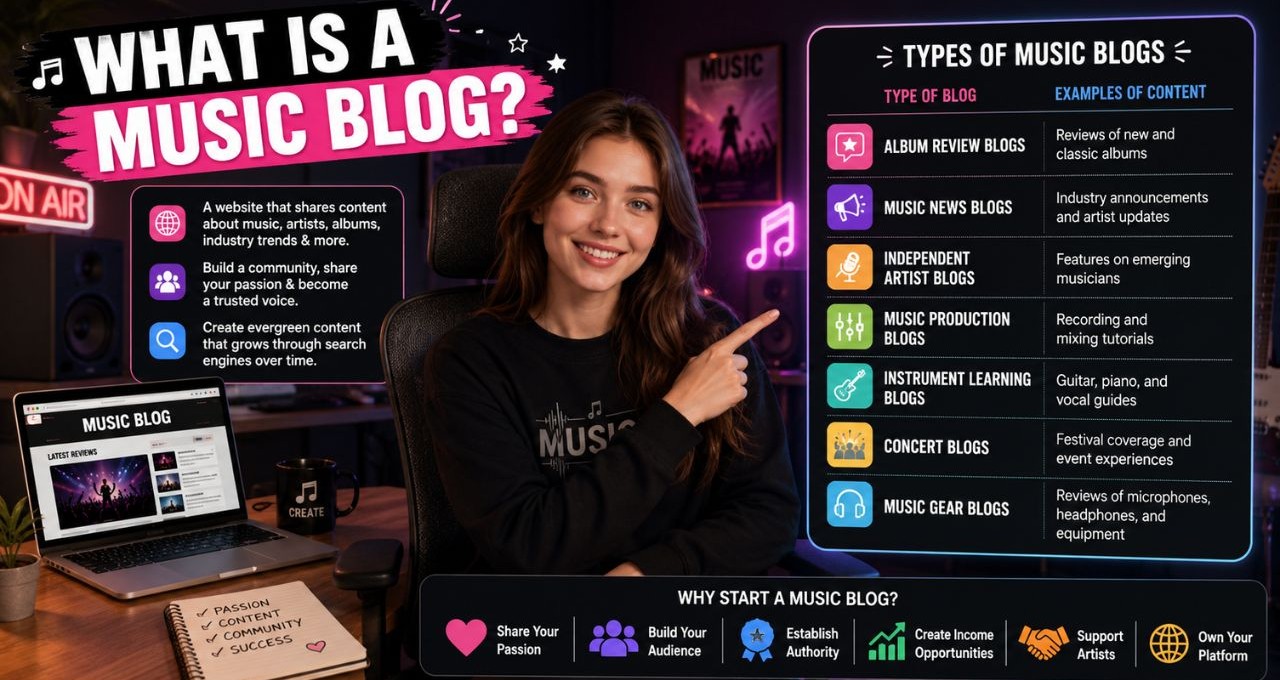
Unlike social media posts that often disappear quickly, music blogs create evergreen content that readers can discover through search engines over time. This gives you an opportunity to establish credibility and become a trusted source within your chosen music niche.
Music blogs can focus on a variety of topics depending on your interests and expertise.
| Type of Music Blog | Examples of Content |
| Album Review Blogs | Reviews of new and classic albums |
| Music News Blogs | Industry announcements and artist updates |
| Independent Artist Blogs | Features on emerging musicians |
| Music Production Blogs | Recording and mixing tutorials |
| Instrument Learning Blogs | Guitar, piano, and vocal guides |
| Concert Blogs | Festival coverage and event experiences |
| Music Gear Blogs | Reviews of microphones, headphones, and equipment |
Whether you want to support independent artists, educate aspiring musicians, share your opinions on new releases, or eventually generate income online, a music blog provides a platform to achieve those goals.
Why Start a Music Blog in 2026?
Starting a music blog in 2026 offers much more than simply writing about your favorite songs. It allows you to build an audience, establish authority within the music community, support artists you admire, and create long term opportunities for growth and monetization.
| Benefit | Why It Matters |
| Share Your Passion | Discuss music genres, artists, and albums you genuinely enjoy. |
| Build an Audience | Connect with music lovers around the world. |
| Establish Authority | Become a trusted voice within your niche. |
| Support Independent Artists | Help emerging musicians gain visibility. |
| Improve Writing Skills | Develop stronger communication abilities. |
| Create Income Opportunities | Monetize through various revenue streams. |
| Network Within the Industry | Build relationships with artists and professionals. |
| Own Your Platform | Maintain complete control over your content and audience. |
What You Need Before Starting a Music Blog
Before creating your music blog, it’s helpful to understand the essentials you’ll need. The good news is that you don’t need advanced technical skills or a large budget to get started successfully.
Choose a Music Blog Niche
Trying to cover every music topic can make it difficult to attract a loyal audience. Focusing on a specific niche helps establish expertise and simplifies content planning.
Popular music blog niches include:
- Album Reviews
- Music News
- Independent Artist Spotlights
- Hip-Hop Blogs
- Rock Music Blogs
- EDM Blogs
- Music Production Tutorials
- Instrument Learning Guides
- Music Industry Insights
- Music Equipment Reviews
Get a Domain Name
Your domain name is your blog’s online identity. Choose something memorable, easy to spell, and relevant to your music niche.
Examples include:
- TheVinylCurrent.com
- IndieSoundScope.com
- FreshTrackJournal.com
- BeatAndMelodyBlog.com
- RhythmReviewer.com
Choose Reliable Hosting
Hosting stores your website files and makes your blog accessible to visitors. Choosing reliable hosting is important because it directly affects website speed, security, and overall performance.
For most beginners, WordPress Hosting is the best option because it provides a simple setup process, excellent performance, and beginner friendly management tools.
As your website grows, you may eventually consider:
- VPS Hosting: Suitable for growing music websites requiring more resources and control.
- Dedicated Servers: Ideal for large music publications, communities, or high traffic websites.
Starting with WordPress Hosting gives you a strong foundation while allowing flexibility for future growth.
Use WordPress
WordPress powers millions of websites worldwide because it’s flexible, beginner friendly, and highly customizable.
Benefits include:
- No coding knowledge required
- Thousands of themes and plugins
- Strong SEO capabilities
- Easy content management
- Excellent scalability
Plan Your Content
Preparing content ideas before launching your website helps maintain consistency.
You could start with:
- Album reviews
- Artist interviews
- Music news updates
- Instrument tutorials
- Music production tips
- Concert experiences
- Equipment reviews
Stay Consistent and Patient
Successful music blogs rarely grow overnight. Focus on publishing valuable content consistently, learning from your audience, and continuously improving your website over time.
With these essentials in place, you’ll have a strong foundation to start building your music blog confidently.
How to Start a Music Blog (Step-by-Step Guide)
Starting a music blog may feel overwhelming initially, especially if you’ve never built a website before. However, once you break the process into manageable steps, you’ll realize that launching a professional music blog is much more straightforward than it seems.
Whether you want to review albums, support independent artists, share music production tips, or build a platform around your passion for music, the following steps will help you create a strong foundation for long term success.
Step 1: Choose Your Music Blog Niche
One of the biggest mistakes new music bloggers make is trying to cover every music genre, artist, and topic at once. While this approach may seem appealing, it often makes it difficult to attract a dedicated audience.
Choosing a specific niche helps readers understand what your blog is about and gives search engines clearer signals about your expertise. As your blog grows, you can always expand into related areas.
Popular Music Blog Niche Ideas
| Music Blog Niche | Best For |
| Album Reviews | Music enthusiasts who enjoy sharing opinions |
| Music News | Covering industry updates and announcements |
| Independent Artist Spotlights | Supporting emerging musicians |
| Hip Hop Blogs | Fans of rap and hip hop culture |
| Rock Music Blogs | Rock music communities |
| EDM Blogs | Electronic music enthusiasts |
| Music Production Blogs | Producers and creators |
| Instrument Tutorials | Musicians and beginners |
| Music Gear Reviews | Reviewing equipment and software |
| Music Industry Blogs | Business and industry insights |
How to Choose the Right Music Niche
Before deciding, ask yourself:
- Which music genres do you genuinely enjoy?
- What topics can you consistently create content about?
- Is there an audience interested in these subjects?
- Can this niche support future monetization opportunities?
For example, if you’re passionate about helping independent musicians gain visibility, you might focus on artist interviews, album reviews, and emerging music discoveries.
Remember, your niche doesn’t need to be permanent. Many successful music blogs begin with a focused topic before gradually expanding into broader categories.
Step 2: Research Topics Music Fans Are Searching For
After selecting your niche, the next step is understanding what your audience wants to read. Creating content around real search demand increases your chances of attracting readers through search engines.
Rather than publishing content based solely on assumptions, focus on topics that music fans actively search for online. This helps you provide value while improving your blog’s visibility.
Understand Your Audience
Think about who you’re writing for.
Your audience may include:
- Casual music listeners
- Dedicated fans of specific genres
- Independent musicians
- Music producers
- Instrument learners
- Industry professionals
Understanding your audience helps you create content that addresses their interests and challenges.
Use Free Research Tools
You don’t need expensive SEO software to find great content ideas.
Several free resources can help:
- Google Autocomplete – Discover popular music related searches.
- People Also Ask – Find common questions users ask.
- Google Trends – Identify growing music topics and trends.
- YouTube Search Suggestions – Explore tutorial and review ideas.
- Reddit Communities – Understand what music fans are discussing.
- Spotify Charts – Monitor popular artists and releases.
Music Blog Content Ideas
| Content Type | Example Topics |
| Album Reviews | Reviews of newly released albums |
| Artist Spotlights | Interviews with emerging musicians |
| Music News | Industry updates and announcements |
| Tutorials | Home recording tips for beginners |
| Equipment Reviews | Best microphones for podcasts and music |
| Opinion Articles | Genre discussions and trends |
| Concert Coverage | Festival experiences and event reviews |
| Beginner Guides | Learning guitar or piano basics |
When planning your content, ask yourself one important question:
“Will this article genuinely help or entertain someone interested in music?”
If the answer is yes, you’re creating content that benefits both your readers and your long term blog growth.
Now that you know what content to create, it’s time to set up your music blog with a domain name and reliable hosting.
Step 3: Get a Domain Name and WordPress Hosting
Now that you’ve chosen your niche and understand what your audience wants to read, it’s time to build the foundation of your music blog. This starts with selecting a domain name and choosing reliable hosting.
Choose a Domain Name for Your Music Blog
Your domain name is your website’s address on the internet. It’s also a major part of your brand identity, so choose something memorable and relevant to your music niche.
When selecting a domain name:
- Keep it short and easy to remember.
- Make it simple to spell and pronounce.
- Avoid numbers and hyphens.
- Choose a name that allows future growth.
- Ensure it reflects your music brand naturally.
Examples include:

- TheVinylCurrent.com
- IndieSoundScope.com
- FreshTrackJournal.com
- BeatAndMelodyBlog.com
- RhythmReviewer.com
Take your time with this decision because changing domains later can affect branding and SEO.
What Is WordPress Hosting?
Hosting is the service that stores your website files and makes them accessible to visitors online.
Think of it this way:
- Domain Name: Your blog’s address.
- Hosting: The place where your website lives.
Reliable hosting affects:
- Website speed
- Security
- Uptime reliability
- Backup availability
- Overall visitor experience
For most music bloggers, WordPress Hosting provides the ideal balance of performance, simplicity, and affordability.
Why We Recommend YouStable WordPress Hosting
If you’re starting your first music blog, YouStable WordPress Hosting offers beginner friendly features that simplify website setup and management while delivering strong performance.
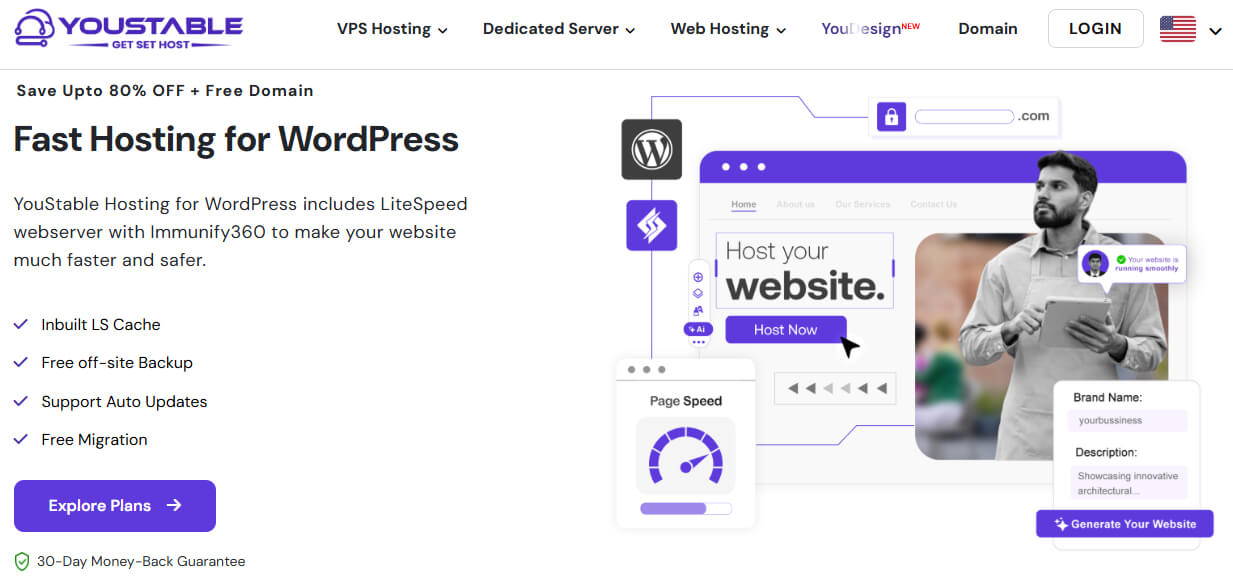
Benefits of YouStable WordPress Hosting
| Feature | Benefit for Music Bloggers |
| Free Domain for 1 Year* | Helps reduce startup costs. |
| LiteSpeed Web Server | Improves website speed and performance. |
| NVMe SSD Storage | Faster loading times for visitors. |
| Free SSL Certificate | Enhances website security and trust. |
| Free Off Site Backups | Protects valuable content. |
| One Click WordPress Installation | Simplifies website setup. |
| AI Optimized Caching | Improves Core Web Vitals performance. |
| Imunify360 Protection | Advanced malware and security protection. |
| Unmetered Bandwidth | Supports growing traffic demands. |
| 24/7 Expert Support | Assistance whenever you need help. |
Which YouStable Plan Should You Choose?
| Plan | Best For | Pricing |
| DaStart | Beginners launching their first music blog | $0.62/month |
| DaProfessional ⭐ | Growing blogs needing additional resources and a free domain | $1.25/month |
| DaElite | High traffic music websites and publications | $2.31/month |
For most beginners, the DaProfessional Plan is often the best choice because it includes a free domain for one year, supports multiple websites, and provides extra resources as your website grows.
How to Buy YouStable WordPress Hosting (Step-by-Step)
- Visit the YouStable WordPress Hosting page.
- Click Explore Plans to compare available options.
- Choose the hosting plan that best fits your needs.
- Claim your free domain for one year if your selected plan qualifies.
- Create your YouStable account.
- Choose your preferred billing cycle.
- Review your order details carefully.
- Complete the payment process securely.
- Access your hosting dashboard and begin setting up WordPress.
Prefer a Faster Setup? Try YouDesign AI Website Builder
If you want to launch your music website quickly without spending time configuring themes and layouts manually, YouDesign AI Website Builder offers a beginner friendly alternative.
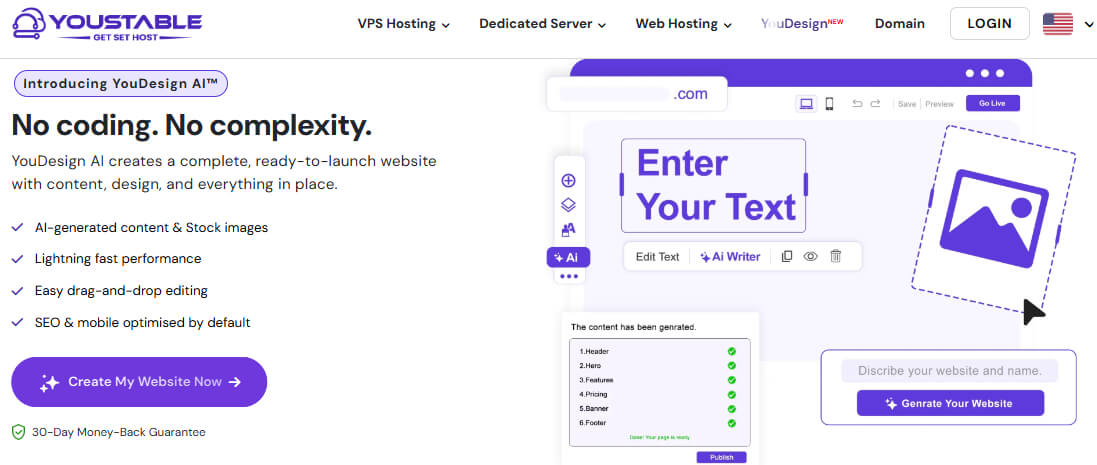
It allows you to create a professional WordPress website using AI powered tools without requiring coding knowledge.
Benefits of YouDesign AI Website Builder
| Feature | Benefit |
| AI Website Generation | Creates a ready to launch website automatically. |
| No Coding Required | Ideal for beginners. |
| AI Content Assistance | Helps generate website content faster. |
| 200+ Ready to Use Templates | Choose designs suited for music websites. |
| Mobile Optimized Designs | Responsive layouts by default. |
| SEO Friendly Structure | Supports search visibility. |
| One Click Publishing | Launch your website quickly. |
YouDesign is particularly useful if you want to focus on creating music content rather than spending time on website design and setup.
When Should You Consider VPS Hosting?
Most music blogs can comfortably start with WordPress Hosting. However, as your website grows, you may require additional resources and flexibility.
VPS Hosting may be suitable if:
- Your music blog experiences significant traffic growth.
- You manage multiple websites.
- You require greater server control.
- Your website uses resource intensive features or applications.
Benefits of VPS Hosting
- Dedicated server resources
- Improved website performance
- Greater customization options
- Better scalability as traffic increases
When Does a Music Blog Need a Dedicated Server?
For larger music websites, Dedicated Servers provide maximum performance and control.
You might consider a Dedicated Server if:
- You operate a large music publication.
- Your website receives substantial traffic volumes.
- You manage membership communities or forums.
- You require advanced security and customization.
Benefits of Dedicated Servers
- Exclusive access to server resources
- Superior performance under heavy workloads
- Enhanced security capabilities
- Complete control over server configurations
Most beginners won’t need VPS Hosting or Dedicated Servers immediately. Starting with WordPress Hosting provides an excellent foundation, while these options remain available as your music website expands.
With your domain and hosting ready, the next step is installing WordPress and preparing your music blog for launch.
Step 4: Install WordPress on Your Hosting Account
Once you’ve purchased your hosting plan and domain name, the next step is installing WordPress. The process is simple, and with YouStable’s one click WordPress installer, you can have your music blog ready within a few minutes without needing technical expertise.
How to Install WordPress on YouStable
- Log in to your YouStable Client Area.
- Open your hosting control panel from the dashboard.
- Locate the WordPress Installer or Softaculous Apps Installer.
- Click Install WordPress.
- Choose the domain name you want to use for your music blog.
- Enter your website details, including:
- Site Name
- Admin Username
- Strong Password
- Admin Email Address
- Review your settings carefully.
- Click Install and wait for the installation process to complete.
- Once finished, you’ll receive your WordPress login URL.
Access Your WordPress Dashboard
You can log in to your website using: yourdomain.com/wp-admin
Enter the administrator credentials you created during installation to access your WordPress dashboard.
Why WordPress Is Ideal for Music Blogs
WordPress powers millions of websites because it’s flexible, beginner friendly, and highly customizable.
Some advantages include:
- Easy content management
- Thousands of themes and plugins
- Strong SEO capabilities
- Excellent scalability
- No coding knowledge required
- Large support community
With WordPress installed, your music blog is officially live. The next step is configuring a few important settings before publishing content.
Step 5: Configure Essential WordPress Settings
Before customizing your music blog, it’s important to adjust a few WordPress settings that improve SEO, security, and overall user experience.
Important Settings to Configure
| Setting | What You Should Do |
| Site Title & Tagline | Add your music blog name and description. |
| Time Zone | Set the correct location for accurate publishing schedules. |
| Permalinks | Choose Post Name for SEO friendly URLs. |
| Search Engine Visibility | Ensure search engines can index your website. |
| User Profile | Update your author information and bio. |
| SSL Certificate | Verify that HTTPS is enabled. |
| WordPress Updates | Keep WordPress, themes, and plugins updated. |
| Default Content | Remove sample posts, pages, and comments. |
Set SEO Friendly Permalinks
Navigate to: Settings → Permalinks
Select: Post Name
This creates clean URLs such as: yourdomain.com/best-albums-of-2026
instead of: yourdomain.com/?p=123
SEO friendly URLs are easier for readers and search engines to understand.
Enable SSL Security
Most YouStable hosting plans include a free SSL certificate.
Ensure your website uses: https://yourdomain.com
instead of: http://yourdomain.com
SSL improves website security and builds trust with visitors.
Keep Your Website Updated
Regular updates help maintain security and performance.
Make it a habit to update:
- WordPress Core
- Themes
- Plugins
This simple step helps prevent vulnerabilities and compatibility issues.
With these settings configured, your music blog is ready for customization.
Step 6: Choose a Professional Theme for Your Music Blog
Your WordPress theme controls your website’s appearance and influences how visitors interact with your content. Choosing the right theme is important because it affects usability, speed, and overall reader experience.
What Should You Look for in a Music Blog Theme?
Mobile Responsiveness
Many users access websites using smartphones. Your theme should automatically adapt to all screen sizes.
Fast Loading Performance
Speed matters for both SEO and user experience. Choose lightweight themes optimized for performance.
Easy Customization
Look for themes that allow you to customize:
- Colors
- Typography
- Homepage layouts
- Navigation menus
- Headers and footers
SEO Friendly Structure
A well coded theme supports better search engine performance.
Recommended WordPress Themes for Music Blogs
| Theme | Best For |
| Astra | Beginners |
| Kadence | Performance focused websites |
| GeneratePress | SEO conscious bloggers |
| Blocksy | Creative music websites |
| Neve | Modern blog layouts |
Our Recommendation for Beginners
If you’re launching your first music blog, Astra is an excellent choice because it offers:
- Fast loading speeds
- Mobile responsive designs
- Beginner friendly customization
- SEO friendly architecture
- Compatibility with popular plugins
How to Install a Theme
- Go to Appearance → Themes.
- Click Add New Theme.
- Search for your preferred theme.
- Click Install.
- Select Activate.
Your theme is now live.
Customize Your Theme
Navigate to: Appearance → Customize
Common customization options include:
- Uploading your logo
- Setting brand colors
- Choosing typography styles
- Creating navigation menus
- Configuring homepage sections
A clean and professional design often performs better than overly complicated layouts.
Step 7: Install Essential WordPress Plugins
Plugins extend the functionality of your music blog without requiring coding knowledge. However, it’s important to install only the plugins you truly need.
Essential Plugins for Music Blogs
| Plugin | Purpose |
| Rank Math SEO | Optimize content for search engines |
| LiteSpeed Cache | Improve website speed and performance |
| WPForms | Create contact forms |
| UpdraftPlus | Back up your website |
| Wordfence Security | Protect against security threats |
| Smash Balloon | Display social media feeds |
| Pretty Links | Manage affiliate links |
| MonsterInsights | Connect Google Analytics |
Rank Math SEO
Rank Math helps improve your website’s visibility in search engines by allowing you to:
- Optimize title tags and meta descriptions
- Generate XML sitemaps
- Add schema markup
- Improve on page SEO
LiteSpeed Cache
LiteSpeed Cache enhances website speed through advanced caching and optimization features.
Benefits include:
- Faster loading times
- Improved Core Web Vitals
- Better user experience
- Enhanced SEO performance
If you’re using YouStable WordPress Hosting, LiteSpeed Cache integrates particularly well with LiteSpeed servers.
WPForms
WPForms makes it easy for readers, artists, and brands to contact you through:
- Contact forms
- Collaboration requests
- Media inquiries
UpdraftPlus
Regular backups protect your content from unexpected issues.
UpdraftPlus helps you:
- Schedule automatic backups
- Restore your website quickly
- Store backup copies securely
Wordfence Security
Wordfence provides additional protection through:
- Firewall security
- Malware scanning
- Login security enhancements
- Threat monitoring
Avoid Installing Too Many Plugins
Before adding a plugin, ask yourself:
- Is this feature necessary?
- Is the plugin actively maintained?
- Does another plugin already provide this functionality?
Keeping your plugin list streamlined improves website performance and stability.
At this stage, your music blog has a strong technical foundation. Next, you’ll create essential pages and publish your first music blog content.
Step 8: Create Important Pages for Your Music Blog
Before publishing articles, create a few essential pages that help visitors understand who you are, what your blog offers, and how they can connect with you. These pages improve professionalism, trust, and user experience.
Essential Pages Every Music Blog Should Have
| Page | Why It Matters |
| About Page | Introduces you and your music journey. |
| Contact Page | Allows readers, artists, and brands to reach you. |
| Privacy Policy | Explains how visitor data is handled. |
| Disclaimer | Clarifies the purpose of your content. |
| Affiliate Disclosure | Maintains transparency about affiliate relationships. |
| Advertise With Us | Provides sponsorship and partnership information. |
| Start Here Page | Helps new visitors navigate your best content. |
About Page
Your About page helps readers connect with the person behind the blog.
Include:
- Your background and music interests.
- Why you started the blog.
- What readers can expect.
- Your experience within the music niche.
Authenticity helps build trust with your audience.
Contact Page
Make it easy for visitors to contact you.
You can include:
- Contact forms.
- Business email addresses.
- Collaboration inquiries.
- Social media links.
Using plugins like WPForms makes this process simple.
Privacy Policy and Disclaimer
These pages are important for transparency and legal compliance.
A Privacy Policy should explain:
- What information you collect.
- How cookies are used.
- Third party services integrated into your website.
A Disclaimer clarifies that your opinions and recommendations are based on personal insights and research.
Affiliate Disclosure
If you recommend music equipment, software, or services using affiliate links, clearly disclose these relationships to maintain reader trust.
Advertise With Us Page
As your blog grows, brands and artists may want to collaborate.
This page can include:
- Sponsorship opportunities.
- Media kit details.
- Partnership guidelines.
- Contact information.
Start Here Page
A Start Here page helps first time visitors discover your most valuable content.
You can feature:
- Popular album reviews.
- Beginner guides.
- Music production tutorials.
- Artist interviews.
With these pages in place, your music blog will appear more professional and trustworthy.
Step 9: Publish Your First Music Blog Post
Publishing your first article is one of the most exciting milestones in your blogging journey. Many beginners delay this step because they feel their website isn’t perfect yet. However, the most important thing is to start.
Music Blog Post Ideas for Beginners
If you’re unsure where to begin, consider these topics:
- Reviews of newly released albums.
- Emerging artist spotlights.
- Concert or festival experiences.
- Music production tips for beginners.
- Instrument learning guides.
- Music equipment recommendations.
- Genre specific playlists and discussions.
Choose topics you genuinely enjoy discussing because passion often translates into better content.
Tips for Writing Great Music Content
Share Honest Opinions
Readers value authenticity.
Whether you’re reviewing an album or recommending equipment, provide balanced and genuine perspectives.
Use Reliable Sources
When covering music news or industry updates:
- Verify information before publishing.
- Reference official artist announcements.
- Use reputable sources when necessary.
This improves trustworthiness and credibility.
Add Personal Insights
Your experiences and viewpoints help differentiate your content from countless other websites.
Consider sharing:
- Why an album resonated with you.
- Lessons learned from music production.
- Personal concert experiences.
These insights strengthen EEAT signals.
Structure Content Clearly
Improve readability by using:
- Headings and subheadings.
- Short paragraphs.
- Bullet points.
- Tables when relevant.
Well structured content is easier to understand and engage with.
Publish Consistently
You don’t need to publish daily.
Choose a schedule you can realistically maintain, such as:
- One article per week.
- Two articles per month.
- Monthly music roundup posts.
Consistency is often more important than frequency.
Don’t Wait for Perfection
Every successful music blogger started with their first article.
Your writing style, website design, and content strategy will naturally improve over time. The key is to begin publishing and continue learning.
With your first post live, the next step is optimizing your music blog for SEO so readers can discover your content through search engines.
Step 10: Optimize Your Music Blog for SEO
Creating valuable content is important, but SEO helps your target audience actually find your articles. Implementing basic SEO practices can improve your visibility in search engines and attract long term organic traffic.
Essential SEO Tips for Music Blogs
| SEO Practice | Why It Matters |
| Keyword Research | Helps target topics users actively search for. |
| Optimize Titles and Meta Descriptions | Improves click through rates. |
| Use Proper Heading Structure | Makes content easier to understand. |
| Internal Linking | Encourages visitors to explore related articles. |
| Image Optimization | Improves performance and accessibility. |
| Mobile Optimization | Enhances user experience across devices. |
| Website Speed Improvements | Supports SEO and visitor satisfaction. |
| Build EEAT Signals | Strengthens authority and trust. |
Use Keywords Naturally
Include relevant keywords in:
- Titles.
- Headings.
- Introduction paragraphs.
- Meta descriptions.
- Image alt text.
Focus on readability rather than repeating keywords excessively.
Strengthen Internal Linking
Link to related content throughout your website.
For example, connect articles about:
- Album reviews.
- Music production guides.
- Instrument tutorials.
- Equipment recommendations.
If your blog expands significantly, you can also naturally guide readers toward hosting resources such as WordPress Hosting, VPS Hosting, or Dedicated Servers based on their website needs.
Improve Website Speed
Fast loading websites provide better user experiences and often perform better in search results.
Improve speed by:
- Optimizing images.
- Using LiteSpeed Cache.
- Choosing reliable hosting.
- Limiting unnecessary plugins.
Reliable hosting plays a major role in maintaining website performance.
Build Trust and Authority
Search engines prioritize content demonstrating expertise and credibility.
You can strengthen EEAT signals by:
- Publishing original content.
- Including author information.
- Sharing personal experiences.
- Updating articles regularly.
- Using accurate and trustworthy information.
SEO is a long term strategy. Consistently creating helpful content and following these best practices can help your music blog attract more readers over time.
Step 11: Promote Your Music Blog
Publishing high quality content is only part of building a successful music blog. Promoting your articles helps you reach new readers, grow your audience, and establish your presence within the music community.
Effective Ways to Promote Your Music Blog
| Promotion Method | Why It Works |
| SEO | Drives long term organic traffic. |
| YouTube | Reaches music focused audiences. |
| Helps showcase music related content visually. | |
| TikTok | Supports music discovery and engagement. |
| X (Twitter) | Encourages industry conversations. |
| Email Marketing | Builds direct relationships with readers. |
| Facebook Groups | Connects with music communities. |
| Networking | Expands your reach through collaborations. |
Use Social Media Strategically
Social platforms can help introduce your content to a wider audience.
You can share:
- Album review highlights
- Artist interviews
- Concert experiences
- Music recommendations
- Behind the scenes content
Rather than promoting every article everywhere, focus on platforms where your audience is most active.
Build an Email List
An email list gives you direct access to your audience without relying on algorithms.
You can use it to share:
- Weekly music recommendations
- New blog posts
- Exclusive content
- Industry updates
Even a small email list can become one of your most valuable assets over time.
Network Within the Music Community
Building relationships can create new opportunities.
Consider:
- Interviewing independent artists
- Collaborating with other bloggers
- Participating in music communities
- Guest posting on relevant websites
Networking helps increase visibility and credibility within your niche.
Focus on Consistency
Successful music blogs rarely grow overnight.
Focus on:
- Publishing valuable content regularly
- Engaging with your audience
- Improving your writing skills
- Learning from analytics and feedback
Small improvements made consistently often lead to significant growth over time.
Step 12: Monetize Your Music Blog
One of the most common questions new bloggers ask is whether it’s possible to make money from a music blog. The answer is yes, but successful monetization usually happens after you’ve built trust with your audience and consistently published valuable content.
Popular Ways to Monetize a Music Blog
| Monetization Method | How It Works |
| Affiliate Marketing | Recommend music equipment and software. |
| Display Advertising | Earn through ad networks. |
| Sponsored Content | Partner with brands and artists. |
| Digital Products | Sell music guides and resources. |
| Membership Content | Offer exclusive content to subscribers. |
| Consulting Services | Share expertise with musicians and creators. |
| Event Promotions | Collaborate with concert organizers. |
Affiliate Marketing
Affiliate marketing works well for music blogs because readers often look for recommendations before purchasing products.
You can recommend:
- Musical instruments
- Audio interfaces
- Microphones
- Headphones
- Recording software
- Online music courses
Always recommend products you genuinely believe provide value.
Display Advertising
As your traffic grows, advertising can become an additional income source.
Popular options include:
- Google AdSense
- Mediavine
- Raptive
Premium ad networks often require minimum traffic levels.
Sponsored Content
Brands, artists, and music companies may collaborate with established blogs through:
- Sponsored reviews
- Product promotions
- Artist features
- Campaign partnerships
Transparency remains important. Always disclose sponsored relationships.
Sell Digital Products
Digital products can provide scalable revenue opportunities.
Examples include:
- Music production guides
- Practice worksheets
- Songwriting templates
- Educational resources
- Online workshops
Set Realistic Expectations
Music blogging is rarely a quick path to income.
Results depend on factors such as:
- Content quality
- Audience engagement
- SEO performance
- Publishing consistency
- Trust built with readers
The most successful music bloggers focus on serving their audience first and treat monetization as a natural outcome of providing value.
Common Mistakes to Avoid When Starting a Music Blog
Avoiding common mistakes can save time and help your music blog grow more effectively. Focus on consistency, authenticity, and helping your readers rather than chasing immediate results.
| Mistake | How to Avoid It |
| Choosing a Broad Niche | Start with a specific music category. |
| Publishing Inconsistently | Follow a realistic schedule. |
| Ignoring SEO | Learn and apply SEO fundamentals. |
| Choosing Poor Hosting | Use reliable hosting from the beginning. |
| Copying Other Blogs | Develop your own voice and perspective. |
| Monetizing Too Early | Build trust before prioritizing revenue. |
| Giving Up Too Soon | Stay patient and continue improving. |
Remember, every successful music blog started with zero readers and a single article. Consistency often matters more than perfection.
FAQs
Can I start a music blog without any technical experience?
Yes, you can absolutely start a music blog without technical knowledge. Modern platforms like WordPress offer beginner friendly dashboards, one click installations, and customizable themes that simplify the entire process.
Many successful music bloggers started with no prior experience in website development. Focus on creating valuable content and learning gradually as your blog grows. Over time, you’ll become more comfortable managing your website and improving its performance.
How often should I publish content on my music blog?
There is no perfect publishing frequency that works for everyone. The key is consistency rather than volume.
For most beginners, a realistic schedule could be:
• Publish one high quality article per week
• Create monthly music roundups or playlist recommendations
• Maintain a schedule you can sustain long term
• Prioritize quality and originality over publishing daily
Readers appreciate reliable content, and search engines often reward websites that update consistently.
What type of content performs best on a music blog?
The best performing content depends on your niche and audience preferences. However, certain content formats consistently attract engagement and search traffic.
Popular music blog content includes:
• Honest album and single reviews
• Emerging artist interviews and spotlights
• Music production tutorials and guides
• Concert and festival experiences
• Music gear and software reviews
• Industry news and trend analysis
• Beginner guides for musicians and producers
Experiment with different formats and use audience feedback to identify what resonates most with your readers.
How long does it take for a music blog to gain traffic?
Building consistent traffic takes time and patience. Most new music blogs begin seeing noticeable organic growth within several months of publishing valuable content regularly.
Factors that influence growth include content quality, SEO optimization, niche competition, and promotional efforts. Instead of focusing on quick results, aim to build trust with your audience and continuously improve your content strategy.
Is it possible to make money from a music blog?
Yes, many music bloggers generate income once they establish an engaged audience. However, monetization should be viewed as a long term goal rather than an immediate outcome.
Common monetization methods include:
• Affiliate marketing through music equipment recommendations
• Display advertising networks
• Sponsored collaborations with brands and artists
• Selling digital products or educational resources
• Offering consulting or coaching services
The most sustainable approach is to focus on providing value first and monetize naturally as your authority grows.
Do I need to know SEO to grow a music blog?
You don’t need to be an SEO expert before launching your music blog, but learning basic SEO principles can significantly improve your visibility in search engines.
Important SEO practices include:
• Researching topics people actively search for
• Writing descriptive titles and meta descriptions
• Using clear heading structures
• Building internal links between related articles
• Optimizing images and website speed
• Publishing original and helpful content consistently
Even small SEO improvements can have a meaningful impact over time.
What is the biggest mistake new music bloggers should avoid?
One of the biggest mistakes is trying to cover every music topic at once while expecting immediate results. Successful music blogs usually start with a focused niche and grow gradually.
Avoid these common pitfalls:
• Choosing an overly broad niche
• Publishing inconsistently
• Prioritizing monetization too early
• Neglecting SEO and website performance
• Copying competitors instead of developing your own voice
Patience, authenticity, and consistency are often the factors that separate successful music blogs from those that give up too soon.
Explore More Blogging Guides:
Conclusion
Starting a music blog is an excellent way to share your passion for music, connect with like minded people, and build a platform that reflects your interests and expertise. By choosing the right niche, creating valuable content, and staying consistent, you can establish a strong foundation for long term success.
You don’t need advanced technical skills or a large budget to get started. Focus on helping your audience, publishing authentic content, and improving gradually as your blog grows. Every successful music blogger started with a single post and a willingness to learn.
If you’re ready to launch your music blog, YouStable WordPress Hosting provides beginner friendly features, one click WordPress installation, and a free domain for one year on eligible plans.
If you prefer a faster, no code approach, YouDesign AI Website Builder can help you create your ideal website quickly. As your music website expands, VPS Hosting and Dedicated Servers offer scalable solutions to support future growth.