India’s startup ecosystem has grown rapidly over the past decade. Thousands of new companies are building digital products in areas such as fintech, SaaS, eCommerce, AI tools, and online services.
As these startups grow, they require reliable infrastructure to run websites, applications, and internal systems smoothly. At the early stage, many startups begin with shared hosting because it is affordable and easy to set up.
However, as traffic increases and applications become more complex, shared hosting often becomes too limited. Because of this, many startups are moving toward Windows VPS hosting, which offers better performance, more control, and the flexibility required for growing platforms.
The Rapid Growth of the Indian Startup Ecosystem
India has become one of the largest startup ecosystems in the world. According to government and industry reports, thousands of startups are registered every year across sectors like software services, financial technology, education platforms, and digital marketplaces.
These businesses rely heavily on online infrastructure to deliver their services. Whether it is a SaaS product, a web application, or an online store, the server environment plays a critical role in keeping the platform available and responsive for users.
As startups scale their products and attract more customers, their infrastructure requirements become more demanding. This is one of the main reasons many startups begin exploring VPS hosting solutions.
What Is Windows VPS Hosting?
Windows VPS hosting refers to a Virtual Private Server that runs the Windows Server operating system.
A VPS is created by dividing a powerful physical server into several isolated virtual environments using virtualization technology.
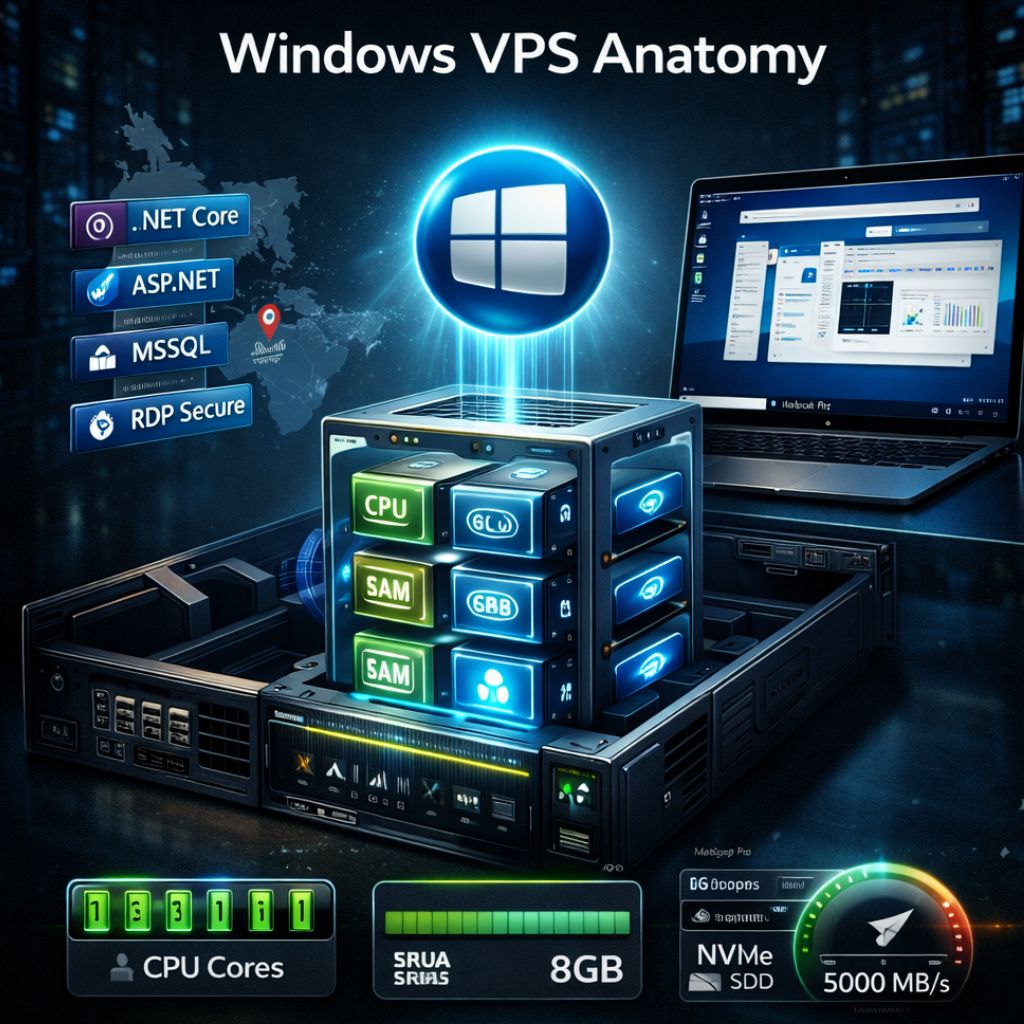
Each VPS receives its own dedicated resources, such as:
- CPU cores
- RAM
- Storage space
- Network bandwidth
Because of this isolation, a VPS behaves much like a small dedicated server.
Windows VPS hosting is especially useful for startups that rely on Microsoft technologies. The server can be accessed remotely through Remote Desktop Protocol (RDP), allowing developers or administrators to manage the server just like a normal Windows computer.
Many businesses use Windows VPS to host applications built with:
- ASP.NET or .NET frameworks
- Microsoft SQL Server databases
- Enterprise management software
- Remote desktop workspaces
Limitations of Shared Hosting for Growing Startups
Shared hosting is a common starting point for new websites. In this environment, multiple websites share the same server resources. While this model keeps costs low, it also creates limitations that become noticeable as a startup grows.
One major limitation is resource sharing. If several websites on the same server experience traffic spikes, performance may slow down for everyone. This can affect loading times and user experience.
Shared hosting also restricts server control. Startups may not be able to install custom software, configure server settings, or adjust system resources according to their needs.
Security can also be a concern in shared environments because multiple users operate on the same infrastructure. For startups handling customer data or financial transactions, stronger isolation is often necessary.
These challenges often lead growing companies to consider VPS hosting as a more reliable alternative.
Why Windows VPS Hosting Is Becoming Popular Among Indian Startups
Better Performance With Dedicated Resources
One of the biggest advantages of VPS hosting is access to dedicated resources. Unlike shared hosting, a VPS reserves CPU power, memory, and storage specifically for one user.
This improves application performance and helps websites handle more traffic without slowdowns.
Greater Control Over the Server Environment
Windows VPS hosting provides administrative access, allowing startups to configure the server according to their needs. Teams can install custom software, manage security settings, and control system updates.
This level of flexibility is important for startups building specialized platforms or internal tools.
Support for Microsoft Development Technologies
Many startups develop applications using Microsoft technologies such as ASP.NET, .NET Core, or Microsoft SQL Server.
Windows VPS hosting offers native compatibility with these technologies, which simplifies deployment and management.
Remote Desktop Access
Another advantage is the ability to access the server through Remote Desktop Protocol. This allows developers, administrators, and support teams to manage the server from different locations without needing physical access.
For distributed startup teams, remote management capabilities are extremely useful.
Scalability for Growing Platforms
Startups often experience unpredictable growth. A platform may suddenly receive more users due to marketing campaigns or product success.
VPS hosting allows businesses to upgrade server resources such as RAM, CPU, or storage as needed. This scalability helps companies expand their infrastructure without rebuilding the entire system.
Cost Efficiency Compared to Dedicated Servers
Dedicated servers provide full hardware resources, but they are usually more expensive and may require advanced technical management.
For many startups, VPS hosting provides a practical balance between cost and performance. It offers much of the flexibility of a dedicated server but at a significantly lower price.
Startups can begin with a smaller VPS plan and increase resources gradually as their platform grows.
Security Benefits for Startup Applications
Security is a major concern for digital businesses, especially those handling user accounts, financial transactions, or sensitive data.
VPS hosting improves security because each virtual server operates in an isolated environment. This separation reduces the risk of other users affecting your server.
Administrators can also implement security measures such as:
- Firewall configuration
- User access controls
- System updates and patches
- Antivirus or monitoring tools
These features help startups maintain a safer hosting environment.
Use Cases of Windows VPS for Startups
Many startups rely on Windows VPS hosting to run essential parts of their infrastructure.
Common use cases include:
Hosting web applications developed with Microsoft frameworks is one of the most common uses. Startups building SaaS platforms often deploy their applications on Windows-based servers.
Database hosting is another important use case. Applications that rely on Microsoft SQL Server databases benefit from running in a Windows server environment.
Some startups also use Windows VPS servers as remote workstations for development teams. Developers can connect to the server remotely and run software tools without installing them on local computers.
Internal business tools, automation scripts, and testing environments can also run on VPS infrastructure.
NVMe Storage and Modern VPS Infrastructure
Many modern VPS providers now use NVMe SSD storage, which offers much faster data access compared to traditional SATA SSD drives.
NVMe storage can significantly improve server responsiveness, especially for applications that perform many database queries or file operations.
For startups running data driven applications, faster storage can help reduce loading times and improve user experience.
When Windows VPS Is the Right Choice for a Startup
Windows VPS hosting is often a good option when startups require more control and performance than shared hosting can provide.
It becomes particularly useful when applications depend on Microsoft technologies or when developers need remote desktop access to manage the server.
Startups that expect steady growth or increasing traffic may also benefit from VPS hosting because it allows infrastructure to scale more easily.
How Startups Should Choose a Reliable VPS Provider
Choosing a reliable hosting provider is an important step when moving to Windows VPS hosting in India, especially for startups that need stable performance and scalable infrastructure. The right provider helps ensure that websites, applications, & business platforms run smoothly without unexpected downtime or performance issues.
Startups should carefully evaluate several factors before selecting a VPS provider.
- Server Hardware Quality: Hardware plays a major role in overall server performance. Providers that use modern processors, sufficient RAM, and fast NVMe storage usually deliver better speed and reliability for applications.
- Data Center Reliability: A dependable data center helps keep websites and applications available for users at all times. High uptime guarantees and strong network infrastructure reduce the risk of service interruptions.
- Technical Support Availability: Reliable technical support can be extremely valuable, especially for startups that may not yet have a dedicated infrastructure team. Quick support responses help resolve server issues faster.
- Scalability Options: Startups often grow quickly, and server requirements can change over time. A good VPS provider should allow businesses to upgrade resources such as CPU, RAM, and storage as their platform expands.
By considering these factors carefully, startups can select a VPS provider that offers both stability and flexibility, helping their digital platforms perform reliably as the business continues to grow.
Conclusion
As India’s startup ecosystem continues to expand, reliable hosting infrastructure has become increasingly important. While shared hosting may work for very small projects, growing platforms often require more performance, flexibility, and control.
Windows VPS hosting provides dedicated resources, remote management capabilities, compatibility with Microsoft technologies, and the ability to scale as traffic increases. These advantages make it a practical infrastructure choice for many startups building modern digital products.
By choosing the right VPS environment and provider, startups can build a stable foundation that supports growth and delivers a better experience for users.