To start a blog in Singapore in 2026, choose a clear niche, register a brandable .com or .sg domain, buy fast NVMe WordPress hosting in a Singapore data center, install WordPress with HTTPS, configure an SEO plugin, and publish helpful, original content. Optimize Core Web Vitals, submit your sitemap to Google Search Console, follow PDPA privacy guidelines, and monetize via AdSense, affiliate programs, or services. Consistency, internal linking, and content updates drive rankings and revenue.
Singapore is one of Asia’s most mature digital markets, where readers expect fast loading, trustworthy, and practical content across English, Mandarin, Malay, Tamil, and Singlish flavored English. If you’ve been thinking about launching a blog, 2026 is an excellent time: Google’s Helpful Content updates favor hands on experience, local relevance, and niche authority exactly where Singapore based blogs can shine.
This guide shows you how to start a blog in Singapore in 2026 the right way choosing a niche, picking a domain, selecting the best WordPress hosting in Singapore, installing and securing WordPress, doing SEO that aligns with Google’s latest standards, and monetizing responsibly under local regulations.
As a Senior Technical SEO Content Writer with 12+ years working across hosting, WordPress, and web performance, I’ll also include practical configurations (servers, caching, CDN, plugins) and Singapore specific tips (PDPA, .sg rules, taxes) so you can launch confidently and scale sustainably.
Why You Should Start a Blog in Singapore?
Singapore’s digital audience is affluent, mobile first, and rewards useful, fast content. Local focus and authentic experience can outrank bigger international sites in 2026.

Singapore’s population may be small, but purchasing power and advertiser demand are high. A well positioned blog can attract targeted traffic from Singapore, Malaysia, and the wider ASEAN region, while still ranking globally for niche topics. With Google doubling down on EEAT, creators who share real, first hand experience can beat thin, AI generated content.
Competition is intense in generic English niches, but lower in localized, intent rich topics such as HDB living, CPF and finance explainers, hawker food guides, local SaaS tooling, SEA travel, and poly/uni career advice. In these niches, users prefer trustworthy sources with local context, which boosts engagement and conversions.
Advertisers, affiliate programs, and brands are actively seeking regional content partners who can deliver quality audiences. That means higher CPMs for display ads and better conversion rates for affiliates when your content reflects Singapore’s reality prices in SGD, local regulations, neighborhood names, and transport options.
- Lower competition in local intent niches vs global English topics
- Stronger trust and loyalty when you demonstrate first hand experience
- Higher engagement, longer time on site, and better conversions
- Attractive to regional advertisers and premium affiliate programs
What Do You Need to Start a Blog in Singapore?
Plan your blog like a small business to avoid costly pivots later.
Set technical foundations early so growth doesn’t break your site later.
- A clear niche and audience with monetization potential
- A brandable .com or .sg domain name
- Fast NVMe WordPress hosting in a Singapore data center
- WordPress with HTTPS, caching, CDN, and a lean plugin stack
- Content plan aligned to search intent and local demand
- Basic compliance: PDPA ready privacy policy, disclaimers
Choosing a Perfect Domain Name for Your Singapore Blog
Your domain name is more than just a web address. In Singapore’s fast, mobile first environment, it becomes your brand name, your first trust signal, and often the reason someone clicks or skips your site.
People here discover content through Google on mobile, WhatsApp and Telegram groups, social shares, and word of mouth. If your domain is hard to spell or remember, they simply won’t type it again.
That’s why a good domain should look clean on a phone screen, sound natural when spoken aloud, and still make sense years later when your blog grows. Think of it like a shop name on Orchard Road: simple names stay in people’s minds, complicated ones fade quickly.
Domain Name Tips That Work well in Singapore
- Keep it short, clear, and easy to pronounce
- Avoid hyphens, numbers, and forced keyword stuffing
- Choose a brandable name that can grow with your content
- Say it out loud and check if it passes the “radio test”
You can follow two common styles:-
- Informational: CPFSimplified, DailySGTech, UniPathwaysSG
- Brandable: RedDotCravings, EstateNook, EastWestWander
Best Domain Extensions for Singapore Blogs
- .com – globally trusted and flexible
- .sg – strong local signal for Singapore readers
- .com.sg – usually suited for registered businesses
If you’re starting as an individual blogger, .com or .sg is the safest choice.
Where to Buy Your Domain
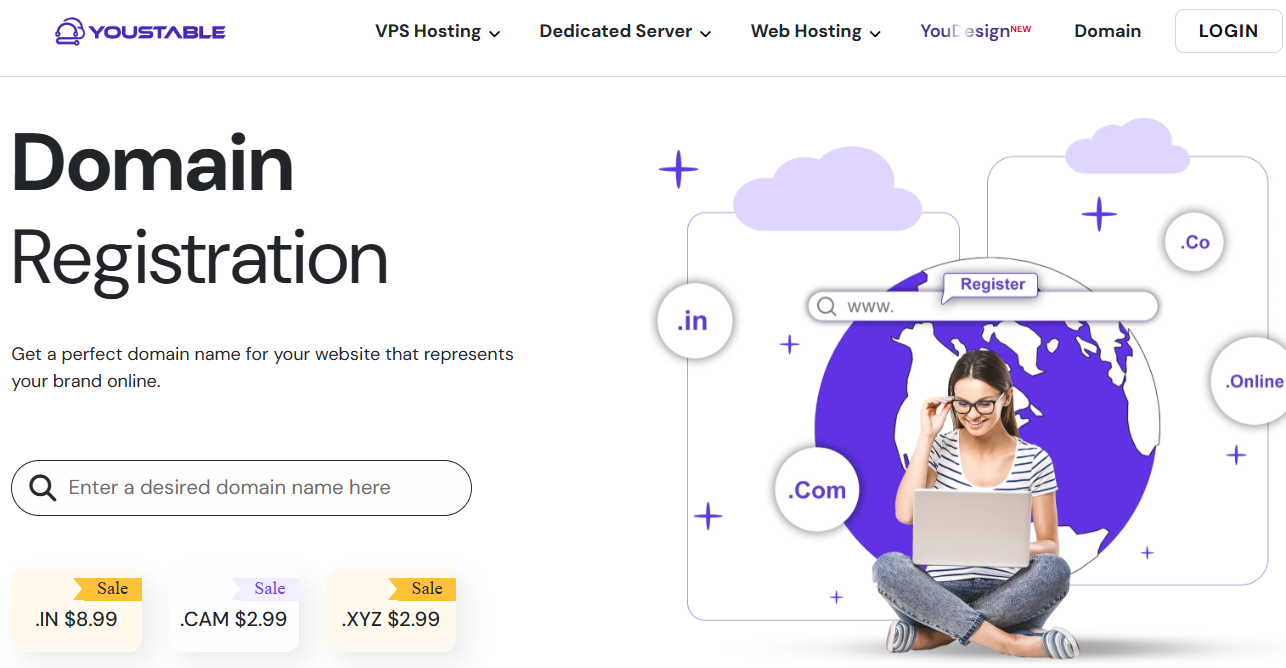
To keep things simple, many beginners choose YouStable. You can search your domain, check .com or .sg availability, and buy it together with hosting. This avoids DNS confusion later and makes WordPress setup much smoother.
Free vs Paid Hosting – What’s Better for Beginners?
Free Hosting (Why to Avoid)
- Slow speed and frequent downtime harm Core Web Vitals and rankings
- Forced ads, limited resources, and no control over server settings
- Hard to get AdSense/affiliate approvals and brand partnerships
- Risk of data loss and platform lock in
Paid Hosting (Why it’s Worth it)
- NVMe SSD storage and LiteSpeed/OpenLiteSpeed deliver sub second TTFB
- Free SSL, automated backups, and malware protection
- Better PageSpeed and CLS/LCP scores for SEO and UX
- Scalable resources, email, staging, and pro support as you grow
Best Hosting Setup for Beginners in 2026
- Server: LiteSpeed or OpenLiteSpeed on NVMe SSDs
- Location: Singapore data center for low latency across SG and SEA
- CDN: Cloudflare or QUIC.cloud with HTTP/3 and Brotli compression
- WordPress Stack: PHP 8.2/8.3, TLS 1.3, HTTP/2/3, OPcache enabled
- Object Cache: Redis (if available) for database heavy sites
- Backups: Daily offsite rotation (e.g., S3/Wasabi/Backblaze)
- Security: WAF, 2FA for wp admin, auto malware scans
This stack consistently meets Core Web Vitals on mobile for content heavy blogs, improves crawl efficiency, and reduces bounce rates key SEO and monetization drivers in 2026.
Step-by-Step – Set Up Hosting with YouStable
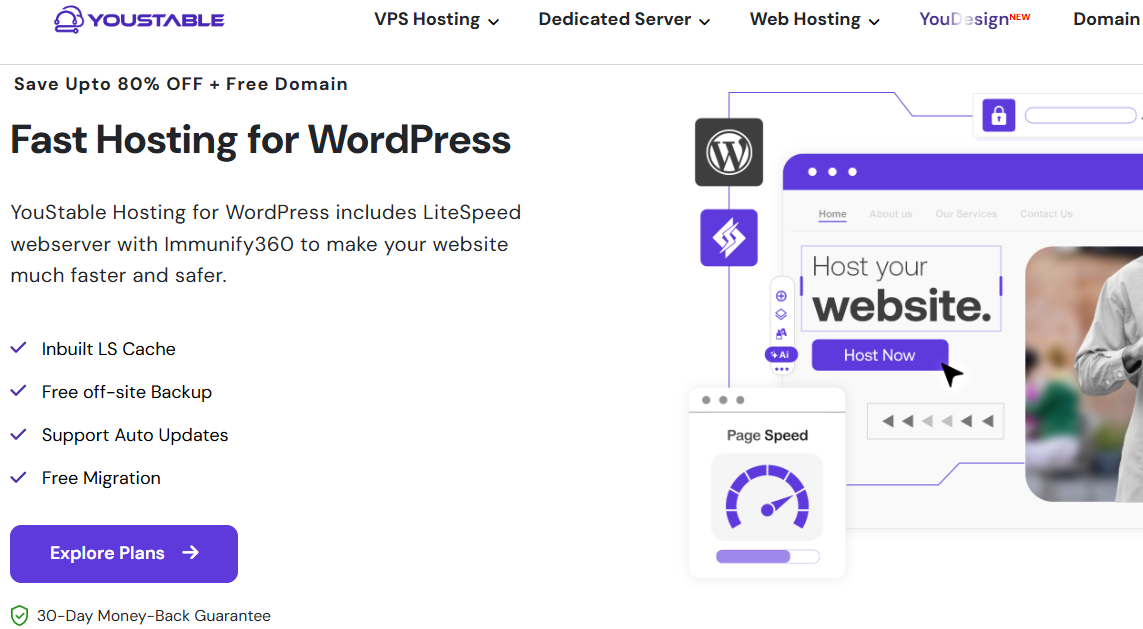
- Visit the YouStable website and open WordPress Hosting plans.
- Choose a beginner friendly plan with NVMe and LiteSpeed.
- Select the Singapore data center for lowest latency to local readers.
- Register a new domain (.com or .sg) or connect an existing domain.
- Complete checkout and log into your YouStable control panel.
- Use the 1‑click WordPress installer (Softaculous/Installatron).
- Enable free SSL; force HTTPS from day one.
- Install LiteSpeed Cache and connect QUIC.cloud or Cloudflare CDN.
- Turn on daily backups and, if available, Redis Object Cache.
YouStable is a strong fit for Singapore bloggers thanks to its Singapore based servers, WordPress friendly stack (LiteSpeed + NVMe), and hands on support. It’s optimized for Core Web Vitals and simple enough for beginners to self manage.
| YouStable WordPress Hosting Plans & Pricing Table in 2026 | ||||
|---|---|---|---|---|
| Plans Name | Websites | Storage | Bandwidth | Monthly Pricing |
| DaStart | 1 | 50GB NVMe SSD | Unmetered | $0.65/mo |
| DaProfessional | 25 | 100GB NVMe SSD | Unmetered | $1.31/mo |
| DaElite | Unlimited | 200GB NVMe SSD | Unmetered | $2.42/mo |
Install WordPress & Set Up Your Singapore Blog
WordPress Installation
- Use the host’s 1‑click installer and choose the latest WordPress version
- Set the site URL to HTTPS and install a free SSL certificate
- Create a unique admin username and a strong passphrase (use a password manager)
- Immediately enable 2FA on your admin account (via plugin)
Basic WordPress Settings
- Site Language: typically English (Singapore), plus multilingual later if needed
- Timezone: Asia/Singapore
- Permalinks: Post name
- Discussion: Enable comment moderation to reduce spam
- Media: Limit image sizes; use WebP; configure compression plugin
Essential Pages
- About – share your experience and what readers can expect
- Contact – form + alternative contact (email/social)
- Privacy Policy – reflect PDPA practices; disclose data usage and retention
- Disclaimer – for finance/health topics, add clear non advice disclaimers
- Affiliate Disclosure – required by most programs and good for trust
Essential Plugins (Lean Stack)
- SEO: Rank Math or Yoast (enable sitemaps, breadcrumbs, schema)
- Cache: LiteSpeed Cache (enable QUIC.cloud or use Cloudflare)
- Security: Wordfence or Solid Security; enable 2FA and WAF
- Backup: UpdraftPlus to S3/Wasabi/Backblaze
- Images: ShortPixel/Imagify for WebP/AVIF and lazy load
- Forms: WPForms or Contact Form 7 with reCAPTCHA
- SMTP: FluentSMTP (connect to a reputable SMTP provider)
Keep plugins minimal to maintain performance. For multilingual content, consider TranslatePress or WPML once your English/Singaporean core is stable.
Best Blogging Platform to Start a Blog in Singapore
Choose a platform that balances control, scalability, and monetization freedom.
WordPress wins in 2026 for SEO control, performance, and ecosystem support.
WordPress (self hosted) gives you full ownership, custom themes, plugins, schema control, fast caching, and CDNs. That means better Core Web Vitals, richer SERP features, and more monetization options (AdSense, premium networks, affiliates, digital products).
You can also implement technical SEO improvements (structured data, internal linking, content updates) without platform limits. Blogger and Medium are beginner friendly but limited. Blogger lacks performance tooling and can look dated.
Medium controls distribution and monetization; you won’t fully own your audience or SEO equity. For a serious Singapore blog, self hosted WordPress offers the best long term ROI.
Content Ideas & Choosing the Right Niche
Pick a niche where you have real experience and a clear monetization path. In Singapore, local intent topics do well: CPF, HDB hacks, hawker food, MRT/transport lifestyle, parenting in SG, SEA travel weekends, university admissions, SME marketing, SaaS how tos for local tools, and sustainable living in a compact city.
Validate demand by checking Google’s autocomplete, People Also Ask, local Facebook groups, Reddit r/singapore, and Telegram channels. Balance evergreen topics (guides and checklists) with trend pieces (budget announcements, new line openings, store launches) to capture both stable and spike traffic.
Importance of Consistency and Patience
Blogging is compounding. Expect 3–6 months to build topical authority and 9–12 months for stable organic traffic. Keep a publish → analyze → improve loop: audit posts monthly, add FAQs from PAA, refresh stats, and tighten internal links. Consistent updates signal freshness and can win featured snippets.
How to Write SEO Friendly Content for a Singapore Blog
Help the reader first, then optimize for search with structure and clarity.
Use local context, prices in SGD, and examples from Singapore for EEAT.
Step 1. Write Original & Valuable Content
Share firsthand experience: screenshots, receipts in SGD, photos you took, and real outcomes. For CPF or HDB topics, include official references and link to source pages. Avoid low quality AI rewrites; Google’s Helpful Content systems prefer depth, clarity, and specificity. Add pros/cons, steps, pitfalls, and local alternatives.
Step 2. Keyword Research (Singapore + Regional)
- Start with Google autocomplete, People Also Ask, and “Related searches.”
- Use long tail queries with local terms (e.g., “best hawker breakfast near AMK,” “CPF OA transfer to SA 2026 rules”).
- Check Search Console after launch to mine “near ranked” keywords and expand sections.
- Balance Singapore first topics with broader SEA/global terms to expand reach.
Step 3. On-Page SEO
- Title and H1: compelling, include the primary keyword naturally
- Headings: use H2/H3 to mirror search intent and PAA structure
- Internal links: connect new posts to relevant pillars and related guides
- Meta description: benefit led, 140–160 characters, with a clear promise
- Schema: use Article/HowTo/FAQ schema via Rank Math or Yoast
- FAQ sections: answer PAA style questions concisely to target snippets
Step 4. Use Images & Internal Linking
- Compress images to WebP/AVIF; keep file sizes < 150KB where possible
- Add descriptive alt text with context (not stuffing)
- Link contextually to relevant posts and categories for topical clusters
- Use descriptive anchors (e.g., “CPF housing grant rules” instead of “click here”)
Step 5. Update Content Regularly
Singapore policies, prices, and trains change fast. Refresh posts quarterly: update screenshots, revise steps after policy changes, add new FAQs, and check internal links. Content freshness signals can improve rankings and CTRs, especially post core updates.
How to Rank Your Singapore Blog on Google
Rankings follow relevance, quality, and performance, not hacks or shortcuts.
Build topical authority with clusters, speed with LiteSpeed, and trust with EEAT.
Focus on matching intent, delivering the best answer fast, and letting technical excellence carry the experience. Here are seven factors you can control:
- Search intent match – Align format and depth with SERP leaders; if top results use checklists and tables, mirror the structure and add better context.
- Topical authority – Build clusters (pillar + supporting posts). For example, a CPF pillar page supported by guides on SA/MA/OA, transfers, and housing grants.
- Internal linking – Link every new post to at least 3 relevant posts; add breadcrumb schema and related articles to improve crawl paths.
- Page speed & Core Web Vitals – Use LiteSpeed Cache with QUIC.cloud/Cloudflare, lazy load media, and preconnect critical origins; target <200ms TTFB in Singapore.
- EEAT signals – Show credentials, cite official sources (Gov.sg, HDB, CPF, IMDA), add author bios, and display last updated dates for sensitive topics.
- Content freshness – Update stats, prices, and steps; add 2026 policy changes quickly to win recency boosts.
- Natural backlinks – Create data driven posts, comparisons, and local maps/guides worth citing; share in relevant SG communities without spamming.
7 Ways to Make Money from a Singapore Blog in 2026
Diversify revenue so algorithm swings don’t tank your income overnight.
Pick methods that match your niche, traffic stage, and audience trust level.
- Google AdSense – Easy entry for display ads; improve RPMs with fast pages, sticky units, and high intent content. Upgrade to premium networks (Mediavine/Raptive) as traffic grows.
- Affiliate marketing – Join Amazon.sg Associates, Involve Asia, CJ, Rakuten, Agoda, Klook, Shopee/Lazada affiliate programs. Add comparison tables, pros/cons, and real photos to boost conversion.
- Sponsored posts – Work with local SMEs and regional brands; publish only relevant, clearly disclosed content. Use a media kit with audience and performance data.
- Digital products – Sell ebooks, templates, and mini courses (e.g., CPF calculators, HDB checklists, SEA travel itineraries) using WooCommerce or Gumroad.
- Freelancing/services – Offer consulting, audits, or writing based on your niche expertise (e.g., SEO for SMEs, uni admissions coaching).
- Local business leads – Create area guides and lead forms; refer readers to vetted service providers (agents, contractors) with transparent disclosure.
- YouTube + blog combo – Repurpose articles into videos and Shorts; embed on posts for engagement and additional ad revenue.
Compliance snapshot: Declare income to IRAS. GST registration may apply if your annual taxable turnover exceeds the prevailing threshold. Clearly disclose affiliate/sponsored relationships and follow platform policies.
Singapore Specific Legal & Trust Considerations
Trust is a ranking and conversion factor in mature markets like Singapore.
Cover privacy, disclosures, and regulated topics with care and clarity.
- PDPA: Explain what personal data you collect (forms, analytics), why, and how long you retain it. Obtain consent where required and provide contact for data requests.
- IMDA Internet Code of Practice: Avoid prohibited content and follow advertising standards; disclose sponsored/affiliate posts clearly.
- Finance/Health disclaimers: If covering CPF, investments, insurance, or medical topics, add clear non advice disclaimers and cite official sources (MAS, CPF Board, MOH).
- Business registration: If operating commercially under a brand, consider registering with ACRA for credibility; required for .com.sg domains.
- Tax: Keep clean records for IRAS; understand GST obligations if you cross thresholds.
Technical Performance Playbook for Singapore Blogs
Better speed means better rankings, engagement, and ad earnings.
Optimize the stack early to avoid painful migrations and rewrites later.
- Hosting: LiteSpeed on NVMe in a Singapore DC; enable HTTP/3 and TLS 1.3
- Caching: Use LiteSpeed Cache presets; enable QUIC.cloud CDN or Cloudflare
- Object cache: Turn on Redis if your host provides it; monitor with Query Monitor
- Images: Serve WebP/AVIF; lazy load and set proper dimensions to prevent CLS
- Fonts: Use system fonts or host locally; preconnect/preload critical assets
- JavaScript: Defer non critical JS; delay third party scripts where possible
- Analytics: Use server side tagging or gtag with consent to minimize bloat
Sample robots.txt for WordPress
User-agent: *
Disallow: /wp-admin/
Allow: /wp-admin/admin-ajax.php
Sitemap: https://example.com/sitemap_index.xml
Submit your sitemap to Google Search Console and Bing Webmaster Tools, fix coverage errors promptly, and monitor Core Web Vitals reports for mobile.
FAQs
How much does it cost to start a blog in Singapore?
Expect roughly SGD $80–$200 for the first year for a .com/.sg domain and entry level NVMe WordPress hosting. Premium themes/plugins, CDN add-ons, and email marketing can raise costs to $200–$600 depending on needs.
Do I need to register a company to run a blog?
No, not to start. You can blog as an individual. Register a business with ACRA if you want a .com.sg, issue invoices, or scale operations. Always declare income to IRAS and review GST obligations if turnover grows.
Is a .sg domain better for local SEO than .com?
Both can rank. .sg sends a strong local signal and can boost CTR among Singapore readers. .com is globally flexible. Choose based on your audience split and brand goals; hosting location and content relevance matter more.
Which platform is best for Singapore blogging?
Self hosted WordPress offers the best control, performance u003cstrongu003e(LiteSpeed + NVMe)u003c/strongu003e, SEO features, and monetization flexibility in 2026. Blogger and Medium are simpler but limit growth and ownership.
How long before I get traffic and income?
With consistent publishing and good SEO, expect initial organic traction in 3–6 months and meaningful revenue in 6–12 months. Compounding effects accelerate as your topical authority grows.
Can I blog in multiple languages in Singapore?
Yes. Start with your strongest language for speed, then expand with subfolders (e.g., /zh/, /ms/, /ta/) using translation plugins. Maintain separate keyword research and intent per language.
What are the must have pages for compliance?
Privacy Policy (PDPA aligned), Disclaimer (especially for finance/health), Contact, and Affiliate Disclosure. Add Terms if selling products/services and ensure clear refund and data policies.
Conclusion
Singapore rewards fast, useful, well sourced content that respects readers’ time. Lay solid technical foundations and compound gains with consistent updates.
To start a blog in Singapore in 2026, pick a clear niche, secure a brandable domain, and host on a Singapore based NVMe + LiteSpeed server.
Install WordPress, configure caching and CDN, publish original, locally relevant content, and align with PDPA and responsible disclosures. Grow with topical clusters, strong internal linking, and regular refreshes.
Take the first step today: choose your domain, set up fast hosting, and publish your first guide. Every well optimized article you ship is a durable asset that builds authority, traffic, and income over time.