To start a blog in Assamese in 2026, you need a clear niche, a brandable domain name, fast and reliable WordPress hosting, and basic SEO and security setup. First, register a domain and purchase hosting.
Then install WordPress using one click setup, set the site language to Assamese, enable SSL and caching, and install essential plugins. After that, create a content calendar, do keyword research, apply on page and internal linking, and keep updating content regularly to start ranking on Google and earning income.
Regional language content is growing rapidly in 2026. Google’s Helpful Content Update gives higher priority to practical, useful content written in native languages.
Compared to English, Assamese blogging has lower competition, stronger trust and audience connection, and better ranking opportunities.
This guide, “How to Start a Blog in Assamese in 2026,” explains everything step by step, including domain and hosting selection, WordPress setup, SEO, ranking strategies, and monetization.
Why You Should Start a Blog in Assamese in 2026
The digital demand for Assamese content is growing rapidly, not slowly.
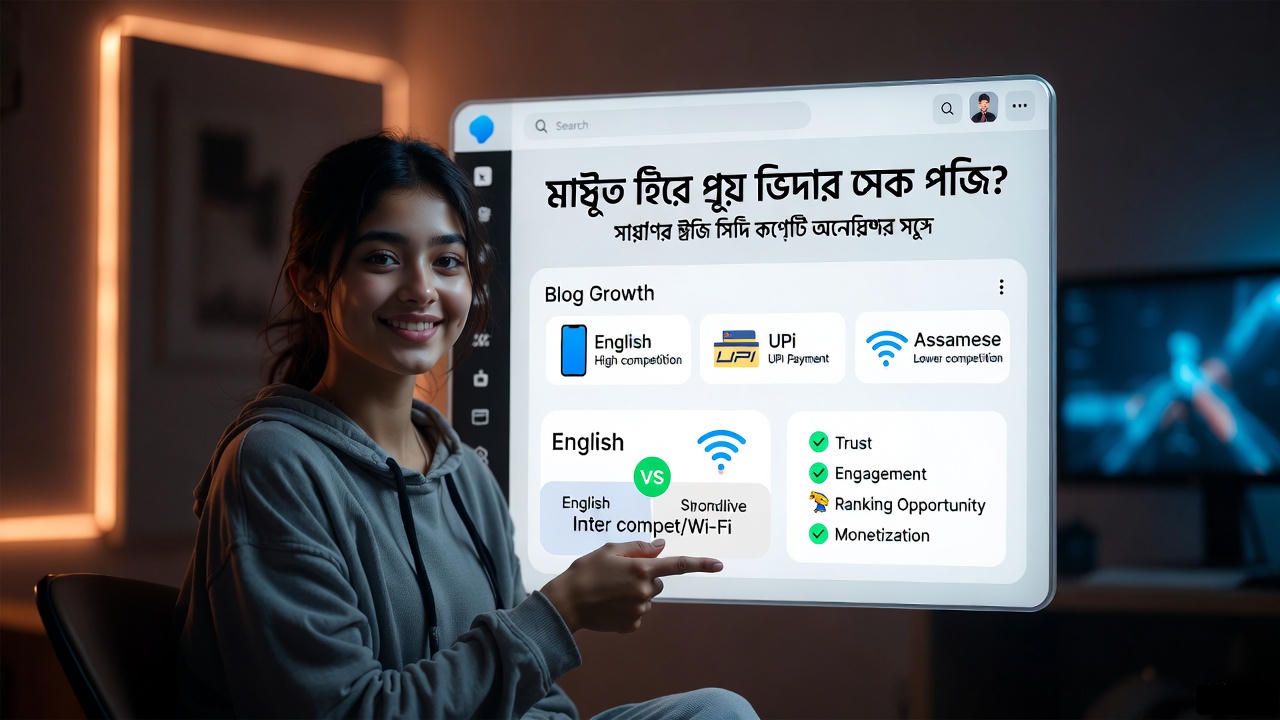
Content written in a native language builds trust. Readers spend more time, feel more connected, and share the content more often.
In the North East region, the spread of smartphones, UPI payments, and affordable internet has pushed Assamese content consumption to a new level. When people find helpful information in their own language, they stay longer, return again, and share it easily.
English blogging has high competition and many niches are already saturated. In contrast, Assamese blogging still has many open niches, which means low competition and high demand. Because brands, advertisers, and Google give more priority to native language content, your chances of ranking and earning increase.
Key benefits of Assamese blogging:
- Lower competition with better ranking opportunities
- Strong audience trust and long term loyalty
- Higher engagement and longer time on site
- Easier monetization in regional markets
If you want, you can send the next section and I’ll translate it in the same clean, simple English style.
What Do You Need to Start a Blog in Assamese
Before starting, you need to make a few basic but important decisions and arrange the right tools.
These choices decide your blog’s success, growth speed, and monetization potential.
- A clear blog niche and a defined target audience
- A brandable domain name
- Fast and reliable web hosting
- WordPress with basic SEO and security setup
You can send the next section whenever you’re ready, and I’ll translate it in the same easy English style.
Choosing a Perfect Domain Name for Your Assamese Blog
Your domain name defines your brand identity, how easily people remember you, and how your blog grows through word of mouth. Short, easy to pronounce, and easy to spell names are remembered faster. The same name also helps maintain brand consistency on platforms like YouTube and Instagram.
When choosing a name for an Assamese blog, follow the short, simple, and pronounceable rule. Avoid hyphens, numbers, and keyword stuffed names. Both informational and brandable styles work well.
Examples:-
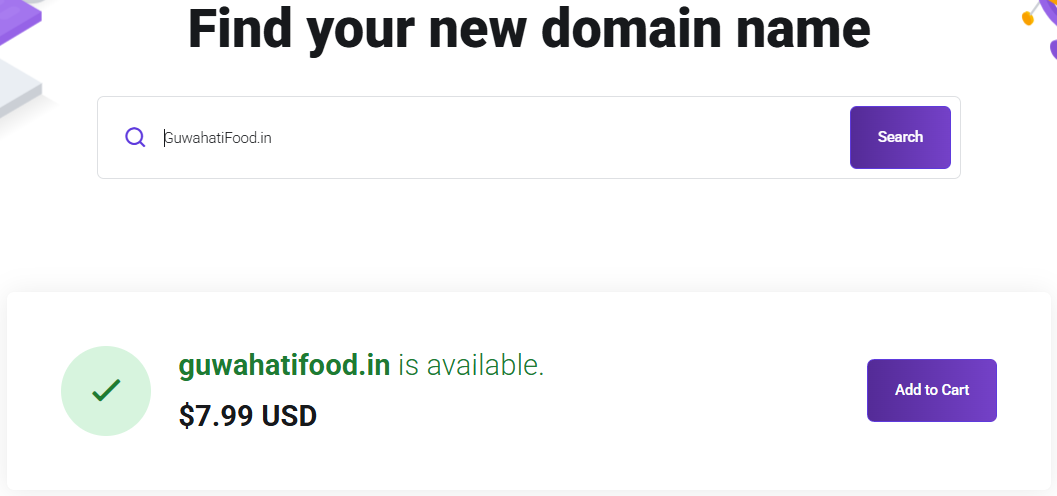
AajKaGyan, DailyTech, DesiNest, LocalVoice, AxomHealth, GuwahatiFood.
Recommended TLDs: .com, .in
Acceptable options: .co.in, .blog
Advanced option: Assamesescript IDN domains (xn-- format), but keep an English short link for easy sharing.
Also try to secure the same name on YouTube, Instagram, Facebook, and X. Having one consistent name across platforms increases brand authority and improves clickthrough rate (CTR).
Free vs Paid Hosting – What’s Better for Beginners?
Free hosting may look attractive at first, but in reality it is slow, unstable, and prone to downtime. It comes with limited resources, forced ads, low bandwidth, and poor Core Web Vitals, which harm both SEO and user experience. Getting AdSense approval is also difficult on free hosting.
Paid hosting offers stability with NVMe SSD storage, better uptime, and free SSL, backups, and security. Technologies like LiteSpeed or OpenLiteSpeed, object caching, and CDN integration improve LCP, CLS, and INP scores. For long term growth, WordPress scalability, and reliable monetization, paid hosting is the better choice.
Best Hosting Setup for Beginners in 2026
Choosing the right hosting setup at the beginning makes a big difference in your blog’s speed, SEO, and long term growth. A good setup helps your site load faster, rank better on Google, and handle more visitors without problems.
Here is what an ideal beginner friendly hosting setup should include in 2026:
- NVMe SSD storage: NVMe SSDs are much faster than normal SSDs or HDDs. They reduce server response time and make pages load quickly. Faster storage improves Time to First Byte (TTFB), which is an important factor for user experience and Google rankings.
- LiteSpeed or OpenLiteSpeed server: LiteSpeed servers are designed for high performance WordPress sites. They support modern technologies like HTTP/3 and QUIC, which improve loading speed, especially on mobile networks. When combined with LSCache, they handle traffic efficiently and reduce server load.
- India or nearby region data center: Hosting your site on an India based or nearby regional data center gives lower latency for Assamese readers. This means pages open faster for your main audience, which improves engagement, reduces bounce rate, and helps with local SEO performance.
- CDN integration: A Content Delivery Network (CDN) stores copies of your site on multiple servers around the world. It delivers content from the closest location to the visitor, improving speed globally. CDN also adds DDoS protection and helps optimize images, making your site safer and faster.
- WordPress optimized stack: Your hosting should support the latest WordPress requirements such as PHP 8.2 or higher for better performance and security. Object caching with Redis or Memcached helps load pages faster by reducing database queries. Automatic daily backups protect your site from data loss and make recovery easy if anything goes wrong.
Set Up Hosting with YouStable – (Step by Step Guide)
For regional bloggers, having a nearby data center is very important. YouStable’s India based, WordPress optimized hosting uses NVMe SSD storage, LiteSpeed servers, and strong caching to improve Core Web Vitals. Low latency for local traffic significantly reduces page loading time and improves user experience.
The beginner friendly dashboard, oneclick WordPress installer, free SSL, automatic backups, and helpful WordPress support make the setup process simple. If you choose the right plan from the start, upgrading or migrating later is smooth and hassle free. This hosting stack works very well for regional language content.
Steps to set up hosting with YouStable:
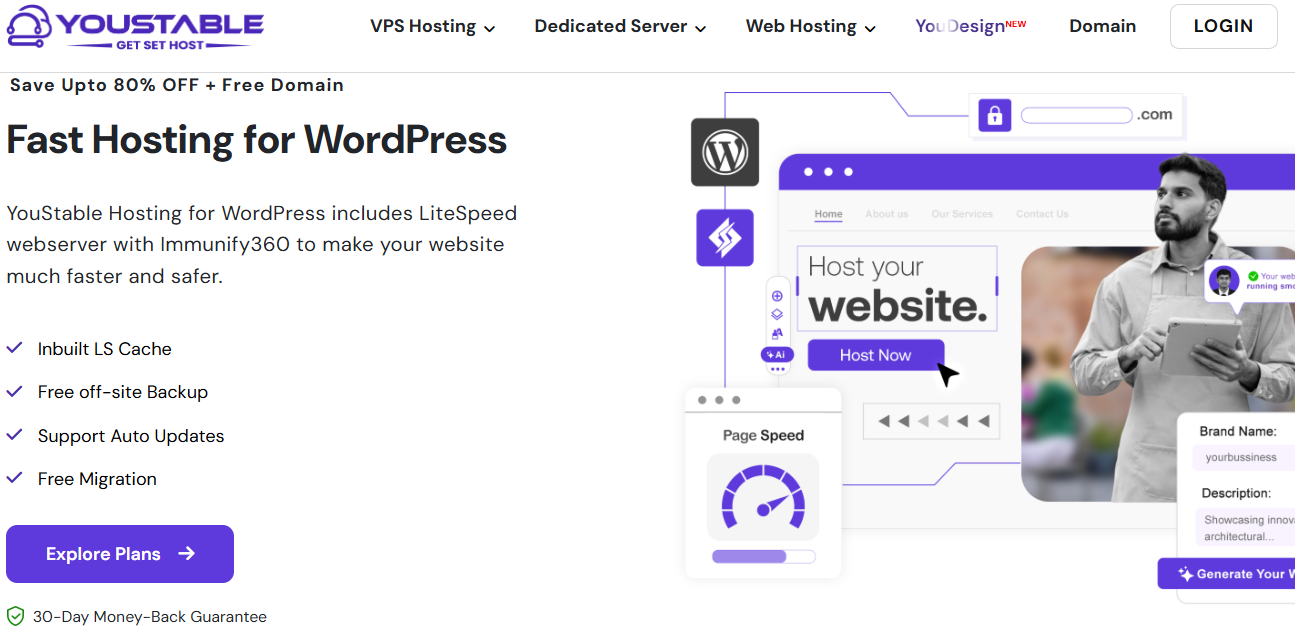
- Visit the YouStable website
- Choose a beginner friendly WordPress hosting plan
- Select a server location close to your target audience
- Register a new domain or connect an existing one
- Complete the checkout and access the dashboard
- Install WordPress using the oneclick installer
- Enable SSL and LiteSpeed Cache
YouStable is a good choice for regional blogging because it offers fast Indiabased servers, WordPressfriendly support, and performance optimized hosting suitable for long term growth.
| YouStable WordPress Hosting Plans & Pricing Table in 2nd April 2026 | ||||
|---|---|---|---|---|
| Plans Name | Websites | Storage | Bandwidth | Monthly Pricing |
| DaStart | 1 | 50GB NVMe SSD | Unmetered | $0.65/mo |
| DaProfessional | 25 | 100GB NVMe SSD | Unmetered | $1.31/mo |
| DaElite | Unlimited | 200GB NVMe SSD | Unmetered | $2.42/mo |
Install WordPress & Set Up Your Assamese Blog
Use Softaculous or Installatron in your hosting dashboard to install WordPress with one click. From the very beginning, enable HTTPS and use a strong admin password and twofactor authentication (2FA) for security.
Basic WordPress settings:
- Site language: Assamese
- Timezone: Asia/Kolkata
- Permalink structure: Post name
Essential pages to create:
- About
- Contact
- Privacy Policy
- Disclaimer (India DPDP Act and cookie information)
Recommended plugins and tools:
- SEO plugins: Rank Math or Yoast (for schema, sitemap, and redirections)
- Caching: LiteSpeed Cache (with QUIC.cloud CDN and image/WebP optimization)
- Security: Wordfence or Solid Security (firewall, login limits, 2FA)
- Backups: UpdraftPlus (remote backups to Google Drive or S3)
- Image optimization: ShortPixel or Imagify (WebP/AVIF, lossy or lossless compression)
- Forms: WPForms or Contact Form 7 (with reCAPTCHA v3)
- SMTP: FluentSMTP (for reliable email delivery)
For typing in Assamese, use Gboard, Indic Keyboard, or Google Input Tools. Always use Unicode fonts so your content looks the same on all devices, and avoid custom non Unicode fonts.
Content Ideas & Choosing the Right Niche
Evergreen niches (education, health, personal finance, agriculture, local food, tourism) generate long term, consistent traffic.
Trending niches (new technology, Assam government schemes, exam updates) bring quick traffic spikes, but they require frequent updates to stay relevant.
Understand audience problems and search intent such as: “how,” “when,” “best,” “price,” “where.”
Align your niche with monetization goals:
- Ads friendly: general informational content
- Affiliate friendly: gadgets, software, tools
- Service friendly: coaching, content writing, consulting
Choosing a niche where user intent, content value, and monetization match is the key to sustainable growth.
Importance of Consistency and Patience
Blogging is a compounding process. Results grow over time when you publish quality content regularly and improve it using data. In most cases, you start seeing early signals in 3-6 months, and stable rankings usually appear within 6-12 months.
Follow a Publish → Analyze → Improve cycle. Use data from Google Search Console to track CTR, time spent on pages, and conversions. Based on this data, build topic clusters and improve internal linking to strengthen your blog’s growth.
How to Write SEO Friendly Content for a Assamese Blog
Usefulness, originality, and readability are the three main pillars of good SEO content.
Write in clear Assamese, keep paragraphs short, and explain topics using facts and practical examples.
Step 1. Write Original and Valuable Content
Share your own experience, local context, and fact based information. Real life examples, screenshots or images, and checklists increase Helpful Content signals. Avoid copy paste or low quality AI content, as Google values experience and trustworthiness under EEAT guidelines.
Step 2. Keyword Research (Language + Regional)
Use Google Autocomplete, People Also Ask, and Related Searches to find ideas. Target Assamese and English mixed long tail keywords such as “Assamese blogging guide” or “how to apply for Assam health scheme.” Adding location based words like Guwahati or Jorhat helps capture local search intent.
Step 3. On Page SEO
Keep the title and H1 clear, keyword rich, but natural. Use structured H2 and H3 subheadings and apply topic cluster based internal linking. Tools like Rank Math or Yoast help automate meta descriptions, Schema (Article, FAQ, HowTo), breadcrumbs, and sitemaps.
Step 4. Use Images and Internal Linking
Use WebP or AVIF images with lazy loading, proper alt text, and descriptive file names. Contextual internal linking improves topical authority and crawl efficiency. Follow the pillar to cluster content model for best results.
Step 5. Update Content Regularly
Content freshness is an important ranking factor. Update dates, processes, and screenshots when needed. Review top performing posts 2–3 times a year and add new FAQs, updated statistics, and internal links to keep content relevant and competitive.
How to Rank Your Assamese Blog on Google
Ranking on Google requires patience, quality content, and strong technical setup working together.
Below are seven key ranking factors explained briefly:
- Search intent match – Make sure your content clearly answers the user’s question or purpose.
- Topical authority – Use the pillar and cluster strategy to cover your niche deeply and completely.
- Internal linking – Use context rich anchor text and avoid orphan pages.
- Page speed and Core Web Vitals – Aim for LCP under 2.5 seconds, CLS below 0.1, and INP under 200 ms.
- EEAT signals – Add author bio, external references, clear policy pages, and trustworthy contact information.
- Content freshness – Update content regularly and add new data or FAQs when needed.
- Natural backlinks – Earn links through local media mentions, community references, and original research.
Along with this, regularly use Google Search Console, PageSpeed Insights, and log analysis to find and fix issues. Keep improving 404 errors, redirects, coverage reports, and click through rate (CTR) for steady growth.
7 Ways to Make Money from a Assamese Blog in 2026
There are many ways to earn from an Assamese blog, but your choice should match your niche, audience, and trust level (EEAT).
In the beginning, focus on one or two income channels. Once your blog grows, you can add more methods.
- Google AdSense: Works well for informational and news based content and earns through CPM. Approval becomes easier when Core Web Vitals are good, policy pages are complete, and traffic quality is strong. Keep ad placements limited but visible and make sure ads load without causing layout shifts (CLS friendly).
- Affiliate marketing: Programs like Amazon India, Flipkart, and hosting or SaaS tools (such as WordPress themes and plugins) convert well through reviews, comparisons, and guides. Always add affiliate disclosure and use tables or checklists to help readers make decisions.
- Sponsored posts: Collaborate with local brands, startups, restaurants, and tourism businesses. Use a media kit and rate card, and apply proper nofollow or sponsored tags to stay compliant.
- Digital products: Sell Assamese ebooks, templates, courses, or memberships. Use platforms like Gumroad, ThriveCart, or WooCommerce with UPI and NetBanking payment options.
- Freelancing and services: Offer content writing, translation (English to Assamese and vice versa), SEO audits, or WordPress setup services. Showing your blog as a portfolio gives high conversion rates.
- Local business leads: “Near me” content brings local leads. Combine lead forms, WhatsApp call to action buttons, and Google Business Profile strategies for better results.
- YouTube + blog combination: Using videos along with long form blog posts increases reach across platforms. Upload video transcripts or show notes on your blog to double your chances of getting indexed.
FAQs
How much does it cost to start a WordPress blog in Assamese?
Usually, a domain costs around ₹1,500-₹3,000 per year and hosting (shared or NVMe) costs about ₹2,500-₹6,000 per year. So, the total starting cost is roughly ₹4,000-₹9,000 annually. Premium themes or plugins can increase the cost, but in the beginning, you can start well using free options.
Is the Assamese language fully supported on WordPress?
Yes. You can set Assamese as the site language, and Unicode fonts are fully supported. Typing is easy using Gboard, Indic Keyboard, or Google Input Tools. Plugins like Rank Math, Yoast, and LiteSpeed Cache work perfectly on Assamese websites.
.com or .in – which TLD is better for an Assamese blog?
A .com domain is globally trusted and easy to understand. A .in domain works well for targeting an Indian audience. Both are good choices. Select based on your audience focus and domain availability.
How long does it take to rank on Google?
You may see early signs within 3-6 months, while stable rankings usually appear in 6-12 months. Regular publishing, high quality content, proper internal linking, and technical optimization are essential.
Blogger or WordPress – which should beginners choose?
Blogger is easy for beginners but offers limited control and monetization options. WordPress is scalable, SEO ready, and gives full ownership, making it the better choice for long term growth.
What are the requirements for AdSense approval?
You need 20–30 or more quality original posts, Privacy Policy and Disclaimer pages, clear navigation, good Core Web Vitals, and copyright free images. Avoid thin or copied content.
Is it a problem to mix Assamese and English while writing?
Most of the content should be in Assamese. Technical terms or brand names can be in English. However, mixing languages too much can confuse search intent and weaken ranking signals. Staying consistent with one main language works better.
Conclusion
Blogging in Assamese offers a huge opportunity in 2026. Strong trust in native language content, lower competition, and both local and global potential make this the right time to start. With original content, a fast website, and the right SEO strategy, it is possible to build long term traffic and stable income.
Start today by choosing a domain and hosting, setting up WordPress, and planning your content calendar. When you begin with a strong foundation, your Assamese blog can build authority, loyal readers, and steady monetization within the coming year.