To start a blog in Bengali (Bangla) in 2026, pick a clear niche and audience, choose a brandable domain, buy fast NVMe SSD hosting, and install WordPress with Bengali as your site language. Set HTTPS, essential pages, and lean plugins. Publish original, helpful content targeting Bengali keywords, optimize on page SEO and Core Web Vitals, build topical authority with internal links, and monetize via AdSense, affiliates, or products as traffic grows.
More people than ever are searching in Bengali, and Google’s helpful content systems increasingly reward high quality, localized pages. If you’ve wanted to teach, document, review, or tell stories in Bangla, 2026 is your best opportunity yet. This guide shows exactly how to start a blog in Bengali from domain and hosting to WordPress setup, SEO, rankings, and monetization.
As a Bengali blogger, you can win trust faster, rank quicker in many niches, and serve audiences that English blogs often overlook. With smart topic selection, a performance first setup, and consistent publishing, your blog becomes a long term digital asset that can generate authority, traffic, and income for years.
In this step by step guide, you’ll learn how to pick a niche, secure a domain, choose the right hosting, install WordPress, set up essential plugins, write SEO friendly Bangla content, rank on Google, and monetize with multiple revenue streams.
Why You Should Start a Blog in Bengali in 2026?
Bengali content demand is surging across India, Bangladesh, and the global diaspora. Competition is lower than English niches, giving new blogs a fairer chance to rank.
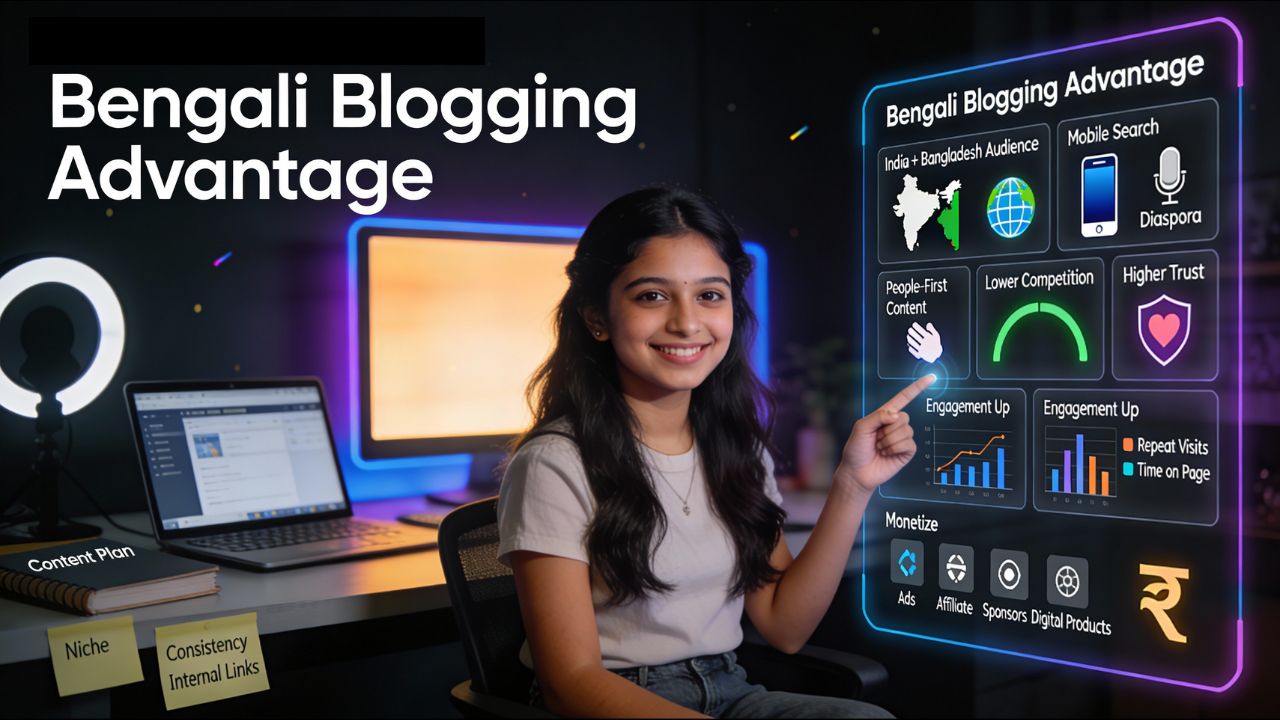
In 2026, regional language search is growing fast on mobile and voice, and Google’s core updates emphasize helpful, people first content. Bengali readers prefer native language explanations for complex topics like finance, health, government exams, and tech areas where English heavy blogs often miss cultural nuance.
Brands and advertisers are allocating more budget to regional markets. If your blog builds trust and solves real problems in Bangla, you’ll achieve higher engagement, longer dwell times, and stronger brand affinity signals that also support better rankings.
- Lower competition, higher ranking chances
- Stronger audience trust and loyalty in native language
- Better engagement, dwell time, and repeat visits
- Easier monetization in regional markets with local partnerships
What Do You Need to Start a Blog in Bengali?
Start with clear goals, a niche, and a plan to serve a specific Bengali audience. Set up fast hosting, choose a brandable domain, and configure WordPress for Bangla.
Here’s the short checklist you’ll move through before publishing your first post:
- A precise blogging niche and audience persona
- A short, brandable domain name
- Fast, reliable NVMe SSD web hosting
- WordPress installed with basic SEO, security, and backup
With this foundation, you’ll be ready to pick a domain and hosting that support long term growth.
Choosing a Perfect Domain Name for Your Bengali Blog
Importance of Domain Branding
Your domain is your public identity make it memorable and easy to say in Bangla or English. A clean, catchy name boosts direct visits, word of mouth, and brand searches, which support your SEO over time.
Domain Name Tips for Bengali
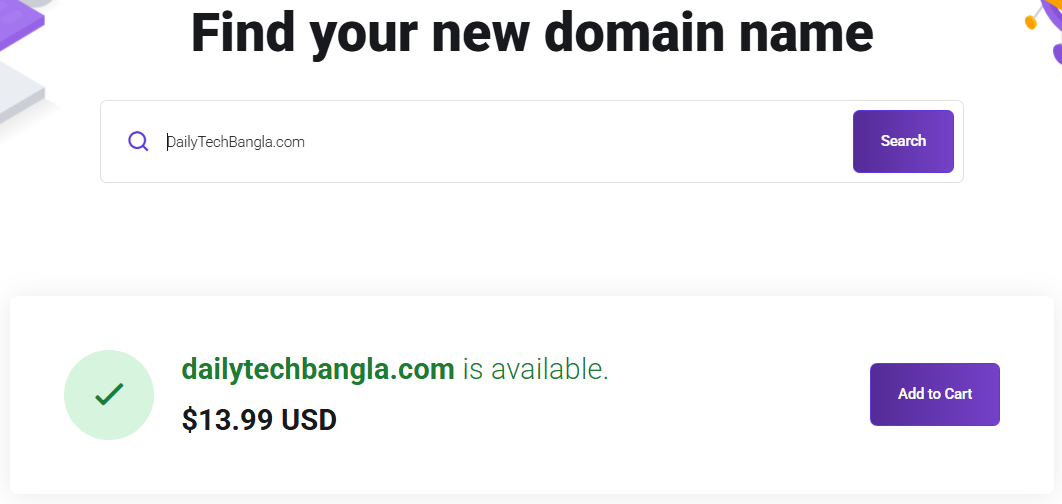
Keep it short, simple, and phonetic. Avoid hyphens, numbers, and keyword stuffing. Choose a name you can say on a podcast or video without spelling it out. Test it with friends from both India and Bangladesh for pronunciation clarity.
- Informational styles: AajKaGyan, DailyTechBangla, ShikkhaDesk
- Brandable styles: DesiNest, LocalVoice, AmarNote
Best TLD Choices
Prefer .com or .in for broad recognition and trust. .co.in and .blog are also fine. Advanced users may explore IDN domains like .বাংলা (for Bangladesh) with a parallel short English redirect (e.g., example.com → এক্সাম্পল.বাংলা) if you serve primarily Bangla readers.
Social Media Consistency
Check the same handle on YouTube, Instagram, Facebook, and X. Consistency across platforms boosts brand authority and simplifies cross promotion.
Free vs Paid Hosting – What’s Better for Beginners?
Free Hosting (Why to Avoid)
Free hosting usually means slow speed, crowded servers, and frequent downtime. Many inject ads, restrict resources, or block custom plugins—hurting Core Web Vitals and SEO. AdSense approvals are also harder because site quality signals (speed, stability, HTTPS) are weak.
Paid Hosting (Why It’s Worth It)
Modern paid hosting with NVMe SSDs and LiteSpeed/OpenLiteSpeed delivers fast TTFB, better INP and LCP scores, and high uptime. Look for built in SSL, daily backups, malware scanning, and a WordPress optimized stack to protect your site and enable consistent growth.
Best Hosting Setup for Beginners in 2026
- NVMe SSD storage for superior I/O and database performance
- LiteSpeed or OpenLiteSpeed web server for fast PHP and LSCache support
- India or nearest regional data center (Mumbai/Delhi for India; Singapore for Bangladesh)
- CDN integration (Cloudflare) to serve diaspora readers globally
- WordPress optimized environment with 1 click installer, auto SSL, and staging
Set Up Hosting with YouStable – (Step-by-Step)
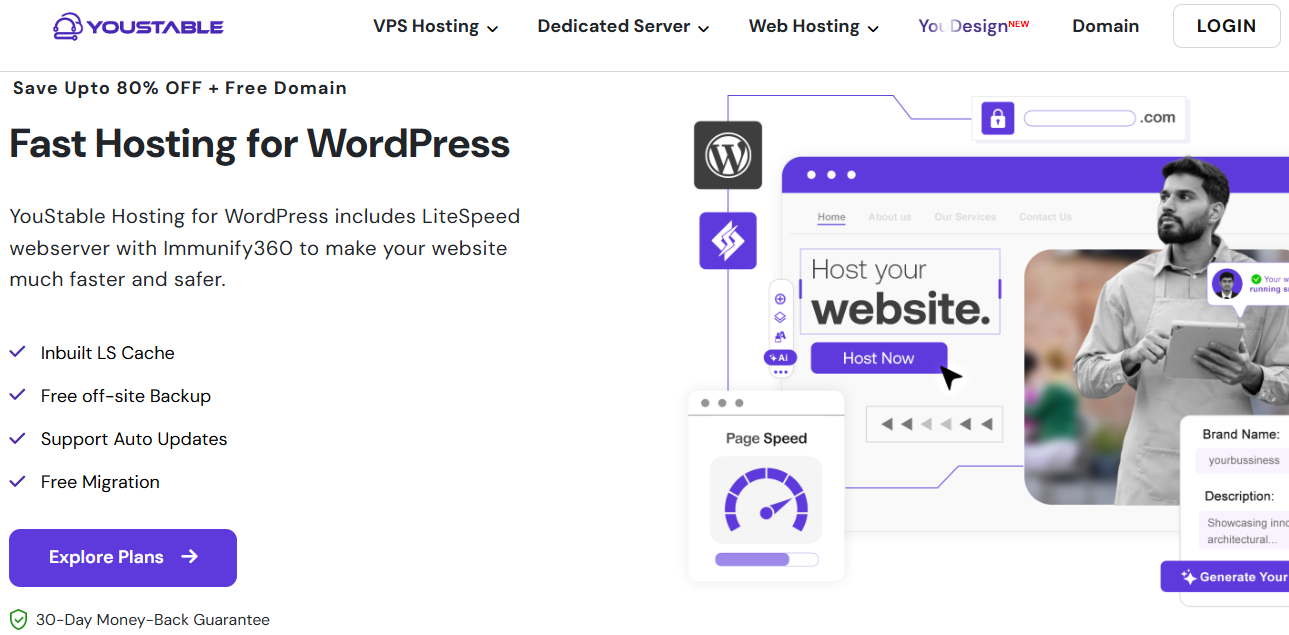
- Visit the YouStable website and open the WordPress hosting section.
- Choose a beginner friendly plan that includes NVMe storage and LiteSpeed.
- Select a server location closest to your Bengali audience (e.g., India region).
- Register a new domain or connect your existing domain by updating nameservers.
- Complete checkout and access your hosting control panel/dashboard.
- Install WordPress using the 1‑click installer (Softaculous or similar).
- Enable free SSL and activate the LiteSpeed Cache plugin.
YouStable’s India based servers, WordPress friendly support, and performance tuned stack make it a practical choice for regional bloggers who want fast load times and stable uptime without overspending. Pick annual billing for best value and free domain offers when available.
| YouStable WordPress Hosting Plans & Pricing Table in 17th February 2026 | ||||
|---|---|---|---|---|
| Plans Name | Websites | Storage | Bandwidth | Monthly Pricing |
| DaStart | 1 | 50GB NVMe SSD | Unmetered | $0.65/mo |
| DaProfessional | 25 | 100GB NVMe SSD | Unmetered | $1.31/mo |
| DaElite | Unlimited | 200GB NVMe SSD | Unmetered | $2.42/mo |
Install WordPress & Set Up Your Bengali Blog
WordPress Installation
- Use a 1 lick installer (Softaculous/Installatron) and select the https version.
- Force HTTPS from day one to avoid mixed content issues.
- Set a strong admin username and password; avoid “admin” as the username.
Basic WordPress Settings
- Site language: Bengali (বাংলা)
- Timezone: Asia/Kolkata (or local time zone for your audience)
- Permalinks: Post name (clean URLs for better CTR and sharing)
Essential Pages
- About
- Contact
- Privacy Policy
- Disclaimer
Essential Plugins (Lean Stack)
- SEO: Rank Math or Yoast
- Cache: LiteSpeed Cache (configure QUIC.cloud CDN if available)
- Security: Wordfence or Solid Security
- Backup: UpdraftPlus (schedule to remote storage)
- Image optimization: ShortPixel or Imagify
- Forms: WPForms or Contact Form 7
- SMTP: FluentSMTP (connect reliable email provider)
Typography & Bengali UX Tips
Use readable Bengali web fonts (e.g., Noto Sans Bengali, Hind Siliguri) and adequate line height. Avoid legacy ASCII fonts (e.g., old Bijoy encodings) that break SEO and accessibility; stick to Unicode. For typing, Avro/Probhat keyboards work smoothly with the WordPress editor. Keep slugs short English slugs are fine for shareability; your on page headings and content can stay fully in Bangla.
Best Blogging Platform to Start a Blog in Bengali
Choose a platform that gives you control over SEO, speed, and monetization. WordPress balances ease of use with enterprise rade scalability as you grow.
Why WordPress: It’s the best option for Bengali blogging thanks to full control over URLs, metadata, schema, and performance optimization. You can use thousands of themes and plugins, and you’re not locked into a single ecosystem. Monetization is flexible AdSense, affiliates, sponsors, memberships, and more.
Blogger/Medium (Quick comparison): Blogger is simple but limited in SEO and scalability. Medium is excellent for distribution but restricts branding and monetization. If your goal is a long term asset you fully own, WordPress on fast NVMe hosting wins.
Content Ideas & Choosing the Right Niche
Balance evergreen topics (steady traffic) with timely, trending content (spikes). Validate ideas via Google Trends, Bengali autosuggestions, and “People Also Ask” questions. Ensure the niche aligns with your expertise and monetization plan.
- Evergreen: Government exams, language learning, recipes, parenting, personal finance
- Trending: UPI/Fintech updates, cricket series, movie/OTT reviews, smartphone launches
- Regional: West Bengal travel, Kolkata food, Bangladesh local business guides, cultural events
- Problem first: “কিভাবে” guides that solve a clear pain point in Bangla
Pick one core niche to build topical authority (e.g., “Bangla exam prep for WBPSC”), then expand into adjacent subtopics. This structure helps you interlink and signal expertise to Google’s knowledge graph.
Importance of Consistency and Patience
Blogging compounds. Realistically, expect 3-6 months for initial traction and 6-12 months to build authority assuming weekly publishing and continuous optimization. Use a simple loop: publish, analyze (Search Console), refresh, republish. Small iterative improvements beat sporadic bursts.
How to Write SEO Friendly Content for a Bengali Blog
Write for humans first, then optimize for search engines with clean structure.
Use clear headings, short paragraphs, and native language examples throughout.
Step 1. Write Original & Valuable Content
Explain concepts with local context and examples in Bangla. If you use AI tools, treat outputs as drafts and add your expertise, screenshots, data, and personal experience. Avoid copying from other sites; Google’s helpful content signals favor first hand knowledge, clarity, and depth.
Step 2. Keyword Research (Language + Regional)
- Use Google Autocomplete and “People Also Ask” in Bengali for intent clues.
- Target long tail queries like “কিভাবে GST রেজিস্ট্রেশন করবেন ধাপে ধাপে”.
- Map regional modifiers: Kolkata/Howrah/Sylhet/Dhaka to capture local demand.
- Check competitors’ headings and FAQs; fill gaps they missed.
Collect clusters of related keywords and build topic hubs. Example hub: “UPI in Bangladesh/India,” covering setup, limits, safety, bank support, and troubleshooting in separate posts interlinked together.
Step 3. On Page SEO
- Use a compelling Bengali title (and an English slug if you prefer).
- Structure with H2/H3 headings; answer the main query in the first 80–120 words.
- Add internal links to related posts and a “Further Reading” block at the end.
- Write meta descriptions in Bangla that promise a clear outcome.
- Add schema (Article, FAQ, Breadcrumb) via Rank Math/Yoast.
Step 4. Use Images & Internal Linking
- Compress images (WebP/AVIF) and lazy load for faster LCP.
- Use descriptive alt text in Bangla for accessibility and image search.
- Interlink new posts to your cornerstone guides to build topical authority.
- Create category hubs and link all relevant posts back to the hub.
Step 5. Update Content Regularly
Refresh posts every 3-6 months fix outdated steps, add new data, and resubmit in Search Console. In 2026, content freshness, user engagement, and task completion signals matter. Keep tutorials accurate as policies, apps, and interfaces evolve.
How to Rank Your Bengali Blog on Google
Rankings improve when your page best satisfies search intent with speed and clarity. Focus on topical depth, internal linking, Core Web Vitals, and credible signals.
Here are seven ranking factors that move the needle for new Bengali blogs:
- Search intent match: Align content format with user intent (how to, checklist, comparison). Put the answer upfront, then details.
- Topical authority: Build clusters around one niche. Publish hubs and spokes with strong interlinking.
- Internal linking: Use descriptive anchor text. Link upward to pillars and sideways to related posts.
- Page speed & Core Web Vitals: Tune INP, LCP, and CLS via LiteSpeed Cache, image optimization, and CDN.
- EEAT signals: Add an author bio with credentials, cite sources, and show screenshots/data from your own tests.
- Content freshness: Update key posts when policies, fees, exam patterns, or app UIs change.
- Natural backlinks: Earn mentions via original research, templates, local directories, and collaborations no spammy link schemes.
7 Ways to Make Money from a Bengali Blog in 2026
Diversify early so your revenue doesn’t depend on a single network or season. Choose monetization that fits your niche, audience, and content lifecycle.
- Google AdSense: Ideal for informational traffic. Focus on fast pages, clean layout, and strong content quality for approval. Test auto ads vs. manual placements and keep intrusive ads minimal to protect UX and rankings.
- Affiliate marketing: Promote relevant tools, books, courses, or local services with honest reviews and tutorials in Bangla. Disclose affiliations, compare alternatives, and include pros/cons to maintain trust and improve conversions.
- Sponsored posts: After you gain traffic and niche authority, brands will approach you. Create a media kit, define pricing, and keep editorial independence clearly label sponsored content to comply with guidelines.
- Digital products: Sell Bengali ebooks, checklists, templates, or micro courses. Start with one high value product solving a specific problem and use email lists to launch and upsell.
- Freelancing or services: Offer consulting, writing, translation, or local SEO for Bengali businesses. Your blog acts as a portfolio and lead magnet.
- Local business leads: Create city or district specific guides; monetize with directory listings, lead referrals, or partnerships with local vendors.
- YouTube + blog combo: Repurpose posts into Bangla videos and embed them. Cross promote to compound reach and diversify monetization with YouTube ads and sponsorships.
FAQs
How much does it cost to start a Bengali blog?
Expect roughly $30-$80/year for a domain and $40-$120/year for quality NVMe hosting. Many hosts include a free SSL and sometimes a free first year domain. Premium themes and plugins are optional; start lean and upgrade as you grow.
Which is better for Bengali blogs WordPress or Blogger?
WordPress wins for SEO control, performance tuning, and monetization flexibility. Blogger is simpler but limited. If you’re serious about long term growth and brand ownership, choose WordPress on fast hosting.
Can I use Bengali titles with English URLs?
Yes. It’s common to write titles/headings in Bangla while keeping short English slugs for shareability. This does not hurt SEO if content quality and internal linking are strong.
How long does it take to get AdSense approval for a Bangla blog?
Typically 2–8 weeks, assuming you have 10–20 high quality posts, clear navigation, essential pages, HTTPS, and fast load times. Avoid copied or thin content and ensure your site is fully usable on mobile.
What Bengali fonts are best for readability?
Noto Sans Bengali, Noto Serif Bengali, and Hind Siliguri are reliable, Unicode compliant choices. Keep adequate line height and font sizes for mobile users, and avoid legacy ASCII fonts that break SEO and accessibility.
Do I need a CDN for a new Bengali blog?
If your audience is regional, a nearby data center may be enough initially. Add a CDN like Cloudflare when you start getting traffic from multiple countries or want to improve global performance and security.
What are the most profitable niches for Bengali blogs?
Government exams, personal finance/fintech, tech reviews, local travel/food, and career skills tend to monetize well. Profitability depends on search demand, affiliate availability, and your depth of expertise.
Conclusion
Regional language blogging is a long term opportunity, and Bengali sits at the heart of that shift. With a focused niche, fast hosting, WordPress configured for Bangla, and a lean plugin stack, your site can deliver the helpful content Google and readers want in 2026.
Start now: pick a brandable domain, set up NVMe hosting (YouStable is a solid option for India based performance), and publish your first helpful post this week. Consistency, clarity, and real world expertise will compound your traffic, trust, and income over time.