To start a blog in Konkani in 2026, pick a clear niche, register a brandable domain, and choose fast NVMe based WordPress hosting with an India or nearby data center. Install WordPress, set site language to Konkani, select the script you’ll publish in (Devanagari or Roman), and configure SEO, caching, backups, and security.
Publish helpful, original content, optimize for search intent, build internal links, and monetize via AdSense, affiliates, and regional sponsors. Blogging in Konkani can feel daunting if you’re starting from scratch.
You may wonder which script to write in, how to attract readers beyond Goa, or whether advertisers value regional content. The good news: Google’s focus on localized, helpful content means Konkani blogs can win traffic with consistent, quality publishing and technical fundamentals.
This guide shows you how to start a blog in Konkani in 2026 the right way. We’ll cover domain selection, hosting, WordPress setup, SEO, Core Web Vitals, content strategy, ranking, and monetization. You’ll also learn script specific tips for Konkani (Devanagari vs Roman) and how to build topical authority in a niche.
As a senior technical SEO writer who has launched and scaled regional language sites, I’ll share practical steps and tools. Follow along to turn your Konkani blog into a durable digital asset that builds trust, traffic, and income over time.
Why You Should Start a Blog in Konkani in 2026?
Regional language audiences are growing fast across India’s mobile first internet. Konkani readers crave trustworthy local voices more than generic English summaries.
In 2026, regional language content continues to surge on Google Discover and Search. Konkani speakers in Goa, coastal Karnataka, and Maharashtra increasingly consume news, recipes, culture, finance, and how‑to guides in their mother tongue. This creates an under served content gap you can fill with a focused, quality blog.
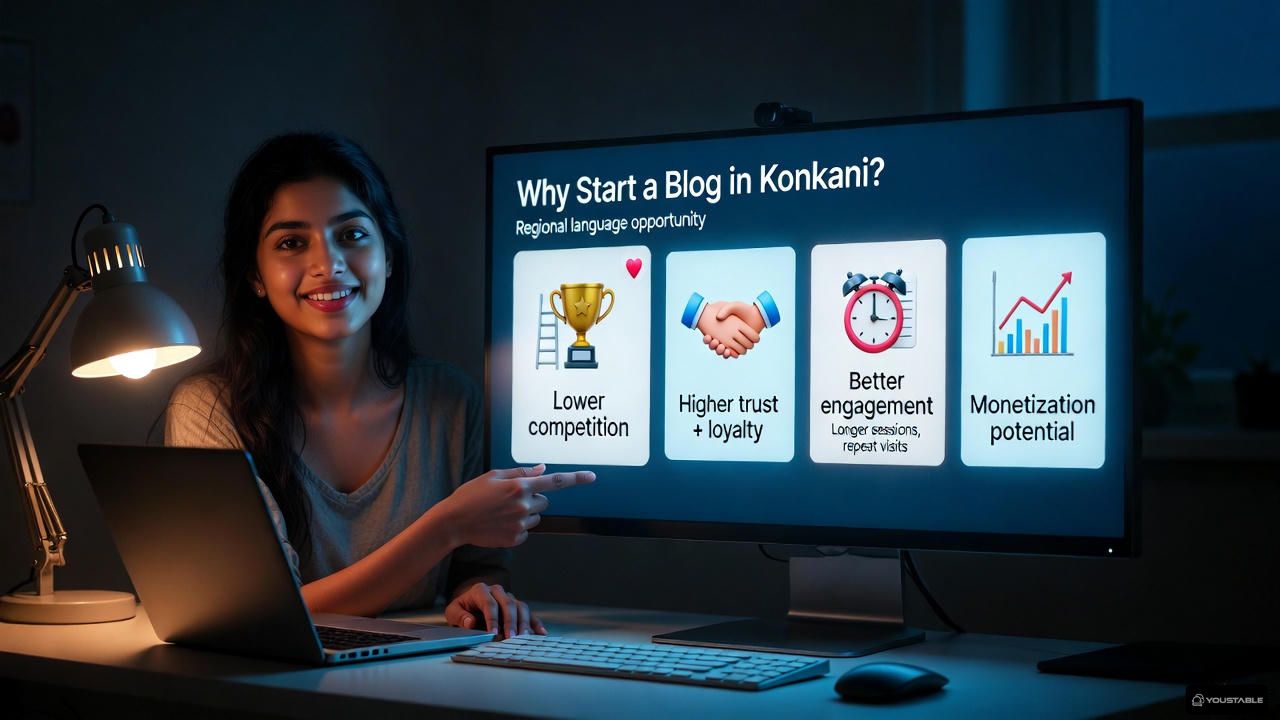
Competition for English keywords is fierce; Konkani is still wide open in most niches. Advertisers are actively targeting regional cohorts, and Google’s Helpful Content system rewards authentic, localized expertise. If you publish unique, experience led posts, you can achieve faster rankings and deeper engagement than in English.
- Lower competition and more achievable rankings
- Higher reader trust and loyalty for nativelanguage content
- Better engagement, session duration, and return visits
- Easier monetization in regional markets and with local sponsors
What Do You Need to Start a Blog in Konkani in 2026?
Keep your toolkit lean and focused so you can publish consistently. Set strong technical foundations once; compound returns come from content.
Here’s a simple checklist to go from idea to launch without overwhelm:
- A clear blogging niche and audience (e.g., Goan recipes, local finance)
- A short, memorable, brandable domain name
- Fast, reliable NVMe WordPress hosting with India servers
- WordPress installed with HTTPS, caching, backups, and security
- Basic SEO setup (SEO plugin, sitemaps, schema, analytics)
Next, let’s lock down domain and hosting—the backbone of performance and growth.
Choosing a Perfect Domain Name for Your Konkani Blog
Your domain is your brand. It shapes first impressions, recall, and word of mouth. Clear, memorable names make it easier for readers to type, share, and recommend your blog across Goa and Konkani speaking communities worldwide.
Keep it short, easy to pronounce, and scriptagnostic. Avoid hyphens, numbers, and awkward keyword stuffing. Your brand should survive platform changes and design tweaks.
- Keep it short and simple: easy to type and say out loud
- Avoid hyphens, numbers, and forced keyword combinations
- Pick a name that works in Devanagari and Roman contexts
- Think long term: can this name host multiple sub niches later?
Example styles:
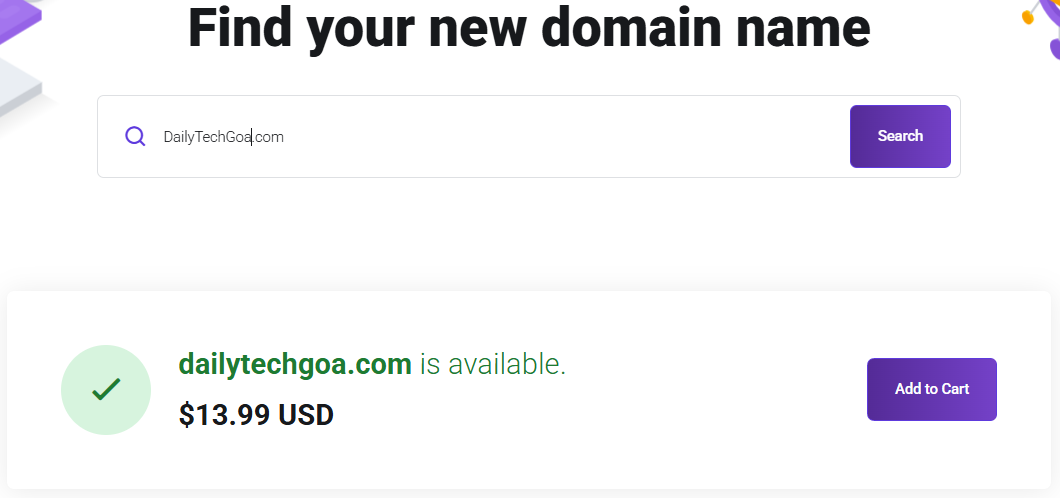
- Informational: AajKaGyan, GoenchoGuide, DailyTechGoa
- Brandable: DesiNest, LocalVoice, KonknniKartavya
Best TLDs: .com and .in offer the strongest recall and flexibility. .co.in or .blog are fine alternatives if your first choices are taken. If you’re comfortable with IDNs, you can register local script domains, but keep an English short link alias for easy sharing.
Finally, check name availability on YouTube, Instagram, Facebook, and X. Consistent handles across platforms increase authority and reduce confusion.
Free vs Paid Hosting – What’s Better for Beginners?
Free hosting looks tempting but often hurts you when it matters most: speed, uptime, and monetization. It’s tougher to pass Core Web Vitals, rank well, and get AdSense approval with restricted resources and injected ads.
- Free hosting cons: slow speeds, frequent downtime, limited storage
- SEO drawbacks: poor CWV, no server level caching, throttling
- Monetization issues: ads injected, AdSense approvals harder
Paid hosting pays for itself with reliability and growth headroom. Look for NVMe SSD storage, LiteSpeed or OpenLiteSpeed servers, free SSL, backups, and security hardening. These directly impact your rankings, user experience, and revenue potential.
- Paid hosting pros: NVMe speed, higher uptime, better caching
- Security: free SSL, firewall, malware scans, backups
- Performance: improved Core Web Vitals and crawl efficiency
Best Hosting Setup for Beginners in 2026
- NVMe SSD storage for fast I/O and reduced TTFB
- LiteSpeed/OpenLiteSpeed web server with LSCache plugin support
- India or nearest regional data center for lower latency
- CDN integration (Cloudflare APO or QUIC.cloud) for global reach
- WordPress optimized stack with HTTP/2 or HTTP/3 and Brotli compression
With this foundation, hitting LCP under 2.5s and CLS under 0.1 becomes realistic on 4G/5G networks common in your audience.
Set Up Hosting with YouStable – (Step-by-Step)
Below is a streamlined setup flow used by many regional creators. Use it as a checklist and adapt to your budget and goals.
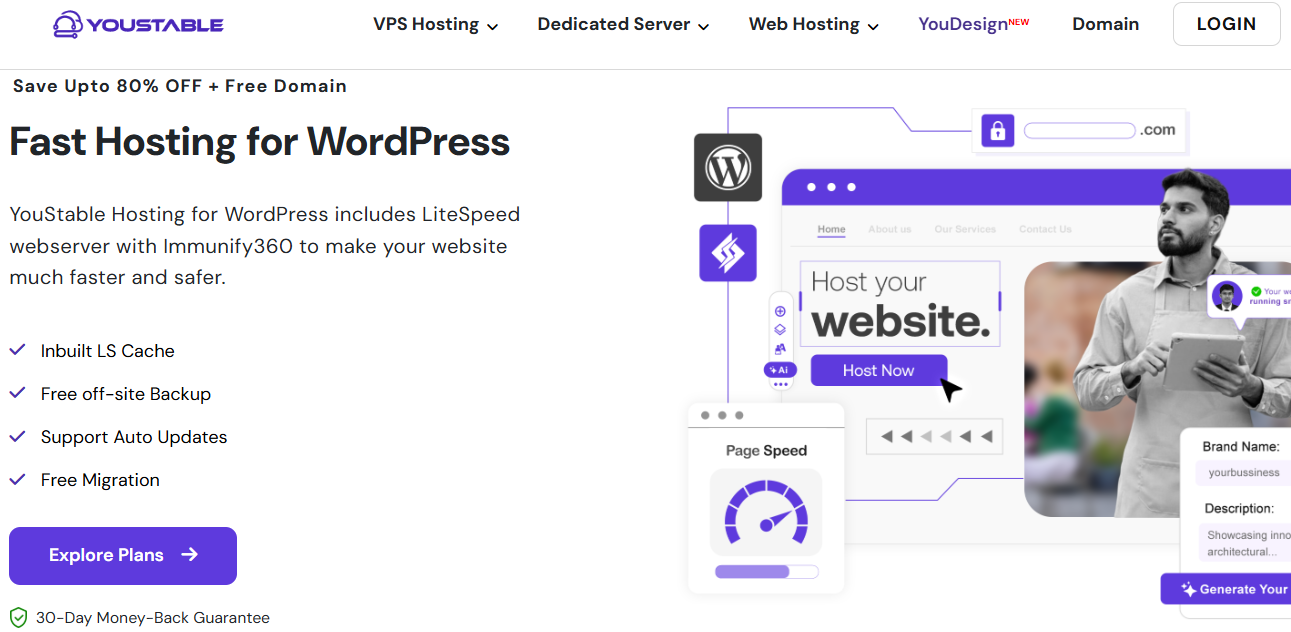
- Visit the YouStable website
- Choose a beginner friendly WordPress hosting plan
- Select the server location closest to your audience (India preferred)
- Register a new domain or connect your existing one
- Complete checkout and open your hosting dashboard
- Install WordPress using the 1 click installer (Softaculous/Installatron)
- Enable free SSL and activate the LiteSpeed Cache plugin
- Turn on automatic backups and basic WAF/security features
YouStable’s India based servers and WordPress tuned support stack are helpful for regional bloggers, especially when optimizing for Core Web Vitals and multilingual SEO. Choose the plan that fits your expected traffic and media needs.
| YouStable WordPress Hosting Plans & Pricing Table in 2026 | ||||
|---|---|---|---|---|
| Plans Name | Websites | Storage | Bandwidth | Monthly Pricing |
| DaStart | 1 | 50GB NVMe SSD | Unmetered | $0.65/mo |
| DaProfessional | 25 | 100GB NVMe SSD | Unmetered | $1.31/mo |
| DaElite | Unlimited | 200GB NVMe SSD | Unmetered | $2.42/mo |
Install WordPress & Set Up Your Konkani Blog
Install WordPress with a 1 click installer and secure it from day one. Keep admin credentials strong and unique. Use HTTPS everywhere to build trust and avoid mixed content issues.
Recommended basic settings:
- Site Language: Konkani (choose appropriate option; set post language with plugins if needed)
- Timezone: Asia/Kolkata
- Permalinks: Post name (clean URLs for better CTR and indexing)
Create essential pages to establish credibility and meet AdSense/affiliate requirements.
- About
- Contact
- Privacy Policy
- Disclaimer
Install a lean, performance first plugin stack. Avoid overlap: one SEO plugin, one cache plugin, one security suite.
- SEO: Rank Math or Yoast
- Cache: LiteSpeed Cache (pair with LiteSpeed/OpenLiteSpeed server)
- Security: Wordfence or Solid Security
- Backup: UpdraftPlus
- Images: ShortPixel or Imagify
- Forms: WPForms or Contact Form 7
- SMTP: FluentSMTP for reliable email delivery
Konkani Scripts: Devanagari vs Roman vs Kannada
Konkani is written in multiple scripts. Devanagari is official in Goa and standard for schools and publications. Roman Konkani is widely used online and on social platforms. In coastal Karnataka, you may see Konkani in Kannada script. Pick one script for consistency, then consider cross script summaries if your audience is broad.
Fonts, Input & Readability
Use Unicode web safe fonts. For Devanagari, Noto Sans Devanagari or Mukta Devanagari render well across devices. For Roman Konkani, any modern Latin font with good diacritic support works. Set 16-18px base font size, 1.6-1.8 line height, and clear contrast to improve readability on mobile.
Transliteration & User Experience
If you serve both Devanagari and Roman audiences, consider a toggle or duplicate posts with canonicalization. Don’t auto translate: write natively for each audience. Clearly label versions and keep slugs in English for ease of sharing and link management.
Best Blogging Platform to Start a Blog in Konkani
Pick a platform that gives you SEO control, speed, and future monetization options.
WordPress leads on flexibility, multilingual support, and plugin ecosystem depth.
WordPress.org is the best choice for Konkani bloggers because it offers full control over SEO, Core Web Vitals, caching, and monetization. You can use translation plugins, set language attributes, and implement JSON LD schema easily. Themes and plugins are abundant, enabling growth without starting over.
Blogger is free but limited on performance, schema, and advanced SEO. Medium is great for discoverability but restricts monetization and brand control. If you aim to build a lasting asset and income stream, self hosted WordPress wins in 2026.
Content Ideas & Choosing the Right Niche
Pick a niche where you have experience and can produce consistent, useful content. Evergreen topics build compounding traffic; trending topics give short term spikes. Blend both to stabilize growth and stay relevant.
- Evergreen: Goan cuisine, personal finance in Goa, Konkani literature notes
- Local Guides: Festivals, travel itineraries, heritage walks, fish market tips
- Practical: Government schemes explained, exam prep in Konkani, farming tips
- Tech: How tos for seniors in Konkani, digital payments, local apps
Monetization alignment matters. Niches like finance, travel, cooking, and education have robust affiliate and sponsorship opportunities. Validate interest with Google Trends and YouTube search before committing.
Importance of Consistency and Patience
Blogging is compounding. Expect 3–6 months to see steady traffic if you publish weekly and optimize. Within 12 months, topic clusters and internal links can elevate entire sections of your site in search.
Adopt the publish → analyze → improve loop. Update headlines, add FAQs based on PAA, enhance images, and tighten intros. Each iteration improves click through and dwell time signals that help rankings.
How to Write SEO Friendly Content for a Konkani Blog
Write first for readers, then optimize for search engines with clean structure. Target search intent, use natural language, and keep mobile readability high.
Step 1. Write Original & Valuable Content
Share first hand experience and examples relevant to Konkani speakers. Avoid thin rewrites or auto translated drafts. Demonstrate E‑E‑A‑T: show your experience, cite sources, and include practical steps and photos where possible.
Step 2. Keyword Research (Language + Regional)
Use Google autocomplete and People Also Ask to capture natural queries. Combine Konkani terms with English/hinglish variants and local place names (e.g., Panjim, Margao, Karwar). Target long tail phrases for quicker wins and higher intent.
- Mine YouTube search suggestions in Konkani/Roman Konkani
- Check Google Trends for seasonality (festivals, tourism peaks)
- Build topic clusters around core pillars (e.g., Goan seafood recipes)
Step 3. On Page SEO
Craft compelling titles and use H2/H3 structure for scannability. Add internal links to related posts to strengthen topical authority. Write meta descriptions that reflect intent and include a clear benefit or outcome.
Use schema where relevant (Article, FAQ, HowTo, Recipe). Ensure the page’s language is accurately declared so search engines understand your content.
Step 4. Use Images & Internal Linking
Compress and properly size images. Add descriptive alt text in Konkani where appropriate. Interlink to cornerstone posts and create hub pages for clusters. This improves crawl paths and distributes link equity.
Step 5. Update Content Regularly
Refresh posts quarterly: update facts, improve media, answer new PAAs, and enhance examples. Content freshness supports discoverability and rankings, especially for newsy or seasonal topics.
Set Language Attributes for Konkani (Recommended)
Use BCP‑47 language tags for Konkani to clarify script and region. For Devanagari, use gom‑Deva‑IN. For Roman, use gom‑Latn‑IN. Apply in schema and, if customizing, ensure the HTML lang attribute matches.
{
  "@context": "https://schema.org",
  "@type": "BlogPosting",
  "inLanguage": "gom-Deva-IN",
  "headline": "Title of your Konkani post",
  "author": {
    "@type": "Person",
    "name": "Your Name"
  },
  "mainEntityOfPage": "https://example.com/your-post/"
}
How to Rank Your Konkani Blog on Google
Rankings follow intent match, expertise signals, and strong site experience.
Focus on topical depth, smart internal links, and fast, stable pages.
Here are the core factors to prioritize in 2026:
- Search intent match: Align posts with what users want how to, list, recipe, or explainer. Mirror SERP patterns.
- Topical authority: Build clusters around pillars (e.g., seafood recipes → curries, grills, chutneys). Publish supporting posts and link to hubs.
- Internal linking: Add contextual links from new to old posts and vice versa. Use descriptive anchors in Konkani.
- Page speed & Core Web Vitals: Optimize LCP, CLS, and INP. Use server caching, image optimization, lazy loading, and a CDN.
- E‑E‑A‑T signals: Show author bios, credentials, local experience, and cite credible sources. Add About and Contact pages.
- Content freshness: Update high traffic posts and seasonal guides before peaks (festivals, tourism seasons).
- Natural backlinks: Earn links via unique data, original photos, and collaborations with Goan creators and local media.
7 Ways to Make Money from a Konkani Blog in 2026
Diversify revenue so seasonality or algorithm shifts don’t hurt your income. Start with simple monetization, then add higher ROI streams as you grow.
1. Google AdSense
Once you have 20-30 high quality posts and steady traffic, apply for AdSense. Use responsive ad units and place them non intrusively. Fast, mobile friendly pages with clear navigation increase RPMs and approval chances.
2. Affiliate Marketing
Promote relevant products: kitchen tools for recipe blogs, local tours for travel, or finance apps for money guides. Disclose affiliations, compare options fairly, and prioritize reader trust over short term commissions.
3. Sponsored Posts & Local Brand Deals
Pitch Goan and coastal Karnataka businesses cafés, homestays, events, and artisans. Create media kits with your audience demographics, traffic, and engagement metrics. Maintain editorial standards and mark sponsored content clearly.
4. Digital Products: Ebooks & Courses
Package your best guides into Konkani ebooks or minicourses. Use WordPress LMS plugins or deliver via email. Evergreen topics like traditional recipes, exam prep, or budgeting in Goa convert well with loyal audiences.
5. Freelancing or Services
Offer writing, translation, content marketing, or local SEO services to Goan businesses. Your blog becomes a portfolio that demonstrates expertise, style, and audience understanding.
6. Local Business Leads
Create location pages and guides that attract nearby searches. Capture leads with contact forms and WhatsApp click to chat buttons. Partner with service providers and earn referral fees.
7. YouTube + Blog Combo
Repurpose blog posts into Konkani videos and shorts. Embed videos in posts to increase dwell time and crosspromote. This two way flywheel improves reach, builds trust, and unlocks YouTube monetization.
FAQs
Is Konkani supported on WordPress?
Yes. WordPress supports Unicode content, and you can set the site language and fonts to render Konkani correctly. For script specific control, use BCP‑47 tags (e.g., gom‑Deva‑IN) in schema and choose web safe fonts.
Which script should I use for a Konkani blog?
Pick one primary script for consistency. Devanagari is standard in Goa; Roman is popular online. If your audience is mixed, create separate versions with clear labels and canonicalization, or offer summaries in the alternate script.
How long will it take to rank a new Konkani blog?
Expect 3–6 months for early traction with weekly publishing and sound SEO. Strong topical clusters, fast pages, and genuine expertise can accelerate results, especially in low competition niches.
Can I get AdSense approval for a Konkani blog?
Yes. Publish 20–30 original posts, complete legal pages, ensure fast loading with HTTPS, and avoid policy violations. Regional language sites are eligible if they meet quality and content standards.
Do I need a CDN for a regional blog?
Recommended but not mandatory. A CDN improves global reach and stabilizes Core Web Vitals. If your audience is mostly in India, choose an India data center and add a CDN as you scale.
What are the best plugins for performance on WordPress?
LiteSpeed Cache with a LiteSpeed/OpenLiteSpeed server, an image optimizer (ShortPixel/Imagify), and a lightweight theme. Keep plugins minimal and avoid overlaps to maintain speed and stability.
Should I write in Konkani only or mix with English?
Write natively in Konkani for trust and SEO alignment. Occasional English terms are fine for tech topics. If mixing heavily, consider a glossary or a bilingual strategy with clear structure.
Conclusion
Konkani blogging in 2026 is a high upside opportunity if you pair cultural authenticity with solid technical setup. Fast hosting, clean structure, and consistent, experience led content will set you apart from generic summaries.
Choose your niche, secure a brandable domain, set up WordPress on NVMe hosting, and publish your first three posts this week. With patience and iteration, your Konkani blog can become a trusted resource and a lasting digital asset.