To start a blog in India in 2026, choose a niche, register a brandable .in or .com domain, and buy fast NVMe hosting on India based LiteSpeed servers. Install WordPress with SSL, set your site language to Hindi or your regional language, and configure SEO, cache, and security plugins.
Publish helpful content mapped to search intent, optimize Core Web Vitals, build topical authority, and monetize via AdSense, affiliate programs, and services while tracking growth in GA4 and Search Console.
Blogging in India is booming in 2026 as users prefer content in Hindi and regional languages across mobile and voice search. If you’re planning to build a long term digital asset, a blog can compound traffic, trust, and income for years.
In this step by step guide, you’ll learn exactly how to start a blog in India in 2026: picking a niche, choosing a domain, selecting the right hosting, installing WordPress, setting up SEO, writing content that ranks, and monetizing with multiple streams.
As a senior technical SEO writer with 12+ years across hosting, WordPress, and cybersecurity, I’ll share real world, India specific recommendations so you launch right, avoid common pitfalls, and grow sustainably.
Why You Should Start a Blog in Hindi in 2026?
India’s internet users increasingly prefer content in native languages, especially on mobile. In 2026, helpful, localized content wins trust, engagement, and monetization faster than English.
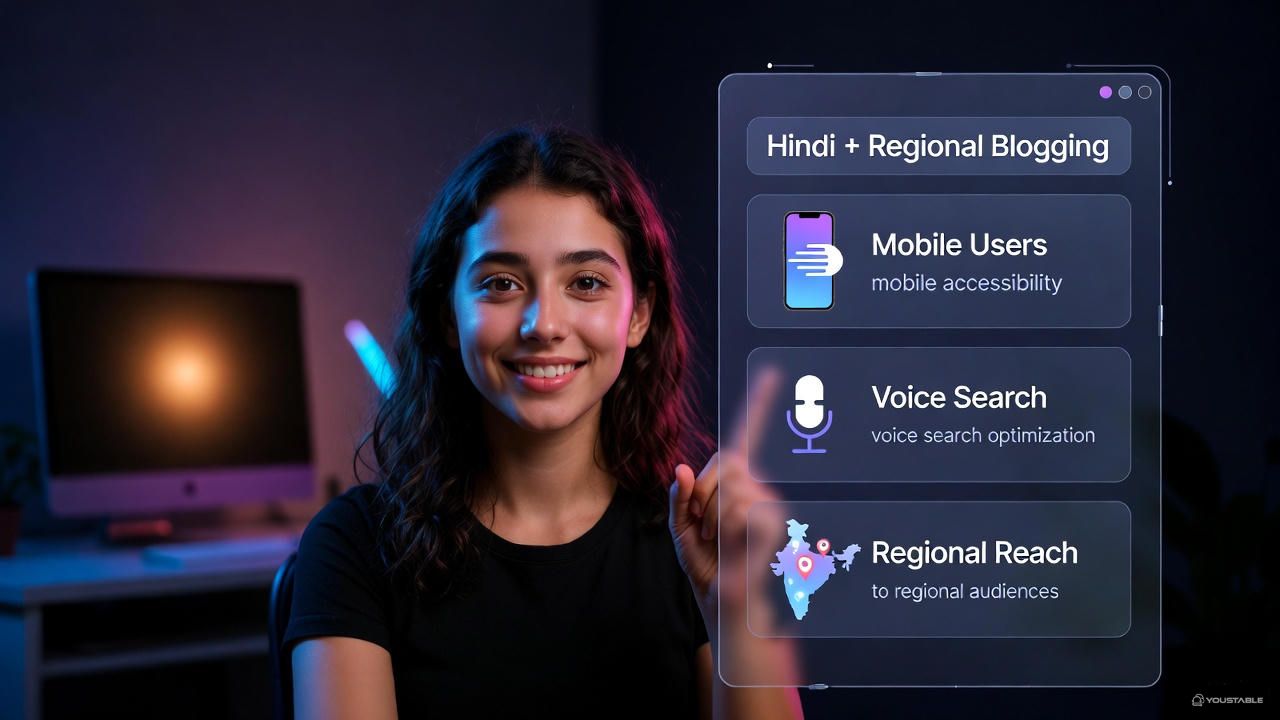
India’s next billion users consume content in Hindi, Tamil, Telugu, Bengali, Marathi, Kannada, Malayalam, Gujarati, Punjabi, Odia, and more. With Jio driven broadband and affordable smartphones, regional language search, YouTube, and Google Discover are exploding. Google’s helpful content systems also reward content written for real people in their preferred language.
Competition in Hindi & regional niches is still lower compared to English. That means higher chances of ranking, better click through rates, and stronger community building for creators who solve local problems with clarity.
Brands, advertisers, and marketplaces want deeper regional penetration. If your blog earns trust in a language community, your CPMs, sponsorships, and affiliate conversions can outperform generic English blogs.
- Lower competition, higher ranking opportunities
- Stronger audience trust and loyalty in native language
- Higher engagement, session duration, and returning visitors
- Easier monetization in regional markets and local niches
What Do You Need to Start a Blog in Hindi in 2026?
Start with a clear niche, a brandable identity, and fast India based infrastructure. Then configure WordPress, optimize for SEO, and publish consistently around user intent.
- A clear blogging niche and target audience
- A short, brandable domain name
- Fast, reliable NVMe hosting with India or nearby data center
- WordPress with SSL, cache, and basic security
- SEO setup (permalinks, sitemap, schema, analytics)
Choosing a Perfect Domain Name for Your Hindi Blog
Importance of Domain Branding: Your domain is your brand’s first impression. A memorable name aids word of mouth, short URLs look trustworthy, and consistent naming across platforms boosts authority. Avoid confusing spellings; prioritize simplicity and recall.
Domain Name Tips for Hindi: Keep it short, easy to pronounce, and language consistent. Avoid hyphens, numbers, and keyword stuffing that looks spammy. Focus on brandability with a subtle topical hint.
Example styles:
- Informational: AajKaGyan, DesiFinance, RozgarGuide
- Brandable: DesiNest, LocalVoice, NukkadNotes
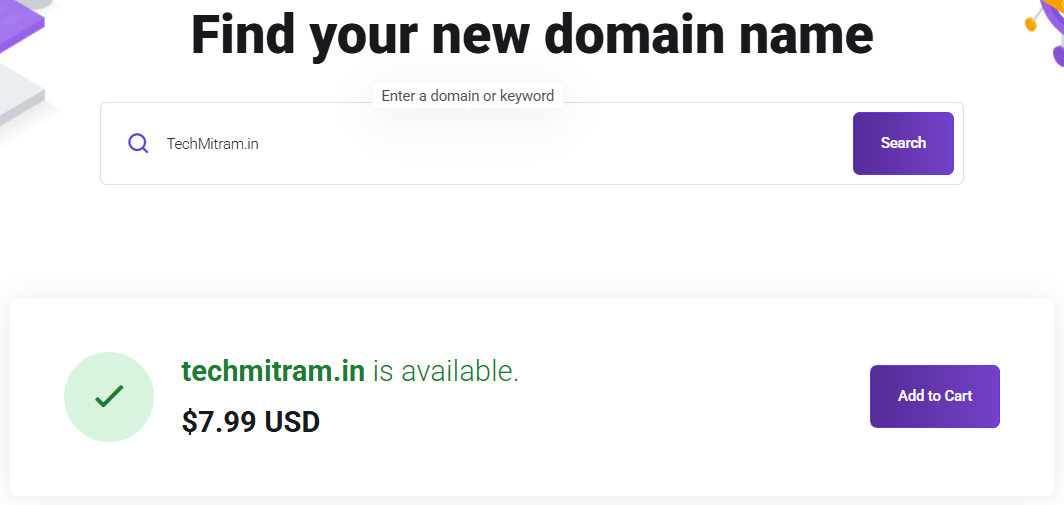
- Descriptive blends: SwadKitchen, YatraDiaries, TechMitram
Best TLD Choices: Preferred: .com, .in (trusted, versatile, great for India). Acceptable: .co.in, .blog for thematic appeal. Advanced users may consider IDNs (Internationalized Domain Names) in local scripts for branding, but maintain an English short link variant for shareability and email.
Social Media Consistency: Before buying, check availability on YouTube, Instagram, Facebook, and X. Consistent handles create a frictionless brand journey across platforms and strengthen your E-E-A-T signals.
Free vs Paid Hosting – What’s Better for Beginners?
Free Hosting (Why to Avoid): Free plans come with slow shared resources, frequent downtime, forced ads, and no guaranteed support. They often miss essentials like reliable SSL, backups, or server level caching hurting Core Web Vitals and SEO. AdSense approvals and affiliate programs may also reject slow or ad injected sites.
Paid Hosting (Why It’s Worth It): Choose NVMe SSD hosting with LiteSpeed/OpenLiteSpeed servers. You’ll get better uptime, server level cache, free SSL, routine backups, and stronger security hardening. That translates into faster LCP, stable CLS, and good INP directly impacting rankings and revenue. It’s the foundation for long term growth.
Best Hosting Setup for Beginners in 2026
- NVMe SSD storage for high IOPS and low latency
- LiteSpeed/OpenLiteSpeed web server with LSCache
- India or nearby data center (Mumbai, Delhi, Singapore) for < 50 ms latency
- CDN integration (Cloudflare or QUIC.cloud) with HTTP/3 and Brotli
- WordPress optimized stack (PHP 8.2/8.3, OPcache, Redis Object Cache)
- Free SSL, daily backups, and malware protection
- Email deliverability via SMTP to avoid lost contact leads
Set Up Hosting with YouStable – (Step by Step)
For regional language blogs targeting Indian readers, India based servers reduce latency and improve CWV. YouStable offers WordPress friendly plans with NVMe and LiteSpeed, making it easy for beginners to launch fast sites.
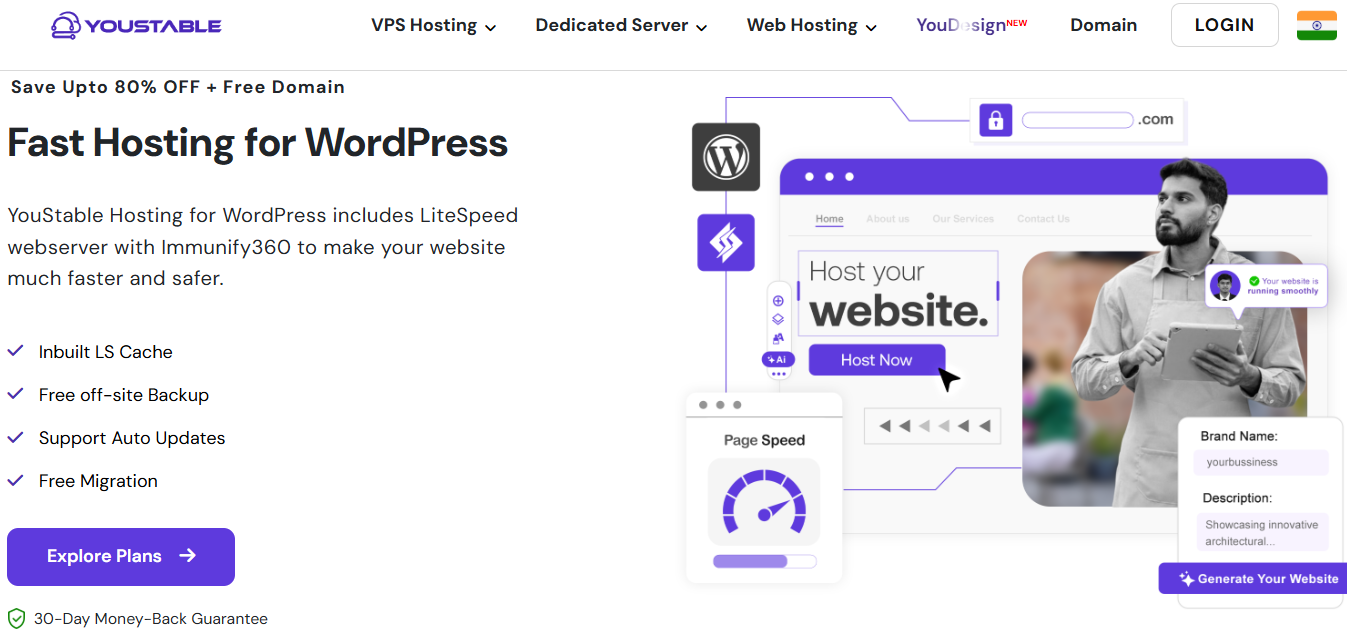
- Visit the YouStable website and open WordPress hosting plans.
- Pick a beginner plan with NVMe and LiteSpeed; select an India server location.
- Register a new .in or .com domain or connect an existing one via DNS.
- Complete checkout and access the control panel or dashboard.
- Use the 1‑click installer (Softaculous/Installatron) to install WordPress.
- Enable free SSL (HTTPS) and activate LiteSpeed Cache plugin.
- Turn on automatic updates and schedule daily backups.
YouStable is ideal for regional bloggers due to fast India based servers, responsive WordPress support, and performance optimized hosting that meets Core Web Vitals benchmarks out of the box.
| YouStable WordPress Hosting Plans & Pricing Table in 24th October 2026 | ||||
|---|---|---|---|---|
| Plans Name | Websites | Storage | Bandwidth | Monthly Pricing |
| DaStart | 1 | 50GB NVMe SSD | Unmetered | $0.65/mo |
| DaProfessional | 25 | 100GB NVMe SSD | Unmetered | $1.31/mo |
| DaElite | Unlimited | 200GB NVMe SSD | Unmetered | $2.42/mo |
Install WordPress & Set Up Your Hindi Blog
WordPress Installation
Use your host’s 1 click installer, set your admin username (avoid “admin”), and use a strong password. Enable HTTPS from day one to avoid mixed content issues and to qualify for modern browser features and SEO signals.
Basic WordPress Settings
Set site language to Hindi (or your chosen language). Set timezone to Asia/Kolkata for analytics accuracy. Use “Post name” permalinks for clean URLs. Turn off discussion pings if you don’t need them. Configure user profiles and ensure Gravatar/author info is correct.
Essential Pages
Create core trust pages early About, Contact, Privacy Policy, and Disclaimer. These improve E-E-A-T, help with AdSense/affiliate approvals, and build reader confidence.
Essential Plugins (Lean, Proven Stack)
Don’t overload plugins. Start lean, then add as needed:
- SEO: Rank Math or Yoast (sitemaps, schema, meta)
- Cache: LiteSpeed Cache (server level integration)
- Security: Wordfence or Solid Security
- Backup: UpdraftPlus (S3/Drive storage)
- Images: ShortPixel or Imagify (WebP/AVIF)
- Forms: WPForms or Contact Form 7
- SMTP: FluentSMTP or Post SMTP (improves email deliverability)
Best Blogging Platform to Start a Blog in Hindi
Pick a platform that gives you SEO control, performance, and monetization freedom. WordPress leads for flexibility, while Blogger/Medium suit hobby use or testing ideas.
Why WordPress: You own your domain and hosting, control your database and performance stack, and implement advanced SEO (schemas, internal linking, redirects). You can add commerce, communities, or learning portals later without platform lock in. With LiteSpeed + NVMe on an India data center, you’ll pass Core Web Vitals sooner.
Blogger: Simple and free, but limited control over performance, SEO, and monetization formats. Migrations can be messy when you outgrow it.
Medium: Great distribution for essays, but you don’t control ads or SEO structure, and you forfeit brand equity on your own domain. Good for audience borrowing not for building a durable business asset.
Content Ideas & Choosing the Right Niche
Pick a niche at the intersection of expertise, demand, and monetization. Evergreen niches (personal finance, education, careers, food, travel, health, tech how tos) compound traffic. Trend led topics (new gadgets, local events, government schemes) can deliver spikes but need updates.
Map audience problems and search intent. For example, a Hindi career blog can cover exam prep roadmaps, state wise vacancies, and interview tips. Align keywords with monetization: AdSense for high traffic guides, affiliates for tools/courses, and services for consulting.
Importance of Consistency and Patience
Blogging compounds over months, not days. Expect 3–6 months for initial traction and 9–12 months for authority if you publish consistently, follow data, and update content. Use a publish → analyze → improve loop: watch GA4 and Search Console, prune underperformers, strengthen winners with internal links.
How to Write SEO Friendly Content for a Hindi Blog
Quality wins when posts answer real questions better than competitors. Structure your posts for scannability, topical depth, and Featured Snippets.
Step 1. Write Original & Valuable Content
Focus on clarity and usefulness over length. Explain with examples, screenshots (where possible), and step by step instructions. Avoid thin or copied content and unedited AI output. Add your real experience: tools you used, costs in INR, pitfalls to avoid, and results from your tests. That’s how you build E-E-A-T.
Step 2. Keyword Research (Language + Regional)
Start with Google autocomplete, People Also Ask, and related searches. Translate seed ideas into Hindi and regional variations, and note how users phrase queries conversationally (voice search). Target long tail queries with strong intent and low competition, like “best inverter for 2bhk in India hindi” or “UPSC essay topics in Hindi 2026”.
Use tools: Google Trends (India), Search Console (after a few posts), and freemium tools (Ubersuggest, Keyword Sheeter) for variants. Build topic clusters and pillar pages to earn topical authority.
Step 3. On Page SEO
Write titles that match intent and entice clicks. Use H2/H3s to structure answers, add FAQs to capture long tail questions, and ensure descriptive alt text on images. Keep URLs short and in one language. Add schema (Article, WebSite, BreadcrumbList, FAQPage) through your SEO plugin. Link to relevant internal pages using descriptive anchors.
On Page Essentials Checklist
- Title includes primary intent and a benefit
- Intro answers the question clearly within 80–120 words
- H2s/H3s reflect PAA questions and subtopics
- 1–2 internal links per section with descriptive anchors
- Image compression to WebP/AVIF with alt text
- FAQ section with concise, schema friendly answers
- Meta description that previews value and CTA
Step 4. Use Images & Internal Linking
Compress images (ShortPixel/Imagify) and serve WebP/AVIF. Lazy load media, preconnect to CDN, and use responsive sizes. Internally link to pillars and related posts to distribute PageRank. Create hub pages (e.g., “Complete UPSC Guide in Hindi”) and support them with in depth sub articles. This structure improves crawlability and session time.
Step 5. Update Content Regularly
Freshness matters for many Indian niches (education, govt schemes, tech). Schedule quarterly updates to fix broken links, refresh stats, and add new insights. Use Search Console to find pages slipping in average position and update them with better intros, clearer steps, and additional FAQs.
How to Rank Your Hindi Blog on Google
Rankings follow when your content satisfies intent and your site loads instantly. Focus on topical depth, internal links, and Core Web Vitals to outpace competitors.
Search intent match
Align articles to informational, navigational, or transactional intent. Inspect the current SERP types (guides, lists, videos) and mirror what works then add more clarity.
Topical authority
Build pillar pages and clusters. Cover related questions, comparisons, and how tos. Interlink thoroughly with descriptive anchors that map concepts.
Internal linking
Add contextual links from high traffic posts to newer ones. Use breadcrumbs and related posts. Keep orphaned pages to zero.
Page speed & Core Web Vitals
With LiteSpeed + NVMe, optimize LCP (<2.5s), CLS (<0.1), and INP (<200ms). Minify CSS/JS via LSCache, delay non critical JS, use critical CSS, and preload hero images.
E-E-A-T signals
Add an author bio with your expertise, cite sources, display contact info, and maintain trust pages. For YMYL topics (finance, health), be extra rigorous with references and disclaimers.
Content freshness
Update annually or quarterly, depending on the niche. Keep publication and update dates visible for transparency.
Natural backlinks
Earn links through unique data, how to visuals, and free tools/templates. Pitch relevant Indian publishers and niche communities rather than buying links.
7 Ways to Make Money from a Hindi Blog in 2026
Diversify revenue so seasonality in one channel doesn’t hurt your business. Pick monetization that fits your niche, audience stage, and content format.
1. Google AdSense
Great for high traffic informational sites. Ensure a clean layout, fast CWV, and compliant content policies. Place ads after intros and between sections; avoid intrusive formats that hurt CLS and INP.
2. Affiliate marketing
Recommend products you trust: hosting, courses, tools, local services. Use comparison guides, checklists, and case studies. Disclose affiliates to maintain trust and comply with Indian guidelines.
3. Sponsored posts
Work with regional brands seeking Hindi audiences. Publish honest reviews with clear disclosures. Offer bundled packages (blog + YouTube + social) to increase deal value.
4. Digital products
Sell ebooks, Hindi printable planners, templates, or mini courses. Use WooCommerce or Gumroad like platforms. Offer UPI payment options for frictionless Indian checkout.
5. Freelancing or services
Turn authority into consulting SEO audits, resume reviews, exam coaching, or recipe workshops. Create a Services page with a simple intake form and calendar booking.
6. Local business leads
If you cover city specific niches (food, home services, tuition), generate leads and charge per lead or a monthly retainer. Build city landing pages and rank on local intent.
7. YouTube + blog combo
Repurpose posts into videos and shorts. Embed videos back into articles to improve time on page and cross promote affiliate links in both places.
Technical Setup Essentials for Indian Bloggers
A clean technical baseline prevents hidden issues from capping your growth. Set up analytics, indexing, and performance tools early to avoid rework later.
- Search Console: Verify domain, submit XML sitemap, monitor Coverage and Enhancements.
- GA4: Track pages, events, outbound clicks, and scroll depth for content insights.
- Bing Webmaster + IndexNow: Capture additional search traffic beyond Google.
- DNS & CDN: Use Cloudflare with proxy off for initial setup; then enable HTTP/3, Brotli, and appropriate page rules.
- Email: Configure SPF, DKIM, and DMARC to prevent contact form emails landing in spam.
- Security: Enable firewall, limit login attempts, auto update plugins, and take offsite backups.
- Structured data: Article, WebSite, BreadcrumbList, Organization, and FAQPage via SEO plugin.
Compliance & Practicalities in India 2026
Build trust with transparent disclosures and basic compliance from the outset. Plan your finances with Indian tax rules in mind as your blog starts earning.
- Disclosures: Add affiliate and sponsorship disclosures as per ASCI guidelines.
- Privacy: Publish a clear privacy policy; disclose cookies/analytics tracking.
- Taxation: Report income from AdSense/affiliates under Indian tax laws. Keep invoices and payment records (PAN linked).
- Copyright: Use licensed images and fonts; attribute sources.
- User data: Use consent banners if you run ads/analytics; honor user requests.
Sample 30 Day Launch Plan (Beginner Friendly)
Ship fast with a focused calendar and minimum viable tech stack. Follow a cadence that builds topical coverage and internal links quickly.
- Week 1: Pick niche and domain, buy hosting, install WordPress, configure SSL, set up Rank Math/Yoast and LSCache, create core pages, verify Search Console/GA4.
- Week 2: Publish 3 pillar posts (1,500-2,000+ words) and 3 supporting posts each; build internal links.
- Week 3: Add images (WebP), compress, add FAQs; set up Cloudflare/QUIC.cloud; optimize CWV.
- Week 4: Publish 6-8 more posts, pitch 3 guest posts, submit sitemap, review Search Console queries, update titles/meta based on early impressions.
FAQs
How much does it cost to start a blog in India in 2026?
Expect ₹1,500–₹4,000 for a domain and the first year of beginner hosting if discounted. Quality NVMe WordPress hosting typically runs ₹150–₹500/month on annual plans.
Is Hindi blogging profitable in 2026?
Yes. Lower competition, higher engagement, and strong advertiser interest make Hindi and regional language blogs profitable with AdSense, affiliates, and sponsor deals.
Which is better: .in or .com for India?
Both work. .in is excellent for Indian audiences; .com is globally versatile. Pick the one that matches your long term audience and brand vision.
Can I start with free hosting and upgrade later?
You can, but it often hurts early SEO due to speed/downtime. Starting with NVMe + LiteSpeed on an India server accelerates rankings and monetization.
How long until I get traffic?
With consistent publishing and good SEO, expect early impressions in 4–8 weeks, steady clicks in 3-6 months, and strong authority by 9–12 months.
Do I need to write only in Hindi?
No. You can write in Hindi, Hinglish, or a mix. Just keep URLs, categories, and slugs consistent and readable. Focus on the language your audience prefers.
Which plugins are must have for beginners?
Rank Math/Yoast (SEO), LiteSpeed Cache (performance), Wordfence (security), UpdraftPlus (backups), and ShortPixel (images) form a solid, lightweight base.
Conclusion
Starting a blog in India in 2026 is a high upside, low cost bet especially in Hindi and regional languages where demand outpaces quality supply.
With a brandable domain, NVMe + LiteSpeed hosting on India servers, and a lean WordPress setup, you can achieve fast pages and strong SEO fundamentals from day one.
Commit to helpful content, topical depth, and consistent updates. Optimize Core Web Vitals, build internal links, and diversify monetization. If you’re ready to launch, secure your domain, choose a performance first host like YouStable, install WordPress, and hit publish. Your audience in India is already searching meet them in their language.
Start a Blog in Different Indian Languages
- How to Start a Blog in Hindi
- How to Start a Blog in Bengali
- How to Start a Blog in Gujarati
- How to Start a Blog in Punjabi
- How to Start a Blog in Kannada
- How to Start a Blog in Telugu
- How to Start a Blog in Malayalam
- How to Start a Blog in Odia
- How to Start a Blog in Assamese
- How to Start a Blog in Maithili
- How to Start a Blog in Konkani
- How to Start a Blog in Urdu