To start a blog in Kannada in 2026, you need the right foundation: a domain name, fast hosting (NVMe + LiteSpeed), WordPress, and basic SEO setup. Choose a clear niche, publish 10-15 high quality articles, then build keyword research, on page SEO, Core Web Vitals optimization, and internal linking.
After that, monetize your blog using AdSense, affiliate marketing, and sponsored content. This step by step guide helps you launch, rank, and monetize a Kannada blog the right way.
“How to start a blog in Kannada?” is one of the most relevant questions in 2026. After Google’s Helpful Content updates, demand for local language content has increased significantly. When you provide useful and trustworthy information in Kannada, you gain faster trust and higher engagement from readers.
In this guide, you will learn the complete technical process from choosing a domain and fast web hosting to WordPress setup, SEO strategy, Google rankings, and monetization. All recommendations are based on real experience and updated best practices suitable for 2026.
I am a senior technical SEO writer with over 12 years of experience in web hosting, WordPress, and SEO. Every step here is explained in a practical, hand holding way so your Kannada blog can grow into a long term digital asset.
Why You Should Start a Blog in Kannada in 2026
Local language users are coming online rapidly, and demand for Kannada content is growing every year.
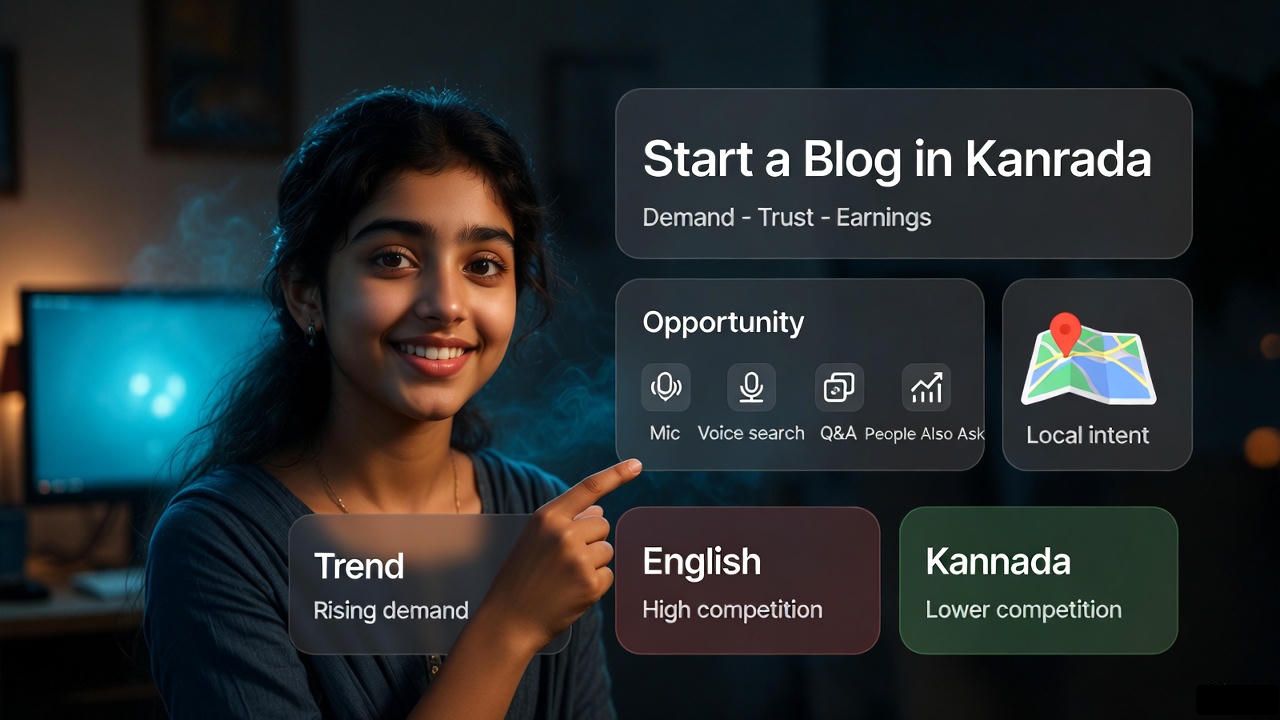
Competition is much lower than English, but opportunities through voice search and People Also Ask (PAA) are higher.
As Kannada content consumption grows, brands and advertisers are actively looking for native language platforms. Google Discover, YouTube, and voice search now give more priority to local languages. If your blog becomes a trusted source, CTR, dwell time, and return visits increase naturally.
Compared to English blogs, you can build topical authority much faster in a Kannada niche. This improves ranking chances even with minimal link building. Collaborations with local brands are also easier.
Key benefits:
- Lower competition, higher ranking potential
- Strong trust and loyalty from local readers
- Better engagement and time on site
- Easier monetization in regional markets
What You Need to Start a Kannada Blog
To start a Kannada blog, a clear niche, the right domain name, fast hosting, and a proper WordPress setup are essential.
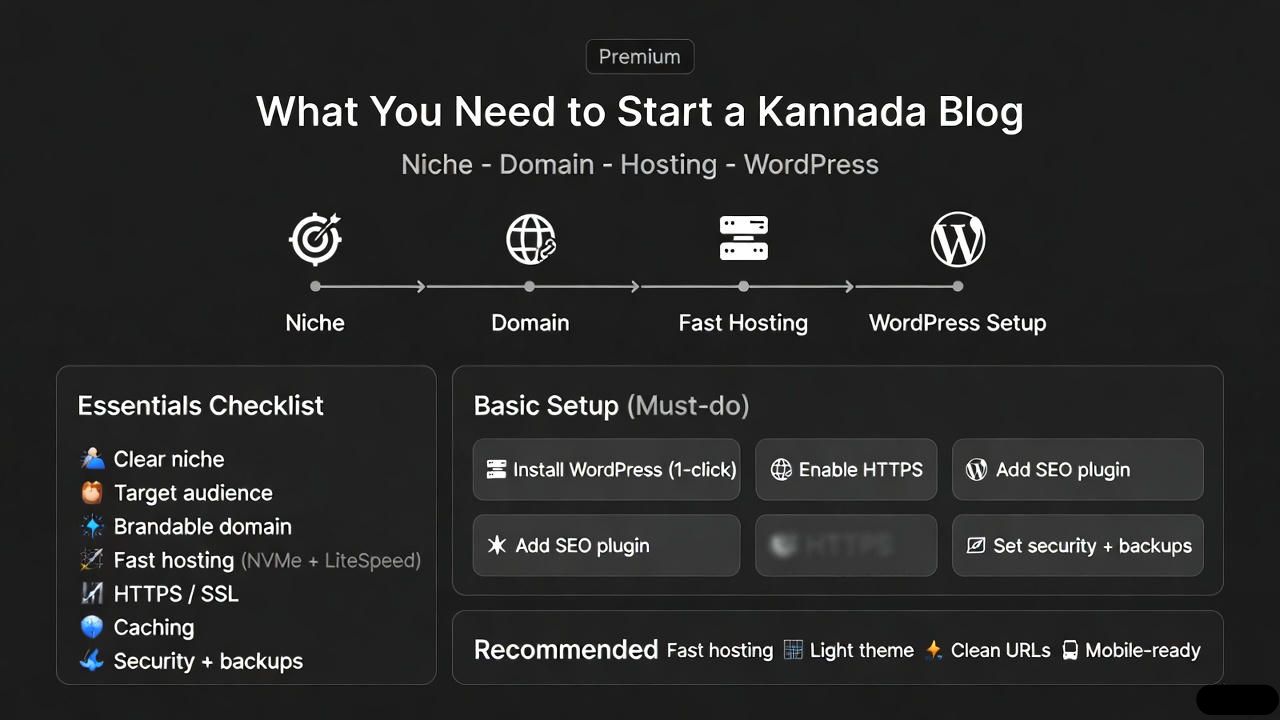
Basic SEO, security, and backup systems should be set up from the very beginning.
First, clearly define a niche and reader profile that suits the Kannada audience. Then choose a brandable domain name. Select WordPress optimized hosting based on NVMe SSD and LiteSpeed. After that, install WordPress using the 1 click installer, enable HTTPS, and correctly configure all essential plugins.
You will need:
- A clear niche and target audience
- A brandable domain name
- Fast and reliable web hosting
- WordPress with basic SEO setup
Best Blogging Platform to Start a Blog in Kannada
For regional language blogging, WordPress is the best overall choice. It gives you full control over your website, content, and growth.
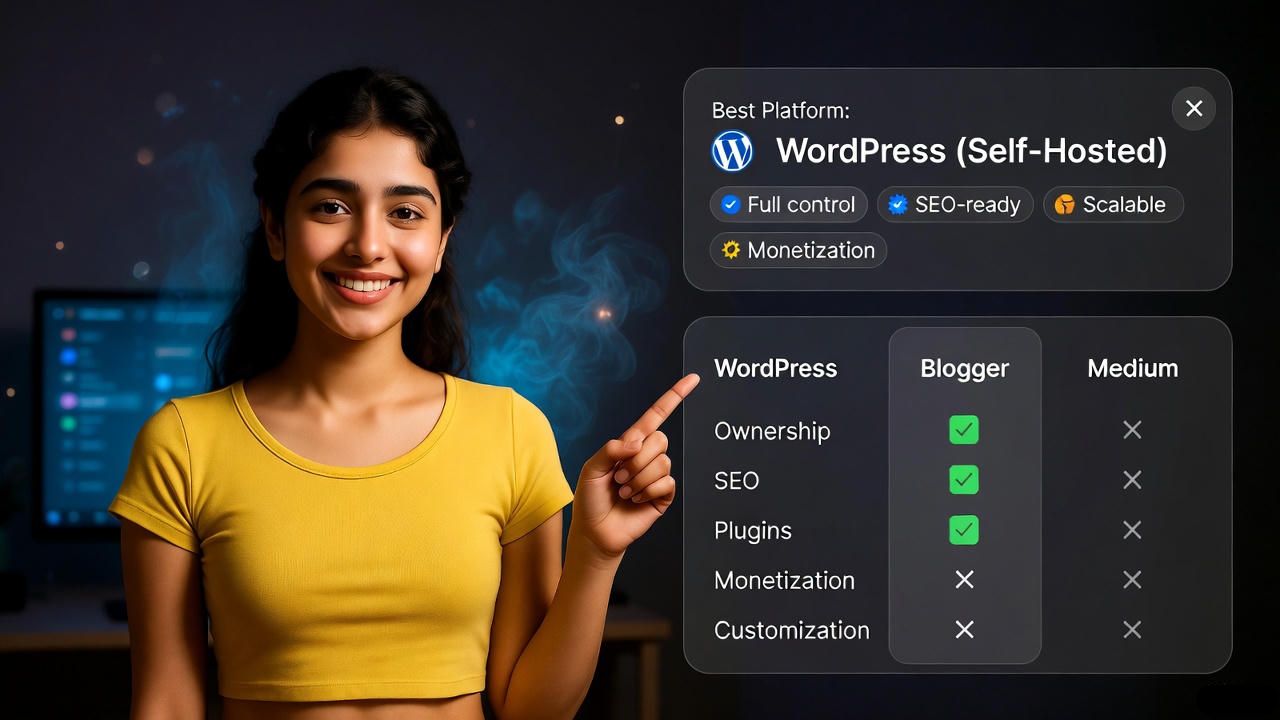
Platforms like Blogger and Medium are easy to use, but they are limited when it comes to SEO, monetization, and long term scalability.
With WordPress.org (self hosted), you can expand your blog without limits using themes and plugins. SEO tools like Rank Math or Yoast, performance plugins such as LiteSpeed Cache, and schema plugins give you strong control over search visibility. If needed, AMP can also be used as an optional feature.
Blogger is simple, but its URL structure, plugin support, and customization options are limited. Medium is good for writing, but it offers very little control over ads, affiliate links, branding, and ownership.
For a serious Kannada blog that you want to rank, grow, and monetize in the long term, self hosted WordPress is the most reliable platform.
Content Ideas & Choosing the Right Niche: Evergreen vs Trending
Evergreen content includes topics like education and career guidance, personal finance, healthy lifestyle, farming tips, and Kannada tech tutorials. These topics bring steady, long term traffic.

Trending content includes new gadgets, government or consumer schemes, and local events. These topics can bring quick traffic spikes but change frequently.
Your main goal should always be the same: write useful articles that genuinely solve your reader’s problem.
From day one, think about search intent and monetization alignment.
For example:
- “Kannada WordPress tutorial” → affiliate income + course sales
- “Local travel guide” → sponsored posts + lead generation
Choosing topics that match both user intent and earning potential makes growth easier later.
Importance of Consistency and Patience
Blogging works like compound interest.
You may start seeing basic traffic in 3-6 months, but real authority usually appears after 12 months.
If you consistently follow this loop-
Publish → Analyze → Improve–
your CTR, dwell time, and rankings will gradually improve.
Patience, regular publishing, and data based improvements are what turn a Kannada blog into a long term digital asset.
Choosing the Right Domain Name for Your Kannada Blog
A simple and memorable domain name becomes the identity of your brand. Ideally, people should be able to spell it correctly as soon as they hear it.
When traffic grows through word of mouth, domain length and complexity make a big difference. Short and clear names spread faster.
Why Domain Branding Matters
Your domain decides your brand recall and recognition. Instead of long keyword based names like “Kannada Tech Tips” or “Daily Kannada Knowledge”, a short, brandable name works much better in the long run.
Avoid:
- Hyphens and numbers
- Keyword stuffing
- Spam looking names
Good Domain Name Characteristics
- Short and clean
- Easy to pronounce
- Easy to remember
- Looks professional
Example Domain Name Formats
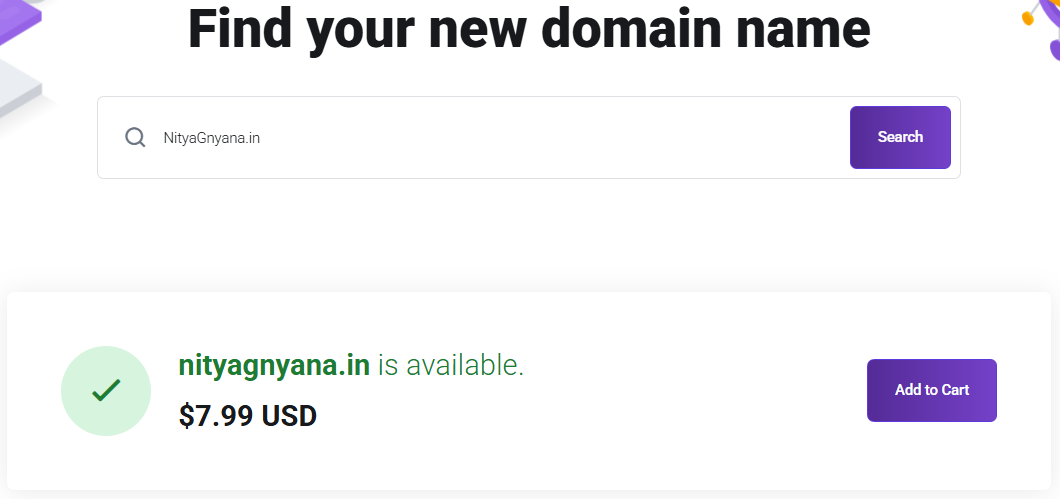
Informational style names
- NityaGnyana
- KannadaTech
Brandable names
- DesiNest
- NammaVoice
- LocalTrail
Best TLD Choices
- Best and safest:
.com,.in - Acceptable alternatives:
.co.in,.blog
You may also consider Kannada script IDN domains (for example: a Kannada language domain ending with .bharat) for branding. However, always keep a short English version for easy sharing on social media and messaging apps.
Check Social Media Availability
Before finalizing your domain, always check whether the same name is available on:
- YouTube
- X (Twitter)
Using the same name everywhere strengthens brand authority, trust, and attribution.
Free vs Paid Hosting – Which is Better for Beginners?
Hosting plays a critical role in website speed, uptime, and SEO performance. In reality, user experience is the core of search rankings.
Free hosting may look attractive at first, but it causes serious problems for AdSense approval, Core Web Vitals, and security.
Free Hosting (Why You Should Avoid It)
- Slow website speed and frequent downtime
- Forced ads and limited server resources
- Weak SEO performance
- AdSense approval becomes difficult
- Poor security and unreliable backups
Paid Hosting (Why It’s Worth It)
- Fast loading with NVMe SSD and LiteSpeed servers
- Free SSL certificates, automated backups, and security protection (WAF)
- Better Core Web Vitals and HTTP/3 support
- Stable resources designed for long term growth
Best Hosting Setup for Beginners in 2026
For a WordPress blog, the ideal hosting setup includes:
- NVMe SSD storage with LiteSpeed/OpenLiteSpeed server
- India or nearby regional data center for low latency
- CDN integration (Cloudflare or QUIC.cloud)
- WordPress optimized stack (HTTP/2, HTTP/3, Brotli compression)
- Automatic daily/weekly backups with one click restore
- Free SSL, malware scanning, 2FA, and SSH/SFTP access
Set Up Hosting with YouStable – (Step-by-Step)
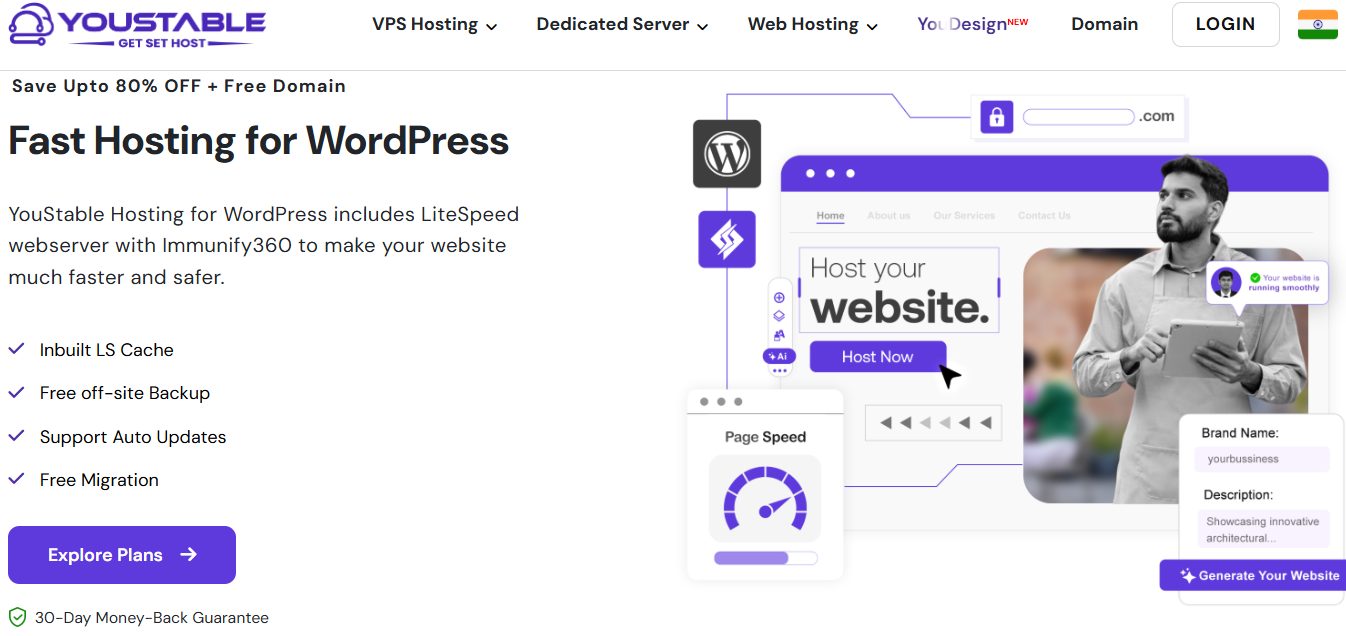
- Visit the YouStable website and choose a WordPress specific hosting plan.
- Select a server location close to your audience (for example, India).
- Register a new domain or connect an existing domain.
- Complete the checkout and access your hosting dashboard.
- Use Softaculous/Installer to install WordPress with one click.
- Enable Free SSL and set HTTPS as default.
- Activate the LiteSpeed Cache plugin and connect QUIC.cloud or a CDN.
YouStable’s India based servers, WordPress friendly support, and performance optimized environment provide fast speed and stable performance, which is especially helpful for regional language bloggers.
| YouStable WordPress Hosting Plans & Pricing Table in 28th April 2026 | ||||
|---|---|---|---|---|
| Plans Name | Websites | Storage | Bandwidth | Monthly Pricing |
| DaStart | 1 | 50GB NVMe SSD | Unmetered | $0.65/mo |
| DaProfessional | 25 | 100GB NVMe SSD | Unmetered | $1.31/mo |
| DaElite | Unlimited | 200GB NVMe SSD | Unmetered | $2.42/mo |
Install WordPress & Set Up Your Kannada Blog Properly
WordPress Installation
- Use the 1 click installer.
- Enable HTTPS from day one.
- Set a strong admin username and password.
- Enable Two Factor Authentication (2FA) later for extra security.
Basic Settings
- Site Language: Kannada
- Timezone: Asia/Kolkata
- Permalinks: Post name
Essential Pages
- About
- Contact
- Privacy Policy
- Disclaimer
Add a contact form and clearly show email or WhatsApp contact details.
Mention cookies and tracking in the Privacy Policy this is important for AdSense and Analytics compliance.
Essential Plugins (Lean & Reliable Stack)
- SEO: Rank Math or Yoast
- Cache: LiteSpeed Cache
- Security: Wordfence or Solid Security
- Backup: UpdraftPlus
- Images: ShortPixel or Imagify
- Forms: WPForms or Contact Form 7
- SMTP: FluentSMTP (for reliable email delivery)
How to Write SEO Friendly Content for a Kannada Blog
Accurate, original, and genuinely helpful articles send strong “helpful content” signals to Google.
Plan your article structure by combining Kannada keywords with local search intent.
Step 1. Write Original and Valuable Content
Avoid copy paste or rewritten content. Add value through personal experience, screenshots, and local examples.
Follow the rule: one topic = one main intent.
Including FAQs, pros & cons, and step by step sections increases the chances of appearing in Featured Snippets.
Step 2. Kannada + Regional Keyword Research
Use:
- Google Autocomplete
- People Also Ask (PAA)
- Related Searches
Focus on long tail keywords such as:
- “Bengaluru tourist places 2026
- “Kannada WordPress tips”
Also target Kannada–English mixed queries (Kanglish), for example:
- “WordPress cache enthadu?” (What is WordPress cache?)
These mixed queries are very common among real users.
Step 3. On Page SEO Basics
- Title / H1: Main keyword + clear benefit
- H2 / H3: Supporting keywords, aligned with search intent
- Meta Description: Clear, 150–160 characters, CTR focused
- Schema: Use Article / FAQ / HowTo where relevant
- Internal Links: Build topic clusters
- URL: Short, clean, clear Kannada or English slug
Step 4. Images and Internal Linking
- Compress images using WebP or AVIF
- Use descriptive file names and meaningful alt text
- Add contextual internal links to related articles
Example:
“Kannada SEO Guide” → “Keyword Research in Kannada”
This reduces crawl depth and builds topical authority.
Step 5. Regular Content Updates
Topics change over time, so review content every 90–180 days.
Add:
- Updated data
- New images
- Fresh FAQs based on SERP questions
Answering popular questions seen in Google results strengthens freshness + helpfulness signals.
How to Rank Your Kannada Blog on Google
The core of ranking is the combination of search intent match, user experience (UX), and topical authority.
More than backlinks, content structure and architecture play a decisive role.
Kannada focused schema, strong internal topic clusters, and fast page load times give you a clear advantage.
Search Intent Match
Your title, introduction, and FAQs should directly answer the user’s question. Avoid vague openings be clear and solution focused from the start.
Topical Authority
Build content in clusters. Publish 8-12 related articles under one subtopic and connect them logically. This helps Google understand that your blog is an authority in that area.
Internal Linking
Use a silo or hub page structure to make crawling easier and distribute PageRank effectively across related pages.
Page Speed & Core Web Vitals
Aim for:
- LCP < 2.5 seconds
- CLS < 0.1
- Low INP
Use LiteSpeed Cache, critical CSS, and proper caching to achieve these benchmarks.
EEAT Signals
Strengthen trust with:
- Clear About and Author Bio pages
- Reliable source citations
- Screenshots and proof
- Real, experience based insights
Content Freshness
Regularly update or republish content. Show the last updated date clearly. Fresh, accurate content performs better in search results.
Natural Backlinks
Earn links organically through:
- Local references
- Mentions on news portals
- High quality resource pages
To rank a Kannada blog on Google, focus on intent clarity, fast performance, structured content, and trust signals. When these align, rankings grow steadily, even with fewer backlinks.
7 Ways to Make Money from a Kannada Blog in 2026
Traffic quality matters more than traffic volume. Always align your monetization model with your niche, and diversify income sources to build long term stability.
For Kannada audiences, local offers, services, and lead generation tend to perform especially well.
1. Google AdSense
A reliable option for informational traffic.
Ensure ad placements are user experience friendly and non intrusive. Follow Privacy Policy, ads.txt, and consent requirements to stay compliant and maintain approval.
2. Affiliate Marketing
Works best in niches like hosting, software, education, and travel.
Focus on honest reviews, detailed comparison guides, and clear CTAs that explain value before pushing clicks.
3. Sponsored Posts
Collaborate with local and niche relevant brands.
Offer bundled packages such as article + short video + social promotion. Always label sponsored content clearly as “Sponsored” to protect audience trust.
4. Digital Products
Sell eBooks, templates, and Kannada language courses.
Use WooCommerce or Gumroad for delivery, with Stripe or UPI for easy payments. Digital products offer high margins and full control.
5. Freelancing & Services
Offer services like content writing, WordPress setup, or SEO audits.
Add a “Hire Me” page and showcase real case studies to convert blog readers into clients.
6. Local Business Leads
Generate leads through local directories, service guides, and city based content.
Use CPL (Cost Per Lead) or CPA models for consistent income.
7. YouTube + Blog Combo
Create short summary videos for each article with chapter timestamps.
Embed videos in blog posts to increase dwell time and send traffic back to your site from YouTube and Discover.
Successful monetization in 2026 depends on trust, relevance, and diversification. When your Kannada blog genuinely helps users, income follows naturally.
FAQs
What is the Minimum Cost to Start a Blog in Kannada?
A domain usually costs around ₹699–₹999 per year, and hosting costs ₹150–₹400 per month (shared WordPress hosting).
SSL is generally free.
Overall, the initial setup cost is about ₹2,000-₹4,000.
Can You Get AdSense Approval on a Free Blog?
In most cases, it is difficult.
AdSense requires good content quality, user experience, site speed, and policy compliance.
A self hosted WordPress blog is far more reliable for approval.
After How Many Articles Does Traffic Start Coming?
Usually, initial traffic appears after 10–15 quality articles.
With 50+ well optimized posts, traffic becomes more stable.
Results depend on the niche, SEO quality, and competition.
Is Kannada Blogging Profitable?
Yes.
There is lower competition and higher engagement compared to English blogs.
Success depends on choosing the right niche and using a smart monetization mix.
WordPress or Blogger Which Is Better?
WordPress (self hosted) is better for SEO, customization, and monetization.
Blogger is simpler, but it has limited control and scalability.
How to Find Kannada Keywords?
Use:
• Google Autocomplete
• People Also Ask (PAA)
• Related Searches
• Google Search Console (GSC) data
• Local Q&A forums
What Technical Setup Is Needed for a Kannada Blog?
• NVMe + LiteSpeed hosting
• Free SSL
• CDN
• LiteSpeed Cache
• Basic security: WAF, 2FA, and regular backups
Conclusion
Kannada blogging is a major opportunity in 2026. When local search intent, a fast website, and helpful content align, results are almost guaranteed. Start with a clear niche, a brandable domain, and WordPress optimized hosting to build a strong foundation.
Begin today by outlining 10 article ideas, installing WordPress with one click, and publishing 5 quality posts within the first two weeks. Repeat the Publish → Analyze → Improve cycle every month. Your Kannada blog can become a long term digital asset, and that journey starts now.