To start a blog in Arabic in 2026, pick a clear niche, secure a brandable domain, and choose fast NVMe WordPress hosting. Install WordPress in Arabic, set essential SEO, cache, and security plugins, then publish original, helpful posts targeting Arabic keywords and search intent.
Optimize Core Web Vitals, build internal links, submit your sitemap to Search Console, and monetize via AdSense, affiliates, or digital products. Consistency for 6-12 months is the key to traction.
Arabic blogging is entering a golden era: search demand is surging, competition is still manageable, and brands are investing more in native language campaigns. If you’ve wondered how to start a blog in Arabic in 2026, you’re in the right place.
This guide walks you through domains, hosting, WordPress setup, Arabic SEO, rankings, and monetization with practical steps and performance focused tips. As a Senior Technical SEO Content Writer at YouStable, I’ve launched, scaled, and audited dozens of blogs across hosting, SaaS, and regional niches.
The patterns are clear: fast hosting, topical authority, and helpful content win consistently, especially in under served languages like Arabic. We’ll keep things beginner friendly but technically accurate. By the end, you’ll have a complete roadmap from picking a niche and domain to achieving Core Web Vitals, ranking for Arabic queries, and unlocking sustainable income streams.
Why Starting a Blog in Arabic is a Smart Opportunity in 2026?
Arabic internet usage is exploding; helpful local content wins trust and rankings. 2026 favors niche expertise, fast sites, and audience first writing in native Arabic.
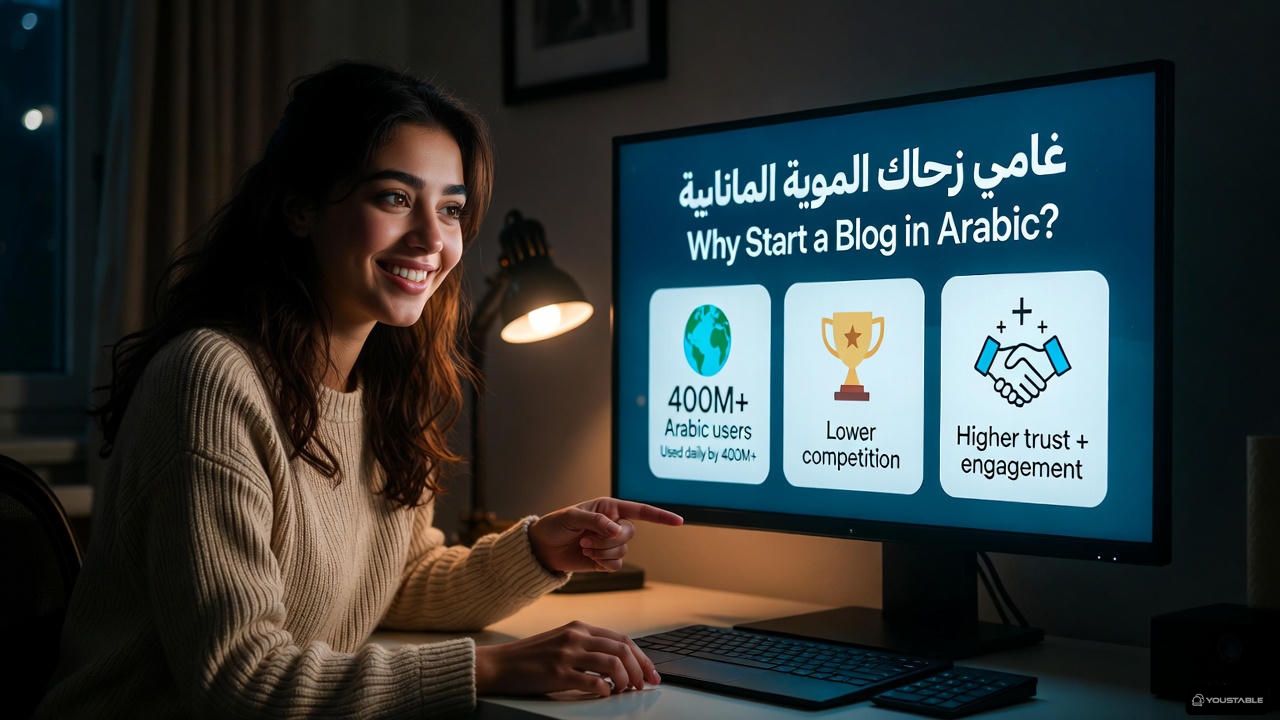
More than 400 million people speak Arabic across MENA and the diaspora, and their digital behavior is maturing. Users search in Modern Standard Arabic (MSA) and dialects (Gulf, Egyptian, Levantine, Maghrebi), creating huge content gaps. This is where new bloggers can shine with precise, helpful content.
Compared to English, Arabic SERPs are less saturated in many verticals (education, finance, travel, tech guides, public services). Native language expertise also earns stronger trust signals longer session durations, lower bounce rates, and higher repeat visits all great for SEO.
Advertisers increasingly localize campaigns, and Google continues rewarding content that demonstrably helps users. If you build authority in Arabic today, you compound advantages in rankings, brand equity, and monetization.
- Lower competition, higher ranking chances in many niches
- Stronger audience trust, authenticity, and community building
- Better engagement metrics: time on site, pages per session
- Easier monetization with regional brands and local SEO demand
Essential Requirements to Start a Blog in Arabic 2026?
Set clear goals, choose the right tools, and plan for 12 months of consistent work. Small technical choices now save months later: prioritize speed, structure, and UX.
- A clear blogging niche and audience (problem focused)
- A brandable domain name (easy to remember in Arabic)
- Fast, reliable NVMe WordPress hosting
- WordPress with a lean, secure plugin stack
- A simple SEO and content workflow you can maintain
Choosing a Perfect Domain Name for Your Arabic Blog
Your domain is your brand’s anchor. It influences click through rates, word of mouth, and how easily people remember you offline. In Arabic markets, pronounceability and simplicity matter even more due to transliteration and dialect variations. A strong domain also helps you look credible to advertisers and affiliates.
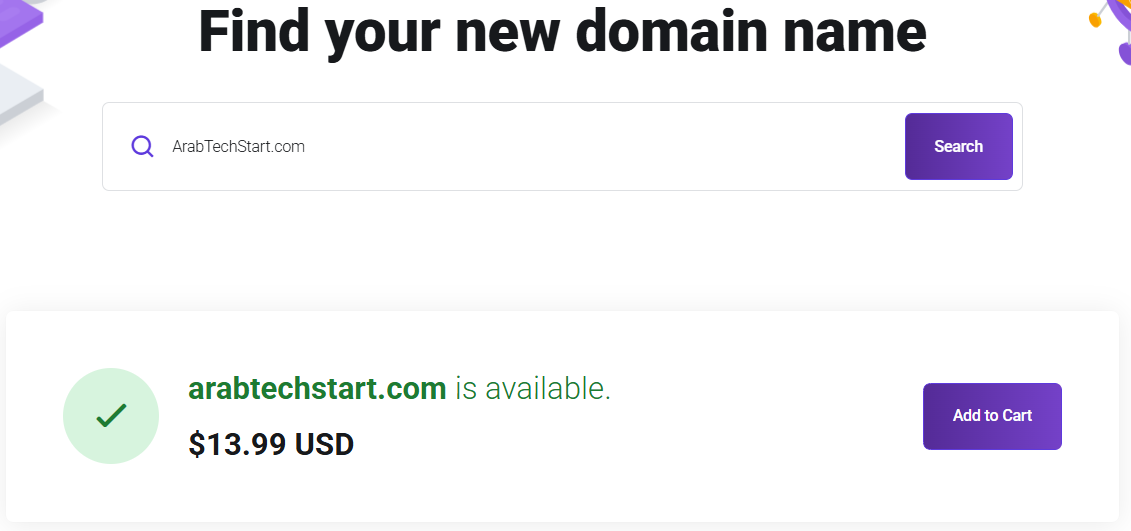
Keep it short, unique, and future proof. Avoid hyphens, numbers, and awkward transliterations. Don’t stuff keywords focus on a brand that can grow as you broaden categories. If your niche is tech for beginners, pick something like ArabTechStart instead of Best-Arabic-Tech-Guide-2026.
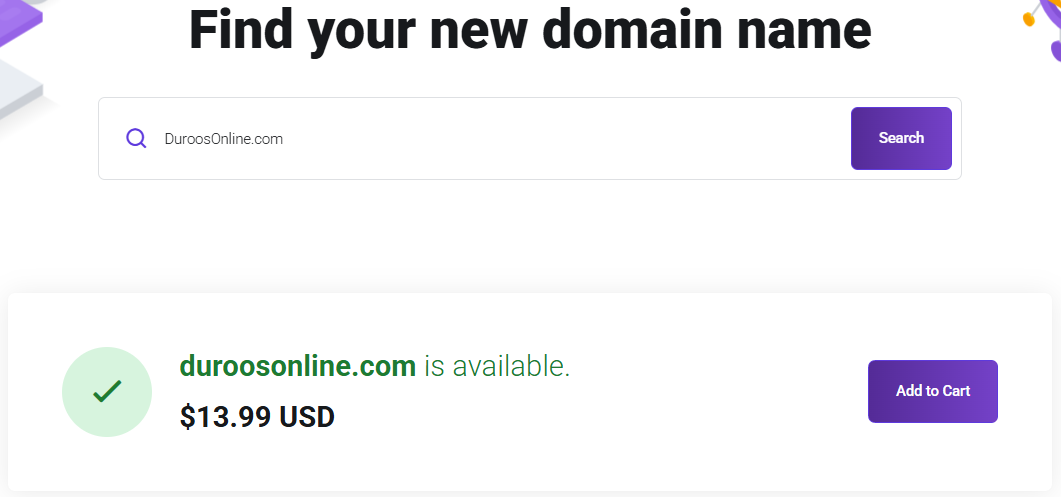
- Keep it short, simple, and easy to pronounce in Arabic
- Avoid hyphens, numbers, and keyword stuffing
- Consider categories you may add later (future proofing)
- Example formats: informational (AkhbarTech, DuroosOnline), brandable (SahhaPlus, MasarNet)
Top level domains that work well: .com for global reach; country TLDs for local trust: .sa (Saudi), .ae (UAE), .eg (Egypt), .ma (Morocco), .jo (Jordan), .qa (Qatar). Specialty TLDs like .blog or .me can work for personal brands. You can also explore Arabic IDNs (e.g., .موقع), but pair them with an English short .com or .me to simplify sharing.
Finally, check name availability on YouTube, Instagram, Facebook, TikTok, & X. Cross platform consistency boosts brand recall and makes multi channel growth easier.
Free vs Paid Hosting for Arabic Blogs – Which One is Better?
Free hosting is tempting, but it slows growth and hurts credibility. You’ll get limited resources, frequent downtime, and most importantly, poor SEO performance due to lousy Core Web Vitals. Many free hosts inject ads and throttle bandwidth, making it hard to pass AdSense reviews or retain readers.
- Slow speeds and frequent downtime harm rankings
- Resource limits, ads, and no control over performance
- Harder to pass AdSense and partner program reviews
Paid hosting with NVMe SSD & LiteSpeed servers delivers fast TTFB, great uptime, and built in caching that improves LCP, CLS, and INP. You also get free SSL, backups, and expert support essentials when you’re learning. You’ll save time and protect your reputation.
- NVMe SSD storage + LiteSpeed/OpenLiteSpeed = excellent Core Web Vitals
- Free SSL, automated backups, and better security
- WordPress tools, staging, and support for long term scaling
Best WordPress Hosting Setup for Arabic Blogs in 2026
- NVMe SSD storage for low latency and fast database queries
- LiteSpeed/OpenLiteSpeed web server with LSCache for WordPress
- Regional data center near your audience: Bahrain, UAE, Qatar, Saudi, or Frankfurt
- Global CDN (Cloudflare) with Brotli compression and HTTP/3
- Daily backups, free SSL, malware scanning, and WAF
- Staging environment to test themes, plugins, and updates safely
How to Set Up Fast WordPress Hosting for an Arabic Blog (Step-by-Step)
For Arabic bloggers targeting MENA, speed and proximity matter. YouStable’s WordPress optimized hosting with NVMe, LiteSpeed, and regional routing is designed for fast TTFB across Saudi, UAE, Egypt, and North Africa.
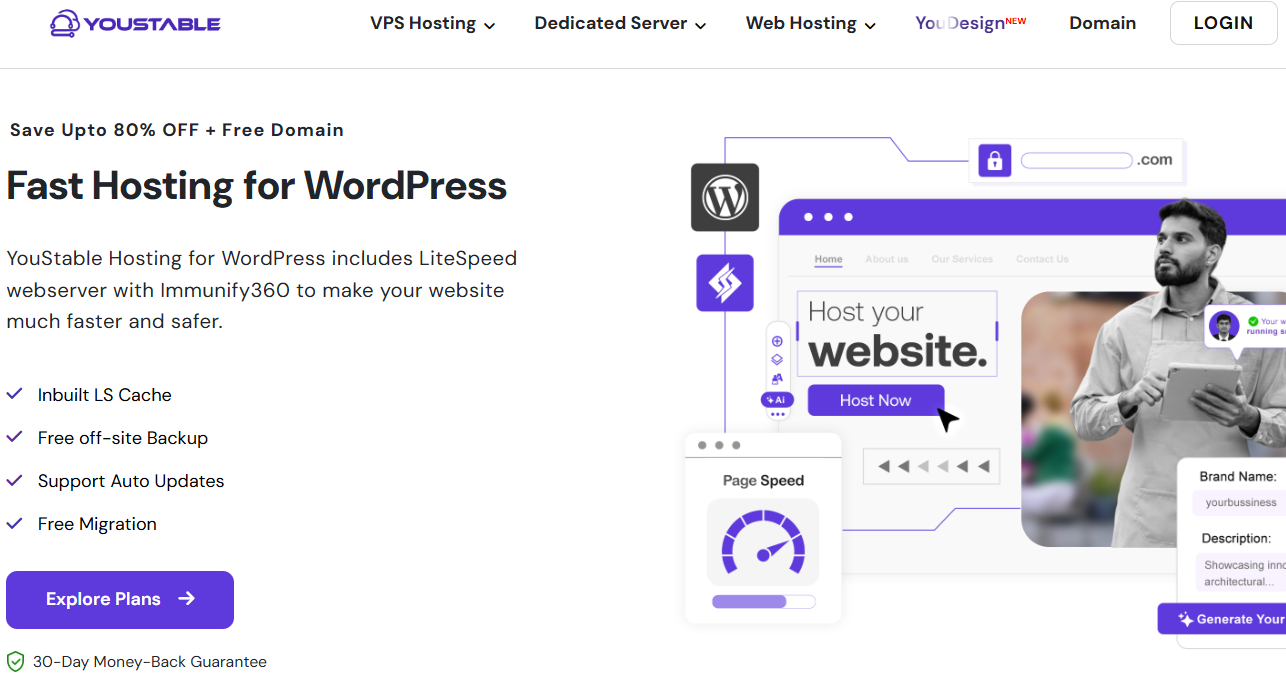
- Visit the YouStable website and open WordPress Hosting.
- Choose a beginner friendly plan (look for NVMe, LiteSpeed, daily backups).
- Select the nearest server location to your readers (e.g., Bahrain/UAE route or Frankfurt).
- Register a new domain or connect an existing one via DNS or nameservers.
- Complete checkout and open your hosting dashboard (cPanel/Plesk).
- Use the 1 click installer (Softaculous/Installatron) to install WordPress.
- Enable free SSL and activate LiteSpeed Cache (set QUIC.cloud if needed).
YouStable is ideal for regional bloggers who want WordPress friendly support, performance optimized infrastructure, and consistently low TTFB for Arabic audiences. It’s a practical balance of speed, support, and price.
| YouStable WordPress Hosting Plans & Pricing Table in 2026 | ||||
|---|---|---|---|---|
| Plans Name | Websites | Storage | Bandwidth | Monthly Pricing |
| DaStart | 1 | 50GB NVMe SSD | Unmetered | $0.65/mo |
| DaProfessional | 25 | 100GB NVMe SSD | Unmetered | $1.31/mo |
| DaElite | Unlimited | 200GB NVMe SSD | Unmetered | $2.42/mo |
Install WordPress & Set Up Your Arabic Blog
Install WordPress using your host’s 1 click tool. Use HTTPS from day one, set a strong admin username and password, and avoid admin as the default username. Pick a lightweight, RTL ready theme (e.g., GeneratePress, Astra, Blocksy with RTL support).
- Site Language: Arabic (العربية)
- Timezone: match your country (Asia/Riyadh, Africa/Cairo, Africa/Casablanca)
- Permalinks: Post name (/%postname%/)
- Discussion: enable manual comment approval to prevent spam
Create essential pages early for trust and compliance. These pages help E-E-A-T and are often requested by ad networks and affiliates. Keep them visible in your menu and footer.
- About (من نحن)
- Contact (اتصل بنا)
- Privacy Policy (سياسة الخصوصية)
- Disclaimer/Terms (إخلاء المسؤولية/الشروط)
Use a lean plugin stack to avoid bloat. Configure each plugin properly before publishing.
- SEO: Rank Math or Yoast
- Cache: LiteSpeed Cache (optimize CSS/JS, image WebP, QUIC.cloud CDN)
- Security: Wordfence or Solid Security
- Backup: UpdraftPlus (daily to cloud storage)
- Images: ShortPixel or Imagify (WebP/AVIF)
- Forms: WPForms or Contact Form 7
- SMTP: FluentSMTP with your email provider for reliable delivery
Best Blogging Platform for Arabic Content (WordPress vs Others)
Own your platform and data; choose tools that scale with traffic and monetization. Arabic blogs need RTL themes, flexible SEO controls, and performance first hosting.
WordPress is the best choice for Arabic blogging thanks to full RTL support, plugins for Arabic SEO, and total control over monetization. You can implement structured data, advanced caching, and custom designs as you grow without switching platforms.
Blogger is simple and free but limited in SEO and scalability. Medium offers distribution but not ownership monetization and customization are restricted. If you want long term growth and income, self hosted WordPress wins on flexibility and ROI.
Best Content Ideas and Profitable Niches for an Arabic Blog
Balance evergreen topics with seasonal or trending content. Evergreen posts (e.g., How to open a bank account in Saudi, Beginner coding tutorials, Hajj and Umrah planning) build consistent traffic, while trending posts capture spikes (e.g., new visa rules, local tech releases).
Start with problems your audience actively searches for, not just what you want to write. Analyze top results, People Also Ask boxes, and local forums. Ensure your niche can be monetized via affiliates, services, or digital products. If not, layer in a secondary niche that aligns with your readers’ needs.
- Personal finance (Halal investing, savings, remittances)
- Career & education (study roadmaps, exam guides, scholarships)
- Travel & visas (Hajj/Umrah, GCC travel, Schengen tips in Arabic)
- Tech & apps (Android/iOS tutorials, privacy, device reviews)
- Food & health (Levant/Maghreb recipes, nutrition, workout plans)
- Public services (government portals, residency, licensing steps)
How Consistency Helps Arabic Blogs Grow on Google
Blogging compounds. Expect 3-6 months to see meaningful impressions, and 6-12 months for stable traffic if you publish weekly and build topical clusters. Improve older posts, expand internal links, and add FAQs to capture long tail queries.
Use a publish → analyze → improve loop. Ship your article, measure in Search Console and Analytics, then iterate titles, intros, headers, and internal links. Growth is steady when you improve the process, not just the post count.
How to Write SEO Friendly Content for an Arabic Blog
Prioritize clarity and depth; answer queries directly, then expand with examples. Use Modern Standard Arabic for reach; note dialectal terms where relevant.
Step 1. Write Original & Valuable Content
Google’s Helpful Content and core updates reward lived experience and actionable detail. Share your steps, screenshots, and results. If you cover open a freelancer tax file in Egypt, include portal paths, document lists, fee ranges, timelines, and common pitfalls not generic advice.
Avoid thin rewrites or low effort AI drafts. If you use AI for outlines, add your unique experience, local links, and original visuals. Fact check against official Arabic sources (ministries, banks, airlines) and cite them for trust.
Step 2. Keyword Research (Arabic + Regional)
Start with Google Autocomplete, People Also Ask, and Related Searches in Arabic. Layer tools like Ahrefs, Semrush, and Google Keyword Planner for volume trends. Capture dialect variations and spelling variants (أ/ا, همزة, تأنيث/تذكير).
- List primary MSA terms, then add dialectal synonyms (e.g., رخصة/ليسن/بيرمي)
- Target long tail queries with intent (e.g., رسوم فيزا شنغن من السعودية 2026)
- Mine PAA for question subheadings (H3) and FAQ sections
- Group topics into clusters (pillar + 6-12 supporting articles)
Step 3. On Page SEO
Cover the topic completely with clear structure: intro, definitions, steps, examples, FAQs, and references. Use H2 for main sections, H3 for subtopics, and H4 for specifics like settings or checklists. Keep paragraphs short and scannable.
Titles, Slugs, and Meta Descriptions
Craft compelling Arabic titles that match intent and include your primary keyword near the start. Use clean Arabic slugs or short transliterated slugs to avoid encoding issues. Write meta descriptions that promise clear value and include a call to action.
Schema, Hreflang, and E-E-A-T
Implement Article, FAQ, and HowTo schema where relevant. If you publish in multiple languages, use hreflang (e.g., ar, ar-SA, ar-AE, ar-EG). Strengthen E-E-A-T with an author bio, About page, contact details, and references to official Arabic sources.
UX and RTL Readability
Use an RTL ready theme, generous line height, and Arabic friendly fonts like Cairo, Tajawal, or Noto Kufi Arabic. Keep contrast high, font sizes 16-18px+, and avoid intrusive popups especially on mobile.
Step 4. Use Images & Internal Linking
Compress images (WebP/AVIF), lazy load, and add descriptive Arabic alt text. Use annotated screenshots for tutorials. Create internal links to related guides and glossary pages to distribute authority and help readers navigate your cluster.
Build a hub and spoke structure: a pillar page links to detailed sub guides; each sub guide links back to the pillar and laterally to sibling topics. This improves crawl paths and topical authority.
Step 5. Update Content Regularly
Arabic searchers value freshness for policy, travel, finance, and tech topics. Review posts every 3-6 months. Update fees, screenshots, links, and FAQs. Add a Last updated line and submit the URL in Search Console for faster reindexing.
How to Rank Your Arabic Blog on Google
Rankings follow relevance, quality, and performance. Serve intent, then excel at speed. Be the best answer in Arabic: complete, current, and easy to skim on any device.
Focus on these 7 factors. They align with Google’s core update guidance and the Helpful Content system, and they map to real world wins I’ve seen on Arabic sites.
- Search intent match: Align format and depth with the SERP (guide, checklist, tool).
- Topical authority: Build clusters; interlink pillars and supporting articles.
- Internal linking: Use descriptive Arabic anchors; add Related boxes in content.
- Page speed & Core Web Vitals: NVMe + LiteSpeed, minify, defer, optimize LCP images.
- E-E-A-T signals: Author bio, About, references to official Arabic sources, transparent contact.
- Content freshness: Update policies, fees, and screenshots; add FAQs from new PAA queries.
- Natural backlinks: Earn citations from forums, universities, NGOs, and local news via useful guides.
Bonus: Submit your sitemap in Google Search Console, fix coverage issues, and monitor enhancements (Mobile Usability, Breadcrumbs, FAQ/HowTo rich results). In Analytics, segment by country to spot content opportunities (e.g., Saudi vs Egypt differences).
7 Best Ways to Monetize an Arabic Blog in 2026
Monetization works best after trust and steady traffic. Build audience value first. Choose 2-3 streams that fit your niche, then optimize placements and tracking.
- Google AdSense: Classic and beginner friendly. Pass Core Web Vitals, avoid intrusive ads, and follow AdSense policies. Optimize ad density and test placements under the first H2, in content, and end of post. RPMs vary by country; GCC markets usually pay more.
- Affiliate marketing: Promote relevant products (hosting, fintech, travel, education). Write comparison posts, best X for Y lists, and step by step tutorials. Disclose affiliations clearly. Track with UTM parameters and compare EPC by network.
- Sponsored posts: As authority grows, local brands will pitch collaborations. Create a media kit with your audience stats (countries, age, interests), traffic, and example posts. Maintain editorial standards to protect trust.
- Digital products: Launch ebooks, checklists, templates, or short courses in Arabic. Great for education, career, and business niches. Use WooCommerce or Gumroad like platforms and bundle with email sequences.
- Freelancing/services: Offer consulting, content writing, SEO audits, or niche specific services (visa guidance, resume reviews). Your blog becomes your portfolio; add a Services page and intake form.
- Local business leads: Rank for local service keywords in Arabic and sell qualified leads or partner on revenue share. This is powerful in cities with weak local SEO content.
- YouTube + blog combo: Repurpose posts into Arabic videos; embed them to increase time on page. Cross promote with summaries and links. Video builds personality and trust that accelerates conversions.
FAQs
How much does it cost to start an Arabic blog?
Expect roughly $40-$120 for the first year: domain ($10-$20), hosting ($30-$80 on a beginner NVMe plan), and optional premium plugins/themes. Start lean; invest more after validation.
Is WordPress better than Blogger for Arabic blogs?
Yes. Self hosted WordPress offers RTL themes, advanced SEO, performance tools, and full monetization control. Blogger is simpler but limited for scaling and brand building.
How long until I rank on Google?
With weekly publishing in a clear niche and solid on page SEO, expect initial traction in 3-6 months and stable growth by 6-12 months. Topical clusters and fast hosting shorten timelines.
Do I need to write in MSA or dialect?
Use MSA for reach and clarity, adding dialect notes where relevant. For local services (e.g., KSA licensing), include country specific terms people actually search for.
What’s the best domain extension for Arabic sites?
.com works everywhere. For local trust, use country TLDs like .sa, .ae, .eg, .ma. You can pair a .com with an Arabic IDN if you want, but keep sharing friendly English short links.
How do I get AdSense approval for an Arabic blog?
Publish 15-30 helpful posts, add About/Contact/Privacy pages, ensure fast Core Web Vitals, and avoid policy violations. Use a clean design and a custom domain with SSL.
Can I blog in Arabic and English on the same site?
Yes. Use multilingual plugins (WPML/Polylang) and proper hreflang tags (ar, en). Keep separate URLs per language and avoid mixing languages in a single post.
Conclusion
Arabic blogging in 2026 is a high upside opportunity if you commit to helpful content, fast hosting, and a structured SEO plan. Start with a focused niche, publish consistently, and build trust with real examples and references your readers value.
Choose a brandable domain, set up NVMe + LiteSpeed WordPress hosting, and use a lean plugin stack. If you target MENA audiences, YouStable’s WordPress optimized setup offers the speed and support you need to rank faster and monetize reliably.
Take action this week: Pick your niche, secure the domain, and publish your first Arabic guide. The earlier you start, the sooner you’ll build authority, traffic, and income.