To start a blog in Tanzania in 2026, choose a clear niche, register a brandable .tz or .com domain, and purchase fast NVMe WordPress hosting near East Africa (Nairobi/Johannesburg/India).
Install WordPress, configure SEO basics, and publish helpful Kiswahili or bilingual (Kiswahili-English) content that solves local problems. Optimize for Core Web Vitals, build topical authority, and monetize via AdSense, affiliates, and services.
Always align with TCRA guidelines and disclose monetization. Blogging in Tanzania is exploding as more users search in Kiswahili on mobile data networks. In 2026, Google’s Helpful Content updates reward original, localized answers giving smart bloggers a real advantage.
This guide shows you how to start a blog in Tanzania in 2026, step by step. You’ll choose a niche, pick a domain, set up fast hosting, install WordPress, master SEO, and learn multiple monetization options. Written from a technical SEO and hosting perspective, it emphasizes performance, security, and compliance. Whether you write in Kiswahili, English, or both, you’ll build a long term digital asset that grows.
Why You Should Start a Blog in Kiswahili (Tanzania) in 2026?
Kiswahili search demand is rising fast as Tanzanians prefer content in their first language. Google now surfaces localized, helpful answers creating room for niche experts to stand out.
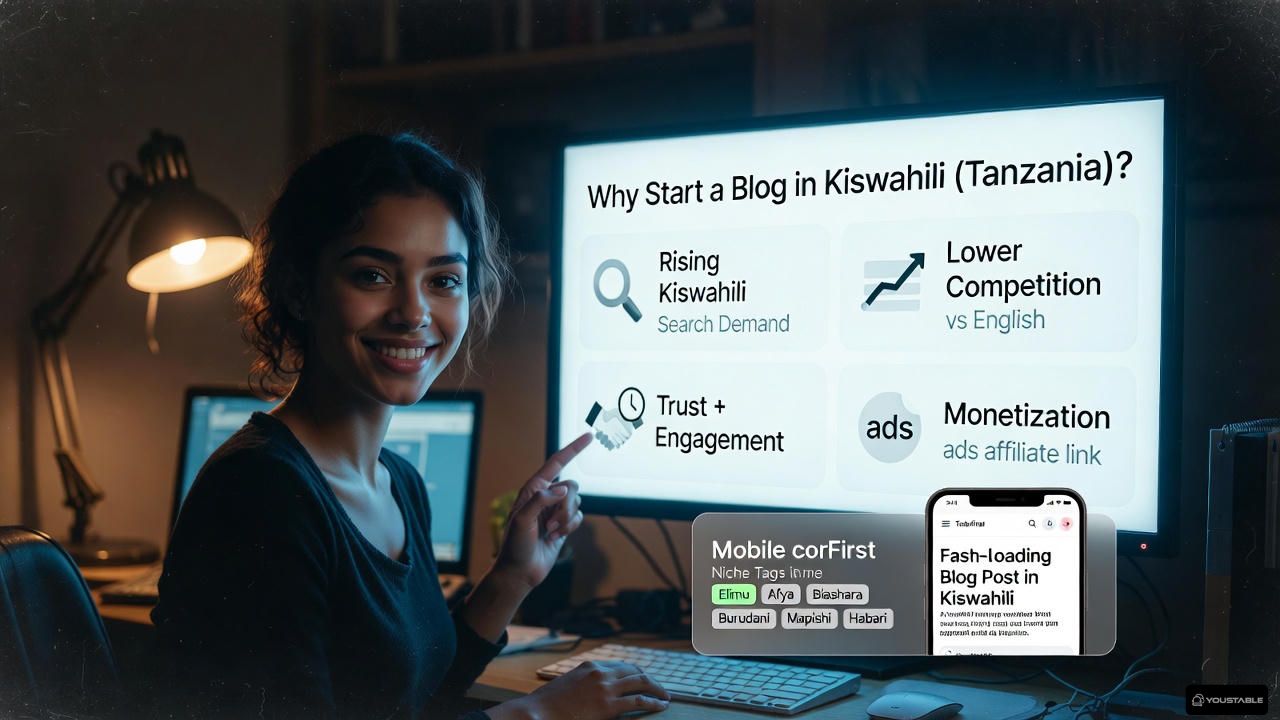
Tanzania’s internet user base keeps growing, and most browsing happens on mobile. Users want practical answers about education, jobs, agriculture, travel, health, and mobile money topics where Kiswahili content often wins.
Competition in English is intense, but Kiswahili has more opportunity. Brands and advertisers increasingly value native language placements because they convert better and build trust faster with local audiences.
- Lower competition with higher ranking potential in many niches
- Deeper audience trust, better engagement, and stronger time on site
- Better contextual ad performance and regional affiliate conversion
- Fewer barriers to topic coverage and content freshness
What Do You Need to Start a Blog in Kiswahili in 2026?
Start with clarity: a defined niche, audience, and the problems you’ll consistently solve. Then set solid foundations: a memorable domain, fast hosting, WordPress, and lean SEO tools.
- A clear blogging niche and reader persona (pain points, language, intent)
- A brandable domain name that’s easy to say and remember
- Fast, reliable NVMe WordPress hosting near East Africa
- WordPress installed with essential SEO, cache, and security basics
With these in place, you’re ready to select a domain and hosting optimized for Tanzania.
Choosing a Perfect Domain Name for Your Kiswahili Blog in 2026
Your domain is your brand’s identity and recall. A clean, short name travels well by word of mouth, screenshots, and WhatsApp shares key channels in Tanzania.
Pick something pronounceable in Kiswahili, easy to spell, and not tied to one subtopic if you plan to expand later. Avoid complex spellings that get lost in voice notes or radio mentions.
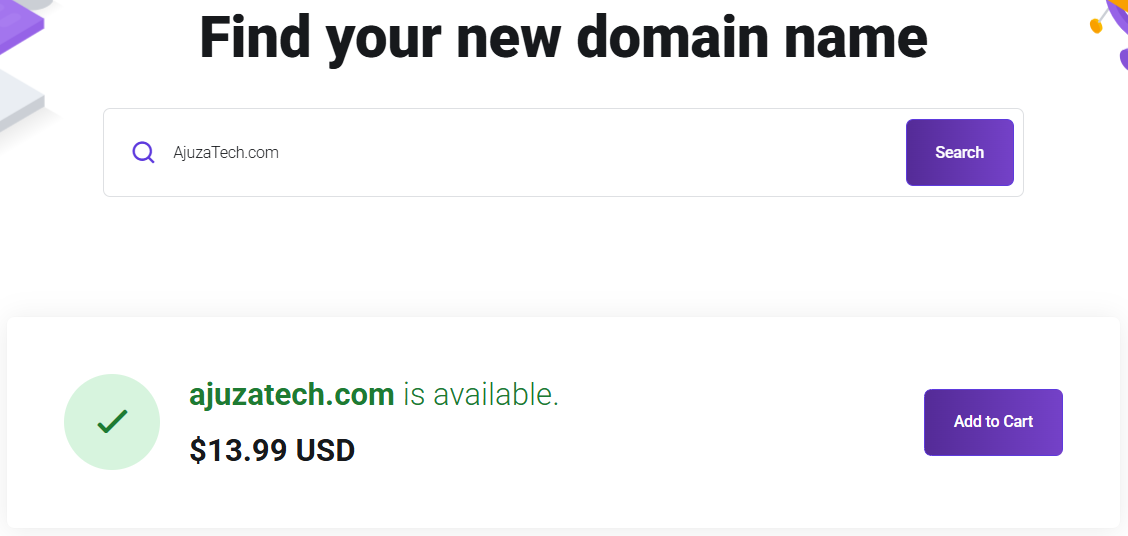
- Keep it short, simple, and easy to pronounce in Kiswahili
- Avoid hyphens, numbers, and outdated keyword stuffing
- Choose names that pass the “radio test” (clear when heard once)
- Examples: AjuzaTech, SafariLeo, ElimuBora, PesaSmart
Top level domain (TLD) choices for Tanzanian blogs:
- Preferred: .tz, .co.tz, .com (globally recognized and trusted)
- Also viable: .or.tz (nonprofit), .blog, .africa depending on purpose
- Tip: .tz second level registrations are now common fast, clean, brandable
Before you commit, check for handle consistency on YouTube, Instagram, Facebook, and X. Matching names unify your brand and improve click through from social to site.
Free vs Paid Hosting – What’s Better for Beginners?
Free hosting seems attractive, but it creates performance and trust challenges. It often injects ads, caps resources, and experiences frequent downtime hurting SEO and user experience on Tanzanian mobile networks.
- Slow speed and throttled CPU/RAM lead to high bounce rates
- Frequent downtime harms trust and indexation
- Limited control over SSL, caching, and backups
- Harder to get AdSense or affiliate approvals
Paid hosting with NVMe storage and LiteSpeed/OpenLiteSpeed is worth it from day one. You’ll get free SSL, better Core Web Vitals, automated backups, and a support team that understands WordPress.
- Faster TTFB and LCP scores improve rankings and conversions
- Daily backups, malware scanning, and staging environments
- 1 click WordPress installs and expert support
- Room to grow without migrations breaking your site
Best Hosting Setup for Beginners in 2026
Focus on a stack optimized for East Africa’s mobile first traffic and flaky connections. The right components reduce latency, speed up rendering, and keep your blog resilient under spikes.
- NVMe SSD storage on LiteSpeed/OpenLiteSpeed web server
- Nearest data center: Nairobi or Johannesburg; secondary: Mumbai, UAE
- HTTP/3 with QUIC and TLS 1.3 for mobile stability
- CDN integration (Cloudflare or QUIC.cloud) for global caching
- Automatic daily backups and on demand restores
- Free SSL, Web Application Firewall (WAF), and malware scans
- PHP 8.2+, Brotli compression, object caching (Redis/Memcached)
Set Up Hosting with YouStable – (Step-by-Step)
YouStable offers beginner friendly WordPress hosting with India and nearby regional options, LiteSpeed servers, and performance optimizations ideal for Kiswahili blogs targeting Tanzanian readers.
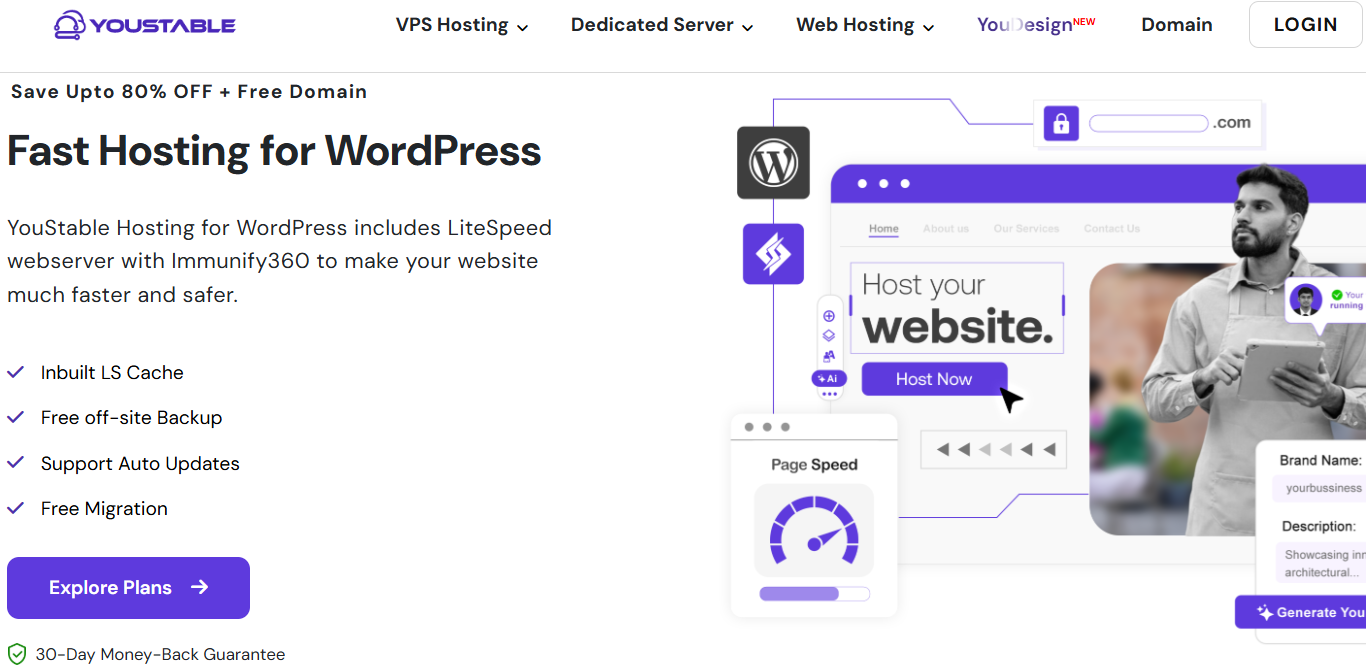
- Visit the YouStable website and open WordPress Hosting plans
- Choose a starter plan with NVMe storage and LiteSpeed
- Select the closest server location to Tanzania (India/UAE), or use a CDN
- Register a new .tz/.com domain or connect an existing one
- Complete checkout and access the hosting dashboard
- Run the 1 click WordPress installer (Softaculous/Installatron)
- Enable free SSL (HTTPS) and activate LiteSpeed Cache
- Connect Cloudflare or QUIC.cloud CDN for global edge caching
YouStable suits regional bloggers for its WordPress focused stack, responsive support, and consistently strong Core Web Vitals on entry plans ideal when building authority from scratch.
| YouStable WordPress Hosting Plans & Pricing Table in 2026 | ||||
|---|---|---|---|---|
| Plans Name | Websites | Storage | Bandwidth | Monthly Pricing |
| DaStart | 1 | 50GB NVMe SSD | Unmetered | $0.65/mo |
| DaProfessional | 25 | 100GB NVMe SSD | Unmetered | $1.31/mo |
| DaElite | Unlimited | 200GB NVMe SSD | Unmetered | $2.42/mo |
Install WordPress & Set Up Your Kiswahili Blog
Use the 1 click installer and secure your admin immediately. Aim for a minimal, fast theme and avoid heavy page builders until you understand their impact on speed and CLS.
- Use 1 click installer (Softaculous/Installatron) and force HTTPS
- Create a unique admin username and a strong password
- Pick a lightweight theme (Block theme, Kadence, GeneratePress)
Set the basics correctly so Google and users understand your site. These settings avoid early technical debt and indexing issues.
- Site language: Kiswahili (add English if bilingual)
- Timezone: Africa/Dar_es_Salaam for accurate post timestamps
- Permalinks: Post name (clean URLs)
- Disable thin “Hello World” content; no index test/staging sites
Create essential trust pages and legal notices early. Transparency supports EEAT and aligns with Tanzanian and Google policies.
- About, Contact, Privacy Policy, Disclaimer
- Editorial policy and sponsorship disclosures
- Note: Review TCRA guidance if covering news/politics or running as an “online content provider”
Keep your plugin stack lean for speed and security. Start with these essentials, then add only when needed.
- SEO: Rank Math or Yoast
- Cache: LiteSpeed Cache (with QUIC.cloud if available)
- Security: Wordfence or Solid Security
- Backup: UpdraftPlus (schedule daily to remote storage)
- Images: ShortPixel/Imagify (WebP/AVIF)
- Forms: WPForms or Contact Form 7
- SMTP: FluentSMTP connected to a reliable sender (e.g., Brevo)
Best Blogging Platform to Start a Blog in Tanzania
Pick a platform you can scale on, monetize freely, and fully control for SEO and security. WordPress leads for flexibility, multilingual support, and plugin ecosystems in 2026.
WordPress gives full ownership, advanced SEO control (schemas, redirects, sitemaps), and monetization freedom (AdSense, affiliates, direct sponsors). You can run a pure Kiswahili site or bilingual setup with translation plugins, categories, or subdirectories.
Blogger is free but limits SEO, performance tuning, and feature growth. Medium is great for discovery but weak for brand building, local SEO, and monetization control. For Tanzania focused authority sites, self hosted WordPress is the clear winner.
Content Ideas & Choosing the Right Niche
Start with audience problems and align them with your expertise. Favor evergreen topics that can earn backlinks and rankings over time, then mix in timely updates for freshness.
- Education: NECTA exam guides, university admissions, study notes
- Jobs & skills: CV templates, interview tips, online work, tech skills
- Personal finance: mobile money (M-Pesa, Tigo Pesa, Airtel Money), budgeting
- Agriculture: cash crops, market prices, agri-tech, post harvest tips
- Travel: national parks, safaris, ferries, bus routes, local itineraries
- Health & fitness: clinics, insurance, nutrition for local diets
- Tech & telecom: bundles, ISPs, device reviews, repairs
- Sports: Simba/Young Africans match guides, player profiles
Check monetization alignment early. For example, travel and telecom reviews fit affiliates; education can sell notes or courses; finance can use ads plus local fintech referrals.
Importance of Consistency and Patience
Blogging compounds. Expect 3-6 months for traction and 6-12 months for steady organic growth. Publish, analyze, and improve in cycles weekly if possible.
Use a simple system: outline, draft, optimize, publish, track. Update winning posts quarterly and refresh underperformers with better answers and data.
How to Write SEO Friendly Content for a Kiswahili Blog in 2026
SEO in 2026 rewards clarity, depth, and real experience. Write to solve the searcher’s job. Structure your article with intent matched headings and keep paragraphs short for mobile.
Step 1. Write Original & Valuable Content
Share firsthand experience, local prices, screenshots, and photos. If you review a ferry route or ISP, include current schedules, coverage maps, or speed tests. Avoid generic AI rewrites Google actively downranks thin or unhelpful content.
Step 2. Keyword Research (Language + Regional)
Use Google autocomplete (Kiswahili and English), “People Also Ask,” and related searches. Look for long tail queries with local modifiers: “gharama ya safari Dar–Zanzibar,” “vigezo vya mkopo Tigo Pesa,” “NECTA matokeo mwongozo.”
- Mix Kiswahili core terms with English tech/brand terms as users search both
- Group keywords by intent (informational, transactional, navigational)
- Create pillar pages (guides) with supporting posts for topical authority
Step 3. On Page SEO
Write compelling titles and intros that match search intent. Use H2/H3s to cover subtopics, add schema (HowTo, FAQ), and include internal links to related posts. Keep meta descriptions natural and click worthy.
- Use descriptive slugs: /gharama-ferry-dar-zanzibar/
- Add HowTo/FAQ schema via Rank Math or Yoast
- Link to glossary pages for telecom or finance terms
- Localize units (TZS), addresses, and timezones
Step 4. Use Images & Internal Linking
Compress images (WebP/AVIF) and write Kiswahili alt text for accessibility and context. Use internal links to guide readers through related answers and keep them on site longer this supports EEAT and helps pass link equity.
Step 5. Update Content Regularly
Prices, schedules, and policies change. Review top URLs quarterly: refresh stats, add FAQs from new PAA questions, and expand sections getting impressions in Search Console. Content freshness is a ranking input.
How to Rank Your Kiswahili Blog on Google in 2026
Rankings come from matching intent, superior user experience, and sustained publishing.
Work the fundamentals: speed, topical depth, smart linking, and trust signals on site.
Here are seven ranking factors that matter in 2026 for a Tanzanian, mobile first audience:
- Search intent match: Answer the exact question early and completely.
- Topical authority: Build clusters (pillar + supporting posts) per niche.
- Internal linking: Use descriptive anchors; surface new posts from older ones.
- Page speed & Core Web Vitals: Optimize LCP, CLS, INP via LiteSpeed Cache.
- EEAT signals: Clear author bio, real photos, sources, and editorial policy.
- Content freshness: Update key posts with dates, new data, and FAQs.
- Natural backlinks: Create linkable assets (checklists, data tables, local maps).
Use Search Console to monitor queries, fix coverage/crawling issues, and submit updated sitemaps when you make significant changes to important pages.
7 Ways to Make Money from a Kiswahili Blog in 2026
Monetization works best when aligned with intent and trust. Diversify beyond display ads. Start with two methods, validate fit, then add more once traffic and engagement grow.
- Google AdSense: Earn from contextual ads on high traffic, informational posts. Improve RPM with fast pages, high viewability, and tight topic focus. Kiswahili sites can be approved if they meet policies and quality standards.
- Affiliate marketing: Promote relevant products ISPs, hosting, online courses, travel bookings, gadgets, fintech apps. Use honest reviews, comparisons, and tutorials with clear disclosures.
- Sponsored posts: Partner with Tanzanian brands for reviews or placements. Publish an editorial policy, label sponsorships, and maintain trust by rejecting poor fit offers.
- Digital products: Sell ebooks, templates, or mini courses (e.g., NECTA revision, budgeting). Use WooCommerce or Gumroad like platforms; accept payments via cards or regional gateways.
- Freelancing/services: Offer CV writing, WordPress setup, SEO audits, or social media management. Convert readers to clients via lead magnets and a service page.
- Local business leads: Rank for local queries (e.g., “fundi laptop Dar”) and sell qualified leads or list businesses in a paid directory.
- YouTube + blog combo: Repurpose posts into videos in Kiswahili. Embed videos to boost engagement; promote the blog in descriptions for cross channel growth.
Practical Tanzania Specific Tips (Payments, Compliance, UX)
Local realities shape your setup and growth. Plan for payments, regulations, and mobile UX. Optimize for low bandwidth and intermittent connectivity common outside major cities.
- Payments: If selling products/services, consider gateways supporting cards and mobile money (e.g., regional providers). Price in TZS and show tax inclusive totals.
- Compliance: Review TCRA regulations if you publish news/politics or operate as an “online content provider.” Personal blogs often don’t need licensing, but verify your category and keep clear disclaimers.
- Mobile first UX: Use 16-18px base font, large tap targets, and avoid intrusive popups. Test on low end Android devices and 3G connections.
- Accessibility: Use clear Kiswahili headings, alt text, and readable contrast for broader reach.
- Backups & security: Enable daily backups, 2FA for logins, and automatic plugin/theme updates with visual checks.
Step-by-Step Editorial Workflow (Repeat Weekly)
A simple, repeatable workflow keeps you publishing and improving quality over time. Follow the loop, measure results, and optimize what data shows not assumptions.
- Research: Collect 10-20 Kiswahili keyword ideas from autocomplete and PAA.
- Outline: Map headings to search intent; add FAQs from real queries.
- Draft: Write short paragraphs, original images, and local examples.
- Optimize: Add schema, internal links, compressed images, and CTAs.
- Publish: Share on WhatsApp groups, Facebook pages, and X for early traffic.
- Analyze: Check Search Console for impressions/clicks and refine titles.
- Update: Refresh content every 60-90 days with new data or tips.
FAQs
How much does it cost to start a blog in Tanzania?
Expect roughly TZS 120,000-350,000 for the first year: domain (TZS 15k-60k), hosting (TZS 80k-250k), and extras like a premium theme or CDN. Start lean; upgrade as traffic grows.
Should I blog in Kiswahili or English?
Kiswahili offers lower competition and higher engagement locally. You can go bilingual: write core content in Kiswahili and publish complementary English posts for regional or global reach.
Do I need a TCRA license to run a blog?
General personal blogs typically don’t require licensing, but sites covering regulated areas (e.g., news/politics) may. Review current TCRA Online Content regulations or consult a local expert.
Which domain is best: .tz or .com?
For local authority, .tz (or .co.tz) is excellent. If you want broader reach, .com remains highly trusted. Many Tanzanian brands register both to protect their identity.
Where should I host my Tanzanian blog?
Pick servers in Nairobi or Johannesburg for lower latency. India or UAE are solid backups if your provider lacks East Africa locations. Always add a CDN for global caching.
Can a Kiswahili blog get AdSense approval?
Yes if it meets AdSense policies and quality standards. Publish original, helpful content, build essential pages, ensure fast load times, and avoid policy violations.
How long will it take to rank on Google?
With consistent publishing and solid SEO, expect 3-6 months for early rankings and 6-12 months for steady organic traffic. Faster results come from narrow niches and strong topical clusters.
Conclusion
Starting a blog in Tanzania in 2026 is a high upside, low cost way to build authority. Kiswahili content, fast hosting, and consistent publishing can win trust and rankings fast in underserved niches.
Lay strong foundations: a brandable domain, NVMe LiteSpeed hosting, and clean WordPress setup. Publish helpful, original posts, optimize for mobile performance, and diversify monetization as you grow.
Begin today with one niche and a 90 day plan. Your future authority and income will compound from the first article you ship.