To start a blog in Urdu, choose a clear niche, buy a brandable domain, get fast NVMe SSD hosting, install WordPress, set up basic SEO (Rank Math or Yoast), enable SSL and LiteSpeed Cache, and then consistently publish helpful content in Urdu. Build EEAT by using search intent based keywords, internal linking, and fast loading pages, and monetize through AdSense, affiliate marketing, and digital products.
Urdu blogging is growing rapidly in 2026 because readers now want real, problem solving content in their own language. Google’s Helpful Content updates and EEAT signals give priority to high quality local language content. In this guide, we explain step by step from the very beginning how to start a blog in Urdu, how to handle the technical setup, how SEO works and why it matters, and what real monetization methods actually work.
If you’ve always wanted to share your voice with the world in Urdu but felt nervous about the technical setup, there’s no need to worry. This guide is written so that even a complete beginner can confidently handle domains, hosting, WordPress, plugins, themes, and security on their own. We move forward with practical examples, real experience, and up to date recommendations for 2026.
By the end, you will not only launch a professional Urdu blog but also turn it into a fast loading, SEO optimized, and income ready digital asset. Let’s get started with How to Start a Blog in Urdu in 2026 a complete step by step guide.
Why You Should Start a Blog in Urdu in 2026
The number of Urdu readers is growing, but the supply of high quality local content is still limited.

Because of lower competition and higher trust, new Urdu bloggers can rank faster and start earning sooner.
A large audience that understands Urdu is active across Pakistan, India, and the global diaspora. With affordable mobile data, people prefer reading how to guides, news, skills, technology, and finance content in their own language.
Compared to English blogs, competition in Urdu is much lower, which increases the chances of ranking and getting consistent organic traffic.
Brands and advertisers are now allocating budgets to local language campaigns. Google Discover and YouTube also provide better recommendations for regional languages. As a result, Urdu blogging is not only influential but is also becoming commercially strong.
Key benefits:
- Lower competition with higher ranking potential
- Strong and fast growing audience trust and loyalty
- Better engagement and longer time on site due to language comfort
- Easier monetization and better RPMs/CTR in regional markets
What Do You Need to Start a Blog in Urdu
When the foundation is strong, a blog grows faster and faces fewer technical problems.
Without these essential elements, you may launch a blog, but ranking and earning will be difficult.
To start a blog in Urdu, you need the following basics. We will set each of these up step by step:
- A clear niche and a well defined target audience
- A brandable domain name
- Fast and reliable web hosting (NVMe SSD + LiteSpeed)
- WordPress with basic SEO setup
Choosing a Perfect Domain Name for Your Urdu Blog
Importance of Domain Branding
Your domain is your online identity. A memorable name helps with word of mouth promotion, improves click through rate (CTR), and builds social proof. When the name is brandable, people are more likely to share your content and return directly to your site.
Domain Name Tips for Urdu Blogs
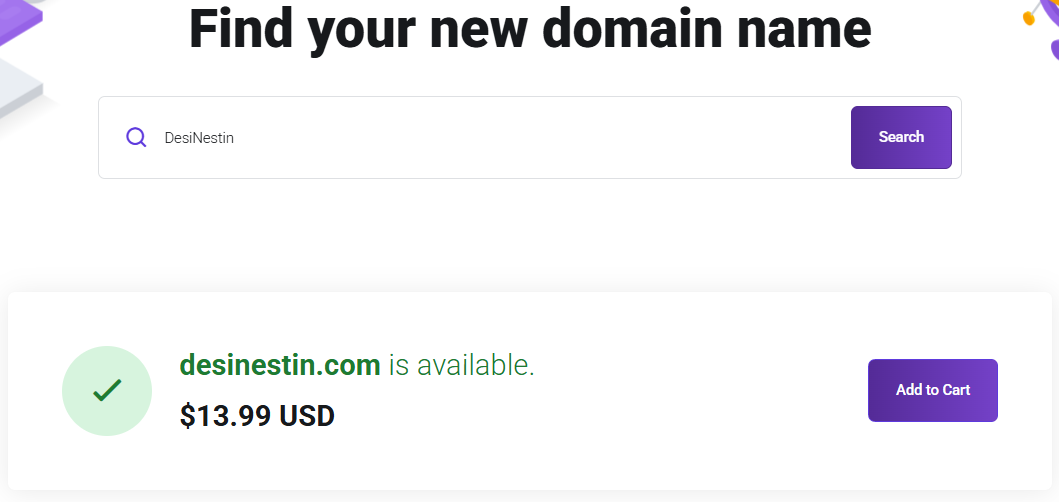
- Keep the name short, simple, and easy to pronounce
- Avoid hyphens, numbers, and excessive keyword stuffing
- Ideal formats:
- Informational: AajKaGyan, DailyTech
- Brandable: DesiNest, LocalVoice
Best TLD Choices
- Preferred:
.com(global reach and trust) - Acceptable:
.in,.co.in,.blog(choose based on availability and brand fit) - Advanced option: Local script IDNs are possible, but always keep a simple English short link for easy sharing
Social Media Consistency
Before finalizing the name, check availability on YouTube, Instagram, Facebook, and X. Using the same name across platforms strengthens brand authority and recall.
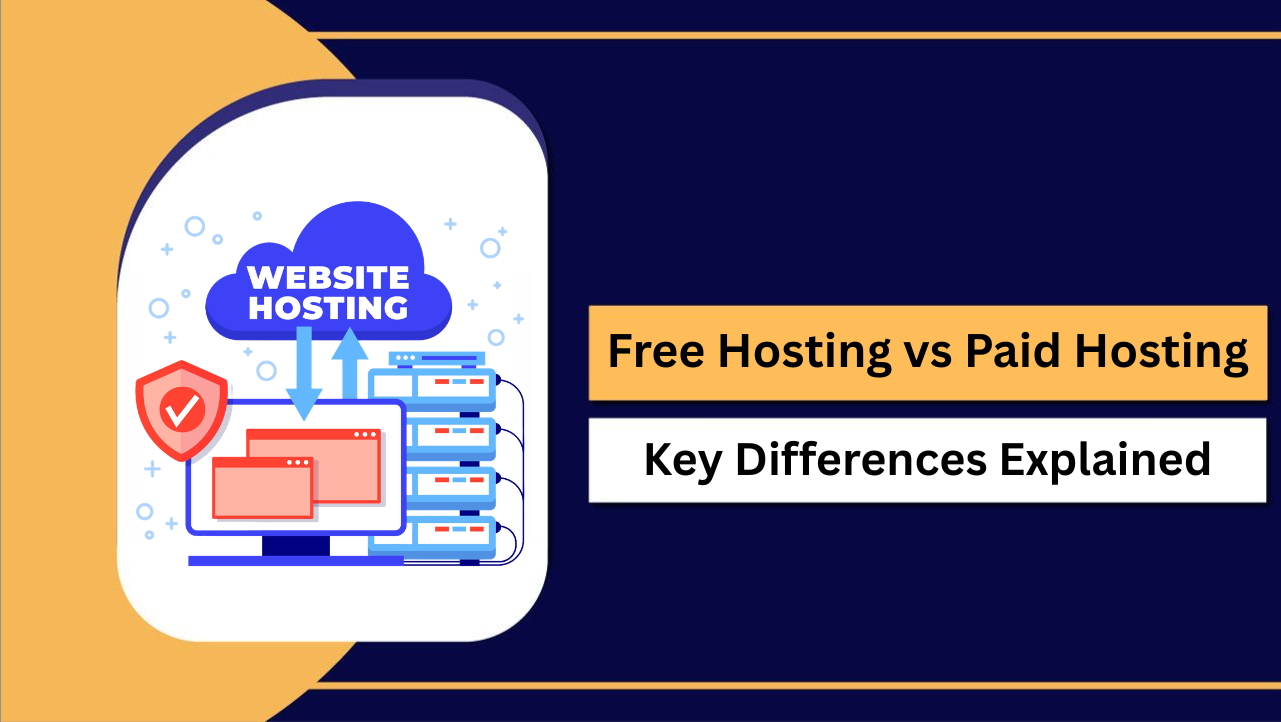
Free vs Paid Hosting – What’s Better for Beginners?
Free Hosting (Why You Should Avoid It)
- Slow website speed and frequent downtime
- Forced ads and very limited resources
- Weak SEO performance and failed Core Web Vitals
- AdSense approval becomes difficult
Paid Hosting (Why it’s Worth it)
- Faster latency and better TTFB with NVMe SSD and LiteSpeed
- Free SSL, automatic backups, and security features
- Better Core Web Vitals and mobile performance scores
- Long term growth and easy scalability
Best Hosting Setup for Beginners in 2026
In 2026, the ideal hosting stack for a beginner blogger includes NVMe SSD storage (high IOPS), a LiteSpeed or OpenLiteSpeed server, a nearby regional data center (India, Singapore, or the Middle East), and CDN integration (Cloudflare).
Along with this, a WordPress optimized environment, HTTP/3, and Brotli compression make a noticeable difference in speed and SEO performance.
Recommended setup includes:
- NVMe SSD storage
- LiteSpeed / OpenLiteSpeed server
- India or nearest regional data center
- CDN integration (Cloudflare)
- WordPress optimized environment with 1 click installer
Set Up Hosting with YouStable – (Step-by-Step)
From my experience as a senior hosting professional, starting with a simple but fast setup gives the best long term results. On WordPress friendly platforms like YouStable, this process takes only a few minutes:
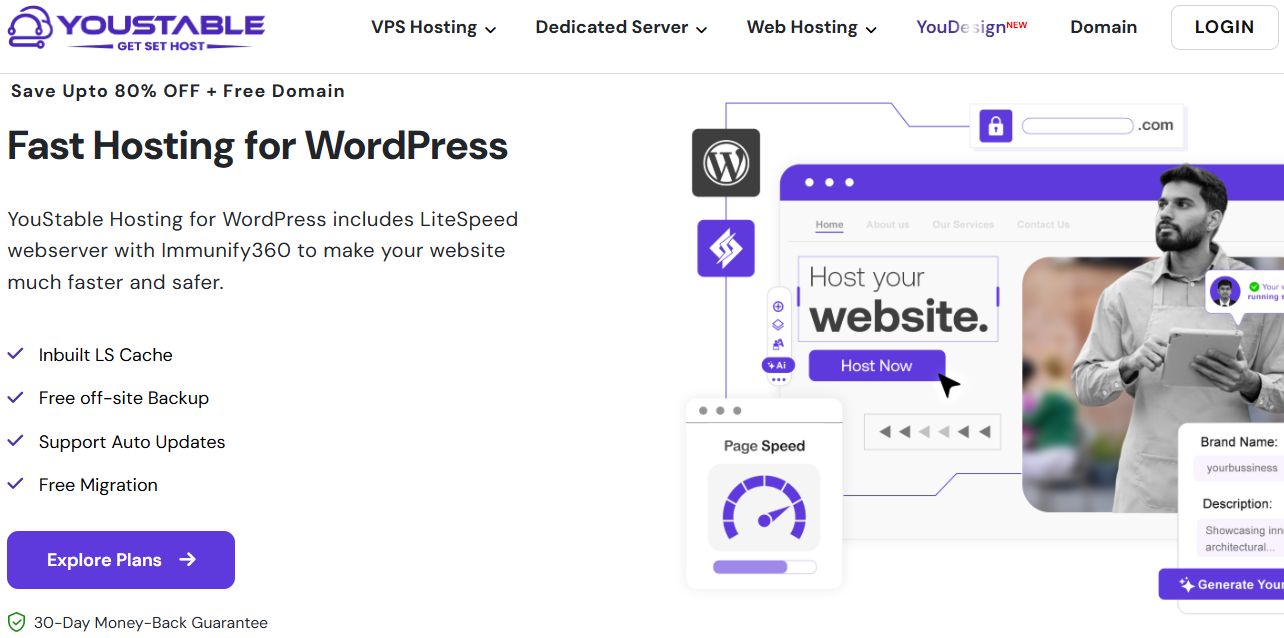
- Visit the YouStable website and choose a WordPress hosting plan
- Select the server location closest to your audience (India/Asia region)
- Register a new domain or connect an existing one
- Complete the checkout and access your dashboard
- Install WordPress using the 1 click installer
- Enable SSL and configure LiteSpeed Cache
- Turn on automatic backups and schedule security scans
YouStable is suitable for regional bloggers because its India based servers, LiteSpeed stack, and WordPress specialist support help deliver lower latency and better Core Web Vitals.
| YouStable WordPress Hosting Plans & Pricing Table in 22nd April 2026 | ||||
|---|---|---|---|---|
| Plans Name | Websites | Storage | Bandwidth | Monthly Pricing |
| DaStart | 1 | 50GB NVMe SSD | Unmetered | $0.65/mo |
| DaProfessional | 25 | 100GB NVMe SSD | Unmetered | $1.31/mo |
| DaElite | Unlimited | 200GB NVMe SSD | Unmetered | $2.42/mo |
Install WordPress & Set Up Your Urdu Blog
WordPress Installation
- Install WordPress using Softaculous or Installatron (1 click install)
- Enable HTTPS from day one
- Use a strong admin password and enable 2FA if possible
Basic WordPress Settings
- Site Language: Urdu
- Timezone: Asia/Kolkata (or your local time zone)
- Permalinks: Post name
Essential Pages
- About
- Contact
- Privacy Policy
- Disclaimer
Essential Plugins (Lean Stack)
- SEO: Rank Math or Yoast
- Cache: LiteSpeed Cache
- Security: Wordfence or Solid Security
- Backup: UpdraftPlus
- Images: ShortPixel or Imagify
- Forms: WPForms or Contact Form 7
- SMTP: FluentSMTP
Best Blogging Platform to Start a Blog in Urdu
To build a successful blog in your own language, you need full control, SEO flexibility, and freedom to monetize.
WordPress fulfills all three better than any other platform, which is why it is the preferred choice.
WordPress is an open source platform that allows you to grow your blog according to your needs using themes, plugins, and custom features. Platforms like Blogger and Medium are simple but limited Blogger offers weak SEO control and difficult migration, while Medium restricts branding and advertising options. For a long term Urdu blog, owning your own domain and hosting on WordPress helps you build real authority and independence.
Content Ideas & Choosing the Right Niche
Evergreen niches (education, personal finance, public health, jobs, Islamic content, cooking, parenting) bring consistent long term traffic.
Trending niches (tech news, gadgets, crypto regulations, local news) provide quick traffic spikes but change rapidly.
The best strategy is to choose one main niche and then create topical clusters around related subtopics.
Understand your audience’s problems and search intent:
- “How to do…?”
- “Which is the best…?”
- “What is the solution to…?”
Align your niche with monetization goals:
- Affiliate marketing: product based or buying intent niches
- AdSense: informational and how to content
- Courses/products: skill based niches
Importance of Consistency and Patience
Blogging is a compounding game.
- The first 3 months build the foundation
- Around 6 months, early rankings appear
- By 12 months, stable traffic becomes visible
Maintain the Publish → Analyze → Improve loop. Use metrics like CTR, dwell time, and user feedback to improve titles, introductions, and headings continuously. Consistency matters more than speed.
How to Write SEO Friendly Content for an Urdu Blog
Good writing is content that solves the reader’s problem quickly and completely.
SEO is the structure that helps this useful content appear higher in search results.
Step 1. Write Original & Valuable Content
Avoid copied or shallow AI generated content. Provide clear, step by step solutions with real examples. Add screenshots or images where helpful, and break each section into short paragraphs of 2-3 lines. Using correct Urdu language style and accurate terminology builds trust and credibility.
Step 2. Keyword Research (Language + Regional)
Use Google Autocomplete and People Also Ask to find local Urdu search phrases such as:
- “online earning in Urdu”
- “how to start a blog in Urdu”
- “Urdu SEO tips”
Focus on long tail keywords with clear intent and low competition. Include local events and regional terms to improve geographic relevance and visibility.
Step 3. On Page SEO
- Use the primary keyword naturally in the Title and H1/H2 headings
- Write a clear, benefit focused meta description (150–160 characters)
- Add Schema markup (Article / FAQ) where appropriate
- Use internal linking to connect related cluster articles
- Add outbound links to trusted and authoritative sources
Step 4. Use Images & Internal Linking
Compress images using ShortPixel or Imagify and prefer the WebP format. Write meaningful Urdu alt text that explains the image clearly. Add 3–5 contextual internal links in every post to improve crawl depth and build topical authority.
Step 5. Update Content Regularly
Content freshness is a strong ranking signal. Update posts every 3–6 months by adding new steps, recent screenshots, and fresh People Also Ask (PAA) questions. After updating, ping your XML sitemap and request re-crawling in Google Search Console.
How to Rank Your Urdu Blog on Google
Ranking is not a single trick, but a continuous process built on strong fundamentals.
The backbone of ranking is correct search intent, fast site performance, and topical authority.
Focus on These 7 Key Factors:
- Search Intent Match – Provide a direct and complete answer to the user’s question.
- Topical Authority – Build clusters with dozens of related posts around one main niche.
- Internal Linking – Use link silos and a pillar cluster structure to strengthen signals.
- Page Speed & Core Web Vitals – Improve LCP and CLS using LiteSpeed Cache, CDN, Critical CSS, and lazy loading.
- EEAT Signals – Strong About page, author bio, citations, research data, screenshots, and experience based insights.
- Content Freshness – Update years, versions, add new sections, and recent examples.
- Natural Backlinks – Earn links through helpful guides, original data, and community collaboration.
7 Ways to Make Money from a Urdu Blog in 2026
Making money from an Urdu blog is not about shortcuts. It works when your content, audience, and monetization method match each other. The safest approach is to build a strong base first, then add multiple income streams gradually.
Depending on just one source (only AdSense or only affiliates) is risky. In 2026, blogs that survive algorithm changes usually use 2-3 income channels together.
1. Google AdSense (Best for Informational Urdu Content)
Google AdSense works well for Urdu blogs that publish:
- How to guides
- Educational content
- News explainers
- Public help articles
To earn properly from AdSense:
- Your site must load fast (good Core Web Vitals)
- Navigation should be clean and simple
- Ads should be visible but not aggressive
Focus on:
- In content ads (after 2-3 paragraphs)
- One sticky ad (desktop or mobile, not both aggressively)
- Avoid too many ads that cause CLS or slow pages
With consistent traffic, AdSense provides passive and stable income, especially for high volume informational topics.
2. Affiliate Marketing (High Intent = Higher Earnings)
Affiliate income depends more on user intent than traffic size.
Affiliate works best when you write:
- Product reviews
- “Best X for…” guides
- Comparisons
- Tutorials that naturally recommend tools
Important rules:
- Always add a clear disclosure
- Recommend only products you understand or have tested
- Explain pros and cons honestly (this builds trust)
Urdu readers convert well when they trust the explanation, not when they feel pushed to buy.
Affiliate income grows slower than AdSense at first, but it often earns more per visitor over time.
3. Sponsored Posts (After You Build Authority)
Sponsored posts should only come after your blog has trust and traffic.
Brands usually look for:
- Niche relevance
- Clean design
- Real audience (not fake traffic)
- Transparent content style
Best practices:
- Accept only niche related sponsors
- Clearly label sponsored content
- Use
rel="sponsored"links where required - Do not exaggerate claims
One honest sponsored post is better than ten low quality ones that damage credibility.
4. Digital Products (Highest Control, Highest Trust)
Digital products work extremely well in Urdu when they solve a specific problem.
Good examples:
- Short Urdu eBooks
- Practical checklists
- Templates
- Beginner friendly mini courses
Why digital products are powerful:
- No commission cuts
- You control pricing
- Income is not dependent on ads or algorithms
Platforms like WooCommerce or Gumroad make selling easy, but success depends on how useful your product is, not how fancy it looks.
5. Freelancing & Services (Fastest Early Income)
Many Urdu bloggers earn their first money through services.
Common services:
- Urdu content writing
- Translation (Urdu ↔ English)
- WordPress setup
- Basic SEO audits
Your blog itself becomes your portfolio.
When people read your content and see quality, they trust your services more than cold outreach.
6. Local Business Leads (Underrated but Powerful)
If your content targets cities or regions, you can generate leads for:
- Coaching centers
- Clinics
- Consultants
- Local services
How it works:
- Write location specific guides
- Add contact forms
- Use WhatsApp or call buttons
- Track conversions
This model works well even with low traffic, because local intent is strong.
7. YouTube + Blog Combination (Long Term Growth)
Combining YouTube and a blog multiplies reach.
Best approach:
- Explain the topic briefly on video
- Publish a detailed article on the blog
- Embed the video inside the post
Benefits:
- Higher dwell time
- More trust
- Traffic from search + video platforms
- Better brand recall
This is one of the strongest strategies for 2026 and beyond.
FAQs
Is starting an Urdu blog in 2026 worth it?
Yes. Demand is high and competition is still low. With the right niche, a fast website, and quality content, stable traffic and income are possible within 6–12 months.
Which platform is best for an Urdu blog?
WordPress is the best option because it offers full SEO control, a wide range of plugins, and flexible monetization options.
Can I create a blog on free hosting?
Technically yes, but it is not recommended. Free hosting usually has slow speed, frequent downtime, poor SEO performance, and getting AdSense approval becomes difficult.
Which plugins are essential for an Urdu blog?
Rank Math or Yoast (SEO), LiteSpeed Cache (speed), Wordfence or Solid Security (security), UpdraftPlus (backups), ShortPixel or Imagify (image optimization), and FluentSMTP.
How should keyword research be done in Urdu?
Focus on Google Autocomplete, People Also Ask, and local search phrases. Give priority to long tail questions and region specific terms.
What are effective earning methods besides AdSense?
Affiliate marketing, sponsored posts, eBooks or courses, freelancing services, and a YouTube + blog combination are strong alternatives.
Is an India based server suitable for an Urdu audience?
Yes. If most of your audience is in Pakistan, India, or the Gulf region, nearby data centers like India or Singapore provide lower latency and faster load times.
Conclusion
Blogging in Urdu in 2026 is a serious opportunity. Readers want trustworthy, practical, and fast answers in their own language. With a strong foundation right domain, NVMe + LiteSpeed hosting, WordPress setup a clear niche, and consistent high quality content, you can build long term success without shortcuts.
Start today by following How to Start a Blog in Urdu in 2026: buy a domain, choose reliable hosting, install WordPress, and plan your first 10 posts. Consistency, data driven improvements, and genuine service to your readers this is the real SEO strategy that delivers lasting growth.