
To start a blog in Punjabi in 2026, choose a niche, register a brandable domain, and buy fast NVMe WordPress hosting with an India or nearby data center.
Install WordPress, set Punjabi as your site language, configure essential SEO and security plugins, and publish original Gurmukhi content focused on user intent. Optimize Core Web Vitals, build topical clusters, and monetize with AdSense, affiliates, and sponsored posts once traffic matures.
Punjabi blogging is entering its best decade. Google increasingly rewards helpful, localized content, and Punjabi readers crave trustworthy information in their mother tongue. If you’ve ever wanted to build an audience, create impact, and earn online starting a Punjabi blog is a smart, sustainable move.
This guide shows beginners exactly how to start a blog in Punjabi, step by step: picking a niche, choosing a domain, selecting the right hosting, installing WordPress, setting up SEO, writing content that ranks, and monetizing responsibly. I’ll also share performance tips from 12+ years of hands on hosting and WordPress work.
We’ll keep it practical, technical where needed, and laser focused on ranking in 2026’s search landscape, so you spend less time guessing and more time building a Punjabi blog that grows.
Why You Should Start a Blog in Punjabi 2026
Punjabi internet usage is surging across India, Pakistan, and the diaspora worldwide.
Local language content earns higher trust, engagement, and repeat visits than English alone.

The Punjabi speaking audience is one of the most engaged regional communities on the web. From lifestyle and agriculture to technology, education, and culture, readers are actively searching for high quality information in Gurmukhi (and Shahmukhi for Pakistan based audiences).
Google’s helpful content updates now favor content that directly serves local intent, tone, and context. Competition in Punjabi is still lower than in English, but demand is real.
Brands and advertisers want to reach native audiences with better conversion intent. That means your blog has a genuine opportunity to rank, build authority, and monetize even if you’re starting in 2026.
- Lower competition, higher ranking chances
- Strong audience trust and loyalty
- Better engagement and time on site
- Easier monetization in regional markets
What Do You Need to Start a Blog in Punjabi 2026
Think niche clarity, fast hosting, and a clean WordPress setup from day one.
Invest early in performance and security to avoid costly migrations later.
At minimum, you need a clear niche and audience, a brandable domain, fast and reliable web hosting, WordPress installed with basic SEO, and a content plan tailored to Punjabi search behavior. The next sections walk you through each step in detail.
- A clear blogging niche and audience
- A brandable domain name
- Fast, reliable web hosting
- WordPress and basic SEO setup
Choosing a Perfect Domain Name for Your Punjabi Blog
Importance of Domain Branding
Your domain is your brand’s first impression in search, social, and shares. A memorable, easy to pronounce name increases word of mouth traffic and direct visits. In regional markets, simple and sticky names outperform long keyword stuffed domains that look spammy and fail to build trust.
Domain Name Tips for Punjabi

Keep it short, simple, and easy to pronounce avoid hyphens, numbers, and forced keywords. If your blog tone is informational, names like “AajDaGyan,” “KhetiGuide,” or “SwasthPunjab” work well. For brandable vibes: “DesiNest,” “PunjabVoice,” “PindAura.” Use English letters even if you publish in Gurmukhi users often type brand names in Latin script.
Best TLD Choices
Prefer .com or .in for trust and flexibility. .co.in or .blog are good alternatives when your first choices are taken. Advanced users can explore local script IDNs (e.g., ਪੰਜਾਬ.ਕੌਮ) for cultural branding just pair them with an English shortlink for ease of sharing and email compatibility.
Social Media Consistency
Before buying, check name availability on YouTube, Instagram, Facebook, and X. Using the same handle across platforms boosts brand recall and reduces impersonation risks.
Free vs Paid Hosting – What’s Better for Beginners?
Free Hosting (Why to Avoid)
Free hosts throttle CPU, RAM, and I/O, causing slow page loads and frequent downtime. This kills Core Web Vitals, prevents stable indexing, and can block AdSense approval. You also get limited control, forced ads, and weak security none of which supports long-term growth.
Paid Hosting (Why it’s Worth it)
Modern paid WordPress hosting offers NVMe SSD storage, LiteSpeed or OpenLiteSpeed servers, HTTP/3 + QUIC, free SSL, automatic backups, and proactive security. These directly improve LCP and INP critical ranking signals in 2026 and ensure your site can scale as traffic grows.
Best Hosting Setup for Beginners in 2026
For Punjabi audiences in India, choose an India based data center (Delhi/Mumbai) or the nearest region (Singapore) for diaspora heavy traffic. Prioritize hosts with LiteSpeed stacks, NVMe SSDs, Redis Object Cache, PHP 8.2/8.3, and automatic WordPress updates. Pair with a global CDN (Cloudflare/Quic.cloud) for image optimization and edge caching.
- NVMe SSD storage for high IOPS and low latency
- LiteSpeed/OpenLiteSpeed server + LSCache plugin
- India or nearest regional data center
- CDN integration with image/WebP delivery
- WordPress optimized environment with Redis
- HTTP/3, TLS 1.3, Brotli compression
Set Up Hosting with YouStable – (Step-by-Step)
YouStable provides performance optimized WordPress hosting with India based servers, NVMe storage, and LiteSpeed technology ideal for regional blogs where milliseconds matter. Here’s how to get started quickly.
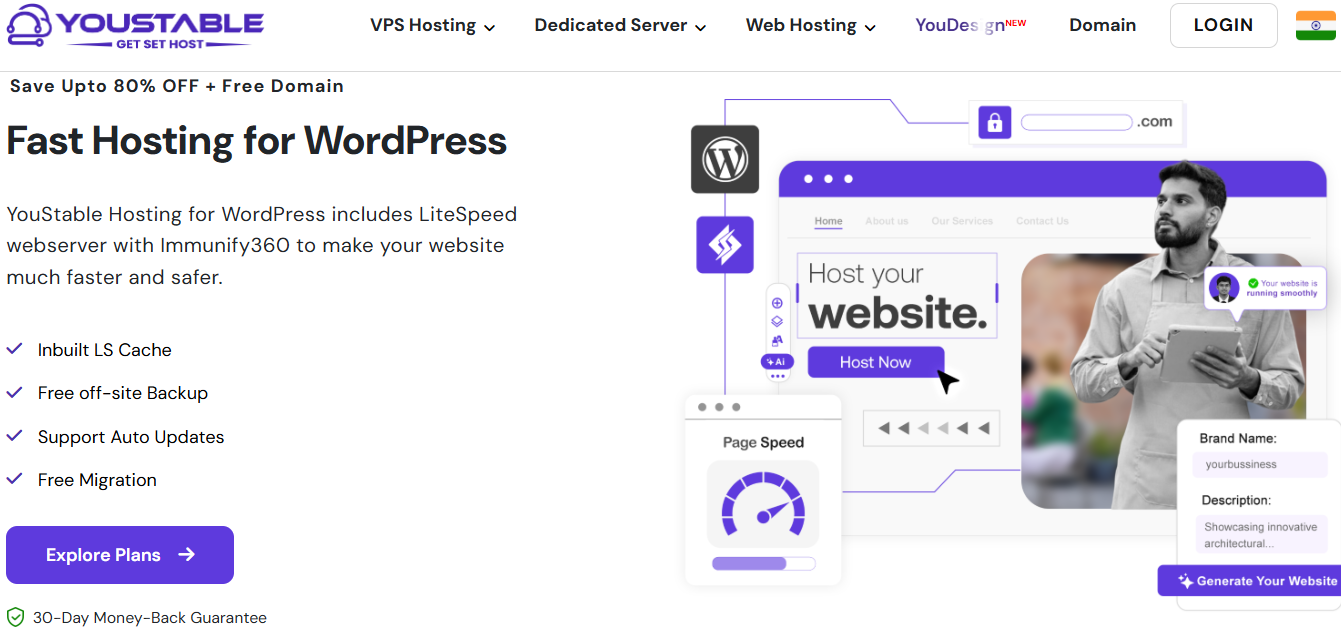
- Visit the YouStable website and open WordPress hosting plans.
- Choose a beginner friendly plan with NVMe + LiteSpeed + free SSL.
- Select the server location closest to your Punjabi audience.
- Register a new domain or connect an existing one during checkout.
- Complete checkout and access your hosting dashboard/cPanel.
- Install WordPress using the 1‑click installer (Softaculous/Installatron).
- Enable HTTPS, force SSL, and install the LiteSpeed Cache plugin.
- Turn on daily/weekly backups and enable Redis Object Cache if offered.
YouStable is a practical fit for Punjabi bloggers due to fast India based servers, WordPress first support, and a stack tuned for Core Web Vitals important for ranking and eligibility in premium ad networks.
| YouStable WordPress Hosting Plans & Pricing Table in 26th February 2026 | ||||
|---|---|---|---|---|
| Plans Name | Websites | Storage | Bandwidth | Monthly Pricing |
| DaStart | 1 | 50GB NVMe SSD | Unmetered | $0.65/mo |
| DaProfessional | 25 | 100GB NVMe SSD | Unmetered | $1.31/mo |
| DaElite | Unlimited | 200GB NVMe SSD | Unmetered | $2.42/mo |
Install WordPress & Set Up Your Punjabi Blog
WordPress Installation
Use the 1-click installer, choose the latest PHP, and set a strong admin username/password (avoid “admin”). Immediately enable HTTPS, and disable directory listing. Create a separate author account to publish and keep the admin account for admin-only tasks.
Basic WordPress Settings
Set Site Language to Punjabi (Gurmukhi) if your content is Punjabi first. Timezone should be Asia/Kolkata. Use a clean permalink structure like “Post name.” Enable discussion settings thoughtfully to avoid spam use Akismet or reCAPTCHA if you allow comments.
Essential Pages
Create About, Contact, Privacy Policy, and Disclaimer pages before publishing posts. These are part of EEAT and help ad networks and users trust your site. Add a proper footer menu with these links and include a physical contact or PO box if possible.
Essential Plugins (Lean Stack)
SEO: Rank Math or Yoast; Cache: LiteSpeed Cache; Security: Wordfence or Solid Security; Backup: UpdraftPlus (offsite storage to Google Drive/S3); Images: ShortPixel/Imagify with WebP; Forms: WPForms/Contact Form 7; SMTP: FluentSMTP for reliable mail delivery. Keep the plugin count lean for speed.
Theme & Design
Use a lightweight theme (GeneratePress, Astra, Kadence, Blockbase) with minimal JavaScript. Avoid heavy page builders; Gutenberg blocks are enough for most blogs and are faster. Set a readable font stack that supports Gurmukhi properly.
Best Blogging Platform to Start a Blog in Punjabi
Choose a platform that gives you control over SEO, design, and monetization.
Self hosted WordPress wins for scalability, plugins, and performance tuning.
WordPress is the best option for regional blogging because it puts you in charge: structured data, XML sitemaps, multilingual options, speed optimization, and monetization flexibility.
Blogger is free but limited for growth and SEO control. Medium is great for distribution but not for building your domain authority or ad revenue. If you’re serious about long term traffic and income, choose self hosted WordPress.
Content Ideas & Choosing the Right Niche
Pick a niche where you can publish 50-100 helpful posts over 6-12 months. Strong Punjabi niches include agriculture (kheti), government schemes, education/exam prep, local travel, culture and festivals, food recipes, home remedies, health and wellness, small business, and tech how tos explained in simple Punjabi.
Balance evergreen topics (“wheat sowing calendar,” “IELTS preparation in Punjabi”) with trending topics (new schemes, seasonal guides). Validate demand by checking Google Autocomplete, People Also Ask, related searches, and Punjabi queries on YouTube. Ensure monetization potentialn ads, affiliates, sponsored posts fits your niche.
Importance of Consistency and Patience
Blogging compounds. Expect 3-6 months to see steady traffic and 9-12 months for authority, provided you publish, interlink, and update consistently. Use a publish → analyze → improve loop: review Search Console queries, expand winning posts, and prune or merge weak ones. One great post a week beats five rushed ones.
How to Write SEO Friendly Content for a Punjabi Blog
Write for people first, then refine for search with clean structure and metadata.
Use clear Gurmukhi, short paragraphs, and examples rooted in Punjabi context.
Step 1. Write Original & Valuable Content
Answer the query completely with practical steps, visuals, and local examples. Avoid thin rewrites or generic AI outputs Google’s helpful content systems demote low value content. Include data, checklists, and FAQs inside posts. If you cover government schemes, cite official links and dates for trust.
Step 2. Keyword Research (Language + Regional)
Use Google Autocomplete, People Also Ask, and YouTube suggestions in Punjabi and Latin transliteration (e.g., “kheti subsidy Punjab,” “ਕਿਸਾਨ ਸਕੀਮ”). Long tail keywords with clear intent are faster to rank. Consider bilingual coverage where relevant (Punjabi + English explanations) to capture wider SERPs, but maintain Punjabi first clarity.
Tools: Google Trends (region: Punjab), Search Console, Rank Math’s built in suggestions, and simple spreadsheets to cluster topics. Map each post to a specific intent informational, comparison, or transactional.
Step 3. On Page SEO
Use clear titles and H2/H3s with natural Punjabi phrasing. Keep URLs short and descriptive. Add a helpful meta description with a benefit and call to action. Implement schema via Rank Math/Yoast (Article, FAQ, Breadcrumb). Add internal links to pillar pages and related how tos to build topical authority and reduce bounce.
Step 4. Use Images & Internal Linking
Compress images (WebP/AVIF via LSCache/ShortPixel). Use descriptive alt text in Punjabi where appropriate. Add contextual internal links near relevant paragraphs, not only in “Related posts” widgets. Aim for 3–6 internal links per post and link up to a pillar page from every supporting article.
Step 5. Update Content Regularly
Freshness matters. Update seasonal posts (festival guides, crop calendars, exam dates) and add new FAQs or stats. Use Search Console to find decaying pages and refresh them with new sections, better formatting, or improved visuals. Republish with updated dates where appropriate.
How to Rank Your Punjabi Blog on Google
Ranking in 2026 is about intent match, strong UX, and clear topical depth. Build clusters, optimize Core Web Vitals, and signal real expertise and trust.
Start with intent: does your post fully answer what searchers need? Then layer in technical excellence. Here are seven factors that consistently move the needle for Punjabi blogs.
- Search intent match: Align titles, intros, and structure to the query’s goal. Put the answer near the top and expand below.
- Topical authority: Create clusters (e.g., Kheti Guide → soil prep, seed selection, irrigation, subsidies). Link all nodes.
- Internal linking: Use pillar pages and contextual links. Add breadcrumb schema and a logical silo structure.
- Page speed & Core Web Vitals: Target LCP < 2.5s, INP < 200ms, CLS < 0.1. Use LiteSpeed Cache, QUIC.cloud, and image CDNs.
- EEAT signals: Add author bio, credentials, local experience, sources, and contact details. Use About and Contact pages.
- Content freshness: Update cluster hubs quarterly; refresh seasonal and exam related posts on schedule.
- Natural backlinks: Earn links via Punjabi guest posts, expert quotes in local media, and high quality how tos worth citing.
7 Ways to Make Money from a Punjabi Blog in 2026
Monetize after you’ve built consistent traffic and strong user engagement.
Diversify income: ads, affiliates, sponsors, products, and services.
1. Google AdSense
AdSense supports Indian regional languages and is a common starting point. Focus on clean layouts, fast pages, and brand safe content to improve approval odds. RPMs vary by niche and audience device mix long form guides and how tos typically perform better.
2. Affiliate Marketing
Promote relevant tools and products education platforms, agri tools, kitchenware, books, or hosting if your niche is tech. Write comparison posts, tutorials, and honest reviews. Disclose affiliations clearly and focus on long term trust over quick commissions.
3. Sponsored Posts
Local brands want access to Punjabi audiences. Create a “Work with us” page listing rates, formats, and audience stats. Vet sponsors for relevance and quality. Mark sponsored content clearly and keep editorial independence intact.
4. Digital Products (Ebooks, Courses, Templates)
Convert pillar content into ebooks or short courses in Punjabi such as exam prep guides, farming calendars, or home business playbooks. Use Gumroad, Lemon Squeezy, or LearnDash for delivery. Offer free samples to build trust.
5. Freelancing or Services
Leverage your blog to sell services: translation, content writing, social media management for Punjabi brands, or consulting in your niche. Case studies and testimonials on your site help convert inquiries.
6. Local Business Leads
If you cover local topics (events, education centers, healthcare), create city pages and directory style posts. Add clear CTAs and contact forms. Use call tracking or WhatsApp click to chat to measure results and sell lead packages ethically.
7. YouTube + Blog Combo
Repurpose blog posts into YouTube videos in Punjabi and embed them back in your articles. This multiplies reach, boosts on page engagement, and creates an additional revenue stream via YouTube Partner Program and brand deals.
Practical Punjabi Specific Tips in 2026
Small tweaks in typing, fonts, and SERP behavior can boost results fast.
Design for mobile first Punjabi readers with crisp typography and white space.
- Typing & Input: Use Gboard, Google Input Tools, or Indic Keyboard for Gurmukhi. Keep transliteration variants in mind when researching keywords.
- Script considerations: Punjabi in India uses Gurmukhi; Pakistan uses Shahmukhi (Arabic script). If your audience spans both, consider bilingual posts or separate categories.
- Multilingual setup: If adding English/Hindi, use Polylang or WPML. Maintain separate slugs and hreflang tags for clarity.
- Accessibility: Choose legible Gurmukhi fonts, larger line height, and contrast friendly palettes. Avoid text in images.
- Analytics: GA4 + Search Console for tracking; set Punjabi filters and segment by device/city for content planning.
Technical Setup Checklist for Speed & Security
Fast sites rank better and convert more optimize your stack early.
Security lapses ruin trust and ad approvals harden WordPress on day one.
- Performance: LiteSpeed Cache (QUIC.cloud CDN), server level caching, Redis Object Cache, HTTP/3, Brotli, PHP 8.2/8.3, lazy load images/iframes, preconnect critical domains.
- Core Web Vitals: Aim LCP < 2.5s, INP < 200ms, CLS < 0.1. Audit with PageSpeed Insights and real user data in Search Console.
- Security: Wordfence/Solid Security, 2FA for admin, WAF enabled, disable XML-RPC if unused, limit login attempts, reCAPTCHA on forms.
- Backups: Daily offsite backups with UpdraftPlus to Drive/S3. Test restores quarterly.
- Maintenance: Auto update minor versions, review plugin list monthly, and replace abandoned plugins promptly.
Publishing Workflow That Scales
A repeatable workflow prevents quality drops as you publish more.
Create templates for posts, images, and internal linking to save hours.
- Brief the post: target query, angle, subheadings, FAQs, interlinks.
- Draft in Punjabi first; add examples, screenshots, and official citations.
- Optimize on page: titles, meta, schema, images, links, and table of contents.
- Publish, share on social, and submit URL in Search Console if timely news.
- Update after 30 days using Search Console queries; add missing sections.
FAQs
Is Punjabi supported by Google AdSense and SEO tools?
Yes. AdSense accepts Indian regional languages, and SEO plugins like Rank Math/Yoast work regardless of language, focusing on structure, metadata, and schema. Quality and policy compliance remain key.
Should I blog only in Punjabi or mix Punjabi and English?
Punjabi first content builds trust fastest. You can add English sections or create bilingual posts if your audience prefers it. Use Polylang for separate language versions and proper hreflang tags.
Which hosting is best for a Punjabi blog?
Choose NVMe WordPress hosting with LiteSpeed/OpenLiteSpeed, India or nearby data centers, free SSL, backups, and Redis. YouStable is a practical pick for performance focused regional blogs.
How many posts do I need before applying for AdSense?
There’s no fixed number, but 20-30 high quality, original posts with essential pages (About, Contact, Privacy, Disclaimer), clean navigation, and fast performance usually set a strong foundation.
How do I type Punjabi on my laptop or phone?
Use Gboard or Google Input Tools (mobile/desktop) to type Gurmukhi. For desktops, install Punjabi keyboard layouts or use transliteration. Always publish in Unicode fonts for search compatibility.
What’s the fastest way to get traffic to a new Punjabi blog?
Publish helpful how tos with long tail keywords, share on relevant Punjabi Facebook groups/WhatsApp communities, and embed short explainer videos. Interlink aggressively and update posts based on Search Console data.
Do I need a logo and brand kit from day one?
Nice to have but not mandatory. A simple text logo and consistent colors are enough initially. Prioritize fast hosting, clean design, and content velocity first.
Conclusion
Blogging in Punjabi is a real, long term opportunity in 2026. With lower competition, rising demand, and Google’s focus on helpful local content, you can build authority and earnings if you commit to quality, speed, and consistency.
Choose a niche, register a brandable domain, and deploy fast NVMe WordPress hosting. Publish original Gurmukhi content, cluster your topics, optimize Core Web Vitals, and monetize thoughtfully. The sooner you ship your first 20–30 posts, the sooner compounding works in your favor.
If you need a reliable foundation, consider a LiteSpeed + NVMe host with India based servers like YouStable and focus on what matters most creating Punjabi content that genuinely helps your readers.