Choosing the right hosting can feel confusing, especially when your website or application starts growing faster than expected. That’s where a Linux dedicated server in India comes into the picture. If shared hosting feels slow and VPS plans no longer give you the power you need, a dedicated server is the next big upgrade. And when it runs on Linux, you get a perfect mix of performance, flexibility, and cost effectiveness.
A Linux dedicated server gives you an entire physical machine all to yourself. No sharing resources, no random slowdowns, and no limitations. Everything CPU, RAM, storage, and bandwidth is 100% yours. This makes it ideal for high traffic websites, eCommerce stores, SaaS platforms, gaming servers, and businesses that need reliable uptime and fast loading speeds.
Hosting your server in India also means lower latency and faster response times for Indian users. On top of that, Linux is open source, secure, and developer friendly, making it a favorite choice for startups and enterprises alike. In this guide, we’ll explore the best Linux dedicated servers in India, what makes them worth your money, and how to choose the right one for your needs, without the technical jargon.
What is a Linux Dedicated Server?
A Linux dedicated server is a hosting solution where you get a full physical server exclusively for your website or application, running on Linux operating systems like AlmaLinux, Ubuntu, or Debian.
All resources such as CPU, RAM, storage, & bandwidth are completely dedicated to you, delivering stable performance without slowdowns.
It is ideal for high traffic websites and applications that require speed, control, security, & long term scalability.
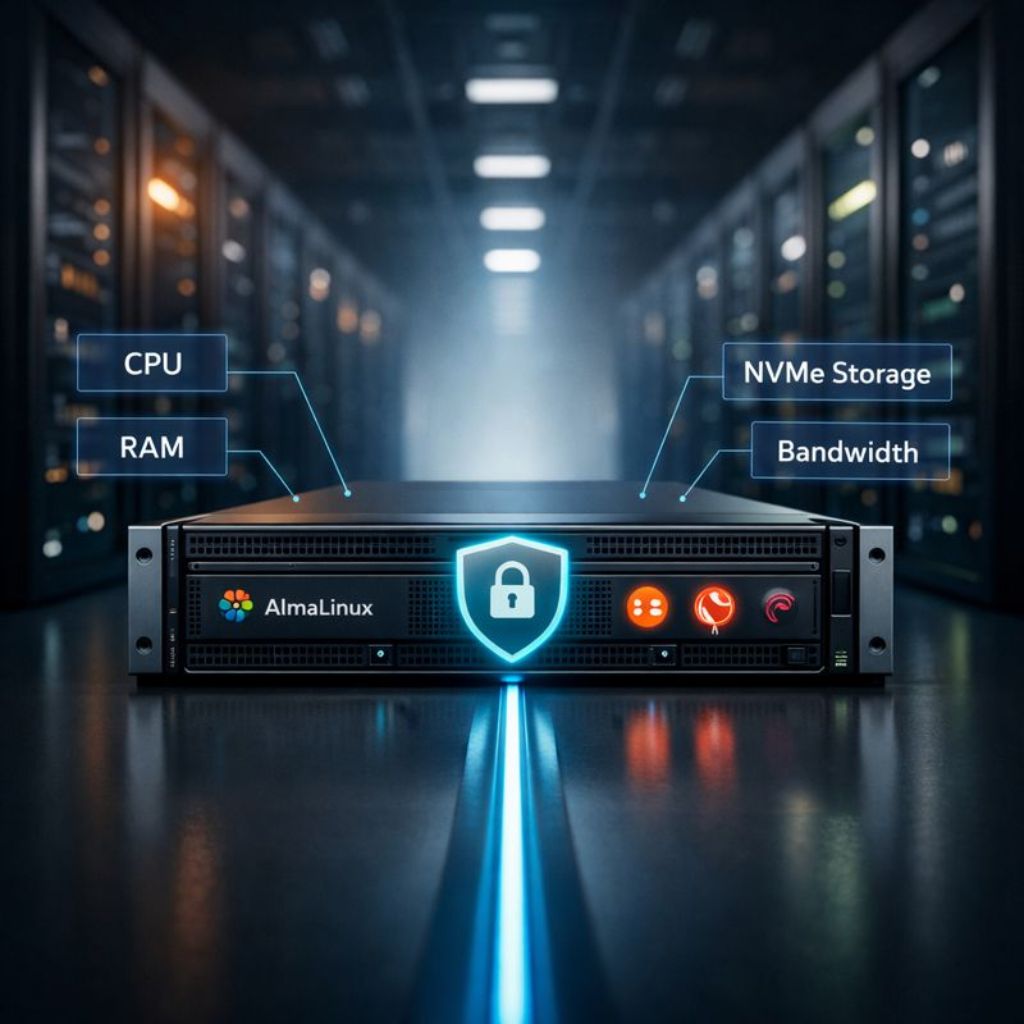
10 Best Linux Dedicated Servers in India 2026, May
This shortlist balances raw performance with India first network reach and support.
Expect sub 20 ms latency in metros and strong throughput for modern workloads.
1. YouStable – Accepts UPI Payments + Hindi Support
Best for: High traffic WordPress, SaaS, and eCommerce needing NVMe speed with managed ops
Price: Typically from ₹7,058-₹56,200/mo for entry builds; custom EPYC/Xeon configs scale up

YouStable focuses on India optimized Linux dedicated servers with AMD EPYC and Intel Xeon builds, ECC RAM, and enterprise NVMe storage. With 1-10 Gbps network options and peering at major Indian internet exchanges, you can achieve sub 20 ms latency for users in Mumbai, Delhi NCR, and Bangalore. Managed tiers include proactive monitoring, patching, firewall hardening, and hands on migrations for cPanel/WHM and Plesk environments.
What stands out is practical support: real engineers available 24/7 who can troubleshoot stack level issues (Nginx, PHP-FPM, MariaDB, Redis) and coordinate data center tasks. For teams moving from cloud VMs to predictable bare metal TCO, YouStable’s transparent bandwidth, DDoS protection, and backup options make capacity planning much simpler.
Key Features of YouStable
If you want strong performance and stability under heavy traffic, YouStable delivers reliable hardware with easy management. It helps you run & scale your applications smoothly without complications.
- India Tier III data centers with redundant power and cooling – improved uptime and resilience
- AMD EPYC/Intel Xeon servers with ECC RAM – consistent performance for concurrent workloads
- NVMe storage + RAID options – fast I/O for databases, search indices, and cache layers
- 1-10 Gbps ports with DDoS mitigation – sustain bursts and absorb volumetric attacks
- Managed Linux stack (AlmaLinux/Ubuntu/Debian) – hardening, patching, and monitoring included
- Hands on control panel support – cPanel/WHM, Plesk, and LiteSpeed/CloudLinux integrations
- Transparent pricing with backups and IP options – plan TCO without surprise overages
Plans & Pricing
Not sure which plan you should pick? If you’re just starting, you can go with a basic server and upgrade later as your traffic grows. YouStable keeps things simple with flexible pricing, so you can scale your server easily without confusion or unexpected costs.
| Plan Name | CPU | RAM | Storage | Bandwidth | Monthly Price |
| E3-1230v3-3.30Ghz | 4 | 32GB DDR4 | 480GB SSD | 10TB/1Gbps | ₹7,058/mo |
| E-2136-3.30Ghz | 6 | 32GB DDR4 | 480GB SSD | 10TB/1Gbps | ₹10,678/mo |
| Ryzen 9 7700 | 8 | 32GB DDR4 | 960 GB NVMe SSD | 10TB/1Gbps | ₹17,737/mo |
Why Choose YouStable Linux Dedicated Server?
So, why should you choose YouStable? If you want a server that handles high traffic smoothly without slowing down, this is a solid option. You get powerful hardware, low latency in India, & managed support that actually helps when you need it, so you can focus on your work instead of worrying about server issues.
2. BlueHost India – Brand Comfort with Managed Options
Best for: SMBs and agencies wanting familiar tooling, cPanel/WHM, and guided management
Price: Starts around₹13001.58-₹28420.55/mo for base dedicated; add-ons may apply

BlueHost India offers Linux dedicated servers suited for agencies consolidating multiple cPanel accounts. Their platform emphasizes managed support, easy SSL and backups, and one dashboard control. While not always the cheapest, BlueHost’s India presence and brand stability appeal to users who value predictable support paths and documentation.
For WordPress heavy stacks, pairing AlmaLinux with LiteSpeed or NGINX reverse proxy can deliver excellent TTFB. The network includes strong backbone providers; check bandwidth quotas and overage policies if you run frequent media transfers or devops pipelines across regions.
Key Features of BlueHost India
- Managed cPanel/WHM deployments – simplifies migrations from shared or VPS hosting
- India focused server provisioning – better latency than offshore data centers
- Automated backups and SSL options – faster compliance and recovery workflows
- Solid WordPress ecosystem support – staging, caching, and CDN integrations
- 24/7 support with guided playbooks – predictable troubleshooting experience
- Root access for advanced admin – combine managed comfort with custom control
3. HostGator India – Easy On Ramp to Dedicated
Best for: First time dedicated buyers moving from VPS; cPanel centric operations
Price: Approx. ₹7,699-₹10,499/mo for entry; verify bandwidth and IP costs

HostGator India provides approachable Linux dedicated plans with familiar control panels and one click installers. The managed stack suits SMBs that need quick setup, reasonable hardware, and a support team accustomed to cPanel workflows. Expect decent hardware profiles for CPU bound PHP applications and media heavy websites.
Before deployment, align your workload with RAID needs, SSL issuance, and backup retention. If you’re handling payment data, confirm PCI related configuration guidance and WAF availability. HostGator’s support processes are clear, which lowers risk for teams taking their first step into bare metal.
Key Features of HostGator India
- Managed Linux with cPanel/WHM – low friction setup for existing cPanel users
- India hosted servers – lower latency for domestic traffic and SEO geo signals
- One click installers and staging – faster website and app rollouts
- Basic DDoS and firewall posture – essential protections for SMB websites
- Scalable RAM and storage – upgrade path without complex re-provisioning
- 24/7 support and migrations – guided transition from shared/VPS to dedicated
4. Contabo – Value Focused Bare Metal with Big Bandwidth
Best for: Cost sensitive projects needing high bandwidth and generous resources
Price: Often among the lowest; from ₹10410.11-₹62057.15/mo depending on config

Contabo is known for aggressive pricing and large traffic allowances. If your workloads are bandwidth heavy package repos, downloads, backups, or streaming, Contabo can offer compelling TCO. While the brand is Germany rooted, choose India region servers where available or closest proximity to minimize latency.
The trade off for value can be longer support queues at peak times. For experienced Linux admins comfortable self managing firewalls, fail2ban, and monitoring stacks (like Prometheus/Grafana), Contabo delivers serious hardware per rupee, especially with NVMe options.
Key Features of Contabo
- Highly competitive pricing – stretch budgets for dev/test and production clusters
- Big traffic quotas and fast uplinks – ideal for downloads, mirrors, and CI/CD artifacts
- Flexible OS choices – Ubuntu, Debian, AlmaLinux with root control
- NVMe storage tiers – cut DB and cache latency for dynamic apps
- Unmanaged first posture – freedom to run custom kernels and security stacks
- Upgradeable resources – scale RAM, storage, and ports as traffic grows
5. E2ENetworks – India Native, Cloud + Bare Metal Hybrid
Best for: India first latency with hybrid cloud/bare metal and enterprise SLAs
Price: Mid range; custom quotes common for EPYC/Xeon and 10 Gbps asks

E2ENetworks operates deep within India’s ecosystem, offering bare metal and cloud instances that interconnect cleanly. For enterprises needing low latency between servers and managed Kubernetes or GPU instances, E2E’s fabric and local peering are strong differentiators. Linux builds cover Ubuntu, AlmaLinux, and Debian, with robust API/portal control.
Expect advanced add-ons like DDoS, WAF, backup vaults, and compliance ready options. For regulated workloads, their India presence and documentation can simplify audits compared to offshore vendors. If you need a mix of dedicated + VM elasticity, E2E is worth a close look.
Key Features of E2ENetworks
- India Tier III facilities and peering – consistently low domestic latency
- Hybrid architectures – run bare metal alongside cloud VMs and Kubernetes
- Enterprise grade DDoS and WAF – L3/L4/L7 protection for public facing apps
- API driven provisioning – automate deployments and configuration pipelines
- Compliance minded operations – documentation for audits and governance
- Custom networking – VLANs, rDNS, and private interconnects for microservices
6. InMotionHosting – Reliable Hardware with Managed Care
Best for: Teams wanting US grade hardware quality delivered with managed Linux
Price: Mid to upper mid; value improves with long term contracts

InMotionHosting brings mature managed Linux dedicated hosting with a focus on stability. While historically US centric, they offer global reach; confirm India routing and data locality for compliance or latency targets. Their managed stack includes kernel updates, proactive security, and performance tuning across web and database tiers.
For developers, SSH with sudo, Git deployment hooks, and staging support simplifies CI/CD. Pair AlmaLinux with cPanel or run a panel free NGINX/Redis stack to maximize resources for PHP workers and background queues.
Key Features of InMotionHosting
- Managed OS and stack updates – fewer maintenance windows for your team
- Hardware RAID and NVMe – faster rebuilds and sustained throughput
- Security hardening and monitoring – active response to threats and anomalies
- Panel or panel free flexibility – cPanel/WHM, Plesk, or pure Linux stacks
- Developer friendly workflows – SSH, Git, staging, and rollbacks
- Clear SLAs and support tiers – predictable response and restore timelines
7. UltaHost – Managed Linux with Strong Security Defaults
Best for: SMEs needing full management, free migrations, and hardened defaults
Price: Competitive managed tiers; confirm India DC availability during checkout

UltaHost positions itself as a security forward managed provider. For Linux dedicated servers, they include malware scanning, WAF options, and application level optimizations out of the box. If you’re moving from multiple shared/VPS servers, UltaHost’s coordinated migration reduces downtime risk.
Ops teams gain value from regular patching, backup automation, and proactive resource alerts. Confirm data center location (India vs nearby region) and bandwidth quotas, especially for media sites or API heavy services with traffic bursts.
Key Features of UltaHost
- Hardened Linux builds – firewalls, malware scans, and staged patching
- Managed migrations – zero/low downtime cutovers from cPanel/Plesk or custom stacks
- NVMe storage as standard – accelerate database and cache operations
- Free SSL and automated backups – easier compliance and faster recovery
- 24/7 admin support – help beyond basic reboots and panel tasks
- Scalable resources – grow CPU/RAM/storage as your traffic expands
8. AccuWeb Hosting – Versatile Configs and Fast Provisioning
Best for: Teams needing custom specs, quick delivery, and Linux versatility
Price: Broad range; entry to enterprise depending on CPU, NVMe, and bandwidth

AccuWeb Hosting provides a wide array of Linux dedicated configurations with strong customization ideal if you need very specific RAM, storage topology (RAID-10 NVMe), or multi IP requirements. Provisioning is generally fast, and support is responsive with clear escalation paths.
The platform suits agencies, resellers, and mid market apps requiring predictable performance. Validate India region data center options and request traceroutes for your audience to ensure you’ll meet latency SLAs.
Key Features of AccuWeb Hosting
- Highly customizable servers – tune CPU cores, ECC RAM, NVMe, and RAID
- Linux distro choice – AlmaLinux, Ubuntu, Debian with root access
- Rapid provisioning – get hardware online quickly for migrations
- DDoS protection add-ons – mitigate common volumetric attack vectors
- Multi IP and rDNS management – support for hosting/reseller scenarios
- Optional managed layers – add control panels and admin support
9. Hosting.com – Enterprise Grade Heritage and Support
Best for: Enterprises seeking governance, documented processes, and SLAs
Price: Premium; expect custom quotes for India placement and compliance

Hosting.com (enterprise heritage via managed hosting lineage) focuses on process driven operations, audits, and SLAs. For Linux dedicated servers in or near India, they can deliver policy backed change management, detailed runbooks, and compliance artifacts that larger organizations require.
If you need SOC 2 reports, advanced security tooling, and 24/7 managed response, this is a fit. Confirm India data center availability or latency guarantees to your target metros and factor in premium pricing for governance heavy environments.
Key Features of Hosting.com
- Enterprise SLAs and governance – change control, incident management, and audits
- Security stack integration – SIEM, WAF, and vulnerability management options
- Documented procedures – runbooks for patching, backups, and DR tests
- Compliance ready posture – SOC 2/ISO documentation for audits
- Custom networking and VPN – private connectivity and access control
- 24/7 L2/L3 support – escalation paths aligned to enterprise needs
10. ServerWala – India Focused Dedicated with Quick Customization
Best for: India centric workloads needing quick setup and budget conscious scaling
Price: Competitive; wide range based on CPU generation and NVMe/RAID choices

ServerWala offers India based Linux dedicated servers with flexible CPU/RAM/storage choices and a solid focus on local latency. It’s a strong option for SMEs and startups that want faster provisioning and the ability to customize IP blocks, rDNS, and bandwidth without enterprise level contracts.
Expect DDoS options, private networking, and standard distros like AlmaLinux, Ubuntu, and Debian. If you’re consolidating multiple sites or microservices, plan RAID-10 NVMe and separate volumes for databases vs logs to keep performance predictable.
Key Features of ServerWala
- India Tier III presence – optimized routes for domestic traffic and SEO
- Configurable hardware – choose Xeon/EPYC, ECC RAM, and NVMe RAID
- Linux distro flexibility – AlmaLinux, Ubuntu, Debian with root access
- Network add-ons – VLANs, additional IPs, and rDNS controls
- Managed support options – upgrade for monitoring and patching
- Fast setup – spin up dedicated boxes quickly for migrations
Who Should Choose a Linux Dedicated Server in India?
Pick dedicated when shared or VPS can’t meet CPU, memory, or I/O demands reliably.
Choose India DCs when user data or latency requires domestic processing and hosting.
Linux dedicated servers are ideal for businesses needing consistent, isolated compute for:
- High traffic WordPress/WooCommerce with Redis, object cache, and CDN
- SaaS/PaaS environments with background workers and message queues
- API backends and microservices requiring low tail latency
- Video streaming or large file distribution with high outbound bandwidth
- Fintech/Edtech workloads requiring India data residency and compliance
- Agencies and resellers consolidating many cPanel accounts on one box
Key Factors to Compare for Linux Dedicated in India
Hardware dictates headroom; network routes decide user experience and conversions.
Management quality affects uptime just as much as CPU cores and NVMe speed.
When shortlisting providers, evaluate these technical and operational essentials:
- CPU Generation: Prefer AMD EPYC (7xx2/7xx3) or Intel Xeon Scalable (Silver/Gold)
- Storage: NVMe over SATA SSD; RAID-1 for OS, RAID-10 for data intensive apps
- Network: 1-10 Gbps ports, multi carrier redundancy, NIXI peering, low packet loss
- Security: DDoS always on, hardware firewalls, rDNS, ACLs on IPMI/BMC, private VLANs
- Backups: Snapshot + offsite; daily increments + weekly full; test restores quarterly
- Management: Clear SLAs, kernel patching, monitoring, and response commitments
- Compliance: ISO 27001 DCs; assist with PCI-DSS hardening if you process payments
- Contracts: IP allocations, bandwidth overage, upgrade paths, and exit/migration terms
Linux OS and Control Panels: What to Use in 2026
AlmaLinux replaced CentOS for production; Ubuntu LTS remains widely supported.
cPanel/WHM is the default for hosting; Plesk suits mixed stacks and .NET proxies.
Recommended stacks by use case:
- WordPress/WooCommerce: AlmaLinux + cPanel/WHM + LiteSpeed + Redis + offsite backups
- SaaS/API: Ubuntu LTS + NGINX + PHP-FPM or Node.js + Redis + Prometheus/Grafana
- Reseller/Agencies: AlmaLinux + CloudLinux + cPanel + Imunify360 + JetBackup
- Streaming/Media: Ubuntu + NGINX/RTMP or HLS + 10 Gbps NIC + DDoS L7 filters
Performance and Security Quick Check
Benchmark read/write and CPU; then harden SSH and set up monitoring from day one.
Document restores and failover steps; test them quarterly to avoid surprises later.
# CPU and disk sanity checks
sudo apt update && sudo apt install -y sysbench fio

# CPU benchmark (example)
sysbench cpu --threads=8 --time=30 run

# NVMe I/O test (adjust device)
fio --name=randrw --filename=/dev/nvme0n1 --rw=randrw --bs=4k --iodepth=64 --runtime=60 --numjobs=4 --time_based --group_reporting

# Basic SSH hardening (sample steps)
sudo sed -i 's/^#\?PasswordAuthentication.*/PasswordAuthentication no/' /etc/ssh/sshd_config
sudo sed -i 's/^#\?PermitRootLogin.*/PermitRootLogin no/' /etc/ssh/sshd_config
sudo systemctl restart sshd
FAQs
Which Linux Distro is Best for a Dedicated Server in India?
AlmaLinux (stable RHEL-compatible) and Ubuntu LTS are the top choices. Pick AlmaLinux for cPanel/WHM hosting and Ubuntu LTS for modern app stacks (NGINX, Node.js, containers).
How Much RAM and Storage Do I Need for High Traffic WordPress?
Start with 32-64 GB RAM, NVMe RAID-10, and 8-16 CPU cores. Add Redis object cache, PHP-FPM tuning, and a CDN. Scale vertically before sharding if latency budgets permit.
Is a Managed Linux Dedicated Server worth the Premium?
Yes if you lack in house admins. Managed providers handle patching, security, backups, and performance tuning, often preventing costly downtime and faster recovery when issues arise.
Do Indian Data Centers Improve SEO for India Audiences?
They can help. Lower TTFB and faster rendering improve UX signals. Combined with geotargeting and CDN, hosting in India supports faster pages for domestic users, aiding conversions.
How Important is DDoS Protection for Dedicated Servers?
Critical for public sites and APIs. Choose always on L3/L4 mitigation and L7 filtering for HTTP. Ensure clean traffic delivery and clear playbooks for incident response.
What Bandwidth Should I Expect with Indian Dedicated Servers?
Common ports are 1 Gbps with 5-30 TB traffic. For media or CI/CD, seek 1-10 Gbps with higher quotas or unmetered options, and clarify overages before purchase.
Can I Host Fintech Workloads on Linux Dedicated Servers in India?
Yes, but confirm data locality, ISO 27001 DCs, audit support, encryption at rest, and network segmentation. Work with providers experienced in RBI/PCI-DSS aligned setups.
Conclusion
For 2026, the best Linux dedicated server in India balances modern CPUs, NVMe, and India first networks with real management and security.
YouStable, E2ENetworks, and UltaHost lead for managed performance; Contabo and ServerWala win on budget value; BlueHost India and HostGator India suit cPanel heavy agencies.
Match your workload to CPU, storage topology, bandwidth, and SLAs, then deploy with a hardened Linux baseline and tested backups for reliable growth.