To start a blog in South Africa in 2026, choose a niche, register a .co.za or .com domain, buy fast NVMe WordPress hosting with a South African or nearby data centre, install WordPress, configure SEO and security plugins, publish helpful local content, and monetize via AdSense, affiliates, and services.
Prioritize Core Web Vitals, internal linking, and EEAT signals. Comply with POPIA using clear policies. Track progress with Search Console and iterate monthly. Starting a blog in South Africa today is more than a hobby it’s a durable, income generating asset.
With Google rewarding helpful, localized content, South African bloggers who publish in English or local languages can build authority faster than ever.
This guide walks you step by step through domain and hosting choices, WordPress setup, SEO, content strategy, ranking, legal pages, and monetization grounded in hands on experience and 2026 best practices.
Whether you’re aiming for AdSense, affiliates, or lead generation, you’ll learn the exact technical stack and workflows I use to launch reliable, fast, and scalable WordPress blogs for South African audiences.
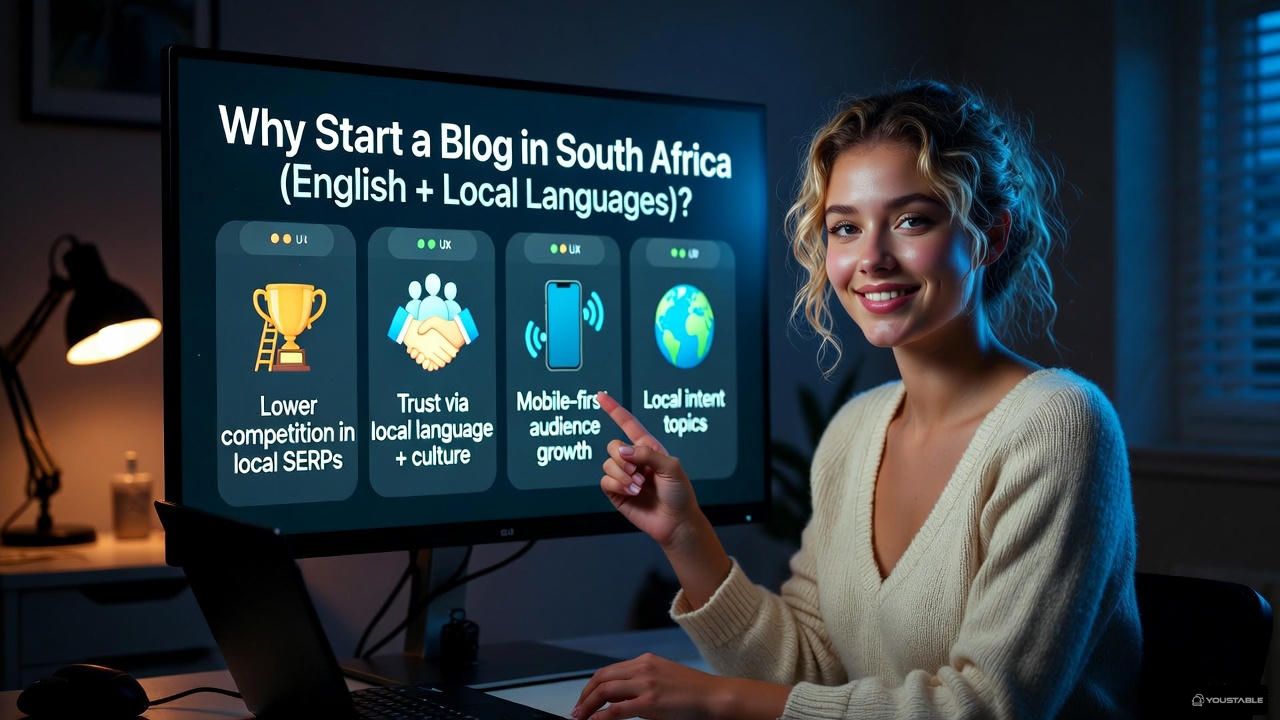
Why You Should Start a Blog in South Africa (English + Local Languages)?
Local content demand is surging across English, isiZulu, Afrikaans, isiXhosa, Sesotho, and more. Google’s algorithms now favour niche authority, first hand experience, and regional relevance.
South Africa’s online readership is growing, with strong mobile usage and affordable data trends. People search for local solutions SASSA updates, student finance, SME tips, township entrepreneurship, travel deals, and tech in plain language. A focused blog with South African context outperforms generic, global content in trust and conversion.
Competition is still lower in many local niches compared to global English markets. Brands, agencies, and Google reward content that uses local terms, prices in ZAR, and references South African regulations and services. This means faster rankings and better engagement.
- Lower competition, higher ranking opportunities in local SERPs
- Deep audience trust via language and cultural relevance
- Higher engagement, time on page, and repeat visitors
- Easier monetization through local affiliates and services
- Content longevity with evergreen South African topics
What Do You Need to Start a Blog in South Africa
Define a niche with real local search demand and clear audience intent. Match a brandable domain with fast, WordPress optimized hosting.
Here’s a quick checklist before setup:
- A clear blogging niche and audience persona
- A memorable domain name (ideally .co.za or .com)
- Fast NVMe hosting near South Africa (Johannesburg/Cape Town)
- WordPress with lean SEO, cache, security, and backup stack
- Editorial calendar and monetization plan
Let’s bridge into domain and hosting choices tailored for South African bloggers.
Choosing a Perfect Domain Name for Your South African Blog
Importance of Domain Branding
Your domain is your brand’s first impression. Short, pronounceable names are easier to remember, type, and recommend. In South Africa, a name that resonates locally (language, slang, geography) improves word of mouth and click through rates.
Domain Name Tips for South Africa
- Keep it short, simple, and easy to say in your chosen language
- Avoid hyphens, numbers, and keyword stuffing
- Use clear value laden words: “guide”, “insider”, “budget”, “deals”
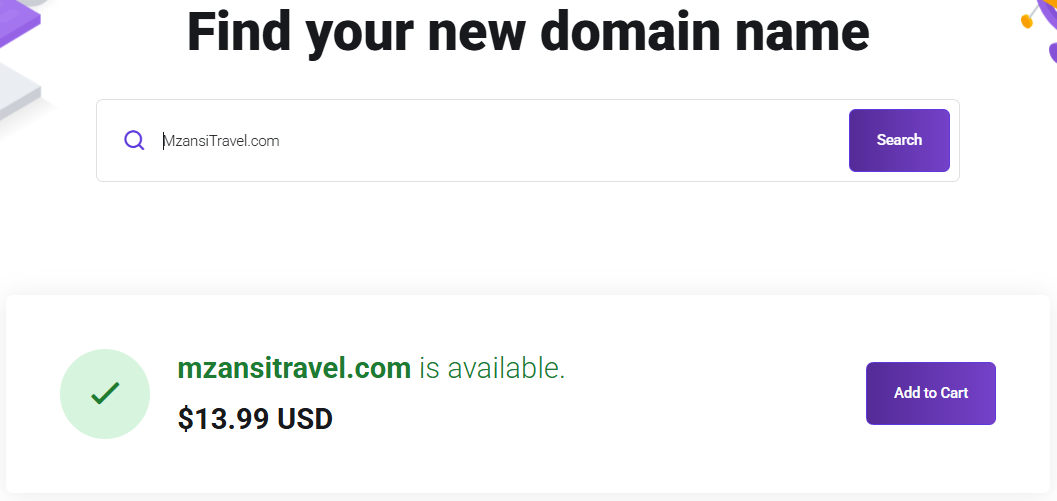
- Examples: MzansiTravel, ZARDeals, StudySmartSA, LocalBites, KasiBusiness
Best TLD Choices
- Preferred: .co.za (local trust, managed by ZACR), .com (global credibility)
- Also good: .africa, .za.net (community), .blog (thematic)
- Advanced: IDNs for Afrikaans or isiZulu terms, paired with a short .com redirect
Social Media Consistency
- Check exact name availability on YouTube, Instagram, Facebook, and X
- Secure handles early to protect your brand and improve cross channel authority
Free vs Paid Hosting – What’s Better for Beginners?
Free Hosting (Why to Avoid)
- Slow shared resources lead to poor Core Web Vitals and rankings
- Random downtime, limited storage/bandwidth, and forced ads
- No SSL, backups, or robust security hurts trust and AdSense approval
- Hard to scale; migration headaches once you grow
Paid Hosting (Why It’s Worth It)
- NVMe SSD + LiteSpeed/OpenLiteSpeed for fast TTFB and LCP
- Free SSL, automatic backups, malware scanning, staging
- Better uptime SLAs and technical support
- Core Web Vitals ready, making SEO and monetization smoother
Best Hosting Setup for Beginners in 2026
- NVMe SSD storage + HTTP/3 (QUIC) for speedy mobile performance
- LiteSpeed or OpenLiteSpeed web server with LSCache
- Data centre in Johannesburg/Cape Town or nearby (Nairobi, Mumbai)
- Cloudflare or QUIC.cloud CDN for global caching and image optimization
- PHP 8.3+, MariaDB 10.6+, and Brotli compression
- Daily offsite backups and one click staging
Set Up Hosting with YouStable – (Step-by-Step)
As a hosting specialist, I recommend a WordPress optimized plan for speed, security, and growth. YouStable provides beginner friendly dashboards, NVMe storage, and performance tuned LiteSpeed stacks with support that understands WordPress.
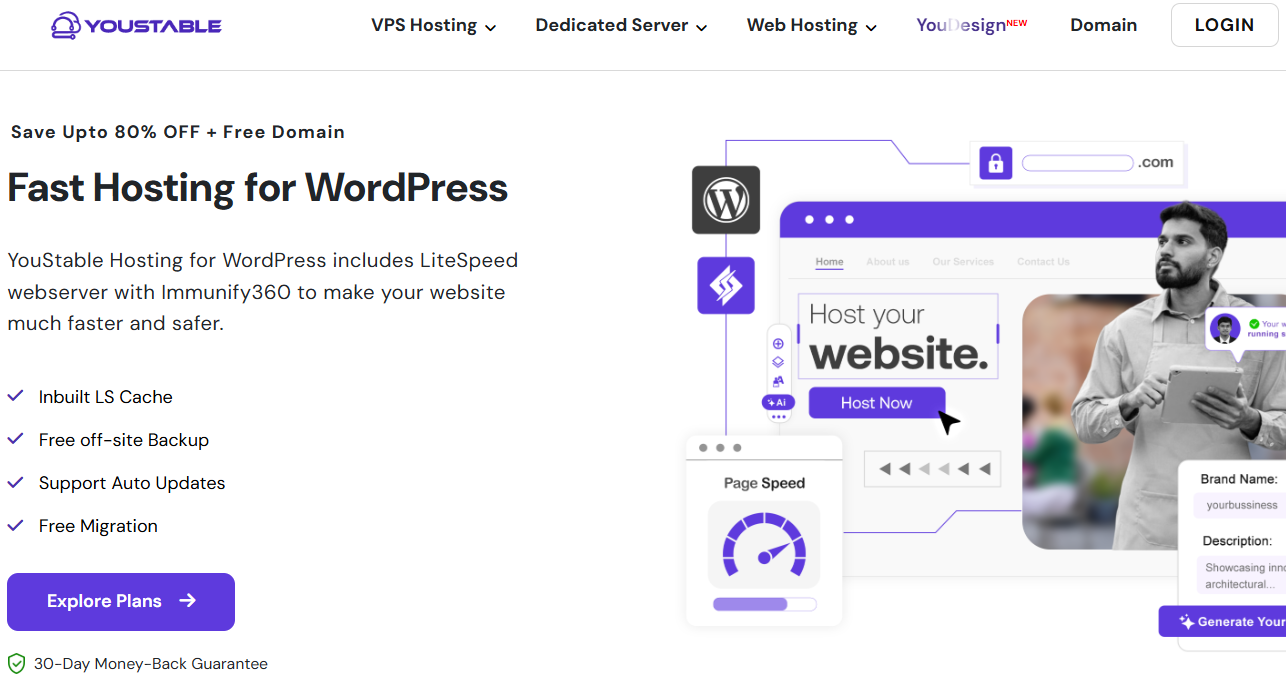
- Visit the YouStable website and open WordPress hosting
- Pick a plan sized to your traffic and storage goals (start modest, upgrade as you grow)
- Select the nearest server location to your readers (Johannesburg/Cape Town or nearest)
- Register a new .co.za/.com domain or connect an existing domain
- Complete checkout; access your control panel for DNS, SSL, and installer
- Use the 1 click installer (Softaculous/Installatron) to deploy WordPress
- Enable free SSL and force HTTPS
- Install LiteSpeed Cache and follow the image/WebP and page cache presets
Fast, regional servers + a tuned WordPress stack translates to better Core Web Vitals, simpler AdSense approval, and a smoother editing experience crucial for new bloggers.
| YouStable WordPress Hosting Plans & Pricing Table in 1st October 2026 | ||||
|---|---|---|---|---|
| Plans Name | Websites | Storage | Bandwidth | Monthly Pricing |
| DaStart | 1 | 50GB NVMe SSD | Unmetered | $0.65/mo |
| DaProfessional | 25 | 100GB NVMe SSD | Unmetered | $1.31/mo |
| DaElite | Unlimited | 200GB NVMe SSD | Unmetered | $2.42/mo |
Install WordPress & Set Up Your South African Blog
WordPress Installation
- Install via 1 click tool; set admin username that isn’t “admin”
- Use a unique, long passphrase and enable HTTPS immediately
- Limit login attempts and enable reCAPTCHA in your forms
Basic WordPress Settings
- Site language: English (South Africa) or your target language
- Timezone: Africa/Johannesburg
- Permalinks: Post name
- Disable default comments on pages; moderate on posts
Essential Pages (with POPIA in mind)
- About: Who you are and why your advice fits South Africans
- Contact: Email/contact form + physical address if you offer services
- Privacy Policy: POPIA compliant disclosure of data usage and cookies
- Disclaimer: Affiliate disclosure, financial/medical disclaimers if relevant
- Terms: Include advertising and comments policy once you scale
Essential Plugins (lean, secure stack)
- SEO: Rank Math or Yoast (enable only needed modules)
- Cache/Performance: LiteSpeed Cache (image/WebP, CSS/JS minify carefully)
- Security: Wordfence or Solid Security (basic hardening + 2FA)
- Backup: UpdraftPlus (daily to Google Drive/S3)
- Images: ShortPixel/Imagify (lossy/lossless + WebP)
- Forms: WPForms/Contact Form 7 with reCAPTCHA
- SMTP: FluentSMTP (domain authenticated via SPF/DKIM)
- Analytics: GA4 + Search Console verification
Best Blogging Platform to Start a Blog in South Africa
Choose a platform you can own, optimize, and monetize without limits. For 2026, WordPress.org remains the most adaptable choice for SA blogs.
Why WordPress: Full SEO control (titles, schema, sitemaps), plugin ecosystem, ownership of your data, and easy scalability from 100 to 100,000 monthly visitors. You can localize content, add multilingual support, and integrate any monetization model.
Versus Blogger/Medium: Blogger is free but limited for SEO and branding; Medium owns the audience and restricts monetization. Both are fine for testing ideas but not ideal for building a South African media asset you fully control.
Content Ideas & Choosing the Right Niche
Pick a niche where you can publish consistently and add first hand insights. Combine evergreen topics (guides, tools, comparisons) with timely content (news, updates, deals) for constant traffic.
- Evergreen: Personal finance in ZAR, business compliance, health advice, DIY
- Local interest: SASSA, NSFAS, bursaries, jobs, Matric/UNISA tips, visa travel
- Lifestyle: South African recipes, braai culture, local travel, wildlife parks
- Tech: Budget smartphones in SA, fibre/ISP comparisons, eSim on SA networks
- SME: Township entrepreneurship, funding, compliance (CIPC/SARS/POPIA)
Validate demand using Google autocomplete, People Also Ask, and Search Console once live. Monetization alignment matters: a finance blog aligns with affiliates (banks, insurers) while travel aligns with bookings and tours.
Importance of Consistency and Patience
Blogging compounds over time. Expect 3–6 months to see early traction and 9–12 months for meaningful traffic if you publish weekly and improve with data. Ship, measure, improve repeat.
Use a simple loop: publish one high quality post weekly, interlink it, fetch and index in Search Console, watch for impressions, update headlines/intros, and expand sections based on PAA queries.
How to Write SEO Friendly Content for a South African Blog
Write for people first, then optimize for search with clean structure. Show first hand experience, local pricing, and references to SA services.
Step 1. Write Original & Valuable Content
Answer the query directly in the intro, then expand with examples and steps. Use South African terms, ZAR pricing, and screenshots from your own setup. Avoid thin rewrites; add checklists, pitfalls, and alternatives so readers can act immediately.
Step 2. Keyword Research (Language + Regional)
Start with Google autocomplete and PAA for long tail phrases like “how to start a blog in South Africa”, “.co.za vs .com”, “AdSense South Africa requirements”. Use local modifiers: “in Johannesburg”, “2026”, “ZAR”, “South African guide”. Expand into related entities: POPIA, SARS, CIPC, NSFAS, fibre ISPs.
Map content to intent: informational guides, comparison posts, and transactional reviews. Prioritize keywords where SERPs show independent blogs an indicator you can win page one.
Step 3. On Page SEO
- Titles/H1: Benefit first, include the main keyword naturally
- Headings: Use H2/H3 to mirror user questions and subtopics
- Meta descriptions: Clear value + CTA; avoid clickbait
- Schema: Article, FAQPage, and Breadcrumbs via your SEO plugin
- Internal links: 3–5 per post to related guides and cornerstone pages
- External links: Cite South African authorities (SARS, ICASA, gov.za)
Step 4. Use Images & Internal Linking
Compress images and serve WebP via LiteSpeed Cache. Use descriptive alt text (not stuffed) and annotate screenshots. Build topic clusters and interlink from new posts to older ones and vice versa to strengthen topical authority and crawl paths.
Step 5. Update Content Regularly
Quarterly updates can boost rankings. Refresh stats, screenshots, and “2026” mentions. Answer new PAA questions, and add FAQs or a quick start checklist. Track changes in Search Console and compare CTR before/after updates.
Robots.txt & Basic Technical Hygiene
Keep robots.txt simple, allow crawling, and submit your XML sitemap in Search Console. Avoid blocking important assets (CSS/JS) that impact rendering. Ensure your site passes Core Web Vitals especially LCP and INP on mobile.
User-agent: *
Allow: /
Sitemap: https://example.co.za/sitemap_index.xml
How to Rank Your South African Blog on Google
Ranking is about intent match, technical speed, and trust signals. Focus on topics you can own, and execute a consistent update cadence.
- Search intent match: Mirror the top SERP format (guide, checklist, comparison)
- Topical authority: Build clusters (e.g., “Start a blog SA”: domains, hosting, SEO, monetization)
- Internal linking: Contextual anchors; keep important pages 2–3 clicks from home
- Page speed & CWV: LiteSpeed Cache, image optimization, HTTP/3, preconnect CDNs
- EEAT signals: About page, author bio, disclosures, references to SA sources
- Content freshness: Update annually or per policy changes (POPIA, AdSense)
- Natural backlinks: Publish data driven posts, local resource lists, and guest posts
Ways to Make Money from a South African Blog in 2026
Diversify revenue to smooth seasonality and algorithm swings. Mix passive (ads, affiliates) with active (services, courses) income.
- Google AdSense: Simple to start; ensure fast pages, original content, and clear policies. Payments in ZAR via EFT; optimize ad placements for UX and RPM.
- Affiliate marketing: Join Takealot, Loot, Admarula, Travelstart, local ISPs, hosting, VPNs. Create comparison guides and “best X in South Africa” posts for higher intent.
- Sponsored posts: Once you have traffic, offer brand features with nofollow/sponsored tags. Provide a media kit with audience stats and rates in ZAR.
- Digital products: Ebooks, templates, and courses tailored to SA topics (CIPC registration, tax prep, bursary applications). Sell via WooCommerce + PayFast/Paystack.
- Freelancing/services: Consulting, web design, SEO audits for SMEs. Your blog acts as a portfolio and lead magnet.
- Local business leads: Niche sites for trades (plumbers in Pretoria, safari tours) that sell qualified leads or charge monthly listings.
- YouTube + Blog combo: Repurpose posts into videos; funnel viewers to long form guides and email lists for higher conversions.
FAQs
How much does it cost to start a blog in South Africa?
From R600-R1,800 for year one: domain (R90–R150 for .co.za), entry NVMe hosting (R40-R120/month), SSL (usually free), and essential tools (many free). Scale costs with traffic and revenue.
Which is better for a South African blog: .co.za or .com?
If your audience is primarily in SA, .co.za builds local trust and relevance. If you plan to go international, .com works well. Many brands register both and point one to the other.
Can I get AdSense approval with a new blog?
Yes publish 10-15 high quality posts, add About/Contact/Privacy/Disclaimer pages, ensure fast loading and mobile usability, and avoid copied content. Use a clean design and HTTPS.
Do I need to register a business for my blog?
Not at launch. As revenue grows, consider registering with CIPC and handling SARS taxes properly. Keep records from day one and include affiliate/sponsored disclosures.
What are the best topics to blog about in South Africa?
Finance in ZAR, jobs/careers, education (NSFAS/bursaries), local travel, tech deals, SME compliance, and lifestyle (food, health, fitness) perform well if you add unique, local insights.
Which hosting specs matter most for rankings?
NVMe SSD, LiteSpeed/OpenLiteSpeed, HTTP/3, a nearby data centre, free SSL, daily backups, and a CDN. These improve Core Web Vitals and crawlability.
Should I blog in English or a local language?
Choose the language your audience uses and you can write fluently. English has broader reach; local languages often have lower competition and higher trust within specific communities.
Conclusion
Blogging in South Africa in 2026 is a serious opportunity if you start with the right foundations. Own a clear niche, pick a fast WordPress stack, and publish useful local content that’s easy to read on mobile.
Keep your setup lean, your pages fast, and your advice practical. Update posts, build internal links, and diversify monetization.
If you’re ready to launch, secure your .co.za domain, choose an NVMe WordPress host like YouStable, and publish your first post this week momentum beats perfection.