A B2B ecommerce website is visited by 10K+ people on a daily basis, has 100’s of products listed in the catalogue page and even handles checkout and the payment gateway securely. Only a paid hosting can handle that huge workflow of the business website.
And, now if we talk about a student website, who wants to show his achievements online to the professors worldwide, he requires a basic free hosting, since it is a static website.
But, those who are newbies, have no idea what free hosting or what paid hosting is, and want to start a website, should know the clear difference between free hosting vs paid hosting and what they offer.
There are two kinds of people: one, who wants to start a website but does not know which hosting to go for and two, who already have a website, but do not know when to upgrade from free hosting to paid hosting.
Our job is to help you out of this if you’re in such a situation.
Our research team has well organised the information step-by-step to help you understand the difference between free hosting vs paid hosting, when you should go for each of them and we’ll also recommend you the coolest free hosting option that is secure and offers fast performance.
Let’s get started! 👍
What Is Free Hosting?
Free hosting is Hosting a website for FREE OF COST! It is a way to put your website online without paying for a server. Means, you host your website online for your viewers to see your website content and that you do not have to pay to put your site live.
It’s something more than just “free space on the internet.” For many people, it’s the easiest and the free entry point into the digital world.
- If you’re a student working on a school project or
- Let’s say you’re a SEO professional, building a portfolio to show your backlinks,
Free hosting provides free service to host your work online. You don’t have to worry about any sort of buying subscriptions and that, you can just focus on creating something useful.
Think of it as a trial room where you can test the hosting service. You can test designs, upload your work, and even share your site with others, all without spending a single dollar.

Of course, free hosting comes with some limitations like limited storage, slower performance, large time taking ads. But when you’re just starting, those limitations are not a problem at all. When you start, the only thing that is important for you is to get your ideas online.
How Free Hosting Works?
Really important to know if you’re planning to use free hosting. You should know how it works so that it can be clear if it’s working securely or not.
- The first thing is that Free hosting providers offer you a small portion of their server resources at no cost.
- In return, they usually monetize through forced ads or upsell. They earn money every time your users click those ads.
- These hosting providers also recommend premium upgrades.
When you sign up, you’re given space on a shared server where your website files go live. Once your files are uploaded, your site becomes accessible through a public URL. Now this URL is a subdomain with the provider’s name included in the main domain.
It looks like this: www.johnblogs.googiehost.com
See! This link has the user’s site name and then the free hosting provider’s name is in the main domain.
| A Subdomain is a big advantage for students or professionals who are putting their portfolio online. They get an online space for free and that’s what matters. So, If you’re just starting, Go for Free Hosting as you get a free subdomain with the free plan. |
From a user’s POV , it’s simple. You sign up, upload your files (or use a website builder), and your site is live. For students, this means you can quickly publish a project and for the professionals, it’s an easy way to get a portfolio online.
Please Note: Remember one thing that you’re sharing the server resources with multiple users. That’s why performance can lag and customization options are also limited. That’s why go for free hosting, if you’re having a static website. And if your website scales, in that case, you need to upgrade your hosting.
Who Uses Free Hosting?
Free Hosting is used by those who are wanting to start their own website, put their personal blogs about any technology, or put school projects online. Free hosting is good for work like these as they have a static website (means, not scalable, fixed number of pages and content).
- It is most popular among students and early-stage professionals (meaning those who have just started their career).
- If you’re a student building a school project website, free hosting gives you a chance to go beyond just submitting files to your college professors, you can actually present your work as a live website so that the professors from all over the world can see your work. It adds a layer of professionalism.
- Free Hosting is also used by professionals who are just starting their careers often use free hosting to create online portfolios. You do not need to send PDFs or static resumes, you can share a live site with your recruiters where they can explore your projects and skills.
The people working as a freelancer and even small startups use free hosting to test ideas before investing money.
| Now, what if you started your blogging website using a free hosting service and now it’s having 10K+ clicks on a daily basis? In this case, you need to switch to Paid Hosting as it allows you to customize your website and has also the ability to handle high traffic to your website as well. |
What Is Paid Hosting?
Paid hosting is a web hosting service that allows you to customize your website, build it in a way to beautify it, handles 100K+ traffic easily, doesn’t lag when you get high traffic, has no ads on your website, and gives you a free .com domain on annual plans. Paid Hosting has all the things that you would want to upgrade your website with.
Here, you pay a hosting provider to store your website on their servers and make it accessible online, with better performance and 100% control compared to the free website hosting option.
In paid hosting plans, you do not need to have provider’s ads on your website nor you have slow speeds. You get a more professional setup that’s designed to handle real visitors.
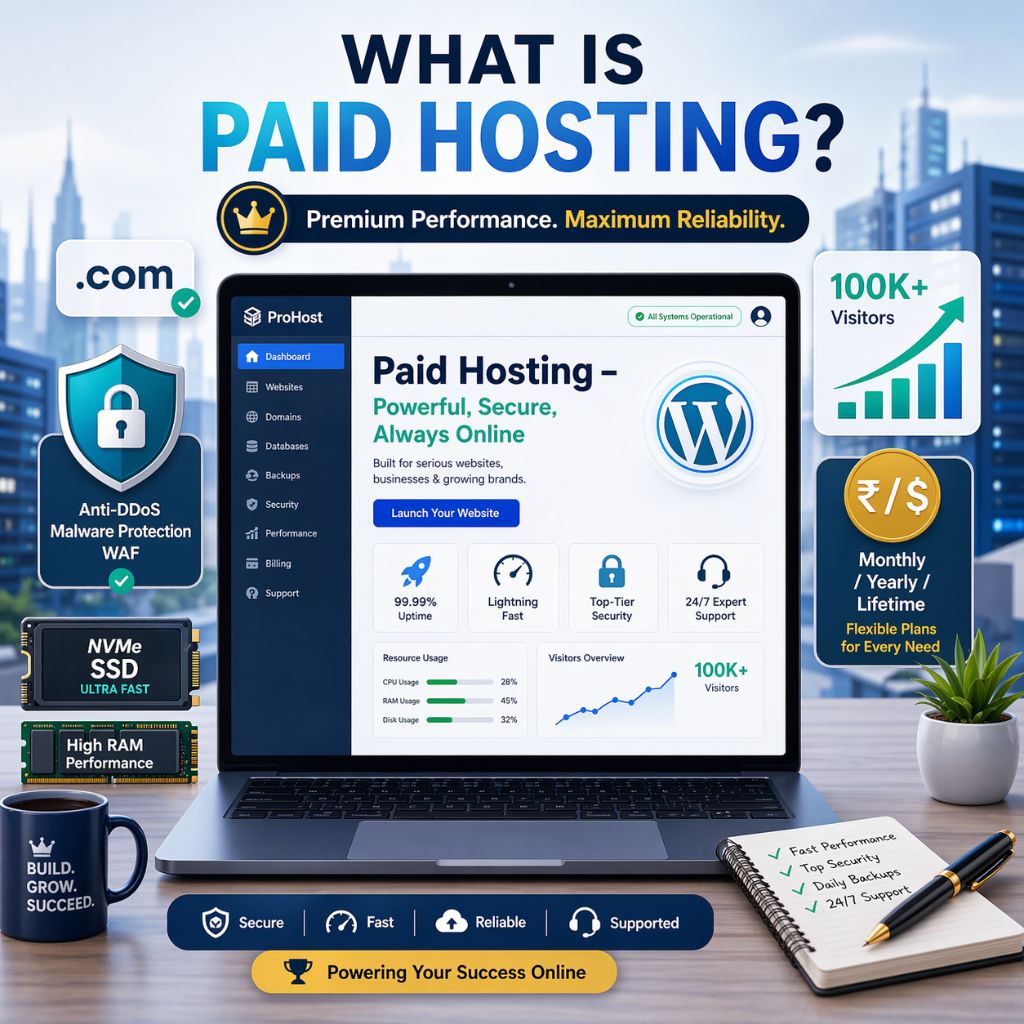
The only thing is that you need to pay money for the hosting service. It is on a monthly, yearly or biennial billing basis. GoogieHost offers a $25 paid hosting plan for LifeTime. You just need to pay it once and you get premium hosting services where you can customize your website, get more resources like NVMe SSD storage and high RAM for quick loading speed and free wordpress CMS for managing the content properly.
Plus, it also offers premium quality website security like Anti-DDoS, malware protection, regular website health checkup and WAF to secure your online space from all kinds of cyber attacks.
Types of Paid Hosting
Paid hosting comes in different types, and each one is fit for different kinds of work.
- The most common starting point is shared hosting, where your site shares a server with others but still gets better resources than free hosting. It’s a very low-cost hosting and perfect for students or professionals launching their first proper website.
- As your needs grow, you might look at VPS (which means, Virtual Private Server) hosting, which gives you more control and dedicated resources. This is great if your portfolio starts getting more traffic or if you’re running applications that need high performance.
- Then there’s dedicated hosting, where an entire server is only for you, this is usually for large-scale projects or businesses.
- There are also managed hosting options, where the provider handles technical tasks like updates and backups. This is especially useful if you don’t want to handle the backend and just want your site to run smoothly.
Paid Hosting is a very good option to go with once you believe that your website (which was earlier hosted on free hosting) has started getting huge traffic day by day and it requires handling a lot of content online.
Who Uses Paid Hosting?
Paid hosting is typically used by people who are ready to take their online presence seriously.
- Students who want their projects to be really nice, especially in competitive fields, often move to paid hosting to create a cleaner, more professional impression. A well-hosted site with a custom domain can instantly make your work feel more credible.
- Professionals, especially those building portfolios, rely heavily on paid hosting. When recruiters visit your website, things like loading speed, design, and domain name matter more than you might think.
Paid hosting ensures your site is fast, reliable, and free from distractions like ads, helping you put your best foot forward.
Beyond that, freelancers, small business owners, and startups use paid hosting to build trust and scale their ideas. It’s not just about having a website, it’s about having one that works consistently, represents you well, and grows with your goals.
Free Hosting vs Paid Hosting: Key Differences Explained
When you’re starting, the choice between free hosting and paid hosting can be confusing but it really comes down to what you need right now versus where you want to go.
If you’re a student building your first school project website or a professional putting together a quick portfolio, free hosting is a great way to get online without spending anything. But as soon as you start caring about things like speed, reliability, branding, and making a strong impression on recruiters or visitors, paid hosting starts to make a lot more sense.
Think of free hosting as your practice ground, and paid hosting as your upgrade when you’re ready to be taken seriously online.
Cost
Free hosting doesn’t cost anything, which makes it perfect for students or beginners experimenting with their first website. You can quickly put a project online without worrying about budgets or subscriptions, which is especially helpful when you’re just learning or testing ideas.
Paid hosting, on the other hand, requires a monthly or yearly fee, but that cost brings better performance, features, and reliability. Over time, it also saves you from hidden “costs” like poor user experience or missed opportunities.
Customer Support
With free hosting, customer support is often very less or community-based, meaning you might have to depend on forums or wait a long time for help. If something goes wrong, like your site going down, you could be stuck figuring it out yourself.
Paid hosting provides dedicated customer support, often available 24/7 through LiveChat, email, or phone. This can be incredibly helpful, especially if you’re not very technical. Having someone to quickly resolve issues ensures your website stays up and running without unnecessary stress.
Control & Customization
Free hosting platforms often come with restrictions on what you can install or customize. You might be limited to certain templates, tools, or features, which can hold back your creativity.
Paid hosting gives you much more freedom, you can install custom software, use advanced frameworks, and tweak server settings if needed. This level of control allows you to build a website that truly reflects your style and goals.
Performance & Speed
With free hosting, your website shares limited resources with many users, which often leads to slower loading times, especially during peak traffic hours. This can be frustrating for visitors and may even cause them to leave your site before it fully loads.
Paid hosting provides better resource allocation, meaning your site gets more consistent CPU, RAM, and bandwidth. As a result, your pages load faster and run smoother, which is crucial when you’re trying to impress recruiters or keep users engaged. Speed isn’t just a technical detail, it directly impacts how people perceive your work.
Scalability
Free hosting is fine for small, simple projects, but it doesn’t scale well as your needs grow. As your website becomes more complex or starts attracting more visitors, you’ll quickly run into limitations.
Paid hosting is designed to grow with you, you can upgrade your plan, add more resources, and handle increased traffic without major disruptions. This flexibility makes it a better long-term solution. Let’s say you’re expanding your portfolio or turning your project into something bigger, paid hosting supports your growth instead of limiting it.
Domain
Free hosting usually gives you a free subdomain (like johnblogs.googiehost.com), which doesn’t look very professional and can make your site feel temporary. It’s fine for testing, but not ideal when you’re trying to build a personal brand.
Paid hosting allows you to connect your own .com domain (like johnblogs.com), which instantly improves credibility. It also makes your website easier to remember and share. For students and professionals alike, having a clean domain name can make a strong first impression and show that you’ve put thought into your online presence.
Ads & Branding
Most free hosting providers display ads on your website, and you typically have no control over what those ads are. This can distract visitors and sometimes even harm your credibility, especially if the ads are irrelevant or intrusive.
Paid hosting removes these ads entirely, giving you full control over your website’s appearance. This means your visitors can focus only on your content, be it a project, portfolio, or personal blog. A clean, ad-free experience makes your site look more polished and professional.
Storage & Bandwidth
Free hosting comes with strict limits on storage and bandwidth, which can restrict how much content you can upload or how many visitors your site can handle. For example, if you’re uploading images, videos, or multiple project files, you might quickly run out of space.
Paid hosting offers much higher limits, and in some cases, even unlimited resources (within fair usage). This allows you to grow your website without constantly worrying about hitting a cap. It’s especially useful if your portfolio expands or your site starts getting more traffic.
Security
Free hosting typically offers only basic security features, which might not be enough as your website grows or starts attracting more visitors. There may be limited protection against threats like malware or hacking attempts.
Paid hosting usually includes advanced security options such as SSL certificates (which show the secure padlock in browsers), regular backups, firewalls, and malware scanning. These features not only protect your website but also build trust with your visitors. For a portfolio or professional site, security is not something you want to compromise on.
Reliability & Uptime
Free hosting services can be less reliable, with occasional downtime or performance issues due to overloaded servers. This means your website might not always be accessible when someone tries to visit it.
Paid hosting providers prioritize uptime and stability, often guaranteeing 99.9% uptime or higher. This reliability is crucial, especially if recruiters or potential clients are visiting your site, you don’t want them to encounter an error page. A consistently available website builds trust and ensures you never miss an opportunity.
If you properly read the above difference between Free hosting vs Paid hosting, you’ll get a clear idea when to use either of them and to use Paid Hosting service when planning to upgrade.
Free Hosting vs Paid Hosting Advantages and Disadvantages
When you’re deciding between free hosting and paid hosting, it’s not really about which one is “better”, it’s about what fits your current situation.
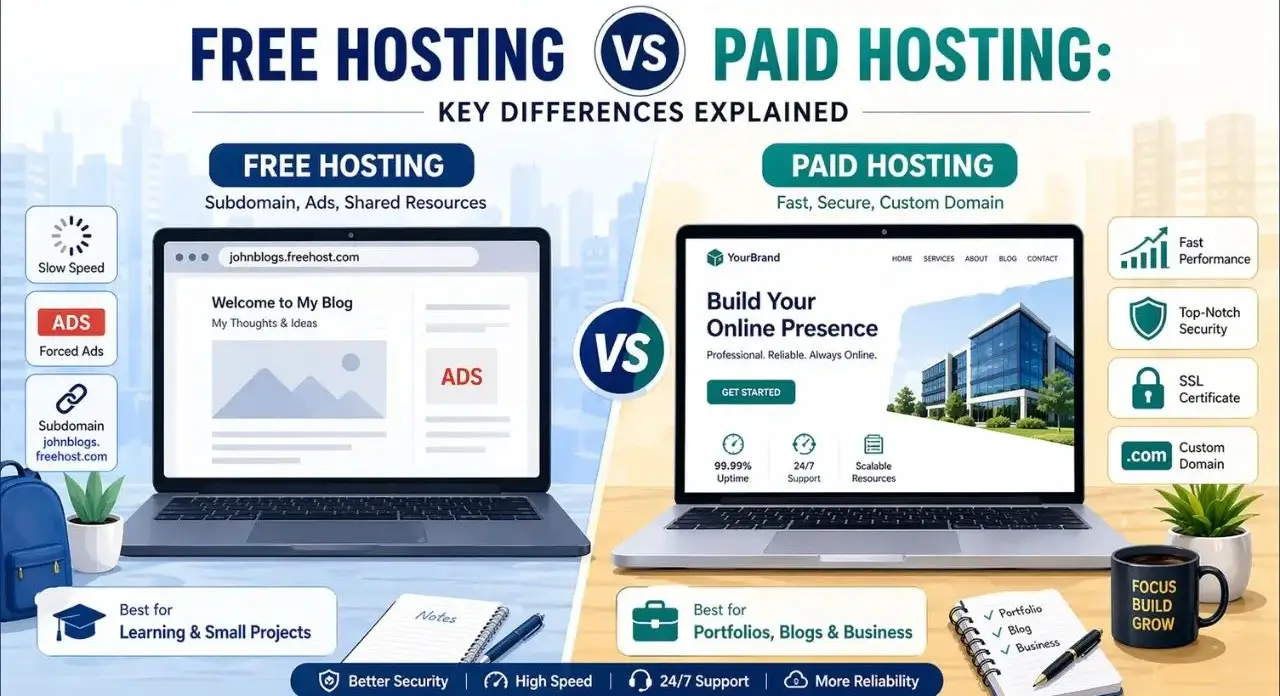
If you’re a student trying to get a school project online quickly or someone testing out ideas for the first time, free hosting feels like the easiest way to start without any pressure. But as soon as you begin thinking about building a strong portfolio, attracting recruiters, or creating something long-term, the limitations of free hosting start to show up.
That’s where paid hosting steps in, it gives you more control, reliability, and a professional edge. So instead of seeing them as competitors, it’s more helpful to see free hosting as your starting point and paid hosting as your upgrade when you’re ready to grow.
Free Hosting
| +Pros • No Cost: You don’t have to spend anything for basic hosting service. • Easy to Get Started: It is beginner-friendly with simple sign-up processes. • Great for Learning: It provides a risk-free environment to learn how websites work. • Quick Deployment: You can get your website live in minutes. • No Maintenance Costs: Since it’s free, you don’t have to worry about unexpected charges. • Good for Small Projects: For basic websites like school assignments or simple portfolios. • Good for Testing Ideas: Lets you experiment before investing money into it |
| -Cons • Limited Performance: Slow loading speeds and shared resources can affect UX. • Ads on Your Website: Display ads, which can distract visitors. • Lack of Custom Domain: Subdomains make your site look less professional. |
Paid Hosting
| +Pros • Professional Appearance: With a custom domain and no ads, your website looks clean. • Better Speed & Performance: Faster loading times improve UX. • Full Control & Flexibility: You can customize your site and build exactly what you want. • Stronger Security: Features like SSL, backups, and malware protection help keep your site safe. • High Uptime: Your website stays accessible almost 24/7. • Scalability: As your site grows, you can upgrade your hosting plan without starting over. |
| -Cons • Cost: You need to pay regularly, which might not be ideal for students. • Overkill for Small Projects: If your website is very simple, you might not fully utilize the features. • Choice Overload: It can be confusing to pick the right hosting plan at first. |
We want to say that free hosting is great for starting out and learning, while paid hosting is the better choice when you want to build something long-lasting.
When Should You Upgrade from Free to Paid Hosting?
When you first launch a website on free hosting, it usually does the job, especially for testing or putting a basic project online.
But as your website starts to grow, you’ll notice certain limitations creeping in, be it slower speed, lack of customization, or a less professional appearance.
That’s typically the point where upgrading to paid hosting becomes less of a luxury and more of a necessity.
If your goal shifts from “just being online” to actually impressing visitors, building credibility, or scaling your work, paid hosting gives you the tools and reliability you need. In simple terms, you upgrade when your website starts to matter, not just to you, but to the people visiting it.
You should consider upgrading when:
- Your website starts getting more traffic: If more people are visiting your site, free hosting may struggle to handle the load, leading to slow speeds or downtime. Paid hosting ensures your site remains stable and responsive.
- You want a professional image: A custom domain and ad-free experience make a big difference, especially if recruiters, clients, or teachers are reviewing your work.
- Your site feels slow or unreliable: Frequent lag or downtime can hurt user experience. Paid hosting provides better performance and uptime guarantees.
- You need more storage or features: If you’re adding more content like images, videos, or projects, free hosting limits can quickly become restrictive.
- You want better security: As your site grows, protecting your data and your visitors becomes important. Paid hosting offers stronger security features like SSL, backups, and malware protection.
- You need full control and customization: If you want to install custom tools, use advanced frameworks, or fully design your site your way, paid hosting gives you that flexibility.
- You’re building a serious portfolio or project: When your website becomes part of your career, like showcasing skills to recruiters, it needs to look polished and reliable.
- You’re planning long-term growth: Free hosting is fine for short-term use, but if you’re thinking long-term, paid hosting allows your site to scale smoothly.
Upgrading isn’t about abandoning free hosting, it’s about recognizing when you’ve outgrown it. Once your website starts representing your work, skills, or brand, moving to paid hosting is a natural and worthwhile step.
FAQs
Is Free Hosting Good for SEO?
u003cstrongu003eNo!u003c/strongu003e Free hosting is not good for SEO. The main limitations are slower loading speeds, shared resources and the use of u003ca href=u0022https://www.youstable.com/blog/how-to-create-a-subdomain-in-cpanelu0022u003esubdomainsu003c/au003e instead of custom domains. Google prefers fast and well-structured websites, which free hosting often struggles to provide. If your goal is just to learn SEO or publish a school project, it’s fine.
Can I Run ads on Free Hosting?
u003cstrongu003eNo!u003c/strongu003e You cannot run your own ads on free hosting platforms. Many providers either restrict ad networks like Google AdSense or display their own ads on your website instead. This means you have little control over monetization and user experience.
Does Paid Hosting Improve Website Speed?
u003cstrongu003eYesu003c/strongu003e, paid hosting improves website speed. It offers better server resources, optimized performance, and less overcrowding compared to free hosting. Faster loading times not only improve user experience but also help with SEO rankings and engagement.
Is Free Hosting Secure?
u003cstrongu003eYeah!u003c/strongu003e Free hosting provides basic security. You may not get features like automatic backups, advanced firewalls, or proactive malware protection. This makes free hosting suitable for low-risk projects, but not for anything important or sensitive.
What Is the Cheapest Paid Hosting Option?
GoogieHost’s $25 LifeTime Paid Hosting plan is the cheapest and the best paid hosting option. It is because you get all the premium resources you require to put your content and rank your website on Google. It’s designed for beginners and small websites. It also includes a free LetsEncrypt SSL certificate, and basic support, making it a great starting point when upgrading from free hosting.
Can I Migrate From Free to Paid Hosting Later?
u003cstrongu003eYesu003c/strongu003e, you can migrate from free to paid hosting at any time. Most hosting providers offer tools or guides to help you transfer your website files, domain and data. The process usually involves backing up your site, uploading it to the new host, and updating your domain settings. It’s a common step as websites grow.
How Much Traffic Can Free Hosting Handle?
Free hosting can handle only limited traffic upto 1000 visitors on a daily basis, typically suitable for small websites with low to moderate visitors. If your site starts receiving consistent or high traffic, you may experience slow performance or downtime. The exact limit depends on the provider, but free hosting is generally not built for scalability.
Is Paid Hosting Worth it in 2026?
u003cstrongu003eYesu003c/strongu003e, paid hosting is absolutely worth it in 2026, especially if you’re serious about your website. With increasing competition online, factors like speed, security, and reliability matter more than ever. So if you’re building a portfolio, blog, or business site, paid hosting helps you stand out, perform better, and grow without limitations.
Final Verdict: Which Should You Choose?
Static website, where you have all your content and the pages fixed (no additions required on a daily basis) can be easily hosted using a free hosting. You get all the basic hosting services like support, basic security, free SSL, 10GB NVMe SSD storage and upto 1GB RAM (enough for static websites like Resume site, Projects Site)
Free hosting is the right starting point. It lets you get online quickly, and for small, low-traffic projects, that’s often enough. But it’s important to understand that free hosting is designed for basic use, it comes with limits in speed and security.
As soon as your website starts to represent something important, like your portfolio or a project you want clients to take seriously, paid hosting becomes the right choice.
It gives you faster performance, a custom domain and a more professional look, all of which directly impact how people perceive your work. In fact, for anything beyond a simple site, paid hosting is generally recommended because it offers scalability.
There is a simple way to decide this:
- Go with free hosting if you are testing or building a short-term project
- Choose paid hosting if you want professionalism and growth
So, start with a free hosting plan if you need to, but don’t stay there for too long. The moment your website starts to grow, upgrading to paid hosting becomes an important step forward.