If you have ever seen a padlock icon next to a website URL in your browser, you have already seen SSL at work. That little symbol tells every visitor that the connection between their device and the website is encrypted and safe. But when it comes to actually buying one, the pricing can feel all over the place. Some certificates cost nothing. Others run thousands of dollars per year. So what is going on?
This guide breaks down exactly how much an SSL certificate costs in 2026, why prices vary so dramatically, what each type covers and most importantly, which one is right for your website. Whether you run a personal blog, a small business or an enterprise level ecommerce platform, this is the only SSL pricing guide you will need.
What Is an SSL Certificate and Why Does Your Website Need One?
An SSL (Secure Sockets Layer) certificate is a digital file that authenticates your website’s identity and enables an encrypted connection between your server and your visitors’ browsers.
When someone visits your site, their browser and your server go through a process called an SSL handshake that establishes a secure tunnel before any data is exchanged.
Without SSL, every piece of information your visitors send, including passwords, credit card numbers and personal details, travels across the internet as plain text that anyone could intercept.
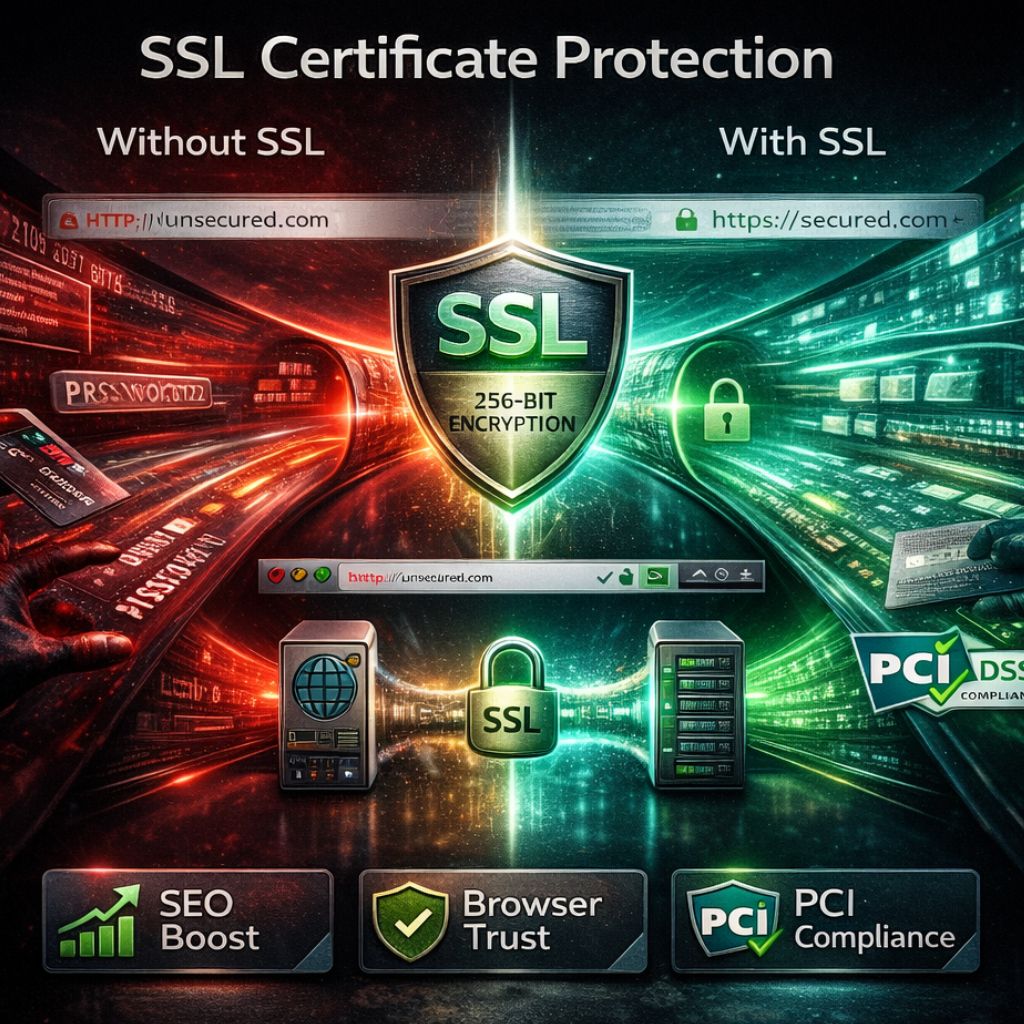
With SSL installed, that same data is encrypted and unreadable to anyone in between. Beyond encryption, SSL certificates matter for three more reasons that directly impact your bottom line.
Google officially counts HTTPS as a ranking signal, meaning sites without SSL rank lower in search results. Every major browser now flags non-HTTPS sites with a “Not Secure” warning in the address bar. And for any business handling payments or user data, SSL is a baseline compliance requirement under standards like PCI DSS.
In short, SSL is not optional anymore. The question is simply which type you need and what you should expect to pay.
How Much Does an SSL Certificate Cost? The Quick Answer
SSL certificate pricing in 2026 ranges from completely free to over $3,000 per year depending on the validation level, number of domains covered and the Certificate Authority (CA) issuing it.
Here is a quick overview of the price ranges by category:
- Free SSL: $0/year (Let’s Encrypt, Cloudflare, hosting providers)
- Domain Validation (DV) SSL: $3 to $60 per year
- Organization Validation (OV) SSL: $20 to $1,302 per year
- Extended Validation (EV) SSL: $75 to $3,480 per year
- Wildcard SSL: $60 to $96 per year
- Multi Domain SSL: $60 to $240 per year
The average paid SSL certificate costs around $60 per year, but that number means very little on its own. What matters is matching the right certificate type to your website’s actual needs.
SSL Certificate Types Explained
Before diving into specific prices, it helps to understand how SSL certificates are categorized. There are two main ways to classify them: by what they protect (domain coverage) and by how thoroughly the issuer verifies your identity (validation level).
By Domain Coverage
Single Domain SSL This is the most straightforward certificate. It secures one domain or one subdomain, nothing more. If you run a single website, this is almost always the most cost effective choice. Single domain certificates typically cost between $4 and $60 per year for paid versions, and free options are widely available.
Wildcard SSL A wildcard certificate secures your main domain plus all of its subdomains under a single installation. So one certificate covers yourdomain.com, blog.yourdomain.com, shop.yourdomain.com and any other subdomain you create. These typically run between $60 and $96 per year and offer excellent value for websites that operate across multiple subdomains.
Multi Domain SSL (SAN Certificate) Also called Subject Alternative Name (SAN) certificates, these allow a single certificate to protect multiple completely different domains, often up to 150 to 250 separate sites. They are ideal for businesses managing several distinct web properties. Expect to pay between $60 and $240 per year.
SSL Certificate Validation Levels and Their Costs
The biggest factor driving SSL certificate prices is the validation level. This refers to how thoroughly the Certificate Authority verifies your identity before issuing the certificate. Higher validation means more trust, more credentials checked and a higher price tag.
Domain Validation (DV) SSL: $3 to $60 per year
DV certificates are the entry level option. The Certificate Authority simply confirms that you control the domain you are trying to secure. This verification process takes minutes and requires no paperwork.
DV certificates provide the same 256 bit encryption as more expensive options. The difference is not in the encryption strength but in what the certificate tells visitors about who is behind the website. Since DV only verifies domain ownership, it says nothing about the organization behind it.
DV SSL is perfectly suitable for personal websites, blogs, portfolios and informational sites that do not collect sensitive user data or process payments. Many hosting providers include free DV certificates through Let’s Encrypt.
Organization Validation (OV) SSL: $20 to $1,302 per year
OV certificates go a step further. The CA verifies not just that you own the domain but that your organization is a legitimate, legally registered entity. You will need to provide business credentials such as your company registration details, physical address and possibly civil records.
This process typically takes one to two business days. The resulting certificate includes verified organizational details that visitors can inspect, which builds a significantly higher level of trust. OV certificates are a strong choice for small to mid sized businesses, ecommerce stores and any organization where brand credibility matters.
Prices start at around $20 per year for basic OV options and can reach over $1,000 for premium brands with extended warranty coverage.
Extended Validation (EV) SSL: $75 to $3,480 per year
EV certificates represent the highest tier of identity verification. The issuing CA conducts a thorough investigation of your organization including legal paperwork, exact trade name or DBA information, physical address, telephone number and the names of key people operating the business.
This rigorous vetting process can take a few days to a couple of weeks. The payoff is maximum trust credibility. EV certificates have historically displayed the verified company name in a green browser bar, though modern browsers handle this display differently. What remains consistent is that certificate details include full organizational verification that sophisticated visitors can examine.
EV certificates are the standard choice for banking, insurance, government agencies, healthcare platforms and enterprise ecommerce sites where user confidence is mission critical. Prices start at around $75 per year and scale up considerably for premium CA brands.
Free SSL Certificates: Are They Actually Good?
The honest answer is yes, for the right use case. Free SSL certificates offered by Let’s Encrypt and bundled through hosting providers deliver real 256 bit encryption and are perfectly legitimate. Let’s Encrypt alone powers SSL for over 300 million websites.
Free SSL certificates are specifically DV certificates. They verify domain ownership and encrypt your connection. For a personal blog, portfolio site, informational website or any site not handling payments or sensitive user registrations, a free SSL certificate does everything you need.
However, free SSL certificates come with real limitations that matter for business websites.
- Shorter validity periods: Free certificates from Let’s Encrypt are valid for just 90 days before requiring renewal. While auto renewal is available, it represents four times more exposure if something goes wrong compared to a paid annual certificate.
- No warranty: Paid certificates come with financial warranties ranging from $10,000 to $2,000,000 that protect end users if a data breach occurs due to a flaw in the certificate. Free certificates offer no such warranty.
- No OV or EV validation: Free certificates only come in DV flavor. If your business needs to display verified organizational credentials to build customer trust, you must go the paid route.
- Limited technical support: Free certificate providers largely rely on community forums for support. If you encounter an issue, you are on your own finding a solution. Paid certificates from commercial CAs include dedicated customer support.
- No certificate management platform: Commercial paid certificates typically come with tools to manage your certificate lifecycle from one dashboard. Free certificates require manual tracking and management.
For a personal site or early stage project, start with a free certificate. For a business accepting payments, a company requiring customer trust or any organization handling sensitive information, the investment in a paid certificate is money well spent.
Major SSL Certificate Providers and Their Prices
Different Certificate Authorities price their offerings quite differently, and buying through an authorized reseller rather than directly from the CA can save you significantly.
- Let’s Encrypt offers free DV certificates and is the most widely used SSL provider in the world, trusted by hundreds of millions of websites. No warranty, no support, 90 day validity with auto renewal.
- Sectigo (formerly Comodo) is one of the most popular commercial CAs offering affordable entry level DV certificates starting around $8 to $17 per year and scaling up through OV and EV options.
- DigiCert is the highest rated Certificate Authority in the industry. Their pricing is structured with a base cost plus multi year savings. The basic Secure Site package has a base price around $484 while advanced EV options start above $1,000. DigiCert is the choice for enterprises where brand trust and support quality are paramount.
- Thawte offers a range of certificates with DV options in the $37 to $60 range per year and EV starting around $170 through resellers compared to nearly $400 on their own site.
- GeoTrust serves small and medium businesses with DV certificates from around $136 per year on multi year plans and EV from approximately $394 per year.
- GlobalSign targets larger enterprises with premium pricing and deep CA infrastructure. OV certificates start around $249 and EV at higher price points.
- GoDaddy is a popular choice for small businesses already using their domain and hosting services. They offer managed SSL plans that include installation and automatic renewal handling.
- SSLs.com offers some of the lowest prices in the market with options starting as low as $3.75 per year, making it a solid choice for budget conscious buyers who still want a commercial certificate.
A key tip: buying directly from a CA’s website is almost always the most expensive option. Authorized resellers like SSL Dragon, SSL2BUY and Namecheap offer the exact same certificates from the same CAs at discounts of 25% to 80% off retail.
What Factors Determine SSL Certificate Cost?
Understanding the pricing drivers helps you make a smarter buying decision instead of just picking the cheapest option available.
- Validation level is the single biggest pricing factor. As covered above, DV is cheapest, OV sits in the middle and EV commands a significant premium.
- Number of domains covered directly impacts price. A single domain certificate is the most affordable. Wildcard certificates cost more because they cover unlimited subdomains. Multi domain certificates cost more still because they cover multiple separate domains.
- Certificate Authority brand matters. More established CAs with strong browser compatibility, higher warranty coverage and recognizable names command higher prices. Smaller or reseller CAs can offer identical encryption at lower costs.
- Warranty level affects pricing. The SSL warranty protects end users financially in the unlikely event of a data breach caused by certificate failure. Warranties range from $10,000 for basic DV certificates to $2,000,000 for premium EV options. Higher warranties mean higher prices.
- Site seal type adds cost. SSL certificates often come with a site seal, a small badge you can display on your site showing it is secure. Dynamic site seals that display real time verification information cost more than static image seals.
- Validity period used to mean longer terms cost more, but Certificate Authority guidelines now cap SSL certificates at 13 months validity. As of February and March 2026, major CAs including DigiCert and Sectigo are also moving toward even shorter 200 day certificate lifespans, which affects multi year planning for purchases.
- Additional features like daily malware scanning, vulnerability assessments and reputation monitoring add value and cost to some certificate packages.
Which SSL Certificate Does Your Website Actually Need?
This is the question most guides dance around. Here is a direct answer based on your website type.
- Personal blog or portfolio: Use a free Let’s Encrypt certificate. Your hosting provider almost certainly offers it with one click. There is no reason to pay for a basic informational site.
- Small business website (no payments): A free DV certificate or an entry level paid DV option works fine. If you want to display organizational credentials for extra trust, step up to a basic OV certificate in the $30 to $60 per year range.
- Ecommerce store or business collecting user data: A paid OV or EV certificate is the right call. The warranty coverage, organizational verification and dedicated support justify the cost when customer trust directly affects your revenue.
- Financial institution, healthcare platform or government website: EV SSL is the standard. The thorough identity verification and maximum warranty levels align with regulatory requirements and user trust expectations in these sectors.
- Website with multiple subdomains: A wildcard SSL certificate saves money compared to buying individual certificates for each subdomain while simplifying management considerably.
- Business managing multiple domains: A multi domain SAN certificate is almost always more cost effective than maintaining separate certificates across your portfolio.
Free Ways to Get an SSL Certificate
Not every website needs to spend money. Here are the most reliable free SSL options.
- Your hosting provider is the easiest starting point. Most reputable hosts including Bluehost, Hostinger, SiteGround, DreamHost and others bundle free Let’s Encrypt certificates with their hosting plans. This is the simplest way to get SSL set up with no technical work required.
- Let’s Encrypt is a non profit Certificate Authority backed by Mozilla, Google Chrome, Facebook and other major technology organizations. It issues free DV certificates and is used by hundreds of millions of websites globally. Certificates are valid for 90 days with auto renewal available.
- Cloudflare offers free SSL through their CDN service. When you route your traffic through Cloudflare, the connection between visitors and Cloudflare’s servers is encrypted at no cost. Note that this is technically a different setup than a certificate installed directly on your server.
- Amazon Certificate Manager (ACM) provides free SSL certificates for use with AWS services. If your infrastructure runs on Amazon Web Services, this is a straightforward option for internal and public facing sites hosted on AWS.
Is a More Expensive SSL Certificate Cost More Secure?
This is one of the most common misconceptions around SSL pricing. The answer is no, not in terms of encryption strength.
All modern SSL certificates, whether free DV or premium EV, use the same 256 bit encryption and the same TLS 1.2 and 1.3 protocols. A hacker cannot break through a $2,000 EV certificate any faster than they could break through a $10 DV certificate or a free Let’s Encrypt certificate.
The price difference is entirely about identity verification depth, warranty coverage, brand recognition and additional features. You are paying for trust signals and validation rigor, not stronger encryption.
However, trust signals are genuinely valuable for businesses. Customers who see verified organizational information in their browser are more likely to complete a purchase or share personal details. That conversion uplift can easily justify the cost of a premium certificate for an ecommerce site or a high traffic business website.
Tips for Getting the Best SSL Certificate Price
A few smart moves can save you meaningful money without sacrificing protection.
Buy through a reseller rather than directly from the Certificate Authority. Resellers like SSL Dragon, Namecheap, SSL2BUY and Comodo SSL Store regularly offer 25% to 80% off CA retail prices for the exact same certificates.
Compare multi year pricing. While SSL certificates are now capped at 13 months validity, many providers offer multi year payment plans at discounted annual rates. Just be aware of the new 200 day lifespan changes being rolled out by major CAs in early 2026.
Check what your hosting plan includes. Many hosts bundle free or significantly discounted SSL certificates. You may already be paying for one as part of your hosting package.
Match the certificate to your actual needs. Do not pay for an EV certificate when a DV certificate genuinely covers your use case. Conversely, do not use a free DV certificate for an ecommerce store where customer trust is directly tied to revenue.
Watch for renewal price differences. Some providers offer low introductory prices that jump significantly at renewal. Check the renewal price before committing, not just the first year rate.
FAQs
u003cstrongu003eDo I need to buy a new SSL certificate every year?u003c/strongu003e
u003cstrongu003eYesu003c/strongu003e. SSL certificates have a maximum validity of 13 months as per current CA/Browser Forum guidelines. Major CAs are also introducing shorter 200 day lifespans in 2026, so you will need to renew more frequently or set up automated renewal.
u003cstrongu003eCan I get an SSL certificate for free permanently?u003c/strongu003e
Free SSL certificates are available indefinitely through providers like Let’s Encrypt, but they require renewal every 90 days. Auto renewal handles this automatically if your hosting environment supports it.
u003cstrongu003eDoes SSL affect my SEO?u003c/strongu003e
u003cstrongu003eYesu003c/strongu003e. Google has confirmed HTTPS as a ranking signal. Sites without SSL certificates are also flagged as “Not Secure” by browsers, which increases bounce rates and negatively impacts user trust, both of which hurt your search rankings indirectly.
u003cstrongu003eIs a wildcard SSL certificate worth the extra cost?u003c/strongu003e
If you have three or more subdomains, a wildcard certificate almost always works out cheaper and simpler than buying individual certificates for each subdomain. The break even point is usually around two to three subdomains.
u003cstrongu003eCan I use the same SSL certificate on multiple servers?u003c/strongu003e
Standard SSL certificates are issued for specific domains, not servers. Whether you can install on multiple servers depends on the CA’s terms. Many CAs allow multi server installation, but verify this before purchasing if it applies to your setup.
Conclusion
SSL certificates are one of the most important investments you can make for your website, but that does not mean you need to overspend. For most personal sites and blogs, a free Let’s Encrypt certificate does everything required.
For small businesses and ecommerce sites, a reasonably priced OV certificate from a reputable CA through a reseller typically hits the sweet spot between cost and trust. Enterprise level platforms handling sensitive data benefit most from premium EV options where the verified credibility directly supports customer confidence and regulatory compliance.
The key is matching the validation level and features to what your website genuinely needs rather than defaulting to the cheapest or most expensive option. Use this guide to make a clear headed choice and you will have both your wallet and your visitors protected.