Git fetch is a safe Git command that downloads new commits, branches, tags, and references from a remote repository into your local remote tracking branches without changing your working directory or current branch.
Use git fetch to update your view of the remote before merging, rebasing, or pulling changes. If you’re learning Git, mastering the git fetch command is essential.
It keeps your local metadata in sync with the remote repository, giving you a clear picture of what changed upstream without touching your current files. In this guide, I’ll explain git fetch with practical examples, comparisons, and workflows you can use right away.
What Git Fetch Does (and Why it Matters)
Git fetch retrieves updates from a remote (like origin) and stores them in remote tracking branches (for example, origin/main).
It does not modify your current branch, working tree, or staging area. This makes fetch ideal for reviewing changes before you integrate them, reducing merge conflicts and surprises.
How Git Fetch Works Under the Hood
When you fetch, Git negotiates with the remote server and transfers packfiles containing new objects (commits, trees, blobs) you don’t have. It then updates references under refs/remotes/<remote>/<branch>, such as refs/remotes/origin/main. Your local branch (e.g., main) and working files remain unchanged until you merge or rebase.
This separation remote tracking branches vs. local branches lets you inspect upstream history safely. You can compare, cherry pick, or fast forward with full control.
Basic Git Fetch Setup and Syntax
Verify Your Remote
git remote -v
# If needed, add a remote:
git remote add origin <[email protected]:user/repo.git>
Most repositories use origin as the default remote. If you fork or maintain multiple remotes (e.g., upstream), you can fetch from any of them.
Common Git Fetch Commands
# Fetch from the default remote (usually origin)
git fetch

# Fetch from a specific remote
git fetch origin

# Fetch a specific branch from a remote
git fetch origin main

# Fetch all remotes configured in the repo
git fetch --all
By default, git fetch updates remote tracking branches based on your remote’s fetch refspec (defined in .git/config).
Git Fetch vs Git Pull
Both commands update your repository, but they differ in safety and control.
Key Differences
- git fetch: Downloads updates to remote tracking branches (
origin/branch) only. Does not change your working tree. Safe for review. - git pull: Equivalent to
git fetch+ integrate into your current branch (merge by default, or rebase with--rebase). Changes your working tree. - When to use: Use
fetchto review first; usepullwhen you’re ready to integrate.
Integrating After Fetch (Merge, Rebase, or Fast-Forward)
# Compare what changed upstream
git log --oneline ..origin/main
git diff main...origin/main

# Fast-forward to match origin/main (if possible)
git checkout main
git merge --ff-only origin/main

# Or rebase your local commits onto origin/main
git rebase origin/main

# Or merge with a merge commit
git merge origin/main
Fast forward keeps history linear if your local branch has no unique commits. Rebasing creates a tidy history but rewrites commits, use it only on branches you control.
Practical Git Fetch Examples
Fetch the Default Remote
git fetch
# Updates origin/* remote-tracking branches without touching your current branch
Fetch a Specific Branch
# Fetch only the main branch from origin
git fetch origin main

# Create or update a local branch tracking origin/main
git switch -c main --track origin/main  # or
git branch --set-upstream-to=origin/main main
Fetch All Branches from All Remotes
git fetch --all --pruneUse this when maintaining forks or multiple remotes. Pairing --all with --prune cleans up references to branches deleted on remotes.
Prune Deleted Remote Branches
# One-time prune
git fetch --prune

# Make pruning the default behavior
git config --global fetch.prune true
Pruning keeps your origin/<branch> list accurate by removing stale references. This prevents confusion and reduces clutter in tools like git branch -r.
Fetch Tags
# Fetch all tags along with branches
git fetch --tags

# Fetch tags without updating branches (useful for releases)
git fetch origin "refs/tags/*:refs/tags/*"
Always fetch tags before packaging releases or deploying tagged builds to ensure you have the correct version markers.
Shallow Fetch for Speed
# Fetch only the last N commits for a faster, smaller download
git fetch --depth=50

# Convert a shallow repo to full history later
git fetch --unshallow
Depth limited fetches are ideal for CI pipelines and containers where bandwidth and storage are constrained. Use --unshallow when you need the full history for bisection or advanced analysis.
Inspect Changes After Fetch
# Show remote-tracking branches
git branch -r

# See what's new on origin/main vs your local main
git log --oneline main..origin/main
git diff main...origin/main
These comparisons help you decide whether to fast forward, merge, or rebase.
Real World Workflows Using Git Fetch
Collaborative Teams
- Start your day with
git fetch --pruneto refresh upstream state. - Review updates with
git log ..origin/mainbefore integrating. - Rebase or merge based on team policy to keep history clean and predictable.
CI/CD Pipelines
- Use
git fetch --depth=1to speed builds, then--unshallowonly when necessary. - Fetch tags before release pipelines to ensure accurate versioning.
- Fetch from read only remotes for security; avoid storing write credentials in pipelines unless required.
Server and Staging Deployments
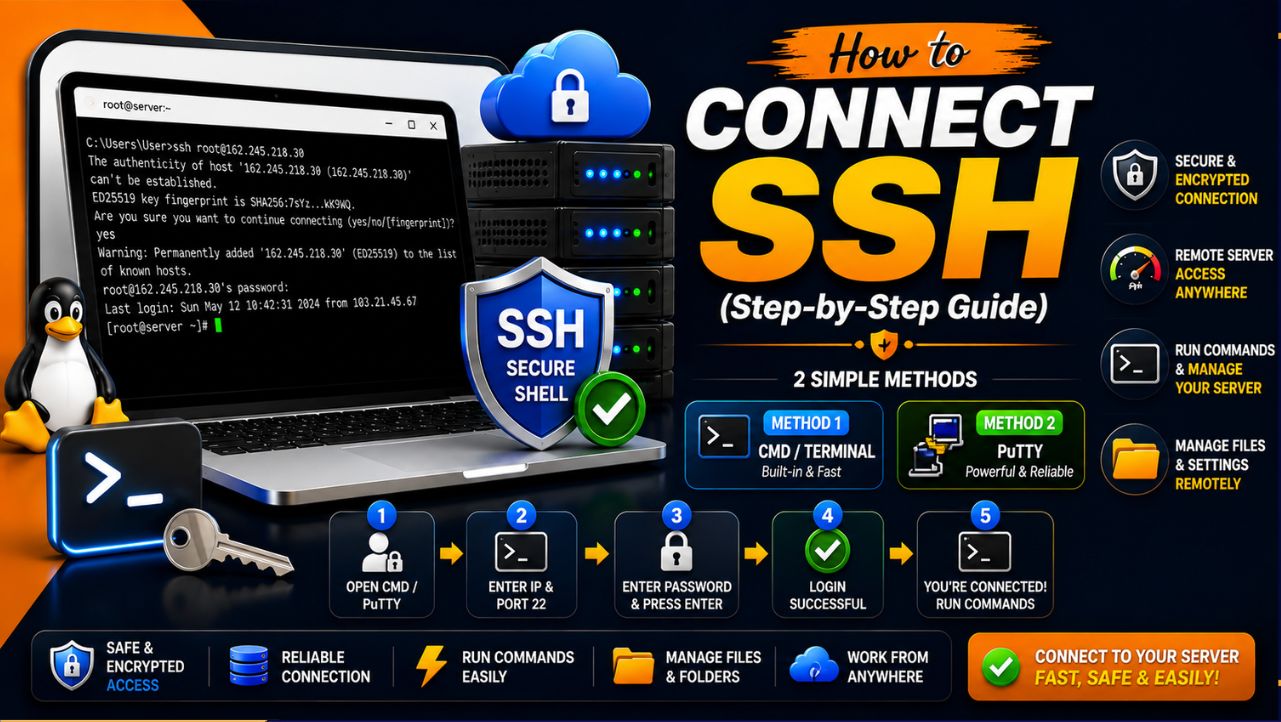
On SSH based deployments, fetch on the server to see upstream changes before releasing:
cd /var/www/app
git fetch origin
git checkout main
git merge --ff-only origin/main
# run migrations/reload services as needed
Hosting with a provider like YouStable gives you Git friendly environments with SSH access, so you can fetch, review, and deploy safely. Our support team routinely helps customers set up staging workflows centered around git fetch for controlled rollouts.
Troubleshooting and Best Practices
Common Errors and Fixes
- Authentication failed: Ensure your SSH keys or tokens are valid and have proper scope. Test with
ssh -T [email protected]or refresh your PAT for HTTPS. - Repository not found: Verify remote URL and permissions:
git remote -v,git remote set-url origin <URL>. - Could not resolve host: Check DNS/firewall/proxy settings. Try fetching via HTTPS if SSH is blocked.
- Stale branches remain: Use
git fetch --pruneor enablefetch.prune=true. - Detached HEAD confusion: After fetching, ensure you’re on the right branch (
git switch main) before integrating.
Best Practices
- Fetch early and often: Reduces merge conflicts and keeps you aware of upstream changes.
- Prune regularly: Keep remote tracking branches current to avoid mistakes with deleted branches.
- Inspect before integrating: Use
loganddiffbetween your branch andorigin/branch. - Use shallow fetch in CI: Save bandwidth/time with
--depth, then unshallow when needed. - Align with team policy: Decide when to merge vs. rebase after fetch to maintain consistent history.
FAQs
Does git fetch change my working directory?
No. u003ccodeu003egit fetchu003c/codeu003e only updates remote tracking branches (like u003ccodeu003eorigin/mainu003c/codeu003e) and your repository’s metadata. Your current branch and files remain untouched until you merge, rebase, or checkout.
What is the difference between git fetch and git pull?
u003ccodeu003egit fetchu003c/codeu003e downloads updates without integrating them; u003ccodeu003egit pullu003c/codeu003e runs a fetch followed by an integration step (merge by default or rebase with u003ccodeu003eu002du002drebaseu003c/codeu003e). Fetch gives you control to review changes before they affect your working tree.
How do I fetch a single branch only?
Use u003ccodeu003egit fetch u0026lt;remoteu003e u0026lt;branchu003eu003c/codeu003e. Example: u003ccodeu003egit fetch origin developu003c/codeu003e. This updates u003ccodeu003eorigin/developu003c/codeu003e without touching your local u003ccodeu003edevelopu003c/codeu003e until you choose to integrate.
What does git fetch u002du002dprune do?
u003ccodeu003eu002du002dpruneu003c/codeu003e removes local references to branches that were deleted on the remote, keeping your u003ccodeu003eorigin/u0026lt;branchu003eu003c/codeu003e list accurate. Make it the default with u003ccodeu003egit config u002du002dglobal fetch.prune trueu003c/codeu003e.
Should I use shallow fetch in production or CI?
Yes, when you only need recent history. u003ccodeu003egit fetch u002du002ddepth=1u003c/codeu003e speeds up builds and reduces bandwidth. If you later need full history for debugging or bisecting, run u003ccodeu003egit fetch u002du002dunshallowu003c/codeu003e.u003cbru003eu003cbru003eWith these patterns and examples, you can use git fetch confidently: keep your repository in sync, review changes safely, and integrate on your terms. Whether you’re collaborating across teams or deploying from a server, a disciplined fetch first habit pays off in fewer conflicts and more predictable releases.