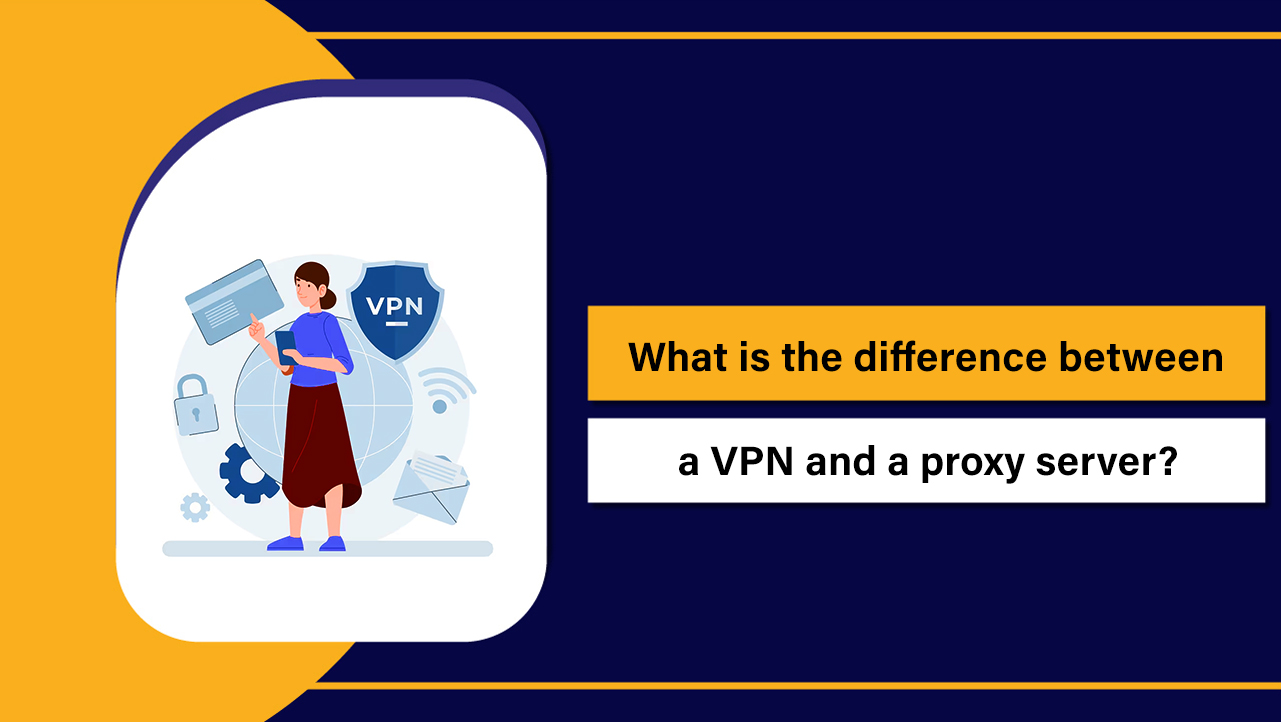
A VPN encrypts all your device’s traffic and routes it through a secure tunnel to a VPN server that changes your public IP.
A proxy server simply forwards selected app traffic (like your browser) to a proxy IP without system wide encryption. VPN = encrypted, device wide privacy; proxy = app level IP masking with limited security.
Understanding the difference between a VPN and a proxy server helps you choose the right tool for privacy, security, speed, and access. Both hide your IP address, but they work differently and solve different problems. Below, I’ll break down how each works, key differences, pros and cons, real world use cases, and how to pick confidently.
What is a VPN and How Does it Work?
A Virtual Private Network (VPN) creates an encrypted tunnel between your device and a VPN server.

All traffic from your device flows through this tunnel, shielding it from ISPs, Wi‑Fi snoops, and many network level attacks.
Technically, VPN clients use tunneling protocols (e.g., WireGuard, OpenVPN, IKEv2) to encapsulate packets. The VPN server then forwards your requests to the internet and returns responses through the same tunnel. Websites see the VPN server’s IP, not yours.
Good VPNs also provide features like a kill switch, split tunneling, DNS leak protection, and audited no logs policies to strengthen privacy and reliability.
What is a Proxy Server and How Does it Work?
A proxy server is an intermediary that forwards your application traffic to its destination, often changing your apparent IP. Unlike VPNs, proxies usually operate per application (e.g., your browser), and most do not encrypt traffic beyond standard HTTPS.
Common Proxy Types
Different proxy types suit different tasks. Here are the most common:
- HTTP/HTTPS proxy: Handles web traffic. Works well for browsers and web automation; relies on site level HTTPS for encryption.
- SOCKS5 proxy: Protocol agnostic and more flexible (supports TCP and some UDP). Great for apps beyond the browser (e.g., P2P, gaming, certain tools).
- Residential vs. datacenter proxy: Residential IPs originate from consumer ISPs (better for avoiding blocks), while datacenter IPs are faster and cheaper but more easily flagged.
- Forward proxy vs. reverse proxy: Forward proxies serve clients trying to reach the internet. Reverse proxies (like Nginx) sit in front of servers for load balancing, caching, TLS termination, different purpose than anonymity.
- Transparent proxy: Often used by networks to filter or cache traffic; offers no anonymity.
VPN vs Proxy: Key Differences (At a Glance)
- Encryption: VPN encrypts all traffic device wide; proxies generally do not encrypt (they rely on HTTPS if present).
- Scope: VPN works at the OS level, securing every app; proxies are configured per app or browser.
- Privacy & logs: Quality VPNs offer audited no logs. Many proxy providers log heavily; free proxies are especially risky.
- Speed & latency: Proxies can be faster for single app use; VPNs add encryption overhead but modern protocols (WireGuard) minimize the difference.
- Compatibility: VPNs protect non browser apps automatically; proxies require each app to support proxy settings.
- Security: VPNs protect on public Wi‑Fi and reduce MITM risks. Proxies don’t secure traffic beyond existing HTTPS.
- Geo access: Both can bypass geo blocks. Residential proxies may work better for some streaming or scraping; VPNs are better for overall security and consistency.
Pros and Cons
VPN Pros
- Device wide encryption and IP masking.
- Protects on public Wi‑Fi and during travel.
- Helps prevent ISP throttling on some traffic types.
- Supports kill switch, split tunneling, Multi Hop with advanced providers.
- Audited no logs policies available from reputable vendors.
VPN Cons
- Small performance overhead due to encryption.
- Some services may block known VPN IPs.
- Requires installing a client and system level permissions.
Proxy Pros
- Lightweight, quick to configure per app or browser.
- Can be very fast for single use tasks.
- Residential IPs reduce blocks for scraping, ad verification, or localized testing.
Proxy Cons
- No device wide encryption; limited security on public Wi‑Fi.
- Free/unknown proxies may log, inject ads, or manipulate traffic.
- Requires configuration per application and may break with non HTTP traffic.
When Should You Use a VPN vs. a Proxy?
- Use a VPN when: You need security on public Wi‑Fi; want device wide privacy; access company resources remotely; transfer sensitive data; need a reliable, encrypted tunnel for all apps.
- Use a proxy when: You only need to change IP for a browser or one app; you’re testing geo specific content; you’re scraping public data respectfully; you need a specific IP type (e.g., residential) for a single task.
Security and Privacy Realities (What Actually Happens)
Encryption is the big divider. With a VPN, everything leaving your device is encrypted until it reaches the VPN server. With a proxy, encryption depends on the destination (HTTPS). If a site is plain HTTP, a proxy can see and alter the data.
Logging matters more than technology. A “no log” VPN with independent audits and a solid track record typically offers stronger privacy than an unknown free proxy. Avoid free proxies for anything sensitive; they often monetize by selling data or injecting code.
Prevent leaks. Even with a VPN, check for DNS and WebRTC leaks, which can expose your IP. Good VPNs route DNS through their resolvers and block WebRTC leaks at the OS or browser level.
VPN vs Proxy for Hosting, DevOps, and SEO Workflows
- Server administration: Use a VPN to securely access control panels, SSH, and internal dashboards, especially over public networks. Combine with SSH keys and MFA.
- Web scraping and QA: Use residential or rotating SOCKS5/HTTP proxies per tool to reduce blocks. Rate limit, obey robots.txt, and respect Terms of Service.
- CDN and reverse proxy: For site reliability, use reverse proxies (e.g., Nginx, Cloudflare) to cache, load balance, and handle TLS. This is different from anonymity proxies.
- Remote teams: Deploy a business VPN or ZTNA for least privilege access to staging and private APIs.
At YouStable, many clients combine secure hosting with a VPN for admin access to reduce attack surfaces. Our hosting stack includes hardened configurations and network protections, while a VPN helps you keep credentials and sessions out of reach on untrusted networks.
Can You Use a VPN and a Proxy Together?
Yes. You can connect to a VPN and then configure a specific app to use a proxy. This “double hop” masks your IP with the VPN server, then again with the proxy. It can help with certain geo or anti bot checks, but it adds latency and complexity. Use only when necessary.
Quick Setup Checklist
- Choose a reputable provider: audited no logs VPN; known, transparent proxy vendor.
- Install/update the VPN client; enable kill switch and DNS leak protection.
- Pick a nearby VPN server for speed; test several.
- Configure proxy per app (HTTP or SOCKS5) only when you need per task IP control.
- Test your IP and DNS before/after with a reliable checker.
- Harden your browser: disable WebRTC leaks; use HTTPS only mode.
- For business: enforce MFA, role based access, and logging on top of VPN.
Practical Example: Verify Your IP With and Without a Proxy
You can quickly check how proxies change your IP per application while your system IP remains the same without a VPN.
# Check your current public IP
curl https://ifconfig.me

# Use an HTTP proxy for this one command
# Replace 203.0.113.10:8080 with your proxy and, if needed, add user:pass@
curl -x http://203.0.113.10:8080 https://ifconfig.me

# Use a SOCKS5 proxy
curl --socks5 203.0.113.10:1080 https://ifconfig.me
With a VPN enabled, both the normal and proxied commands will first pass through the VPN tunnel, then optionally through the proxy if specified.
How to Choose Between a VPN and a Proxy
- Primary goal is security/privacy: Choose a VPN with strong encryption, modern protocols (WireGuard/OpenVPN), kill switch, and audited no logs.
- Primary goal is IP control for a single tool: Choose the right proxy (HTTP for web, SOCKS5 for broader protocols; residential if you face frequent blocks).
- Need both: Run a VPN for baseline protection and configure a proxy per app when needed.
If your website or app is hosted with YouStable, pair our secure hosting with a VPN for admin access and use proxies only for targeted tasks like location testing or content reviews. This keeps your attack surface small while staying productive.
FAQs
Is a VPN better than a proxy?
For privacy and security, yes. A VPN encrypts device wide traffic and reduces risks on public Wi‑Fi. A proxy mainly changes IP per app and usually doesn’t add encryption. Proxies are fine for targeted tasks; VPNs are better for everyday protection.
Does a proxy hide my IP address completely?
A proxy masks your IP for the apps configured to use it, but it doesn’t affect other apps or background services. Also, web features like WebRTC can leak your real IP unless you disable them. A VPN offers more consistent, system wide IP masking.
Is a VPN just a type of proxy?
Conceptually both are intermediaries, but a VPN is more than a proxy. It creates an encrypted tunnel at the OS level and routes all traffic, while most proxies operate at the application level and don’t encrypt beyond standard HTTPS.
Which is faster: VPN or proxy?
Proxies can be faster for single app use because there’s no encryption overhead. That said, modern VPNs using WireGuard are often very close in speed, especially with nearby servers. Network quality, server load, and distance matter more than the technology alone.
Can I use a VPN and a proxy at the same time?
Yes. Connect to a VPN for system wide encryption, then set a proxy inside a specific app for an extra IP hop. This can help with geo tests or certain anti bot hurdles, but it increases latency and complexity, use when you have a clear need.