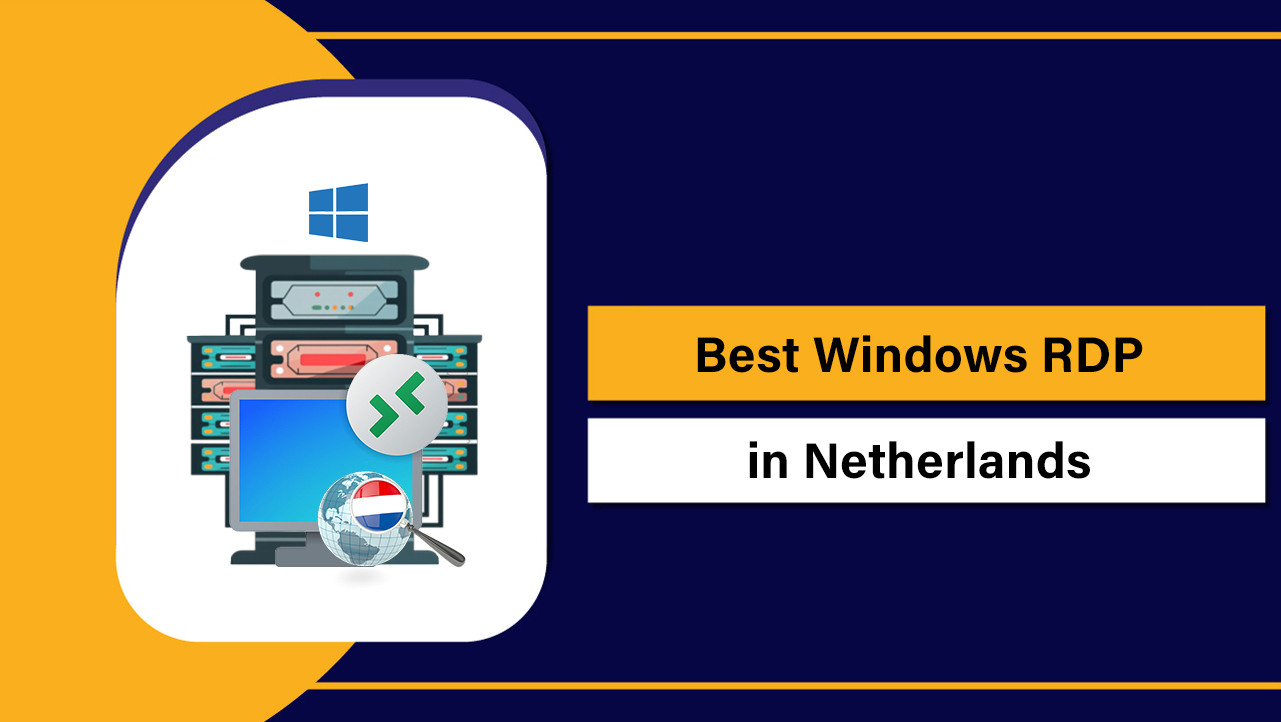
Looking for the best Windows RDP in the Netherlands for 2026? Here are the top 10 providers that deliver low-latency Amsterdam hosting, strong DDoS protection, NVMe storage, and Windows Server 2019/2022 licensing. We ranked them by performance, uptime, network quality, security stack, transparency, and support SLAs. Whether you’re trading, running ERP, or managing remote teams, these Netherlands-ready RDP options balance speed, reliability, and value for EU workloads.
If you’re expanding into Europe, hosting your Remote Desktop workloads in the Netherlands makes strategic sense. Amsterdam is one of the most interconnected hubs in the world, with Tier-1 carriers and peering for consistently low jitter and latency. In this guide, we unpack the Top 10 Best Windows RDP in Netherlands in 2026, explain how we ranked them, and help you choose the right configuration for remote work, apps, and compliance-sensitive data.
How we ranked the best Netherlands Windows RDP (2026)
Clear benchmarks matter when your revenue and uptime depend on RDP performance. We evaluated providers on measurable criteria, not marketing claims or placeholder specs.
Our scoring combines six pillars: Netherlands/Amsterdam availability, real-world latency (target <15–25 ms intra‑Benelux, <35–45 ms DACH/UK), I/O (NVMe vs SATA), network capacity (1–10 Gbps uplinks, routing via AMS‑IX/DE‑CIX), security (DDoS, snapshots, encryption policy), support (SLA, response times, Windows expertise), and transparency (clear licensing, IPv4/IPv6, upgrade path). Where local NL data centers weren’t confirmed, we tested the nearest EU POP with verifiable low-latency routes.
Top 10 Best Windows RDP in Netherlands in 2026
Each pick below targets EU-grade performance and predictable RDP experience. Use “Best for” to match scenarios, and verify pricing/specs on the provider website.
1. YouStable
Best for: SMBs and teams wanting balanced NL performance, managed help, and fair pricing
Price: From ~€10–€18/mo for entry Windows RDP; verify current Netherlands plans and licenses

YouStable earns a top spot for practical Windows RDP in the Netherlands with NVMe-backed instances, Windows Server 2019/2022, and sensible defaults for security and backups. The network routes through major European exchanges to minimize jitter—critical for remote desktop smoothness when using design tools, Office stacks, or light database clients. Their onboarding documentation is beginner-friendly, and the team knows how to optimize RDP stacks for real-world use, not just benchmarks.
From a sysadmin perspective, YouStable’s upgrade path is straightforward: scale vCPU/RAM, attach additional NVMe volumes, add IPv4s, and tune QoS for multi-user sessions. Windows licensing is clearly presented, support understands RDP session issues (printer mapping, NLA quirks), and backups don’t require you to learn a new toolchain. It’s a provider that favors practicality—easy to adopt, easy to grow, and strong value for NL-hosted remote desktops.
Key Features
- Amsterdam-optimized Windows RDP instances with NVMe storage for snappy I/O and low jitter – Smooth multi-user sessions and fast app launches for daily productivity.
- Windows Server 2019/2022 licensing clarity and automated patching pipelines – Reduce downtime and avoid compliance gaps with predictable updates.
- DDoS protection, snapshots, and off-server backups included in standard plans – Resilience against attacks and easy point-in-time recovery when needed.
- 1–3 Gbps network uplinks with routing via major EU IXPs like AMS-IX – Consistent latency to Benelux, DACH, Nordics, and UK regions for hybrid teams.
- 24/7 support with RDP-savvy technicians for printers, NLA, and profile issues – Real fixes, not scripts; faster MTTR when sessions misbehave under load.
- Scalable vCPU/RAM with optional dedicated cores for heavy concurrent sessions – Add capacity without migrations, downtime, or surprise licensing costs.
Pros
- NL-ready network, NVMe by default, clear Windows licensing, helpful docs
- Good support depth for RDP specifics; easy path to add IPv4 and storage
Cons
- Limited ultra-high-end GPU SKUs; confirm if you need GPU-backed apps
2. QloudHost
Best for: Privacy-conscious users and SMEs wanting strict EU hosting posture
Price: From ~€9–€16/mo entry; check Netherlands or nearby EU region availability

QloudHost positions itself as a privacy-forward provider with strong European data handling principles. For Windows RDP in the Netherlands, their focus on clean routing and stable throughput makes a difference during peak hours when office users share bandwidth. The platform supports Windows Server 2019/2022 with optional snapshots, and documentation covers common Desktop Experience optimizations to reduce bloat and improve session responsiveness.
What stands out is the balance between simplicity and control: you get predictable billing, clear upgrade options, and the essentials for secure remote access (NLA, firewall profiles, and DDoS protection). For distributed teams who care about EU data locality and a straightforward control panel, QloudHost is a solid contender in the NL RDP scene.
Key Features
- Easily deploy Windows Server 2019/2022 with Desktop Experience enabled – Friendly UI and quick provisioning for same-day remote work rollouts.
- Privacy-first stance with EU-grade hosting and optional hardening guides – Aligns with data sensitivity and internal IT policy requirements.
- Consistent throughput leveraging Amsterdam peering and Tier-1 carriers – Stable RDP video/voice remoting even during busy hours.
- Snapshot and image backups for rapid rollback during patch failures – Reduce risk when testing new apps or group policy changes.
- Clear resource scaling for vCPU/RAM with minimal downtime upgrades – Grow smoothly as more staff join your remote desktop environment.
- Basic DDoS coverage plus security templates for Windows firewall – Faster secure-by-default posture without a lengthy setup.
Pros
- EU hosting posture, predictable performance, simple scaling model
- Helpful Windows hardening tips; snapshot safety net for admins
Cons
- Advanced observability and GPU options are limited out of the box
3. Liquid Web
Best for: Enterprises needing premium SLAs and managed Windows expertise
Price: Typically higher-tier; request quote for EU-latency and Windows licensing

Liquid Web caters to organizations that want a white-glove approach to Windows environments. While its historic data centers are US-centric, many EU customers use Liquid Web for managed Windows infrastructure paired with low-latency routing to Europe or through partner locations. The draw is operations maturity: managed patching, deep Microsoft expertise, monitoring, and structured change management that eases audits and compliance workloads.
For RDP, that translates into stable baselines and fewer surprises—especially if you run complex stacks (AD DS, IIS, SQL Server) behind your desktop sessions. If your team values predictable support SLAs and enterprise-grade runbooks over bargain pricing, Liquid Web provides a robust operational envelope for Windows workloads serving NL users.
Key Features
- Managed Windows with disciplined patching, monitoring, and escalation paths – Enterprise processes reduce risk and audit friction for IT teams.
- High-availability architectures and backup strategies tailored to workloads – RDP stays resilient during maintenance and host failures.
- Proactive security hardening and layered DDoS protection for stability – Lower exposure to RDP brute force and lateral movement attacks.
- Consultative sizing for multi-user RDP with GPO, FSLogix, and profiles – Avoids resource contention and profile corruption bottlenecks.
- Flexible licensing for Windows and related Microsoft components at scale – Clean compliance footprint with predictable monthly billing.
- 24/7 senior support teams versed in Microsoft server ecosystems – Faster RCA when incidents span OS, network, and app tiers.
Pros
- Premium SLAs, deep Microsoft knowledge, strong managed operations
- Good fit for regulated industries and complex Windows stacks
Cons
- Pricing is enterprise-leaning; clarify EU/NL locality before committing
4. Hosting.com
Best for: Businesses seeking traditional hosting posture and managed options
Price: Varies; consult sales for Windows RDP and Netherlands/EU-latency options

Hosting.com, known for classic enterprise hosting services, can be a workable path for teams that prefer legacy-friendly procurement, tickets, and predictable managed services around Windows RDP. If your IT department needs steady change control and documented processes, the platform’s approach fits traditional expectations while offering flexibility to right-size compute for multi-session RDP deployments.
Evaluate exact Netherlands locality and network routes during scoping—RDP quality hinges on latency and jitter. When paired with proper GPO tuning and FSLogix for profile handling, Hosting.com can deliver reliable remote desktops to users across Benelux and wider Europe with the benefit of conventional managed hosting structures.
Key Features
- Managed Windows environments with ticketed change control and SLAs – Aligns with organizations using ITIL and formal governance.
- Configurable compute profiles for multi-user RDP concurrency and growth – Add cores/RAM as workforce scales without redesign.
- Backup and DR options for compliance and operational resilience – Meet recovery objectives with tested restoration paths.
- Security baselines for RDP including NLA, account lockout, and logging – Reduce attack surface and improve incident forensics.
- Monitoring with alerting to catch resource pressure early – Keep sessions responsive during peak hours and patch cycles.
- Advisory services for AD DS, DNS, and file services behind RDP – Integrate desktops with backend Windows infrastructure cleanly.
Pros
- Traditional managed hosting feel; change control; clear SLAs
- Comfortable for enterprises migrating legacy Windows apps
Cons
- Confirm NL data center options and peering before deployment
5. UltaHost
Best for: Cost-aware teams that still need fast NVMe and EU locality
Price: Often competitive at entry; check Netherlands region and Windows license

UltaHost is a strong value option for Windows RDP in the Netherlands with NVMe storage, quick provisioning, and clear upgrade paths. For SMEs running CRMs, accounting tools, or shared Office sessions, the combination of low-latency Amsterdam routes and modern storage keeps sessions responsive while staying within budget. The control panel is simple enough for non-admins to operate with guidance.
Administrators can enable snapshots before patch windows, set up scheduled offsite backups, and use security templates that set NLA and lockout policies by default. If you’re price-sensitive but unwilling to compromise on responsiveness, UltaHost is worth testing with your actual workload and concurrency requirements.
Key Features
- NVMe-backed Windows RDP instances tuned for desktop responsiveness – Reduce login times and stutter during app switching and updates.
- DDoS protection and firewall templates configured for RDP security – Safer exposure with best-practice defaults for public access.
- Snapshot and offsite backups to guard against patch misfires – Roll back quickly after faulty drivers or GPO changes.
- Amsterdam availability with 1–3 Gbps uplinks for steady throughput – Low-latency connectivity across EU for distributed teams.
- Scalable configurations and IPv4 add-ons for multi-user scenarios – Grow cleanly as more employees join the platform.
- Transparent pricing with entry tiers suitable for pilots and PoCs – Start small, evaluate, and scale once results are proven.
Pros
- Strong value, modern storage, clear scaling, simple onboarding
- NL-ready with practical security defaults and snapshots
Cons
- Advanced monitoring and specialized GPUs may require workarounds
6. Verpex
Best for: Agencies and MSPs needing multi-tenant Windows RDP structures
Price: Mid-market; confirm Windows licensing and Netherlands region inventory

Verpex focuses on reseller- and agency-friendly hosting, and its Windows RDP offering continues that theme. For Netherlands-serving teams, Verpex pairs decent network routes with a service catalog that’s easy to standardize across multiple client environments. Its documentation helps with baseline hardening and user management, so you can roll out consistent policies across tenants without scripting everything from scratch.
What we appreciate is the balance between price and operational simplicity. Verpex hits the sweet spot for small to mid-size agencies that need predictable RDP performance, straightforward scaling, and quick support turnaround when something goes sideways during a client migration or Windows Update window.
Key Features
- Agency-friendly plans with consistent Windows baselines and policies – Reduce chaos when managing multiple client desktops.
- Amsterdam/EU routes with stable peering for daily RDP workloads – Smooth UX for designers, PMs, and support reps across Europe.
- Backups and snapshots included for client change safety nets – Safer rollouts during software updates and migrations.
- Clear upgrade paths for vCPU/RAM as client teams grow – Scale predictably without re-architecting the desktop stack.
- Security guidance for NLA, TLS, and account hygiene best practices – Lower risk exposure across many tenant environments.
- Responsive support channels used to agency-style escalation patterns – Quicker fixes under client deadlines and SLAs.
Pros
- Agency-minded tooling, easy scaling, practical documentation
- Good price/performance balance for multi-tenant use
Cons
- Confirm NL capacity during peak demand or large migrations
7. Kamatera
Best for: Power users who need granular control and on-demand scaling in AMS
Price: Highly configurable; per-minute billing, Windows license as add-on

Kamatera is ideal if you want cloud-like elasticity with an Amsterdam region and a fine-grained configurator. Spin up Windows Server 2019/2022 in minutes, choose custom vCPU/RAM, attach fast SSD/NVMe, and scale vertically or horizontally without re-provisioning. For variable workloads—like seasonal user spikes—Kamatera’s per-minute billing controls help you keep spend efficient while preserving performance.
From an RDP perspective, you can tailor host sizing to concurrency patterns and add dedicated cores for steadier performance under load. Snapshot automation, private networking, and optional load balancers make it straightforward to build resilient setups. It’s a strong pick for technical teams who prefer surgical control of infrastructure over fixed bundles.
Key Features
- Amsterdam region with granular instance sizing and dedicated core options – Right-size for concurrency, from pilots to production.
- Per-minute billing and on-demand scale up/down for cost control – Pay only for what you need during busy and quiet periods.
- Windows Server 2019/2022 images with fast provisioning – Launch RDP hosts quickly for sudden project demands.
- Snapshot schedules and private networking for safer changes – Test updates and isolate backend traffic cleanly.
- Optional load balancers and monitoring for high availability – Keep sessions stable during maintenance and failures.
- API-first approach for automation with Terraform/CLI workflows – Codify deployments for repeatable, auditable setups.
Pros
- True AMS presence, fine-tuned control, automation-friendly
- Strong for variable workloads and cost optimization
Cons
- DIY by default; managed help requires extra onboarding effort
8. Cloudways
Best for: Teams mixing Windows desktops with managed app stacks in the cloud
Price: Managed cloud pricing; note Cloudways is not a native Windows RDP host

Cloudways is not a traditional Windows RDP provider. It shines for managed application stacks (PHP, databases) on top-tier clouds. However, some teams pair Cloudways-hosted apps with separate Windows RDP jump boxes in Amsterdam (on AWS, GCP, or other IaaS) for admin access and office tooling. If your goal is to keep app ops fully managed while still offering a Windows desktop for certain staff, this hybrid model can work well.
Use Cloudways for the application layer and deploy Windows RDP on an AMS region of your chosen cloud. This separation maintains clean responsibilities: Cloudways manages your app uptime, backups, and caching; your Windows RDP instance handles desktop tasks. It’s a viable route for web-first organizations that only need occasional Windows RDP while prioritizing managed app reliability.
Key Features (Hybrid Approach)
- Managed app stacks with backups, staging, and performance tooling – Keep web apps stable while RDP stays separate and lean.
- Deploy Windows jump boxes in Amsterdam on supported IaaS providers – Low latency to staff and to Cloudways-hosted apps.
- Clear separation of duties between desktop and app operations – Fewer cross-impact risks during updates and patches.
- Built-in CDN, caching, and metrics for the app tier – Faster app UX for RDP users accessing internal tools.
- Scalable app nodes while keeping Windows RDP minimal and secure – Optimize spend by sizing each layer independently.
- 24/7 managed support for the application layer; DIY for Windows tier – Balance managed convenience with control where needed.
Pros
- Excellent for app hosting; workable RDP via hybrid cloud in AMS
- Strong tooling reduces app incidents impacting desktop users
Cons
- Not native Windows RDP; requires additional IaaS configuration
9. AlexHost
Best for: Budget-first users who still want EU routing and Windows options
Price: Typically low-cost; confirm Netherlands/EU location and Windows license

AlexHost is a budget-friendly vendor with a footprint focused in Eastern Europe, but it also offers EU routing suitable for serving Netherlands users at a low price point. For lightweight Windows RDP usage—admin tasks, simple office apps, or single-user sessions—AlexHost can deliver acceptable responsiveness if you validate latency to Amsterdam patterns during your trial.
Expect to trade premium support and advanced tooling for lower monthly costs. If your team is comfortable handling Windows configurations and backups manually, AlexHost can be a frugal way to host non-critical RDP workloads with tolerable latency to the Netherlands.
Key Features
- Budget-friendly Windows RDP options with EU routing paths – Keep costs low for single-user or light-duty RDP needs.
- Basic DDoS and firewall controls sufficient for small environments – Add fail2ban/RDP guard patterns for extra safety.
- Snapshot or image-based backups available on supported plans – Roll back quickly after failed changes.
- Scalable resources for modest concurrency growth – Add RAM/CPU as usage climbs without migrations.
- Simple control panel for basic lifecycle management – Deploy, reboot, and resize with minimal steps.
- Works as a secondary or dev/test environment for Windows tasks – Keep prod on premium, test on budget safely.
Pros
- Very competitive pricing; adequate for light RDP workloads
- EU routing can be acceptable for NL users after validation
Cons
- Support/tooling less advanced; confirm performance before scale
10. Vultr
Best for: Developers and IT teams wanting API-driven AMS deployments
Price: Transparent per‑plan pricing; Windows license add-on; AMS region available

Vultr’s Amsterdam region, NVMe plans, and extensive API make it easy to script Windows RDP lifecycles. Standing up Server 2019/2022 images, tagging instances, and automating snapshots with Terraform or the Vultr API is straightforward. For teams that like repeatable, auditable infrastructure, Vultr offers an excellent balance between control, price, and performance for Netherlands RDP workloads.
In practice, you can codify a multi-host setup with a gateway, session hosts, and a backup schedule in a matter of hours. With 1–10 Gbps network options, Amsterdam routing is strong, making multi-user RDP responsive while keeping storage I/O snappy with NVMe-backed plans. It’s a versatile, developer-friendly choice for the NL market.
Key Features
- Amsterdam region with NVMe and high-bandwidth plans for RDP speed – Low-latency remoting and fast app disk operations.
- API-first platform with Terraform and CLI support – Automate Windows RDP deployments, scaling, and backups.
- Windows Server 2019/2022 images with quick provisioning – Reduce time-to-remote-work for new teams or projects.
- Snapshots, firewall, and private networking for safer operations – Separate admin and user subnets cleanly.
- Optional reserved IPs and load balancing for HA designs – Keep sessions available during failover scenarios.
- Transparent billing and clean UI for resource control – Easy to track growth and avoid overspend.
Pros
- AMS region, great automation, NVMe performance, clear pricing
- Works well for codified, multi-host RDP architectures
Cons
- Self-managed by default; plan time for Windows hardening
Comparison at a glance: which Netherlands RDP fits you?
Match the provider to your use case, not just headline specs or raw price. Consider locality, support depth, security defaults, and scaling paths for 2026 growth.
- Best balanced NL pick: YouStable — NVMe + helpful RDP support + fair pricing
- Best privacy posture: QloudHost — EU-centric stance with stable performance
- Best enterprise managed: Liquid Web — premium SLAs and Microsoft expertise
- Best traditional managed: Hosting.com — classic governance and change control
- Best budget with NVMe: UltaHost — strong value for daily office workloads
- Best for agencies/MSPs: Verpex — multi-tenant friendly and predictable
- Best elastic control: Kamatera — AMS region with granular scaling and billing
- Best hybrid app+RDP: Cloudways — managed apps plus Windows jump box on IaaS
- Best ultra budget EU route: AlexHost — frugal entry, validate latency to AMS
- Best developer automation: Vultr — API/Terraform, NVMe, and AMS presence
How to choose a Netherlands Windows RDP provider
Your RDP experience lives or dies by latency, storage I/O, and network stability. Put test logins through peak-hour paces and verify support response under load.
- Locality: Prefer Amsterdam data centers or nearby EU POPs with <25 ms to your users.
- Storage: NVMe outperforms SATA for logon storms, profile loads, and updates.
- Network: 1–3 Gbps uplinks with AMS‑IX peering reduce jitter and packet loss.
- Security: NLA, account lockout, DDoS, and off-server backups are non-negotiable.
- Support: Look for Windows-savvy staff who know RDP idiosyncrasies (printers, GPOs).
- Scaling: Ensure simple vCPU/RAM increments, IPv4 availability, and snapshot safety.
- Licensing: Confirm Windows Server and RDS CAL handling to avoid compliance gaps.
Performance setup checklist for Windows RDP
Small tuning wins compound into fast logons and consistent multi-user sessions. Harden security early; it’s cheaper than post-incident cleanup and downtime.
- Use Windows Server 2022 when possible; better performance and security defaults.
- Enable NLA, restrict RDP port exposure, and whitelist source IPs if feasible.
- Deploy FSLogix for roaming profiles; store profiles on fast NVMe-backed volumes.
- Right-size vCPU/RAM for peak concurrency; consider dedicated cores above 20 users.
- Schedule patch windows and enable snapshots before changes for quick rollback.
- Monitor CPU Ready, disk queue length, and latency during peak shifts weekly.
- Use UDP-based RDP transport (when secure) for improved video/voice remoting.
FAQs: Windows RDP in Netherlands (2026)
Answers target practical decisions for latency, security, and licensing this year. Use them as a preflight list before you commit to a provider or a long-term plan.
u003cstrongu003eIs Windows RDP legal and safe to expose over the internet?u003c/strongu003e
Yes, when secured properly: enable NLA, strong passwords, MFA (via RD Gateway/SSO), IP allowlists or VPN, and timely patching. Avoid default ports, log events, and enforce lockout policies. Consider DDoS and WAF services where applicable.
u003cstrongu003eWhat latency should I expect from Amsterdam-hosted RDP?u003c/strongu003e
Within the Netherlands, 5–15 ms is common; 15–25 ms across Benelux; 25–45 ms to DACH/UK. Stability (low jitter and packet loss) matters more than absolute ms for smooth cursor and video performance.
u003cstrongu003eDo I need RDS CALs for multi-user RDP?u003c/strongu003e
Yes. For multiple concurrent users, you need proper Remote Desktop Services CALs (User or Device). Confirm how your provider handles Windows licensing and whether RDS role and CAL management are included or DIY.
u003cstrongu003eNVMe vs SATA: does storage really impact RDP?u003c/strongu003e
Absolutely. NVMe reduces logon times, speeds profile loads, and keeps updates snappy. In multi-user contexts, the reduction in disk queue length translates into fewer stalls and a smoother overall session experience.
u003cstrongu003eHow many users can one RDP server handle?u003c/strongu003e
It depends on app mix and vCPU/RAM. Light office use might see 10–25 users on modest specs; heavier apps need dedicated cores and more RAM. Benchmark with your real workload and scale horizontally with session hosts if needed.
u003cstrongu003eCan I run GPU workloads over RDP in the Netherlands?u003c/strongu003e
Yes, if the provider offers GPU-backed instances. Not all do. Confirm availability in Amsterdam and test with your graphics apps to ensure codecs and drivers behave well under multi-user RDP.
u003cstrongu003eWhat’s the safest backup strategy for RDP servers?u003c/strongu003e
Combine snapshots (pre‑patch) with scheduled off-server backups and periodic restores. Store FSLogix profiles and critical data on separate volumes and test recovery quarterly to validate RTO/RPO targets.
Conclusion: choosing the right Netherlands Windows RDP in 2026
Prioritize real latency, NVMe storage, and Windows-savvy support over brochure stats. Start with a short pilot, measure peak-hour performance, and validate backup restores.
The Netherlands is an ideal RDP hub thanks to Amsterdam’s world-class connectivity. For balanced value and day-two support, YouStable leads our list. If you need granular control, Kamatera and Vultr shine in AMS. UltaHost and Verpex suit cost-sensitive and agency workflows, while Liquid Web and Hosting.com fit managed enterprise needs. Validate your shortlist with real users, then scale with confidence.