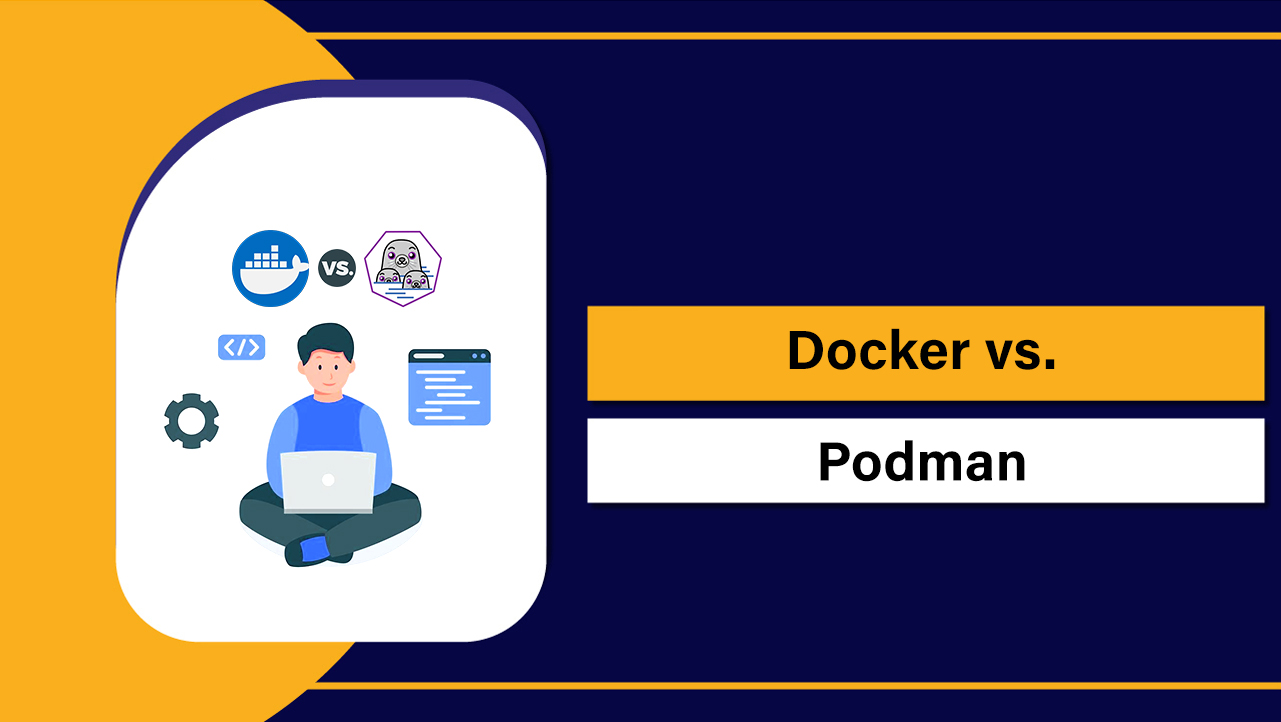
Docker vs. Podman: Both are OCI-compliant container engines for packaging, running, and managing applications. Docker offers a mature, all-in-one developer experience and broad ecosystem support, while Podman is daemonless, rootless-first, and security-focused. For hosting, choose Docker for ease and tooling; choose Podman for hardened, least-privilege deployments.
Choosing the best containerization tool for hosting often comes down to Docker vs Podman. Both run OCI images, integrate with CI/CD pipelines, and support modern Linux features (cgroups v2, namespaces, seccomp). But their architecture, security posture, and developer experience differ in ways that matter for production hosting, compliance, and day‑to‑day operations.
What Is Containerization (and Why It Matters for Hosting)?
Containerization packages apps and dependencies into lightweight units that run consistently across environments. Unlike VMs, containers share the host kernel, making them faster to start, denser to schedule, and easier to scale. For hosting, this means higher resource efficiency, cleaner deployments, and predictable rollbacks with image immutability.
Docker: Overview, Strengths, and Hosting Fit
Docker popularized containers by bundling the Docker Engine (dockerd), CLI, Docker Compose, and extensive tooling. It uses a daemon to manage containers, images, networking, and volumes. Docker images are OCI-compliant and run on Linux, Windows (Windows containers), and macOS (via virtualization).
Why teams pick Docker
- Best-in-class developer UX: Dockerfile, Compose, and Docker Desktop streamline local dev.
- Huge ecosystem: Guides, examples, and integrations for CI/CD and registries.
- Cross-platform support: First-class on Windows/macOS via Docker Desktop and WSL 2.
- Compatibility: Most images and guides are written with Docker in mind.
Potential drawbacks
- Daemon and root privileges by default (rootless mode exists but is newer to many teams).
- Commercial licensing for Docker Desktop in some business contexts.
- In Kubernetes, Docker Engine isn’t used directly since v1.24 (containerd/cri-o are preferred runtimes), though Docker-built images remain fully compatible.
Podman: Overview, Strengths, and Hosting Fit
Podman, from Red Hat’s ecosystem, is a daemonless container engine that emphasizes security and standards. It reuses core OCI technologies (runc/crun) and integrates with Buildah (building images) and Skopeo (image copying/signing). Podman is rootless by design and can manage pods similar to Kubernetes concepts.
Why teams pick Podman
- Security-first: Daemonless architecture and rootless containers reduce attack surface.
- Tight Linux integration: Works well with SELinux, systemd, and cgroups v2.
- Kubernetes alignment: Pods concept and
podman generate kubeease migration. - No background daemon: Fewer long-lived privileged processes on the host.
Potential drawbacks
- Learning curve for teams coming from Docker (especially networking and Compose).
- Windows/macOS experience is improving (Podman Desktop, WSL 2) but still trails Docker Desktop polish.
- Some third-party tools assume Docker semantics or APIs.
Docker vs Podman: Feature-by-Feature Comparison
Architecture
- Docker: Daemon-based (dockerd) controls containers; CLI talks to the daemon.
- Podman: Daemonless; each container is a direct child of the CLI process or managed by systemd.
Security
- Docker: Root by default; supports rootless mode; AppArmor/SELinux/ seccomp available.
- Podman: Rootless-first; fewer privileged processes; excellent SELinux alignment on RHEL/CentOS/Fedora.
Performance
For Linux hosts, raw runtime performance is broadly similar because both rely on OCI runtimes (runc/crun) and kernel primitives. Differences typically arise from storage drivers, logging, or virtualization layers on macOS/Windows rather than the engine itself.
Developer Experience
- Docker: Compose v2, Desktop UI, and seamless volume/network management lead the pack.
- Podman: Podman Desktop exists;
podman play kube,podman generate systemd, and pods are powerful once learned. Compose alternatives (podman-compose) are functional but less universal.
Operating System Support
- Docker: Strong Linux, Windows, macOS support (with Docker Desktop or WSL 2).
- Podman: Best on Linux; usable on macOS/Windows via Podman Desktop and virtualization layers.
Orchestration and Kubernetes
- Docker: Docker Swarm exists but is niche now; Kubernetes dropped dockershim in v1.24, favoring containerd/CRI-O. Docker-built images still work everywhere.
- Podman: Plays nicely with CRI-O concepts;
podman generate kubehelps export workloads to K8s YAML.
Image Build and Registry
- Docker: Dockerfile and BuildKit are mature and fast; integrates with most registries.
- Podman: Uses Buildah under the hood; Skopeo simplifies copying and signing images; OCI-compliant.
Real-World Hosting Scenarios: Which Should You Use?
Pick Docker if you need
- Fast onboarding for developers with familiar tooling (Compose, Desktop).
- Cross-platform local development on Windows/macOS with minimal friction.
- Broad third-party integrations across CI/CD, monitoring, and registries.
Pick Podman if you need
- Rootless, daemonless security for compliance or multi-tenant Linux hosts.
- Tighter systemd integration (e.g., managing containers as systemd services).
- Smooth path to Kubernetes-style manifests with
podman generate kube.
Hands-On: Running a Web Server with Docker and Podman
Here’s how to run NGINX with both engines so you can compare the workflow.
# Docker: run NGINX and expose port 8080
docker run -d --name web -p 8080:80 nginx:stable

# Docker Compose: docker-compose.yml
services:
  web:
    image: nginx:stable
    ports:
      - "8080:80"
    restart: unless-stopped

# Podman: run NGINX and expose port 8080 (rootless-friendly)
podman run -d --name web -p 8080:80 nginx:stable

# Podman: generate a systemd unit for auto-start on boot
podman generate systemd --name web --files --new
# Then move unit file to ~/.config/systemd/user/ and enable it:
systemctl --user enable --now container-web.service

# Podman: create a pod with app + sidecar, then run containers into it
podman pod create --name webpod -p 8080:80
podman run -d --pod webpod --name web nginx:stable
podman run -d --pod webpod --name log-agent your/log-agent:latest
Migrating from Docker to Podman (Compatibility Notes)
- CLI parity: Podman’s CLI mirrors Docker’s. Many commands work unchanged.
- Wrapper: Installing the
podman-dockerpackage letsdockercommands call Podman. - Compose: Use
podman-composeor translate services to systemd units or Kubernetes YAML withpodman generate kube. - Volumes and networks: Expect minor differences; validate paths, SELinux contexts, and naming.
- CI/CD: Switch the engine in your pipeline runners; image formats remain OCI-standard.
Best Practices for Hosting Containers (Regardless of Engine)
- Run rootless where possible: Reduces risk on multi-tenant or Internet-exposed hosts.
- Pin image versions and use digests: Avoid surprises from latest tags.
- Keep images minimal: Use distroless/alpine when appropriate; reduce CVE surface.
- Scan images regularly: Integrate Trivy/Grype into CI and set failure thresholds.
- Separate networks and least privilege: Expose only required ports; use firewall policies.
- Use secrets managers: Avoid plain env vars for sensitive data; prefer files or external stores.
- Log and monitor: Centralize logs (Fluent Bit, Loki, ELK) and watch resource usage.
- Automate restarts and health checks: Compose, systemd, or orchestrators should enforce self-healing.
- Backup stateful data: Snapshot volumes, test restores, and document runbooks.
Performance and Resource Efficiency: What to Expect
On Linux servers, CPU and memory overhead differences between Docker and Podman are negligible for most web workloads because both rely on the same kernel features and OCI runtimes. The biggest variables are image sizes, logging drivers, storage backends (overlayfs vs btrfs), and whether you’re using virtualization layers (macOS/Windows).
Security Considerations for Production Hosting
- Rootless by default (Podman) or configured (Docker) minimizes privilege.
- Enable SELinux/AppArmor profiles and seccomp for syscall filtering.
- Use read-only root filesystems and drop Linux capabilities not needed.
- Namespace isolation: User namespaces map container root to non-root on host.
- Immutable infrastructure: Treat images as read-only, rebuild for changes rather than patch in place.
How YouStable Helps You Run Containers at Scale
At YouStable, we provide high-performance NVMe VPS and dedicated servers with full root access, optimized kernels, and hardened host security. Our experts can preinstall Docker or Podman, configure rootless setups, tune storage drivers, and integrate systemd, registries, and CI/CD. Need managed help? We’ll design a secure, scalable container hosting stack tailored to your app and budget.
Quick Decision Guide: Docker vs Podman for Hosting
- If your team is new to containers and wants the smoothest dev experience: choose Docker.
- If your priority is least privilege, daemonless operation, and systemd/K8s parity: choose Podman.
- If you’re hybrid Windows/macOS: Docker Desktop is more polished; Podman Desktop is improving.
- For Kubernetes: Build images with either; run workloads with containerd/CRI-O in clusters.
FAQs: Docker vs Podman for Hosting
Is Podman more secure than Docker for production hosting?
Podman’s daemonless, rootless-first design reduces privileged attack surface, which many security teams prefer. Docker can also run rootless and enforce strong profiles (AppArmor/SELinux/seccomp). With proper hardening, both are secure; Podman simply makes least privilege easier by default on Linux.
Can Docker and Podman run the same images?
Yes. Both support OCI images, so you can pull and run the same image tags from Docker Hub, GHCR, Quay, or private registries. Build pipelines that output OCI images will work with either engine.
Which is faster: Docker or Podman?
On Linux, runtime performance is similar because both rely on OCI runtimes and kernel features. Perceived differences often stem from build cache behavior, storage drivers, or virtualization layers on Mac/Windows rather than the engines themselves.
Does Kubernetes use Docker or Podman?
Kubernetes uses CRI-compliant runtimes like containerd and CRI-O. Docker Engine is not required and dockershim was removed in v1.24. Images built by Docker or Podman run fine on clusters. Podman can help generate Kubernetes YAML via podman generate kube.
Which should I choose on a new Linux VPS?
If you’re optimizing for quick setup and team familiarity, pick Docker with Compose. If you need rootless-by-default and tight systemd integration, choose Podman. YouStable can provision either on your VPS or dedicated server and apply best-practice hardening from day one.
Conclusion
For most everyday container workloads, Docker is still the easiest and most “plug‑and‑play” choice, especially for developers on Windows and macOS who rely on Docker Desktop, Docker Hub images, and Docker Compose.
Podman shines when security and Linux‑server hygiene matter more than convenience: its daemonless, rootless design reduces the attack surface and aligns better with modern Kubernetes‑centric, multi‑user environments.
In practice, they are compatible enough that you can start with Docker for simplicity, and gradually introduce Podman where you need stricter security, rootless containers, or closer parity with Kubernetes pods—treating Podman as a more secure engine rather than a completely different ecosystem.