Be honest: how many times has work stopped in your office just because “Tally nahi chal raha”? One system hangs, LAN disconnects, backup missing, or the “Tally PC” is with someone else—and suddenly billing, GST, and reports all get stuck.
At the same time, your team is no longer sitting in one cabin. Someone is in the head office, someone in a branch, someone working from home, and someone travelling to client sites. But your Tally is still chained to one old desktop inside the office.
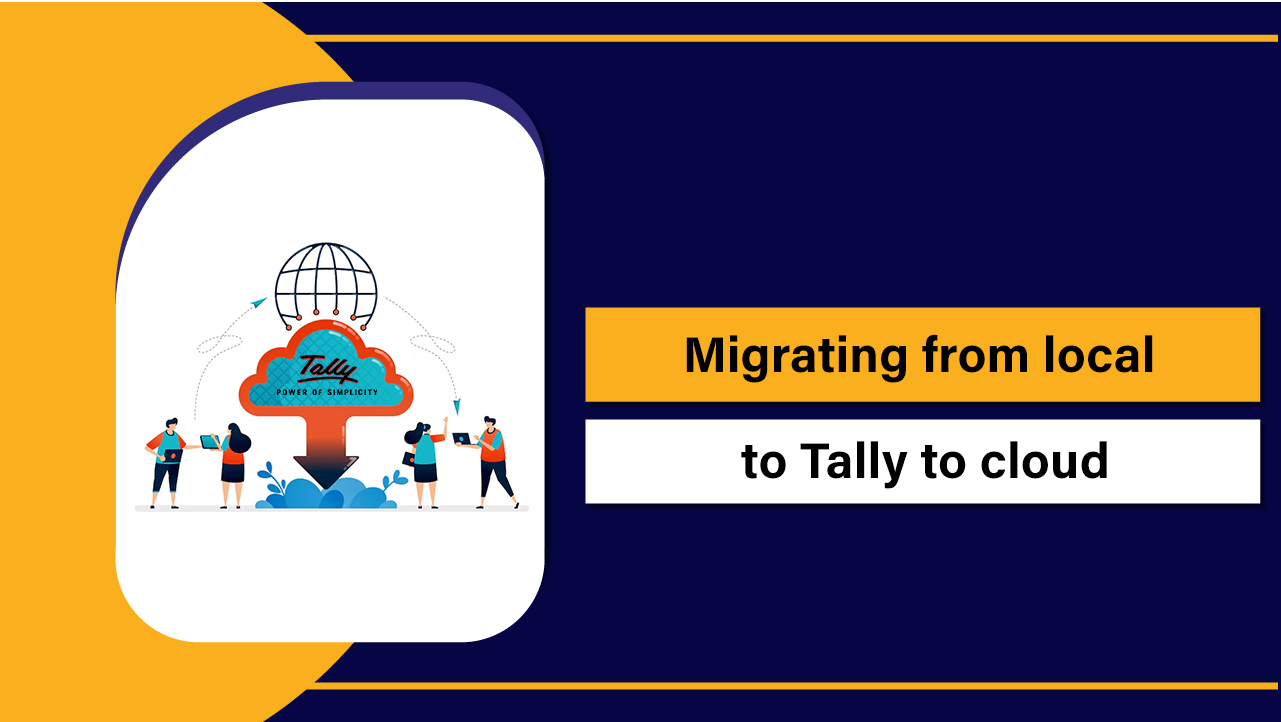
Migrating from local to Tally to cloud solves this exact mess. Your same Tally ERP 9 or TallyPrime runs on a secure cloud server; you log in from anywhere; multiple users work together; data is auto-backed up; and you don’t have to become an “IT person” just to keep accounts running. This guide walks you through what Tally on Cloud is, why you should migrate, key differences vs local, a step-by-step migration process, features you get after moving, and clear answers to common doubts.
What Is Tally on the Cloud?
Tally on Cloud simply means your Tally software (ERP 9 or TallyPrime) is installed on a remote cloud server instead of your physical office desktop or LAN server.
You and your team access that cloud server over the internet through remote desktop or a similar secure connection and use Tally exactly like you do today—same interface, same shortcuts, same reports. In simple words, your Tally is “sitting” in a professional data center, not in one local machine that can crash, get stolen, or lose data.

Cloud providers offer ready-made “Tally on Cloud” environments with Windows servers, security layers, daily backups, and remote access pre-configured, so you don’t have to build anything from scratch.
Why Migrate from Local Tally to Tally on Cloud?
1. Anywhere, anytime access
With local Tally, you’re stuck with the office network or complicated remote tools. With Tally on Cloud, authorised users can log in securely from office, home, branch, client site, or while travelling—as long as they have internet and their credentials. This is a big win for CAs, agencies, distributed teams, and owners who want to quickly check reports on the go.
No more “Sir, please send backup” or screen-sharing just to see a ledger or stock summary.
2. Stronger security and reliable backups
A single office PC is vulnerable to hardware failure, ransomware, theft, power issues, and accidental deletion. In a proper Tally on Cloud setup, your data lives in a secure data center with:
- Encrypted connections between your device and the cloud server.
- Multi-layer security (firewalls, access control, monitoring).
- Scheduled automatic backups and quick restore options.
Even if your laptop dies tomorrow, your Tally data on the cloud stays safe and can be accessed from another device.
3. Less IT headache
On local setup, you or your IT guy must handle Windows updates, Tally updates, antivirus issues, network problems, and backups. When Tally runs on cloud, professional engineers maintain the infrastructure, monitor uptime, and handle most technical work behind the scenes.
You focus on business and compliance; they focus on servers, security, and uptime (many providers claim 99.9% or more).
4. Scale as you grow
If your team grows, or your data gets heavier, a local PC quickly starts feeling slow and overloaded. With Tally on Cloud, you can upgrade RAM, CPU, and storage or add extra users by simply changing your plan.
This flexibility is ideal for businesses that grow branch-by-branch, add new departments, or experience seasonal spikes in activity.
5. Better continuity and disaster recovery
Fire, theft, major disk failure, or severe malware can destroy your local machine and backups. Cloud setups are designed with redundancy, off-site backups, and disaster recovery plans so that even if something goes wrong at hardware level, your Tally can be restored on another node or server.
For businesses where downtime directly hits cash flow, this resilience is a big advantage.
Local Tally vs Tally on Cloud
| Factor | Local Tally (Desktop / LAN) | Tally on Cloud |
| Where it runs | On your own PC or office server. | On a remote cloud server in a data center. |
| Access | Only in office or via complex remote tools. | Anywhere via secure internet connection. |
| Backups | Manual: pen drives, external HDDs, ad-hoc cloud uploads. | Automated scheduled backups handled by provider. |
| Security | Depends on your antivirus, firewall, and habits. | Multi-layer security, encryption, and monitoring. |
| Users | Limited by LAN and license on one network. | Multi-user, multi-location access on same data. |
| IT maintenance | You/your IT handle hardware, OS, updates. | Provider manages server, uptime, and updates. |
| Disaster recovery | Depends on your backup discipline. | Built-in DR and quick restore options. |
Functionally, Tally itself works similarly in both setups—but the reliability, access, security, and maintenance experience are totally different.
Step-by-Step Migration Process from Local Tally to Cloud
Step 1: Audit your current Tally environment
Before migrating, understand what you are moving.
- Check which version you use (Tally ERP 9 or TallyPrime, and which release).
- List active companies you actually care about; archive very old or unused ones.
- Note approximate data size and years of history.
- Count how many users need access and from where (office, branches, remote).
This helps you choose correct cloud resources (RAM/CPU/storage) and a suitable plan.
Step 2: Take proper backups (non‑negotiable)
Never touch a live system without clean backups.
- Use Tally’s backup option to take a complete backup of your companies.
- Store backups on at least two locations—e.g., external HDD and a cloud drive (Google Drive, OneDrive, etc.).
- Optionally copy raw data folders as an extra safety layer.
Test restoring one backup on a different PC to be sure your backups are valid.
Step 3: Choose your cloud provider and plan
You can:
- Go with a managed Tally on Cloud provider who specialises in hosting Tally.
- Or use your own VPS/Cloud (AWS, Azure, etc.) and set everything up manually with an IT expert.
When evaluating providers, look at:
- Uptime guarantee (aim for 99.9% or higher).
- Data center location (India region if your users are in India).
- Backup policy, recovery options, and retention periods.
- Support quality and response time.
Step 4: Set up the cloud server and install Tally
Once you pick a provider:
- They create your Windows cloud server and secure remote access.
- Tally ERP 9 or TallyPrime is installed and activated with your existing license or a cloud-friendly licensing method.
- User accounts and roles are created at OS and Tally level (admin, data entry, auditor, etc.).
Many providers follow a defined checklist: prepare account, secure server, install Tally, configure firewall, and test connectivity.
Step 5: Upload backup and restore data on cloud
Now move your data safely:
- Upload the backup file or data folder to the cloud server via SFTP, RDP drive mapping, or provider panel.
- Open Tally on the cloud server and restore the backup into a suitable data directory.
- Verify that your companies appear correctly in the list and open without errors.
If you are also migrating from ERP 9 to TallyPrime, use Tally’s official migration tool and follow recommended steps to avoid corruption.
Step 6: Configure multi-user access and permissions
If more than one user will access Tally:
- Enable multi-user capability and configure licensing as required (e.g., Tally Gold).
- Create user roles and permissions inside Tally (data entry, supervisor, auditor).
- Set up separate OS-level logins on the cloud server if needed.
This ensures proper segregation, audit trails, and controlled access to sensitive data.
Step 7: Test thoroughly before going fully live
Don’t rush the final switch.
- Compare key reports (Balance Sheet, P&L, GST, stock) between local and cloud for the same date.
- Enter some sample vouchers in cloud Tally and see if they reflect correctly.
- Test printing, exports, and any custom modules or add-ons.
- Check performance from all major locations (head office, branch, remote).
Run both systems in parallel for a short time, if possible, before fully decommissioning the local setup.
Features You Get After Migrating Tally to Cloud
Once you’re live on Tally on Cloud, you unlock several practical features and benefits.
1. Secure remote access
Authorised users log into Tally from anywhere using a secure connection, typically with username, strong password, and sometimes additional authentication. Data travels over encrypted channels, protecting it from interception.
You control who can access from where and can disable access instantly if needed.
2. Multi-user, multi-location operations
Multiple users can work at the same time on the same company data from different locations (branches, warehouses, home, etc.). Multi-user Tally on Cloud improves collaboration for accounting, inventory, and compliance workflows without LAN headaches.
For growing SMEs and agencies, this is often the single biggest productivity booster.
3. Automated backups and recovery
Cloud Tally setups usually include daily or scheduled backups, often stored on separate storage systems or regions. If something goes wrong—corruption, accidental deletion, or serious error—you can roll back to a recent restore point instead of starting from scratch.
This automation dramatically reduces the risk caused by “I forgot to take backup” situations.
4. Improved uptime and performance
Professional providers monitor servers, fix issues proactively, and optimise resources to reduce downtime. With the right plan and decent internet, Tally on Cloud can often feel faster and more stable than an overloaded, ageing office PC.
Some providers also let you scale up CPU/RAM during peak seasons and then scale down later to manage costs.
5. Compatibility with multiple devices
Cloud-based Tally can be accessed from various devices—typical setup includes Windows laptops/desktops and thin clients; some providers also offer browser-based or app-based access from tablets. While heavy data entry is usually best on a full keyboard and screen, basic report viewing and checks can be done from lighter devices.
FAQs – Migrating from Local to Tally to Cloud
Is it safe to migrate Tally data to the cloud?
Yes, migrating Tally to the cloud is safe when done with proper backups, verified tools, and a professional provider that uses encryption, access control, and regular security monitoring. Safety mainly depends on your migration discipline and the provider’s security standards, not on the word “cloud” itself.
How long does the migration process take?
For a small company with limited data, migration can be done in a few hours, including backup, setup, restore, and basic testing. Larger databases, multiple companies, ERP 9 to TallyPrime upgrades, or complex setups may stretch into a day or two, especially if you plan thorough parallel testing before going live.
Can multiple users access Tally after migration?
Yes, that’s one of the main reasons people move to Tally on Cloud—multiple users can log in at the same time and work on the same company data from different locations. With proper multi-user configuration and licensing, you can control who sees what and maintain secure, real-time collaboration.
What happens if the internet goes down?
If your internet goes down, you temporarily lose access to Tally on Cloud until connectivity is restored, but your data remains safe on the cloud server. Many businesses use reliable broadband plus a backup 4G/5G connection or dongle so that brief outages don’t stop work completely.
Will cloud Tally work the same as my local Tally?
Yes, in terms of interface and features, Tally on Cloud works almost exactly like your local Tally because you’re still running the same Tally software—just on a cloud server. Menus, shortcuts, reports, and vouchers remain familiar; the only difference is that you access it through a remote session instead of directly on your desktop.
Do I need to buy a new Tally license?
In most cases, you can use your existing licensed Tally (Silver/Gold) on the cloud server, as long as it’s properly configured and compliant with Tally’s licensing terms. Some Tally on Cloud providers also offer bundled options that include TallyPrime licenses as part of their package, which can simplify management for new users.
What devices support cloud-based Tally?
Typically, any device that can establish a secure remote desktop or browser session to the cloud server can be used—this usually includes Windows PCs/laptops and compatible thin clients by default. Many setups also allow access from tablets or other devices for basic checking and report viewing, but intensive data entry is recommended on a full PC environment.
Conclusion
Migrating from local Tally to cloud is not just a “tech upgrade”; it’s a way to remove daily accounting friction, reduce risk, and give your team the freedom to work from anywhere without juggling backups and LAN issues.
When you plan the migration carefully—audit data, take solid backups, choose a reliable provider, and test thoroughly—you end up with the same familiar Tally experience but with far better access, security, uptime, and peace of mind