To start a blog in Nigeria in 2026, choose a niche, register a .com or .ng domain, buy fast NVMe WordPress hosting with a Lagos/Johannesburg/Frankfurt server, install WordPress, enable SSL and caching, configure essential SEO/security plugins, publish helpful posts weekly, build topical clusters, connect Search Console/Analytics, and monetize with AdSense, affiliates, and digital products.
Expect 3-6 months to gain traction if you focus on Nigerian search intent and consistent quality. Blogging in Nigeria has matured into a serious, location independent business. With more Nigerians searching for practical answers online in English, Pidgin, Yoruba, Hausa, and Igbo there’s massive room to serve real needs and build authority.
This guide shows you how to start a blog in Nigeria the right way: from picking a niche, securing a domain, and buying performance hosting to installing WordPress, publishing SEO content, and monetizing safely. As a Senior Technical SEO writer at YouStable, I’ll also share infrastructure level tips servers, caching, and security that Nigerian blogs need to rank faster and stay stable during traffic spikes.
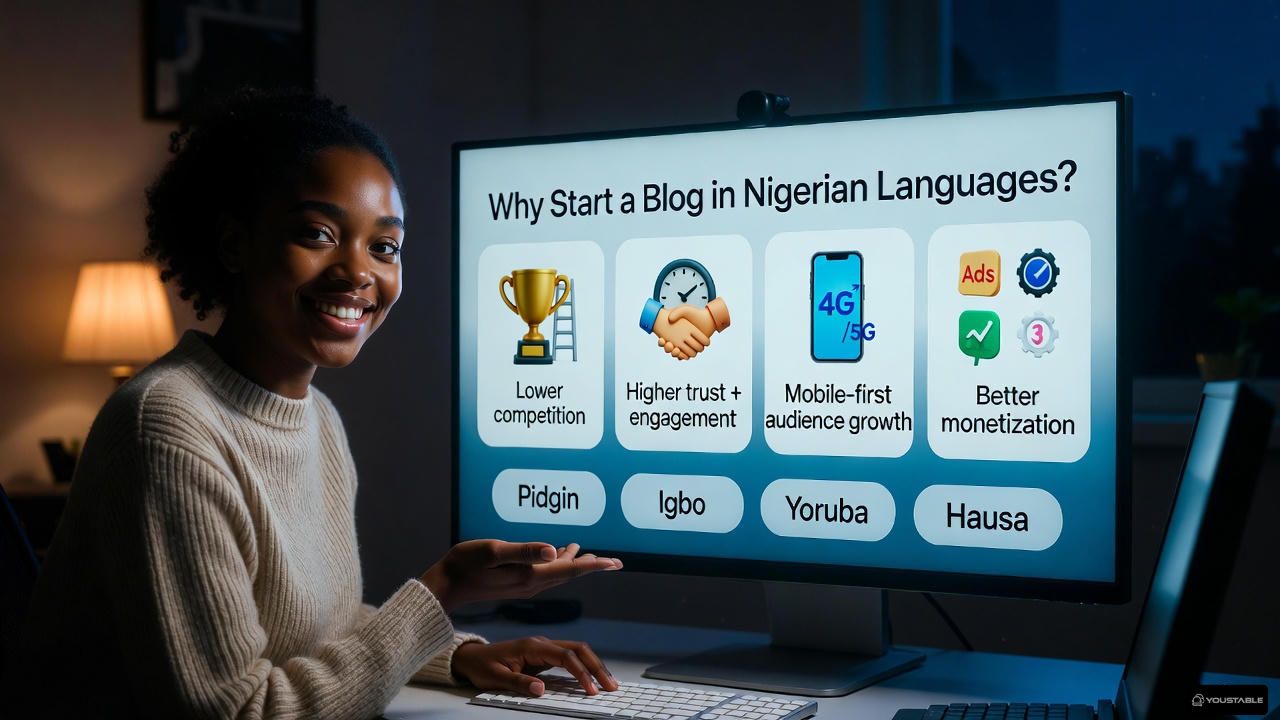
Why You Should Start a Blog in Nigerian Languages in 2026?
Local language search is exploding as Nigerians prefer content they can relate to. Trust, time on page, and conversions are consistently higher for native language sites.
Nigeria’s internet audience has grown rapidly, fueled by affordable smartphones and better 4G/5G coverage. People now rely on blogs for exam guides (JAMB/WAEC), fintech and bank how tos, job alerts, Nollywood and football updates, recipes, and small business advice. This is your opportunity to serve authentic, helpful content.
Competition is lower in Pidgin, Yoruba, Hausa, and Igbo compared to English, but demand is strong. Google’s Helpful Content and EEAT updates favor deep, localized expertise, giving regional blogs an edge when they solve real Nigerian problems.
Brands increasingly value native language inventory for relevance and engagement. If you can provide quality content consistently, you’ll earn loyalty, repeat visits, and better monetization.
- Lower competition, faster rankings in regional language SERPs
- Higher trust, engagement, and longer sessions from local audiences
- Better ad performance and sponsored deals with Nigerian brands
- Evergreen authority assets that compound traffic and income
What Do You Need to Start a Blog in Nigeria?
Set your foundations first to avoid costly migrations and SEO setbacks later. Pick a niche, secure a brandable domain, and choose fast NVMe hosting near Nigeria.
- A clear niche and reader persona (English, Pidgin, or a local language)
- A short, brandable domain (.com, .ng, or .com.ng preferred)
- Fast, secure WordPress hosting (NVMe, LiteSpeed, SSL, backups)
- Lean WordPress setup with essential SEO, cache, and security plugins
Choosing a Perfect Domain Name for Your Nigerian Blog
Your domain is your brand’s identity. Clear, memorable domains improve recall, word of mouth, and direct traffic. In competitive verticals like finance or education, a distinctive brand prevents confusion and sets you up for long term growth beyond a single topic.
Keep it short, easy to pronounce, and simple to type on mobile keyboards. Avoid hyphens, numbers, and keyword stuffing Google prefers brands that feel natural. Use words Nigerians use daily, including Pidgin if it fits your content voice.
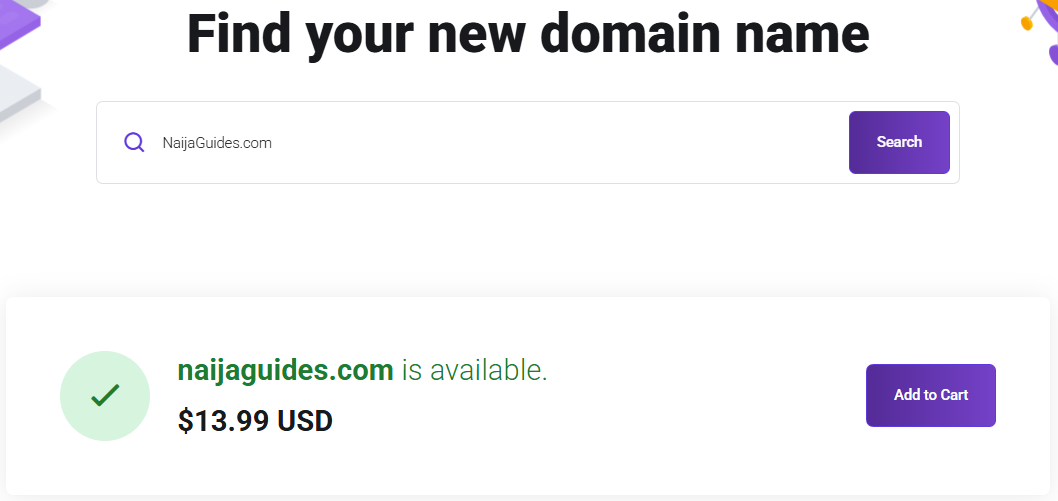
- Keep it short, simple, and speakable on WhatsApp and YouTube
- Avoid hyphens, numbers, and forced keywords
- Sample formats: Informational (NaijaGuides, SchoolGistNG), Brandable (KokoTalk, JollyChef)
- Best TLDs: .com, .ng, .com.ng; Acceptable: .net, .blog
- Advanced: IDNs for Yoruba/Hausa/Igbo optional; keep an English short link variant
- Check social availability on YouTube, Instagram, Facebook, and X for consistency
Free vs Paid Hosting – What’s Better for Beginners?
Free hosting looks tempting but becomes expensive in lost rankings and reputation. Most free plans throttle CPU/RAM, inject ads, or block essential plugins hurting Core Web Vitals and making AdSense approval difficult.
- Slow TTFB and frequent downtime during Nigeria’s peak hours
- Resource limits break backups, image optimization, and caching
- Poor SEO signals and crawlability; unreliable SSL and security
- Harder to pass AdSense and premium ad networks
Paid hosting ensures speed, reliability, and security core inputs for ranking and user experience. Look for NVMe SSD storage, LiteSpeed or NGINX based stacks, free SSL, daily backups, and responsive support that understands WordPress.
- Low TTFB, strong uptime, and better Core Web Vitals
- Free SSL, automatic backups, and malware protection
- Scales for viral spikes from social or Google Discover
- Friendly to AdSense, affiliates, and e-commerce growth
Best Hosting Setup for Beginners in 2026
For Nigerian audiences, prioritize proximity and caching. A Lagos or Johannesburg data center is ideal; Frankfurt or London also deliver excellent latency. Pair a LiteSpeed based stack with QUIC.cloud or Cloudflare for global distribution and DDoS protection.
- NVMe SSD storage for fast database and media access
- LiteSpeed/OpenLiteSpeed server with HTTP/3 and QUIC
- Data center: Lagos > Johannesburg > Frankfurt/London
- CDN: Cloudflare (free) or QUIC.cloud for LiteSpeed Cache
- WordPress optimized environment with PHP 8.2/8.3 and Brotli compression
Set Up Hosting with YouStable – (Step by Step)
If your audience is primarily in Nigeria or West Africa, choose a server close to Lagos or Johannesburg for the best latency. YouStable’s WordPress optimized hosting includes NVMe, LiteSpeed Cache, free SSL, and 1 click WordPress installs ideal for beginner to intermediate bloggers.
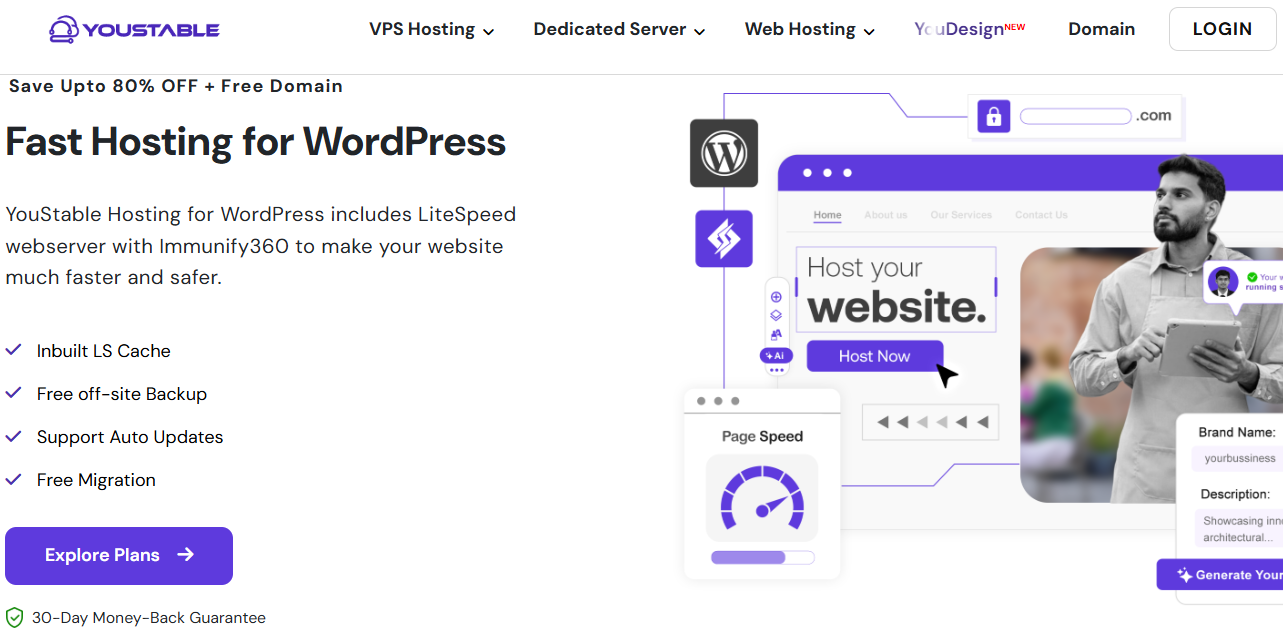
- Visit the YouStable website and open WordPress Hosting.
- Pick a beginner plan with NVMe and LiteSpeed Cache enabled.
- Select a server location closest to Nigeria (Lagos/Johannesburg/Frankfurt/London).
- Register a new domain (.com, .ng, or .com.ng) or connect an existing one via nameservers.
- Complete checkout and access your hosting dashboard or cPanel.
- Install WordPress with the 1 click installer (Softaculous/Installatron).
- Enable free SSL, force HTTPS, and activate LiteSpeed Cache.
- Connect Cloudflare or QUIC.cloud for CDN and DDoS protection.
YouStable suits regional bloggers thanks to fast, optimized servers, WordPress‑savvy support, and a stack tuned for Core Web Vitals, image optimization, and traffic surges common in Nigeria’s news and education niches.
| YouStable WordPress Hosting Plans & Pricing Table in 2026 | ||||
|---|---|---|---|---|
| Plans Name | Websites | Storage | Bandwidth | Monthly Pricing |
| DaStart | 1 | 50GB NVMe SSD | Unmetered | $0.65/mo |
| DaProfessional | 25 | 100GB NVMe SSD | Unmetered | $1.31/mo |
| DaElite | Unlimited | 200GB NVMe SSD | Unmetered | $2.42/mo |
Install WordPress & Set Up Your Nigerian Blog
Use the 1 click installer to deploy WordPress. Confirm your domain points to the host (DNS propagation can take up to 24 hours). Install with HTTPS from day one this avoids mixed content issues and builds trust.
- Use strong admin credentials and disable “admin” as a username
- Set site language to English (Nigeria), Pidgin, or local language if supported
- Set timezone to Africa/Lagos so post times match Nigerian audiences
- Permalinks: Post name for clean, SEO friendly URLs
Create core pages to establish credibility and meet compliance requirements. Nigeria’s data privacy regime (NDPA 2023) and ad networks expect transparency on data use, cookies, and affiliate disclosures.
- About
- Contact (with functional form)
- Privacy Policy (reflect analytics, ads, email tools)
- Disclaimer and Affiliate Disclosure
Keep your plugin stack lean to avoid conflicts and bloat. Prioritize performance, security, and SEO control. Test plugin updates on a staging site before pushing live if your traffic is significant.
- SEO: Rank Math or Yoast (enable breadcrumbs, schema, sitemaps)
- Cache: LiteSpeed Cache (image/WebP, page cache, CSS/JS minify)
- Security: Wordfence or Solid Security (2FA, firewall, brute force limits)
- Backup: UpdraftPlus (off site to Google Drive/Dropbox weekly)
- Images: ShortPixel or Imagify (lossy WebP + lazy load)
- Forms: WPForms or Contact Form 7 (with reCAPTCHA/hCaptcha)
- SMTP: FluentSMTP with a reliable mail sender (e.g., Brevo, Amazon SES)
- Optional: TranslatePress/Polylang for bilingual content (English ↔ Pidgin/local)
Best Blogging Platform to Start a Blog in Nigeria
Choose a platform that gives you control, speed, and monetization flexibility. WordPress powers over 40% of the web and fits Nigerian growth needs perfectly.
WordPress.org is the best choice for serious Nigerian blogs. You own your data, control SEO, and can scale from a few hundred visits to hundreds of thousands with proper caching and CDN. Themes and plugins cover everything from education portals to recipe cards and review schema.
Blogger is free but limited: weaker SEO control, slower templates, and harder monetization optimizations. Medium is great for distribution, but you don’t fully own the audience or SEO value. For long term authority and income, self hosted WordPress wins.
Content Ideas & Choosing the Right Niche
Start where you have lived experience. Nigerian search behavior favors creators who solve specific problems with clear steps. Blend evergreen topics with timely updates to capture both stable and trending traffic.
- Evergreen: Nigerian recipes, small business guides (POS, logistics), study tips
- Education: JAMB/WAEC/NECO/NYSC guides, past questions, result checking
- Money: Fintech apps, bank transfers, fees, BVN/NIN, savings & investment basics
- Careers: Job alerts, CV templates, interview prep, government recruitment
- Tech: Data plans, network comparisons (MTN, Airtel, Glo, 9mobile), device reviews
- Entertainment/Sports: Nollywood, Nigerian music, Premier League updates
- Travel/Local Life: Lagos/Abuja living costs, transport routes, market prices
Check monetization alignment early. Education and fintech monetizes well via affiliates; recipes and travel can do great with display ads and sponsored posts. Review SERPs, check who ranks, and find content gaps you can fill better.
Importance of Consistency and Patience
Blogging compounds. Publish 2-3 high quality posts weekly, build internal links, and update older guides. Expect 3-6 months for early traction, 6-12 months for strong growth if you maintain quality, topical clusters, and technical hygiene.
Adopt a publish → measure → improve loop. Use Google Search Console to track queries, click through rates, and pages close to Page 1; update those pages with better answers, FAQs, visuals, and internal links.
How to Write SEO Friendly Content for a Nigerian Blog
Help real people first; optimize for search second but precisely and consistently. Align with Nigerian intent: platforms, banks, exams, telcos, prices, and timelines.
Step 1. Write Original & Valuable Content
Answer the exact Nigerian query with step by step clarity. Include current fees, timelines, forms, and requirements for local institutions. Add screenshots where possible, list common errors, and offer workarounds that reflect how things work in Nigeria (e.g., network downtime, USSD alternatives).
Avoid thin or purely AI spun content. Google’s EEAT favors expertise and real world experience. Cite official sources (banks, exam boards), link to them, and include dates for updates especially on time sensitive topics like admissions or tariffs.
Step 2. Keyword Research (Language + Regional)
Use Google Autocomplete, People Also Ask, and “Related searches” for local phrasing. Combine English head terms with Nigerian modifiers like “in Nigeria,” “Lagos,” “USSD,” “without BVN,” “2026,” and brand names (JAMB, WAEC, GTBank, Zenith, MTN, Airtel).
- Collect long tail topics: “how to check JAMB result 2026,” “MTN eSIM Nigeria,” “price of cement in Abuja today”
- Scan top 10 results, note gaps (missing steps, no images, outdated fees)
- Use YouTube and Nairaland to find FAQs and pain points to convert into H2/H3s
- Group keywords into topical clusters for stronger authority over time
Step 3. On Page SEO
Craft benefit first titles with the year (2026) when relevant. Use a clear H1, descriptive H2/H3s that mirror questions, short paragraphs, and scannable bullet lists. Place your primary keyword naturally in the first 100 words.
- Meta: Compelling meta description with value + CTA (120–155 chars)
- Schema: Use Rank Math/Yoast to add FAQ, HowTo, Recipe, or Review schema
- Internal links: Link to related guides and cornerstone content
- Outbound links: Cite credible Nigerian sources (CBN, JAMB, banks)
- Images: Descriptive file names and alt text; add charts where useful
Step 4. Use Images & Internal Linking
Compress images to WebP, aim for <100 KB where possible, and lazy load. Use screenshots for bank/portal steps and add captions to improve comprehension. Link to cluster pages and related FAQs to increase session depth and distribute PageRank.
Step 5. Update Content Regularly
Content freshness is a ranking signal, especially for fees, application windows, and requirements. Add an “Updated on” note, refresh screenshots, and revalidate links. If a page loses rankings, analyze competitors and bolster your page with missing subtopics or FAQs.
How to Rank Your Nigerian Blog on Google
Ranking is about matching intent and proving authority over time with clean tech. Optimize site speed, structure, and trust signals while publishing helpful content.
Here are seven practical levers to move your pages up the SERPs for Nigeria focused queries. Treat them as ongoing habits, not one time tasks; the sites that win do these consistently and measure impact in Search Console.
- Search intent match: Align content type and depth with what ranks (guides vs news vs tools)
- Topical authority: Build clusters (e.g., JAMB hub → registration, results, reprinting, cut off marks)
- Internal linking: Use descriptive anchors, link upward to pillar pages, and laterally to peers
- Page speed & Core Web Vitals: Target <200 ms TTFB, <2.5 s LCP, <100 ms INP
- EEAT: Show author bio, credentials, contact details, and clear editorial standards
- Content freshness: Update key pages quarterly or when policies, prices, or dates change
- Natural backlinks: Earn from guides that solve real problems; pitch Nigerian media/blogs
Use a ccTLD (.ng, .com.ng) or set geo targeting in Search Console for a .com domain. Submit XML sitemaps, fix coverage issues quickly, and keep your robots.txt simple and crawl friendly.
7 Ways to Make Money from a Nigerian Blog in 2026
Diversify early so a policy change doesn’t wipe out your revenue stream. Pick monetization that fits your niche, audience intent, and content depth.
- Google AdSense: Works well for education, news, recipes, and lifestyle. Improve RPMs with longer sessions, better ad placements (avoid intrusive), and faster pages. Consider moving to Ezoic or Mediavine/SheMedia as traffic grows for higher yields.
- Affiliate marketing: Promote relevant products and services Jumia, Konga, travel bookings, software/SaaS, fintech cards, learning platforms. Use comparison tables, pros/cons, and honest reviews. Always disclose affiliate links to comply with policies and build trust.
- Sponsored posts: Nigerian SMEs and startups seek local reach. Publish media kits with traffic/geography data, sample topics, and rates in Naira (accept Paystack/Flutterwave). Maintain editorial standards to protect your audience and rankings.
- Digital products: Sell ebooks, templates, and mini courses. Use Selar, Gumroad, or WooCommerce with Paystack/Flutterwave. Education (past questions, study planners), small business (POS setup guides), and budgeting templates sell well.
- Freelancing or services: Convert authority into income CV writing, WordPress setup, SEO consulting, or social media packages for local businesses. Create a Services page and add a booking form with WhatsApp integration.
- Lead generation: Capture email leads with content upgrades and send curated deals or job alerts. Sell qualified leads to local service providers (moving, repairs, events) while respecting NDPA data rules and user consent.
- YouTube + blog combo: Repurpose tutorials into videos; embed them into posts for better engagement and time on page. Cross promote and diversify ad + affiliate revenue across platforms your audience already uses.
FAQs
How much does it cost to start a blog in Nigeria in 2026?
Budget ₦25,000–₦80,000 for year one: domain (₦6k–₦18k for .com/.ng), hosting (₦18k–₦55k for entry NVMe WordPress hosting with SSL/backups), and premium plugins/themes if needed. You can start lean and upgrade as traffic grows.
Which is better for Nigeria: .com or .ng?
.com is globally recognized and easy to resell; .ng or .com.ng can boost geo relevance and trust locally. If your audience is primarily Nigerian, .ng/.com.ng is great; otherwise use .com and set Nigeria targeting in Search Console.
Can I start and run a blog using only my phone?
Yes. You can write in Google Docs/Notion, upload via the WordPress app, compress images with mobile apps, and manage social sharing. For speed, design, and bulk editing, a laptop is more efficient but not mandatory to start.
How long until I get AdSense approval in Nigeria?
Typically 2-6 weeks if your site has 15–30 quality posts, clear About/Contact/Privacy pages, original images, no scraped content, and a clean theme. Keep pages fast, avoid intrusive ads, and ensure legal pages are accessible in the footer.
Do I need CAC registration to start a blog?
No. You can start as an individual. Registering with CAC becomes useful when you want brand sponsorships, open business bank accounts, or issue invoices. It also enhances trust and eligibility for certain affiliate programs.
Which hosting location is best for Nigerian readers?
Lagos or Johannesburg first, then Frankfurt or London. Pair with Cloudflare or QUIC.cloud to serve assets quickly across Nigeria and the diaspora. Prioritize NVMe, LiteSpeed, SSL, backups, and responsive WordPress support.
How do I receive payments from my blog in Nigeria?
Use AdSense/Ezoic for ads; for direct sales and sponsorships, accept Naira via Paystack/Flutterwave. For foreign affiliate payouts, use domiciliary accounts, Payoneer, or Wise where supported. Provide invoices and keep records for taxes.
Conclusion
Blogging in Nigeria is a long term digital asset play. With fast hosting, a clean WordPress stack, and a consistent publishing schedule tailored to Nigerian search intent, you can build authority, steady traffic, and multiple income streams by 2026 and beyond.
Pick a niche, secure your domain, deploy on NVMe WordPress hosting near Nigeria, and publish two helpful posts this week. Once the fundamentals are right, your only job is to keep helping your audience better than anyone else.
When you’re ready to scale, optimize Core Web Vitals, build topical clusters, and diversify monetization. The Nigerian web needs more accurate, practical guides yours can be one of them.