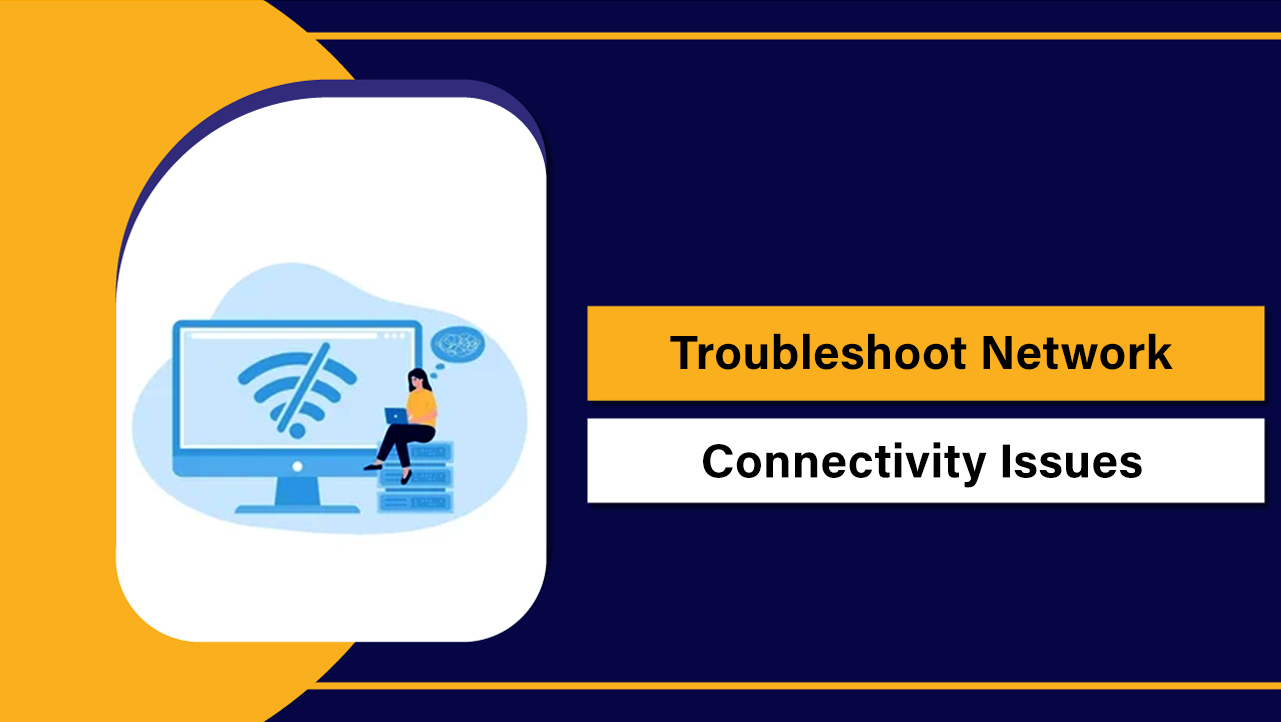
To troubleshoot network connectivity issues on dedicated servers, start with link checks (cable, port, speed/duplex), verify IP/subnet/gateway, ping the gateway and public hosts, run traceroute/MTR for path insight, validate DNS, review firewall/ACL rules, test specific service ports, and collect packet captures/logs before escalating to your provider with evidence.
If your dedicated server suddenly goes offline or feels sluggish, a structured approach restores uptime fastest. In this guide, you’ll learn how to troubleshoot network connectivity issues on dedicated servers using proven steps, command examples for Linux and Windows, and practical tips from real-world hosting experience.
At-a-Glance Checklist (Use This First)
- Confirm link is up: port LEDs, switch port state, NIC status, speed/duplex.
- Verify IP addressing: correct IP, mask, gateway, VLAN tagging, static routes.
- Ping tests: loopback, self IP, gateway, known public IP (e.g., 1.1.1.1), domain name.
- Path tests: traceroute/MTR to identify hops, latency, and packet loss.
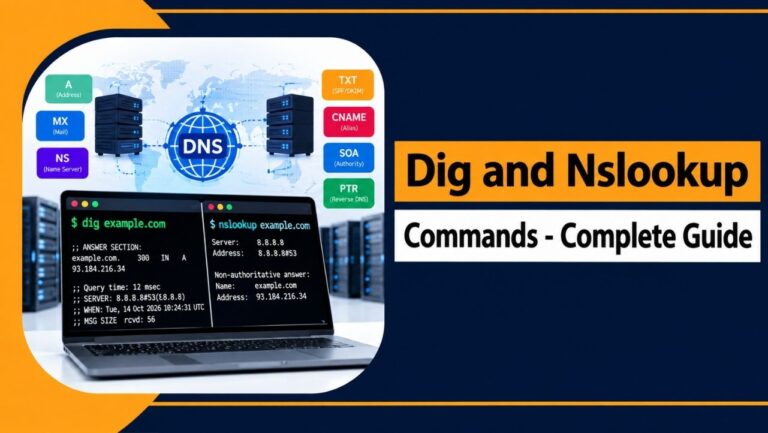
- DNS checks: resolve with dig/nslookup; test with and without DNS.
- Firewall/ACLs: review iptables/nftables/UFW or Windows Firewall; provider ACLs/DDOS filters.
- Service-level tests: curl/telnet/nc/Test-NetConnection to target port from inside and from outside.
- Packet capture and logs: tcpdump, event logs, syslog, IDS/WAF logs.
- Collect proof for escalation: timestamps, MTR, packet captures, config snippets.
How Dedicated Server Networking Fails (and Why)
Most outages fall into a few buckets: link negotiation problems, incorrect IP/gateway, VLAN or trunking mismatches, upstream routing or DDoS filtering, DNS resolution failures, host firewall rules, or performance issues like MTU mismatch and packet loss. Understanding where the stack breaks helps you fix it fast.
Step 1: Verify Physical and Link Layer
Start at Layer 1/2. If the link is down or flapping, nothing at higher layers will work. Check cables, SFP modules, switch port errors, speed/duplex, and VLAN tagging.
Linux link checks
# Show interfaces and link state
ip -br link

# Detailed NIC and driver info
ethtool eth0
ethtool -S eth0   # driver counters (drops/errors)

# VLAN interfaces (if applicable)
ip -d link show eth0.100

# Bring interface up/down
ip link set dev eth0 up
Windows link checks
# PowerShell: adapter status, speed, VLAN
Get-NetAdapter | Format-Table Name,Status,LinkSpeed,MacAddress

# Advanced properties (offloads/VLAN)
Get-NetAdapterAdvancedProperty -Name "Ethernet" | Format-Table DisplayName,DisplayValue
If you see frequent errors, drops, or half-duplex, renegotiate speed/duplex (prefer Auto unless your provider mandates otherwise), reseat cables, or use another port. In data centers, VLAN mis-tags commonly break connectivity—confirm the expected VLAN ID with your provider.
Step 2: Validate IP Addressing, Subnet, and Gateway
A wrong mask or gateway prevents off-subnet traffic. On routed setups, gateways are often outside your usable range—copy them carefully.
Linux addressing
# Show IPs and routes
ip -br addr
ip route

# Add IP / route (example)
ip addr add 203.0.113.10/29 dev eth0
ip route add default via 203.0.113.9 dev eth0

# ARP neighbors
ip neigh
Windows addressing
# IP and gateway
ipconfig /all
Get-NetIPConfiguration

# Add/modify gateway (PowerShell example)
New-NetRoute -DestinationPrefix 0.0.0.0/0 -InterfaceAlias "Ethernet" -NextHop 203.0.113.9

# ARP cache
arp -a
Tip: If you can ping your gateway but not the internet, suspect upstream routing or provider ACLs. If you cannot ping your gateway but can ping yourself, revisit your mask/gateway or VLAN.
Step 3: Test Reachability and Paths (ICMP and Traceroute/MTR)
Always test both by IP and by hostname to separate routing from DNS issues. Use MTR for a running view of latency and loss over time.
# Linux
ping -c 4 127.0.0.1
ping -c 4 <server-IP>
ping -c 4 <gateway-IP>
ping -c 4 1.1.1.1
traceroute 1.1.1.1
mtr -rw 1.1.1.1

# Windows
ping 127.0.0.1
ping <server-IP> && ping <gateway-IP> && ping 1.1.1.1
tracert 1.1.1.1
# WinMTR (GUI) is a great alternative
Interpretation: Loss or high latency starting at hop 1–2 indicates local or provider edge issues. Loss further out suggests upstream congestion or route instability. Persistent “Request timed out” at every hop often means ICMP is rate-limited; verify with TCP tests.
Step 4: DNS and Name Resolution
If raw IPs work but domains fail, it’s DNS. Check resolvers and try a known resolver like 1.1.1.1 or 8.8.8.8. Ensure no DNS firewall policy blocks queries.
# Linux
cat /etc/resolv.conf
resolvectl status  # on systemd-resolved
dig A example.com @1.1.1.1
dig +trace example.com

# Windows
nslookup example.com 1.1.1.1
Get-DnsClientServerAddress
For authoritative servers you run, confirm your NS records, glue records, and that your firewall allows UDP/TCP 53 where required.
Step 5: Firewalls, ACLs, and DDoS Mitigation
Host firewalls and upstream ACLs frequently block expected traffic. Audit allow-lists, default policies, and recent rule changes. During DDoS events, providers may null-route or rate-limit traffic.
Linux firewall checks
# nftables
nft list ruleset

# iptables (legacy)
iptables -S
iptables -L -n -v

# UFW
ufw status verbose
Windows firewall checks
Get-NetFirewallProfile
Get-NetFirewallRule -Enabled True | where {$_.Direction -eq "Inbound"} | Format-Table DisplayName,Direction,Action,Enabled
Port and service-level tests
# From the server
ss -tulpn  # Linux: listening services
netstat -ano | findstr LISTEN  # Windows

# End-to-end port test
nc -vz yourserver.com 443  # Linux/macOS
Test-NetConnection yourserver.com -Port 443  # Windows

# HTTP(S) test
curl -I https://yourserver.com
At YouStable, our network includes always-on DDoS mitigation and proactive filtering. If you suspect volumetric or application-layer attacks, open a ticket with MTR outputs, timestamps, source/dest IPs, and any WAF/IDS logs so our NOC can tune mitigation without breaking legitimate traffic.
Step 6: Latency, Packet Loss, and MTU Mismatch
Intermittent timeouts and slow transfers often point to path-quality issues or MTU problems. Identify where loss begins, then test MTU and offload settings.
Diagnose and fix MTU
# Linux: find working MTU to 1.1.1.1
ping -M do -s 1472 1.1.1.1  # If it fragments, lower -s until it works
ip link set dev eth0 mtu 1450

# Windows (PowerShell): test and set
ping -f -l 1472 1.1.1.1
netsh interface ipv4 set subinterface "Ethernet" mtu=1450 store=persistent
Check offloads and queues (performance tuning)
# Linux: disable problematic offloads (test)
ethtool -K eth0 tso off gso off gro off lro off

# Windows: adapter advanced properties (GUI) or PowerShell
Get-NetAdapterAdvancedProperty -Name "Ethernet" | ? {$_.DisplayName -match "Offload"}
For high-throughput workloads, consider NIC bonding/teaming, interrupt coalescing, and CPU affinity tuning. Always test changes during maintenance windows to avoid unintended impact.
Step 7: Upstream Provider or Routing Issues
If local tests pass but paths show loss beyond your edge, capture evidence and engage your provider. Include MTRs from you to the target and from an external probe back to you (use RIPE Atlas or looking glass tools), timestamps, and the affected prefixes/ports.
YouStable customers can request route optimization or traffic engineering assistance. Our team reviews BGP paths, scrubbing policies, and peer selection to improve latency and resilience where possible.
Advanced Troubleshooting: Packet Capture and Logs
When simple tests aren’t enough, inspect packets and logs. Packet captures show whether traffic reaches the NIC and how it’s shaped or dropped.
# Linux: capture specific port
tcpdump -ni eth0 port 443 -w /tmp/https.cap

# Capture without truncation for analysis
tcpdump -ni eth0 -s 0 -vvv -w /tmp/full.cap

# Windows (with Wireshark or pktmon)
pktmon start --etw -p 0
pktmon stop
pktmon format PktMon.etl -o trace.txt
Correlate captures with logs: web server access/error logs, IDS/WAF, system logs (journalctl, /var/log/messages), and Windows Event Viewer (System, Security). Look for connection resets, SYN floods, TLS handshake failures, or resource limits.
Linux vs. Windows: Quick Command Reference
# Linux quick hits
ip -br addr && ip route
ethtool eth0 && ethtool -S eth0
ping -c 4 1.1.1.1 && traceroute 1.1.1.1
mtr -rw 1.1.1.1
dig A example.com @1.1.1.1
ss -tulpn
nft list ruleset | iptables -S
tcpdump -ni eth0 host <IP> -w trace.cap

# Windows quick hits
ipconfig /all
Get-NetIPConfiguration
Get-NetAdapter | ft Name,Status,LinkSpeed
ping 1.1.1.1 && tracert 1.1.1.1
nslookup example.com 1.1.1.1
netstat -ano | findstr LISTEN
Get-NetFirewallProfile; Get-NetFirewallRule -Enabled True
Test-NetConnection yourserver.com -Port 443
Common Scenarios and Fast Fixes
- No outbound traffic, inbound works: check default route, outbound ACLs, egress filtering, NAT rules, and provider null-routes after DDoS.
- Can ping by IP but not by domain: fix resolvers; verify UDP/TCP 53 allowed; check systemd-resolved config.
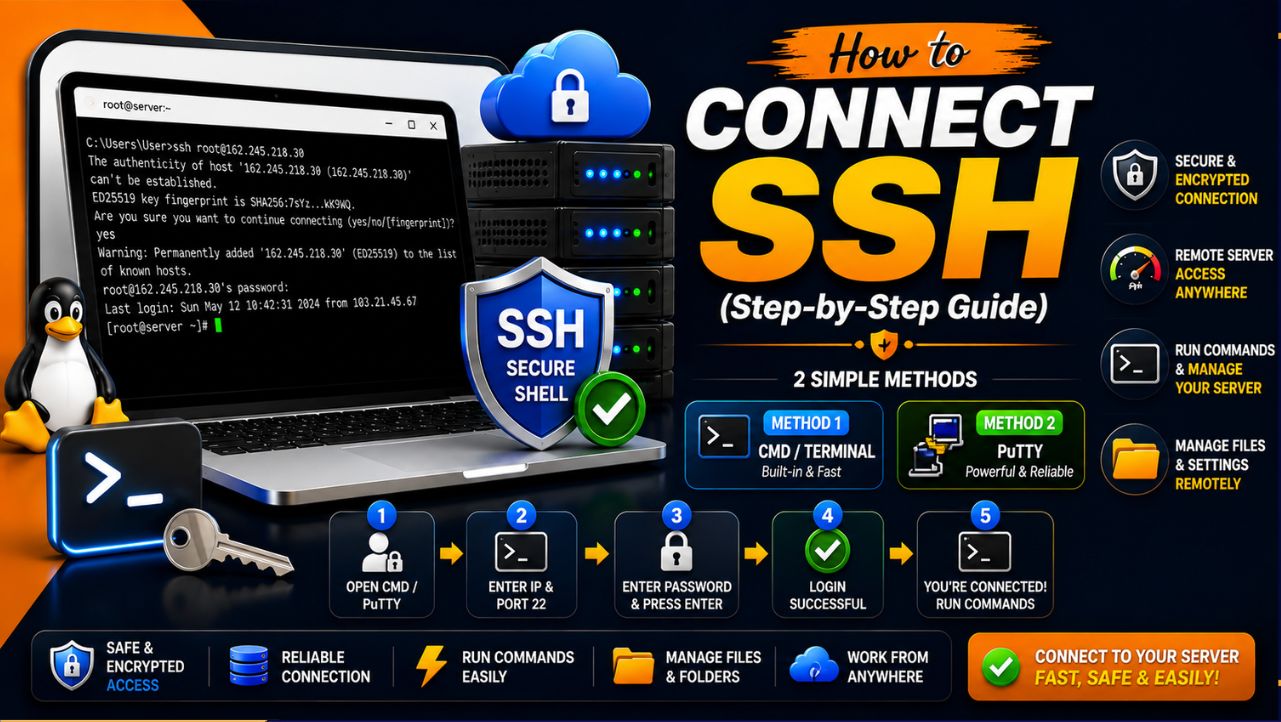
- SSH/RDP blocked after updates: host firewall changed; allow-list your IP; confirm port changes; check fail2ban/Windows Defender rules.
- Intermittent timeouts: investigate MTU, offloads, duplex mismatches, NIC errors, or upstream congestion via MTR.
- Only one VLAN/subnet broken: verify switch trunk config, tagged interface naming (eth0.100), and PVID on access ports.
Prevention and Hardening Best Practices
- Document addressing: IPs, masks, gateways, VLAN IDs, and any static routes.
- Baseline monitoring: ping/Jitter, MTR from external probes, flow analytics.
- Version-controlled firewall: manage nftables/iptables or Windows Firewall rules as code.
- Change windows and rollbacks: test MTU/offload changes off-peak; keep a backout plan.
- DDoS readiness: rate limits, SYN cookies, WAF, CDN for L7, provider-side blackhole controls.
- Redundancy: dual NICs, LACP bonding/teaming, diverse uplinks where available.
- Update NIC drivers/firmware and OS regularly for stability and security.
When to Escalate to Your Provider (What to Send)
- Problem summary with exact UTC timestamps and scope (IPs, ports, protocols).
- MTRs from server to target and external MTRs back to your server.
- Traceroutes, ping results, and packet captures (pcap) for failing flows.
- Switch/NIC stats showing errors or flaps; relevant firewall logs.
- Configuration snippets (sanitized) for IP/gateway/VLAN/firewall.
YouStable’s 24×7 network engineers can validate routing, adjust DDoS profiles, and coordinate with upstream carriers. The more precise your evidence, the faster we can resolve the incident.
FAQs: Troubleshoot Network Connectivity Issues
Why is my dedicated server not responding to ping?
Common reasons include disabled ICMP in host firewall, provider ICMP rate-limiting, no default route, gateway misconfiguration, or DDoS null-routing. Test a TCP port (e.g., 22/3389/443) from outside and review firewall/ACLs. If TCP works but ping doesn’t, ICMP is likely filtered—not a full outage.
How do I fix packet loss on my dedicated server?
Identify where loss begins using MTR. If at hop 1, check NIC errors, duplex/MTU, or host firewall. If in the provider core, open a ticket with MTR/pcaps. Under attack, enable DDoS protection and rate limits. Also review offloads (TSO/GSO/GRO), driver updates, and hardware health.
How can I tell if a firewall is blocking a specific port?
From the client, run Test-NetConnection (Windows) or nc/curl (Linux) to the port. On the server, confirm the service is listening (ss/netstat) and firewall rules allow the port. If local checks pass but remote fails, investigate upstream ACLs, load balancers, or DDoS policies.
Traceroute vs. MTR: which should I use?
Traceroute gives a snapshot of the path; MTR combines traceroute with continuous pings to each hop, revealing intermittent loss and jitter. Use both: traceroute for a quick map, MTR for trend analysis and evidence to share with your provider.
What logs help diagnose network outages?
On Linux, check journalctl, /var/log/syslog or messages, service logs (Nginx/Apache), and firewall logs. On Windows, review Event Viewer (System, Security), Windows Defender, and application logs. Pair logs with tcpdump/pcap captures for definitive proof of drops, resets, or handshake failures.
Need a second set of eyes? YouStable’s dedicated server specialists can audit your stack, validate configs, and provide network-hardening recommendations tailored to your workloads.