To monitor and secure MySQL on a Linux server, combine continuous performance monitoring (logs, metrics, slow queries) with layered security (firewalling, least-privilege users, TLS, encryption at rest, auditing, and regular backups).
Start by locking down network access, hardening MySQL accounts, enabling monitoring and alerts, and automating backups and patching for ongoing protection. If you run mission‑critical databases, learning how to monitor and secure MySQL on Linux server is non‑negotiable.
In this guide, I’ll show you a practical, step‑by‑step workflow I’ve used for 12+ years to keep MySQL fast, stable, and locked down—covering monitoring stacks, query profiling, user hardening, TLS, encryption at rest, audit logging, backups, and more.
What You’ll Monitor and Secure (Scope & Checklist)
- Availability: service status, restarts, replication lag.
- Performance: CPU, RAM, I/O, threads, query latency, slow queries.
- Errors: crashes, deadlocks, lock waits, out-of-memory, disk full.
- Security: network exposure, user privileges, authentication, TLS, audit trail.
- Data safety: backups, restore tests, binary logs, encryption at rest.
Quick MySQL Health Check (5 Minutes)
# 1) Service and version
sudo systemctl status mysql
mysql --version

# 2) Basic stats
mysqladmin -uroot -p status
mysql -uroot -p -e "SHOW GLOBAL STATUS LIKE 'Threads_connected';"
mysql -uroot -p -e "SHOW ENGINE INNODB STATUSG" | head -n 50

# 3) Errors
sudo tail -n 100 /var/log/mysql/error.log

# 4) Slow queries (if enabled)
mysql -uroot -p -e "SHOW VARIABLES LIKE 'slow_query_log%';"
sudo tail -n 100 /var/log/mysql/mysql-slow.log
Monitor MySQL on Linux: Tools, Logs, and Alerts
Built in Metrics You Already Have
Start with native tools before adding a full stack. They’re light and reliable.
# Key status counters
mysql -uroot -p -e "SHOW GLOBAL STATUS LIKE 'Connections';"
mysql -uroot -p -e "SHOW GLOBAL STATUS LIKE 'Queries';"
mysql -uroot -p -e "SHOW GLOBAL STATUS LIKE 'Innodb_row_lock%';"

# Long-running queries
mysql -uroot -p -e "SELECT * FROM INFORMATION_SCHEMA.PROCESSLIST WHERE TIME > 5 AND COMMAND='Query' ORDER BY TIME DESC LIMIT 20G"

# Performance Schema samples
mysql -uroot -p -e "SELECT EVENT_NAME, COUNT_STAR, SUM_TIMER_WAIT/1000000000 AS ms FROM performance_schema.events_statements_summary_global_by_event_name ORDER BY SUM_TIMER_WAIT DESC LIMIT 10;"
Logs You Must Watch
- Error log: crashes, aborted connections, auth failures. Tune verbosity if needed.
# Increase detail if troubleshooting
mysql -uroot -p -e "SET PERSIST log_error_verbosity=3;"- Slow query log: the single most valuable performance log in production.
[mysqld]
slow_query_log = ON
slow_query_log_file = /var/log/mysql/mysql-slow.log
long_query_time = 0.5
log_slow_admin_statements = ON
# Be cautious with this one; use for short windows only:
# log_queries_not_using_indexes = ON
Avoid leaving the general log on in production—it’s chatty and can crush I/O. Use it only for short, targeted debugging windows.
Profile Queries and Fix the Top Offenders
# Find the worst statements (by total time) from Performance Schema
mysql -uroot -p -e "
SELECT DIGEST_TEXT AS query, COUNT_STAR AS execs,
ROUND(SUM_TIMER_WAIT/1000000000,0) AS total_ms,
ROUND(AVG_TIMER_WAIT/1000000,2) AS avg_ms
FROM performance_schema.events_statements_summary_by_digest
ORDER BY SUM_TIMER_WAIT DESC LIMIT 20;"
Tackle queries with high total time first; add indexes, reduce rows scanned, or rewrite joins. Always validate with EXPLAIN and measure before/after.
Build a Continuous Monitoring Stack
- mysqld_exporter + Prometheus + Grafana: battle‑tested, open‑source, rich dashboards.
- Percona Monitoring and Management (PMM): turnkey with advisors and query analytics.
- Alternatives: Zabbix, Nagios, Datadog, New Relic (agents + ready dashboards).
# Example: mysqld_exporter on Ubuntu
sudo useradd -rs /bin/false mysqld_exporter
wget https://github.com/prometheus/mysqld_exporter/releases/download/v0.15.1/mysqld_exporter-0.15.1.linux-amd64.tar.gz
tar xzf mysqld_exporter-*.tar.gz
sudo mv mysqld_exporter-*/mysqld_exporter /usr/local/bin/

# MySQL user for exporter (read-only)
mysql -uroot -p -e "
CREATE USER 'exporter'@'localhost' IDENTIFIED BY 'StrongPass!';
GRANT PROCESS, REPLICATION CLIENT, SELECT ON *.* TO 'exporter'@'localhost';
FLUSH PRIVILEGES;"

# Systemd service
echo '[Unit]
Description=mysqld_exporter
[Service]
User=mysqld_exporter
ExecStart=/usr/local/bin/mysqld_exporter --mysqld.username=exporter --mysqld.password=StrongPass!
[Install]
WantedBy=multi-user.target' | sudo tee /etc/systemd/system/mysqld_exporter.service

sudo systemctl daemon-reload
sudo systemctl enable --now mysqld_exporter
# Prometheus scrape config (snippet in prometheus.yml)
- job_name: "mysql"
static_configs:
- targets: ["127.0.0.1:9104"]Alerts That Catch Problems Early
- High connections/threads: Threads_running > CPU cores for sustained periods.
- Replication lag: Seconds_Behind_Master > threshold.
- Slow query surge: increase in slow log rate or avg query time.
- Disk space: data/log filesystem > 80%.
- Errors: aborted connections, lock waits, deadlocks.
- Backups: missing or failed backup jobs, stale binlogs.
Secure MySQL on Linux: A Practical Hardening Plan
1) Run mysql_secure_installation
sudo mysql_secure_installation
# Set strong root password, remove anonymous users,
# disallow remote root login, remove test DB, reload privileges.
2) Restrict Network Exposure
[mysqld]
# Prefer localhost or a private VPC IP, never 0.0.0.0 unless strictly required
bind-address = 127.0.0.1
# Or, for private network:
# bind-address = 10.0.2.15
# If MySQL is local-only for the app:
# skip-networking = 1
# UFW example: allow only your app server
sudo ufw allow from 10.0.2.20 to any port 3306 proto tcp
# Drop all other inbound on 3306
sudo ufw deny 3306
sudo ufw enableOn RHEL/CentOS, use firewalld; on raw iptables, restrict 3306 to trusted CIDRs. Never expose MySQL directly to the internet.
3) Users, Authentication, and Least Privilege
# Separate app user with minimal rights
CREATE USER 'appuser'@'10.%' IDENTIFIED BY 'Complex#Passw0rd' REQUIRE SSL;
GRANT SELECT, INSERT, UPDATE, DELETE ON appdb.* TO 'appuser'@'10.%';
FLUSH PRIVILEGES;

# Strong password policy and rotation
SET PERSIST validate_password.policy=STRONG;
SET PERSIST validate_password.length=16;

# Lockout policy (MySQL 8+)
ALTER USER 'appuser'@'10.%'
  FAILED_LOGIN_ATTEMPTS 5
  PASSWORD_LOCK_TIME 2
  PASSWORD EXPIRE INTERVAL 180 DAY;

# Remove anonymous and remote root if present
DROP USER IF EXISTS ''@'localhost';
DROP USER IF EXISTS ''@'%';
UPDATE mysql.user SET host='localhost' WHERE user='root' AND host!='localhost';
Use separate users per application/service. Grant only required privileges at the schema level. For admin access, prefer socket-based root on the server over remote root logins.
4) Enforce TLS In Transit
# Generate a quick self-signed CA and server certs (lab/dev). Use a real CA in production.
openssl genrsa -out ca-key.pem 4096
openssl req -new -x509 -nodes -days 3650 -key ca-key.pem -out ca.pem -subj "/CN=MySQL-CA"
openssl genrsa -out server-key.pem 2048
openssl req -new -key server-key.pem -out server-req.pem -subj "/CN=mysql.internal"
openssl x509 -req -in server-req.pem -days 3650 -CA ca.pem -CAkey ca-key.pem -set_serial 01 -out server-cert.pem

# my.cnf
[mysqld]
ssl-ca=/etc/mysql/certs/ca.pem
ssl-cert=/etc/mysql/certs/server-cert.pem
ssl-key=/etc/mysql/certs/server-key.pem
# Force clients to use TLS
ALTER USER 'appuser'@'10.%' REQUIRE SSL;
# Optionally pin client certs:
# ALTER USER 'appuser'@'10.%' REQUIRE X509;5) Encrypt at Rest
For MySQL 8, enable keyring and tablespace/binlog encryption, or use full‑disk encryption (LUKS) if features are unavailable in your build.
# my.cnf (MySQL 8 Community)
[mysqld]
early-plugin-load=keyring_file.so
keyring_file_data=/var/lib/mysql-keyring/keyring
# Enable encryption defaults
innodb_encrypt_tables=ON
innodb_redo_log_encrypt=ON
binlog_encryption=ON

# Secure keyring directory permissions
sudo mkdir -p /var/lib/mysql-keyring
sudo chown mysql:mysql /var/lib/mysql-keyring
sudo chmod 700 /var/lib/mysql-keyring
If you can’t use tablespace encryption, encrypt the underlying block device with LUKS and restrict physical access to keys.
6) OS Hardening for the Database Host
- Patch regularly: keep kernel, OpenSSL, and MySQL up to date.
- Run as dedicated “mysql” user; never run mysqld as root.
- Enable SELinux/AppArmor with appropriate profile; whitelist only required paths/ports.
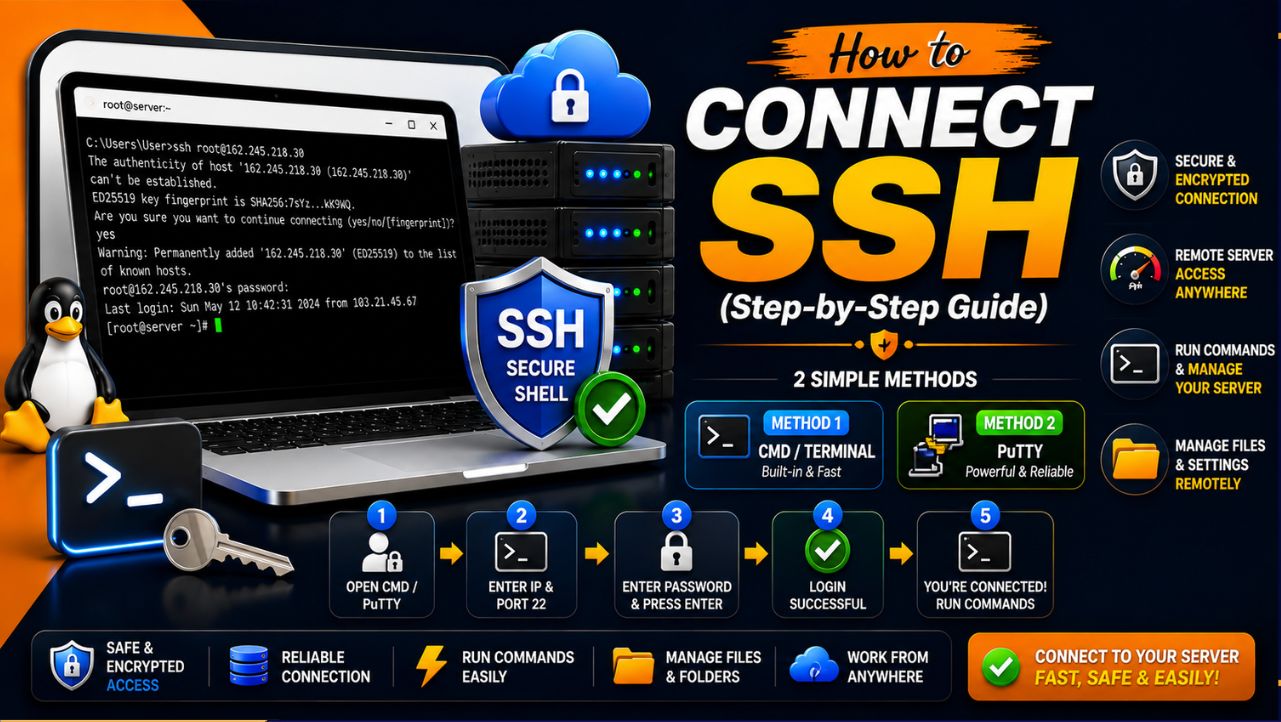
- Limit sudo and SSH: key‑based auth, no password SSH, firewall SSH to admin IPs.
- Separate volumes for data and logs; monitor I/O latency and filesystem usage.
- Restrict file permissions on /var/lib/mysql and config files.
7) Audit Logging for Compliance and Forensics
To track who did what and when, enable an audit plugin. Options include MySQL Enterprise Audit (licensed) and Percona Server Audit Log Plugin (open source). Ship logs to a secure, append‑only destination (e.g., rsyslog + SIEM).
# Percona Server (example)
INSTALL PLUGIN audit_log SONAME 'audit_log.so';
SET GLOBAL audit_log_format = 'JSON';
SET GLOBAL audit_log_policy = 'ALL';
# In my.cnf to persist:
# plugin-load-add=audit_log.so
# audit_log_policy=ALL
8) Throttle Brute Force with Fail2ban
Fail2ban can parse MySQL error logs for repeated auth failures and block offending IPs at the firewall.
# /etc/fail2ban/filter.d/mysqld-auth.conf
[Definition]
failregex = Access denied for user .* from <HOST>

# /etc/fail2ban/jail.d/mysqld-auth.local
[mysqld-auth]
enabled = true
filter = mysqld-auth
logpath = /var/log/mysql/error.log
maxretry = 5
bantime = 3600
port = 3306
Backups, Restores, and Disaster Drills
You don’t have backups; you have restores you’ve tested. Use a strategy that fits your data size and RPO/RTO.
- Logical backups (mysqldump): portable, easy; slower for large datasets.
- Physical/hot backups (Percona XtraBackup): near‑zero downtime, much faster for big data.
- Binary logs: enable for point‑in‑time recovery (PITR).
# Logical backup
mysqldump -uroot -p --single-transaction --routines --triggers --events --databases appdb
  | gzip > /backups/appdb-$(date +%F).sql.gz

# Enable binlogs for PITR (my.cnf)
[mysqld]
server_id=101
log_bin=/var/log/mysql/mysql-bin
binlog_expire_logs_seconds=604800  # 7 days
# Percona XtraBackup (physical)
sudo apt-get install percona-xtrabackup-80 -y
xtrabackup --backup --target-dir=/backups/full-$(date +%F)
xtrabackup --prepare --target-dir=/backups/full-$(date +%F)
# Restore test (on a staging VM)
xtrabackup --copy-back --target-dir=/backups/full-YYYY-MM-DDAutomate nightly backups, copy off‑site, and run monthly restore drills to validate integrity and runbooks.
Maintenance Automation: Logs, Cron, and Configuration
- Log rotation: rotate error and slow logs to prevent disk fill.
# /etc/logrotate.d/mysql-custom
/var/log/mysql/*.log {
  daily
  rotate 14
  compress
  missingok
  notifempty
  create 640 mysql adm
  postrotate
    invoke-rc.d mysql rotate >/dev/null 2>&1 || true
  endscript
}- Cron/systemd timers: schedule checks for disk, replication lag, and backup verification.
- Config management: store sanitized my.cnf in version control; use Ansible for repeatable hardening.
Common Pitfalls to Avoid
- Exposing 3306 to the public internet.
- One superuser for everything; no least privilege.
- Skipping TLS because “it’s inside the VPC.” Attackers love lateral movement.
- Leaving slow log disabled and guessing about performance.
- Backups without restore tests.
- No alerts—finding out about outages from users.
How YouStable Can Help
Prefer not to babysit databases 24/7? YouStable’s managed servers include hardened MySQL builds, private networking, TLS, automated backups, and 24×7 monitoring with real‑time alerting.
We can migrate your workloads, implement a least‑privilege model, set up Prometheus/Grafana or PMM, and document restore drills—so you focus on features, not firefighting.
FAQ’s
1. u003cstrongu003eWhat’s the best way to monitor MySQL performance on Linux?u003c/strongu003e
Combine mysqld_exporter + Prometheus + Grafana (or PMM) for dashboards, enable the slow query log, and use Performance Schema for query analytics. Add alerts for connections, slow query rate, replication lag, errors, and disk space.
2. u003cstrongu003eHow do I secure MySQL against remote attacks?u003c/strongu003e
Bind to localhost or a private IP, firewall 3306 to trusted hosts, disable remote root, enforce strong passwords and lockout policies, use TLS for all connections, require least privileges per user, and enable audit logging.
3. u003cstrongu003eShould I enable the general log in production?u003c/strongu003e
No. The general log is extremely verbose and can hurt performance. Use it only briefly for debugging. Prefer the slow query log, Performance Schema, and query digest tools for ongoing visibility.
u003cstrongu003e4. Is encryption at rest necessary if the server is in a secure data center?u003c/strongu003e
Yes—encrypting tablespaces or disks protects data from physical theft, snapshot leaks, or improper decommissioning. Pair it with strong key management and restricted key access to reduce risk.
5. u003cstrongu003eHow often should I test MySQL backups?u003c/strongu003e
At least monthly. Automate nightly backups, then run a restore on a staging server, validate checksums and application integrity, and document the recovery time. Treat restore drills as part of release readiness.