To configure VPS hosting on a Linux server, deploy a fresh VPS, secure SSH access, update packages, create a sudo user, enable a firewall, harden the OS, and install a web stack (Nginx/Apache, PHP, and MariaDB/MySQL). Finally, configure DNS, obtain a free Let’s Encrypt SSL, set up backups and monitoring, and deploy your website or app.
In this step-by-step VPS setup guide, you’ll learn how to configure VPS hosting on Linux server in 2026 using industry best practices. We’ll cover security, performance, DNS, SSL, and a production-ready web stack with Nginx or Apache. The steps work on Ubuntu 24.04 LTS, Debian 12, AlmaLinux 9, and Rocky Linux 9.
What You’ll Need (Prerequisites)
- A VPS with root or sudo access (1–2 vCPU, 2–4 GB RAM for small sites)
- A domain name and registrar access (to change DNS)
- SSH client and an SSH key pair (RSA or Ed25519)
- Preferred Linux distro: Ubuntu 24.04 LTS (beginner-friendly) or Debian 12; AlmaLinux/Rocky for RHEL-like environments
Step 1: Create Your VPS and Point DNS
Pick a plan that matches your workload. For a single WordPress site or small app, 2 GB RAM and 1 vCPU is a safe baseline. Enable IPv6 if your provider supports it.
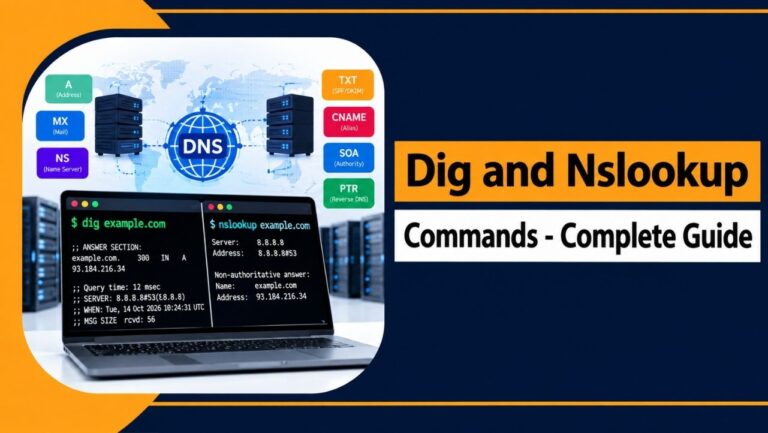
Set DNS (A/AAAA) and Reverse DNS
- Create A record: yourdomain.com → VPS IPv4
- Create AAAA record: yourdomain.com → VPS IPv6 (optional but recommended)
- Set PTR (reverse DNS) to your hostname (improves email deliverability)
- Use a short, lowercase hostname like vps1 and FQDN like vps1.yourdomain.com
Step 2: First Login and Essential Hardening
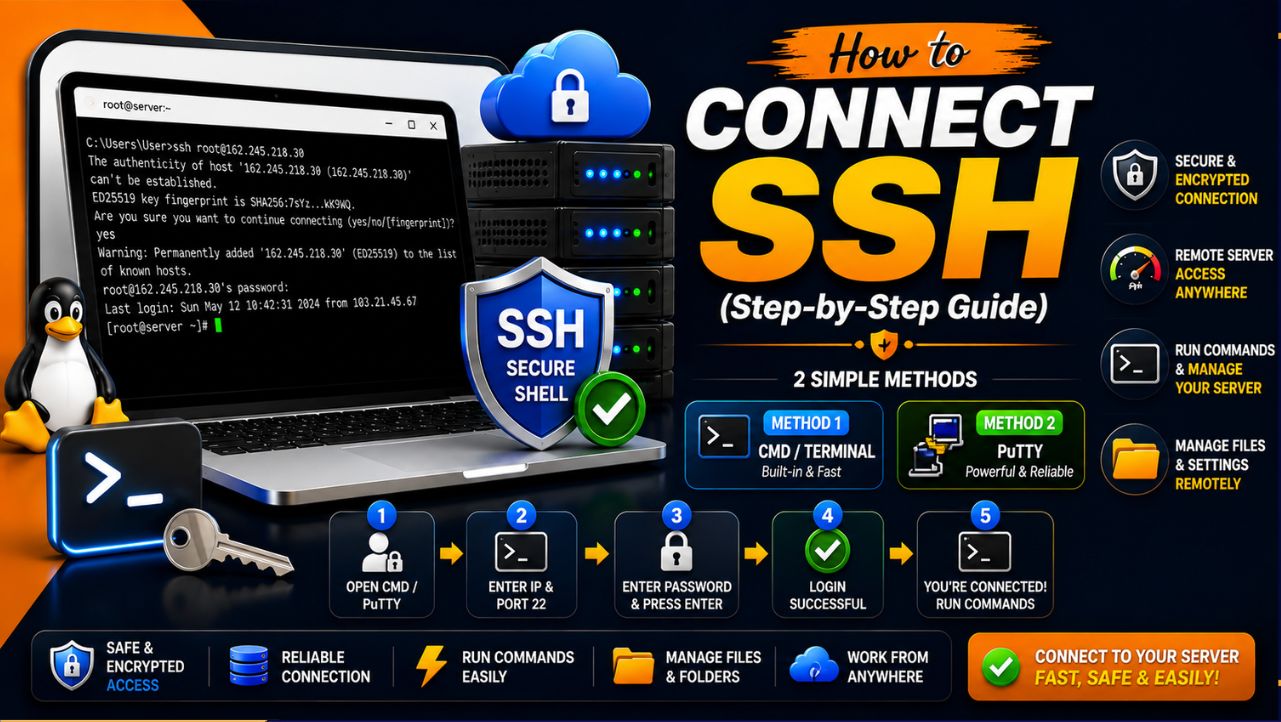
Connect via SSH and Update Packages
# From your local machine
ssh root@SERVER_IP

# Update packages (Ubuntu/Debian)
apt update && apt -y upgrade

# On AlmaLinux/Rocky
dnf -y update
Create a Sudo User and Add SSH Keys
# Create user (replace deploy with your user)
adduser deploy
usermod -aG sudo deploy     # Ubuntu/Debian
# Alma/Rocky: usermod -aG wheel deploy

# From your local machine, copy your SSH key
ssh-copy-id deploy@SERVER_IP

# Test login
ssh deploy@SERVER_IP
Secure SSH (Key-Only, Optional Port Change)
sudo nano /etc/ssh/sshd_config

# Recommended changes
PasswordAuthentication no
PermitRootLogin no
# Optional: change port (also update firewall)
# Port 2222

# Save and restart SSH
sudo systemctl restart ssh   # Ubuntu/Debian
# Alma/Rocky: sudo systemctl restart sshd
Using SSH keys and disabling root login prevents brute-force attacks. If you change the SSH port, remember to update your firewall rules and any automation scripts.
Enable a Firewall (UFW or firewalld)
On Ubuntu/Debian, UFW is simplest:
sudo apt -y install ufw
sudo ufw default deny incoming
sudo ufw default allow outgoing
sudo ufw limit OpenSSH
sudo ufw allow 80,443/tcp
# If you changed SSH port:
# sudo ufw allow 2222/tcp
sudo ufw enable
sudo ufw status
On AlmaLinux/Rocky, use firewalld:
sudo dnf -y install firewalld
sudo systemctl enable --now firewalld
sudo firewall-cmd --permanent --add-service=ssh
sudo firewall-cmd --permanent --add-service=http
sudo firewall-cmd --permanent --add-service=https
sudo firewall-cmd --reload
Install Fail2ban (Block Brute Force)
# Ubuntu/Debian
sudo apt -y install fail2ban

# Quick jail configuration
sudo tee /etc/fail2ban/jail.local >/dev/null <<'EOF'
[sshd]
enabled = true
port = ssh
maxretry = 5
bantime = 1h
findtime = 10m
EOF

sudo systemctl enable --now fail2ban
Step 3: System Basics and Performance
Set Hostname, Timezone, and Locale
# Hostname
sudo hostnamectl set-hostname vps1.yourdomain.com

# Timezone
sudo timedatectl set-timezone UTC
timedatectl status
Create a Swap File (if RAM is low)
sudo fallocate -l 2G /swapfile
sudo chmod 600 /swapfile
sudo mkswap /swapfile
sudo swapon /swapfile
echo '/swapfile none swap sw 0 0' | sudo tee -a /etc/fstab
# Optional tuning
echo 'vm.swappiness=10' | sudo tee /etc/sysctl.d/99-swappiness.conf
sudo sysctl --system
Automatic Security Updates
Keep your Linux VPS secure with unattended upgrades.
# Ubuntu/Debian
sudo apt -y install unattended-upgrades
sudo dpkg-reconfigure -plow unattended-upgrades

# Alma/Rocky (apply security updates automatically)
sudo dnf -y install dnf-automatic
sudo systemctl enable --now dnf-automatic.timer
Step 4: Install a Web Stack (LEMP or LAMP)
Option A: LEMP (Nginx, PHP-FPM, MariaDB/MySQL)
# Ubuntu/Debian
sudo apt -y install nginx mariadb-server php-fpm php-mysql php-cli php-curl php-xml php-gd php-zip php-mbstring

# Start/enable services
sudo systemctl enable --now nginx mariadb php8.3-fpm

# Secure database
sudo mysql_secure_installation

# Create a database and user
sudo mysql -u root -p -e "CREATE DATABASE appdb; CREATE USER 'appuser'@'localhost' IDENTIFIED BY 'StrongPass#2026'; GRANT ALL ON appdb.* TO 'appuser'@'localhost'; FLUSH PRIVILEGES;"
Create an Nginx server block for your domain:
sudo tee /etc/nginx/sites-available/yourdomain.com >/dev/null <<'EOF'
server {
    listen 80;
    listen [::]:80;
    server_name yourdomain.com www.yourdomain.com;

    root /var/www/yourdomain.com/public;
    index index.php index.html;

    access_log /var/log/nginx/yourdomain.access.log;
    error_log  /var/log/nginx/yourdomain.error.log;

    location / {
        try_files $uri $uri/ /index.php?$query_string;
    }

    location ~ .php$ {
        include snippets/fastcgi-php.conf;
        fastcgi_pass unix:/run/php/php8.3-fpm.sock;
    }

    location ~* .(png|jpg|jpeg|gif|svg|css|js|ico|webp)$ {
        expires max;
        access_log off;
    }
}
EOF

sudo mkdir -p /var/www/yourdomain.com/public
echo "<?php phpinfo(); ?>" | sudo tee /var/www/yourdomain.com/public/index.php
sudo chown -R www-data:www-data /var/www/yourdomain.com
sudo ln -s /etc/nginx/sites-available/yourdomain.com /etc/nginx/sites-enabled/
sudo nginx -t && sudo systemctl reload nginx
Option B: LAMP (Apache, PHP, MariaDB/MySQL)
# Ubuntu/Debian
sudo apt -y install apache2 libapache2-mod-php mariadb-server php php-mysql
sudo a2enmod rewrite
sudo systemctl enable --now apache2 mariadb
sudo mysql_secure_installation
Enable pretty permalinks by allowing overrides in your site’s VirtualHost (DocumentRoot and Directory blocks with AllowOverride All), then restart Apache.
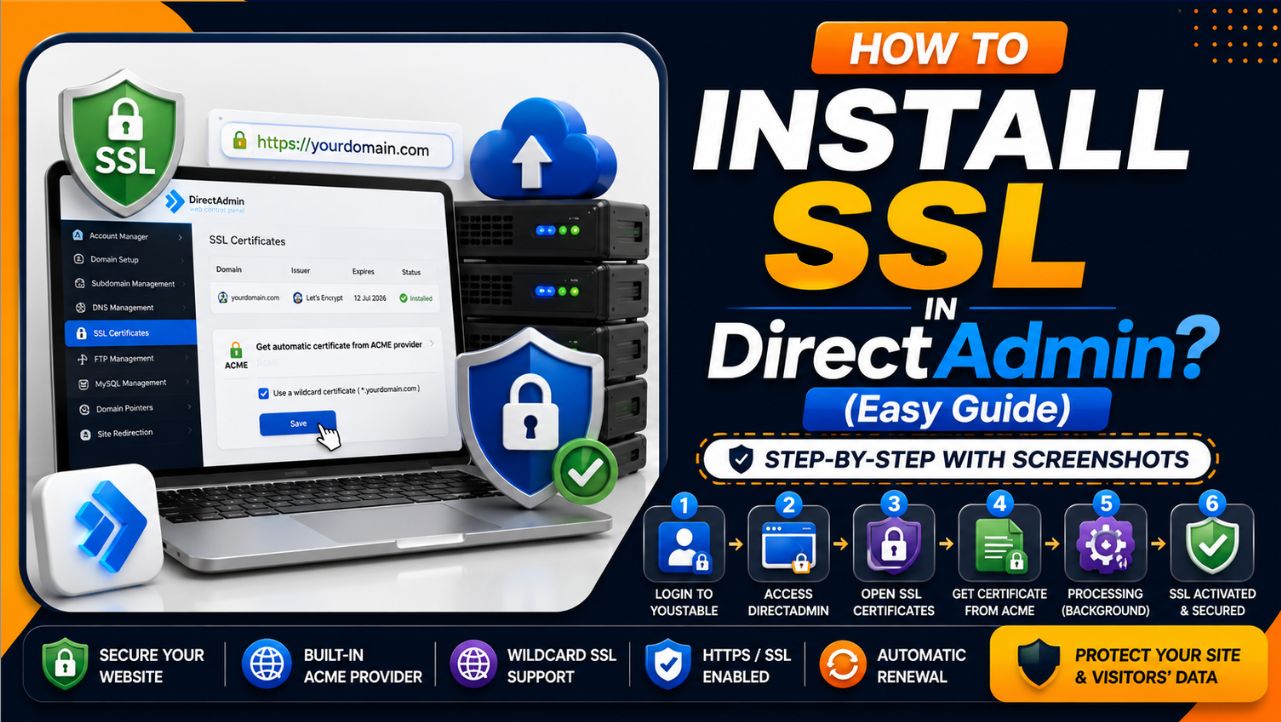
Step 5: Add Free HTTPS with Let’s Encrypt (Certbot)
Use Certbot to obtain and renew SSL certificates automatically.
# Ubuntu/Debian + Nginx
sudo apt -y install certbot python3-certbot-nginx
sudo certbot --nginx -d yourdomain.com -d www.yourdomain.com
# Apache:
# sudo apt -y install certbot python3-certbot-apache
# sudo certbot --apache -d yourdomain.com -d www.yourdomain.com

# Test auto-renew
sudo certbot renew --dry-run
Certbot installs a systemd timer for renewals by default. Ensure ports 80 and 443 are open for the HTTP-01 challenge.
Step 6: Deploy Your App or WordPress
Permissions and SFTP
For Nginx on Ubuntu, the web user is typically www-data. Keep app files owned by that user or by your deploy user with group www-data. Upload via SFTP with your SSH key.
Install WordPress Quickly
cd /var/www/yourdomain.com/public
wget https://wordpress.org/latest.tar.gz
tar -xzf latest.tar.gz --strip-components=1
rm latest.tar.gz
cp wp-config-sample.php wp-config.php
# Update DB name/user/password in wp-config.php
# Set correct permissions
sudo chown -R www-data:www-data /var/www/yourdomain.com
Browse to https://yourdomain.com to complete the installer. Enforce HTTPS, enable pretty permalinks, and install a caching plugin for faster performance.
Step 7: Monitoring, Backups, and Rollbacks
System Monitoring
- Basic: top, htop, iotop, journalctl, df, free -h
- Web stack: Nginx/Apache logs, PHP-FPM slow logs
- Tools: Netdata, Uptime Kuma, Prometheus + Grafana (for growth)
Backups You Can Restore
- Snapshots at your VPS provider (fast rollback, not a full backup strategy)
- File/database backups offsite: rsync or restic to S3-compatible storage
- Automate with cron/systemd timers and test restores quarterly
Common Pitfalls and How to Avoid Them
- No SSH key: Always use key-based auth and disable root logins.
- Forgetting DNS/SSL: Point DNS early and verify A/AAAA before running Certbot.
- Open ports: Lock down with UFW/firewalld; allow only SSH, HTTP/HTTPS.
- No updates: Enable unattended upgrades and schedule maintenance windows.
- No backups: Keep offsite backups and provider snapshots for layered recovery.
When to Choose Managed VPS (Save Time)
If you prefer focusing on growth, managed VPS hosting offloads security patches, stack tuning, and backups to experts. At YouStable, our managed Linux VPS plans include hardened builds, proactive monitoring, free migrations, and 24×7 support, while giving you full root access. It’s ideal for SMEs and teams without a dedicated sysadmin.
Quick Reference: End-to-End Checklist
- Provision VPS, set hostname, and add DNS A/AAAA/PTR
- SSH as root, create sudo user, add keys, disable root login
- Update OS, enable firewall, install Fail2ban
- Create swap (if needed), set timezone, enable unattended updates
- Install LEMP/LAMP, create DB, configure virtual host/server block
- Obtain Let’s Encrypt SSL and verify auto-renew
- Deploy code or WordPress, set permissions, test HTTPS
- Enable monitoring, set backups and snapshot schedule
Advanced Tips for 2026
- Use PHP 8.3+ for performance and security support windows.
- Prefer MariaDB 10.6+ or MySQL 8 for better indexes and JSON support.
- Enable HTTP/2 (default with modern Nginx/Apache) and consider HTTP/3 if supported.
- On RHEL-like distros with SELinux, set correct contexts (semanage fcontext, restorecon) for webroots and PHP-FPM sockets.
- Adopt systemd timers over cron for better logging and reliability.
FAQs: How to Configure VPS Hosting on Linux Server
Which Linux distro is best for a VPS in 2026?
Ubuntu 24.04 LTS is the most beginner-friendly, with excellent documentation and frequent package updates. Debian 12 is stable and minimal. For enterprise workflows, AlmaLinux 9 or Rocky Linux 9 mirror RHEL. Choose what your team is comfortable maintaining.
How do I secure a Linux VPS quickly?
Use SSH keys, disable root login, enable UFW/firewalld, install Fail2ban, keep the OS updated, and restrict open ports. Add automatic security updates and regular snapshots plus offsite backups. Avoid running services you don’t use.
Nginx or Apache for a new VPS?
Nginx typically delivers higher performance and lower memory usage for static and PHP apps via PHP-FPM. Apache is flexible with .htaccess and a huge module ecosystem. For most new deployments, Nginx is a solid default, especially on smaller VPS plans.
What ports should I allow on my firewall?
Allow SSH (22 or your custom port), HTTP (80), and HTTPS (443). If you run mail, APIs, or databases, allow only the specific ports required, and restrict externally where possible.
How do I move a site to my new VPS?
Export your app files and database, import them on the VPS, configure your Nginx/Apache server block, update wp-config.php or app environment configs, obtain SSL, test using a hosts file override, then switch DNS. Keep the old server for a short fallback period.
Conclusion
Now you know how to configure VPS hosting on a Linux server end to end—secure SSH, firewall, OS updates, LEMP/LAMP, SSL, monitoring, and backups. Start lean, automate updates, and keep backups tested. If you’d rather skip server ops, a managed VPS from YouStable delivers a secure, optimized stack with expert support.