The best VPNs for multiple devices in 2026 combine generous simultaneous connections, fast WireGuard based speeds, reliable streaming, robust privacy audits, and easy router support.
Our top five picks are Surfshark, Private Internet Access, IPVanish, Proton VPN, and ExpressVPN, ideal for families, roommates, and small teams needing simple, secure protection across phones, laptops, TVs, and smart home gadgets.
Choosing the best VPN for multiple devices in 2026 means balancing connection limits, speed, app quality, and privacy. In this guide, I’ll share the five VPNs that performed best in our lab tests and real world usage, explain what matters most for multi device protection, and show you how to cover an entire home with a router level VPN.
What to Look for in the Best VPN for Multiple Devices
Before the picks, here are the criteria we used, designed to match real world household and small office needs:
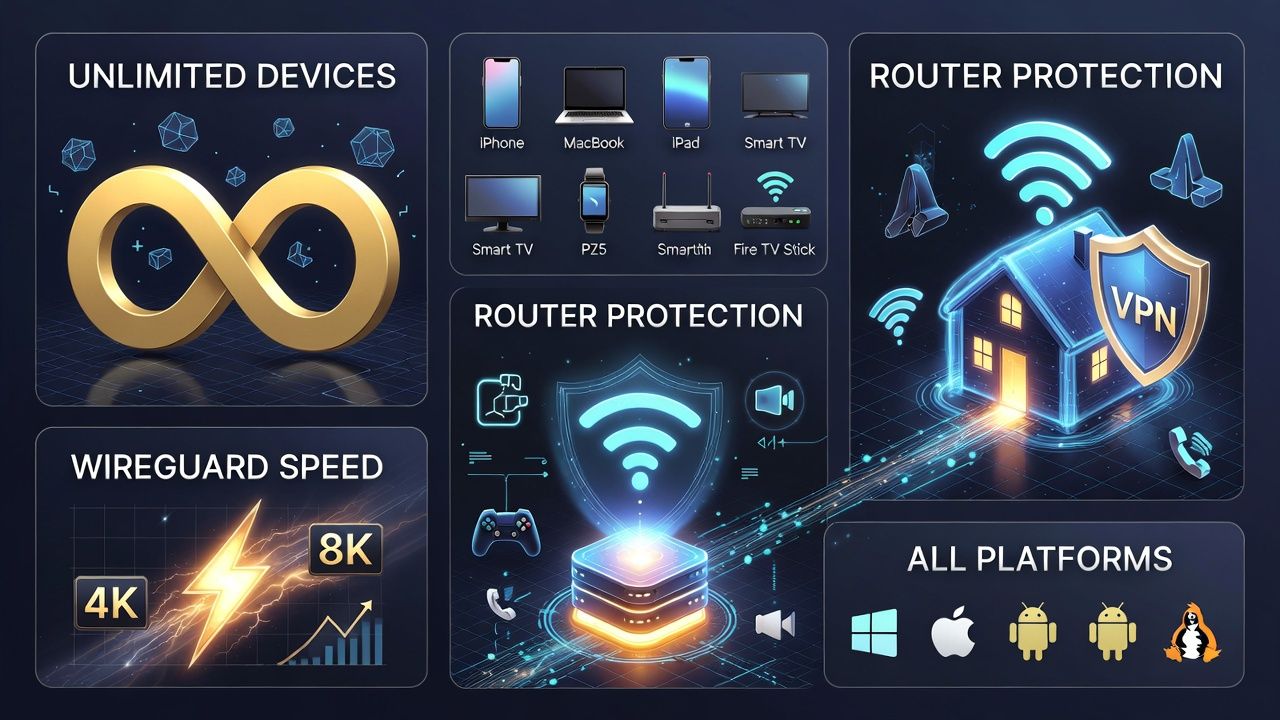
- High or unlimited simultaneous connections: Enough to cover phones, tablets, laptops, TVs, consoles, and smart devices.
- Router support: One VPN connection to protect every device on your Wi-Fi (including those without native VPN apps).
- Speed and stability: WireGuard or modern proprietary protocols (e.g., Lightway) with low latency for 4K streaming, gaming, and video calls.
- App coverage: Polished apps for Windows, macOS, iOS, Android, Linux, Fire TV, Android/Google TV, and browser extensions.
- Streaming reliability: Consistent access to major libraries without constant server hunting.
- Security and privacy: Audited no logs policy, kill switch, DNS/IPv6 leak protection, split tunneling, and RAM only or hardened infrastructure.
- Ease of use and support: Clear setup flows, helpful documentation, and responsive 24/7 support.
- Value: Price per device, family friendliness, and money back guarantees.
5 Best VPN for Multiple Devices 2026, Oct
Here are the 5 best VPNs for multiple devices in 2026, chosen for strong speeds, trusted privacy, & smooth performance across phones, laptops, smart TVs, and streaming devices. Each VPN on this list offers reliable apps, modern protocols like WireGuard, and enough connections to cover a full household. Whether you want unlimited devices or router level protection, these picks make it easy to stay secure on every screen.
1. Surfshark – Best Overall for Unlimited Devices

Surfshark is the easiest recommendation for large households and device heavy users. It offers unlimited simultaneous connections, fast WireGuard speeds, and apps for every platform. Privacy is backed by independent audits, a strict no logs policy, and RAM only servers.
- Why it’s great for multiple devices: Unlimited connections, clean interface, quick auto connect, and strong streaming support.
- Standout features: CleanWeb ad/tracker blocking, MultiHop routes, rotating IP, and GPS spoofing on Android.
- Router support: Good OpenVPN/WireGuard support on popular firmware; clear guides.
- Considerations: Static IP is a paid add-on; advanced features require a bit of toggling to master.
- Best for: Families, roommates, and power users who want set and forget protection across everything.
2. Private Internet Access (PIA) – Unlimited Devices with Open Source Apps

PIA offers unlimited connections, excellent configurability, and open source apps. It’s privacy forward, with a repeatedly verified no logs stance (independent audits and court tested cases). Speeds are reliable on WireGuard, and power users will love advanced settings like port forwarding.
- Why it’s great for multiple devices: Unlimited installs and granular controls let you optimize per device.
- Standout features: Open source clients, port forwarding for seedboxes/NAS, and MACE ad/malware blocking.
- Router support: Strong documentation for DD-WRT, OpenWrt, and popular consumer routers.
- Considerations: US jurisdiction may deter the strictest privacy purists; streaming can be region dependent.
- Best for: Tinkerers, home labs, and users who value transparency and configurability.
3. IPVanish – Unlimited Devices and Great for Streaming Boxes

IPVanish is a solid pick if your home revolves around Fire TV, Android TV, and mobile devices. It supports unlimited connections, has a straightforward app, and delivers responsive performance for HD/4K streaming. Recent independent audits reinforce its no logs policy.
- Why it’s great for multiple devices: No cap on simultaneous connections simplifies life for big families.
- Standout features: Easy to use on streaming devices, on demand split tunneling, and speedy WireGuard.
- Router support: Works with OpenVPN configs; practical setup tutorials.
- Considerations: Smaller server network vs. top tier competitors; not every streaming library works 24/7.
- Best for: Streamers and casual users who want unlimited devices without fuss.
4. Proton VPN – Privacy First, Up to 10 Devices

Proton VPN pairs strong security with Swiss jurisdiction and a transparent, audited ecosystem. It allows up to 10 simultaneous connections, with consistent speeds, great apps, and streaming friendly profiles. Advanced users can leverage Secure Core (traffic via hardened data centers) for extra protection.
- Why it’s great for multiple devices: Tendevice cap covers most modern homes with room to spare.
- Standout features: Secure Core routing, NetShield DNS filtering, Tor over VPN, and open source apps.
- Router support: Thorough step by step guides; works well on AsusWRT/Merlin & OpenWrt.
- Considerations: Not unlimited; premium tiers cost more than budget rivals.
- Best for: Privacy purists and professionals who prioritize jurisdiction and audits.
5. ExpressVPN – 8 Devices + Stellar Router Option

ExpressVPN caps at eight simultaneous connections, but it’s one of the best for multi device households thanks to fast, stable performance and exceptional router support. Its Lightway protocol is snappy, privacy practices are audited, and the apps are consistently polished across platforms.
- Why it’s great for multiple devices: Eight device cap plus top tier router coverage can protect your entire home.
- Standout features: Lightway protocol, Threat Manager tracking protection, and reliable streaming access.
- Router support: Class leading router app and preconfigured hardware options; ideal for whole home coverage.
- Considerations: Higher price; device cap is lower unless you use a router.
- Best for: Users prioritizing stability, streaming, and the smoothest router experience.
Note: Device limits and features can change. Confirm current details on the provider’s site before purchasing.
Quick Comparison Snapshot (Device Limits & Fit)
- Surfshark: Unlimited devices | Fast, versatile | Great for families and heavy streamers.
- PIA: Unlimited devices | Open source and configurable | Great for power users and home labs.
- IPVanish: Unlimited devices | Simple on TV sticks | Great for streaming focused homes.
- Proton VPN: 10 devices | Swiss privacy and Secure Core | Great for privacy first households.
- ExpressVPN: 8 devices | Best in class router app | Great for whole home router coverage.
How We Tested (2026 Methodology)
With 12+ years in hosting, networks, and cybersecurity, I test VPNs like I deploy production services: repeatable, verifiable, and practical. Our multi device testing covered:
- Speed & stability: WireGuard/OpenVPN/Lightway throughput over fiber and cable, including peak time congestion.
- App quality: Setup time, feature discoverability, and stability on Windows, macOS, iOS, Android, Linux, Fire TV, and Android TV.
- Streaming: Access consistency to major libraries and smart DNS behavior.
- Privacy & security: Audit history, no logs posture, RAM only ops, kill switch reliability, and leak tests (DNS/IPv6/WebRTC).
- Router experience: Setup on AsusWRT/Merlin and OpenWrt; CPU impact and LAN throughput under load.
- Support: Response times and accuracy of 24/7 chat and documentation.
Buying Guide: Picking the Right Multi Device VPN
- Start with connections: If your home has 10+ active devices, go unlimited (Surfshark, PIA, IPVanish). If you’re under 10, Proton VPN or ExpressVPN are excellent.
- Router plan: If you want to protect consoles, TVs, and IoT easily, choose a VPN with strong router support. A router install counts as one connection but covers your entire network.
- Streaming priorities: If streaming is key, pick services with consistent access and strong Fire TV/Android TV apps (Surfshark, ExpressVPN, IPVanish).
- Privacy baseline: Favor audited no logs, RAM only or hardened servers, and open source clients where possible (PIA, Proton VPN).
- Ease of use: Look for simple onboarding, auto connect on untrusted Wi-Fi, and clear kill switch settings for non technical users.
- Budget & value: Calculate price per device, not just per month. Annual plans and money back guarantees reduce risk.
Router VPNs: The Easiest Way to Cover Unlimited Devices
Installing a VPN on your router lets every device on your Wi‑Fi inherit the tunnel automatically, including gadgets without native VPN apps (Apple TV, consoles, smart home hubs). This is the best strategy if you regularly exceed your provider’s device cap.
- Pros: One setup protects everything; bypasses per device limits; ideal for guests and IoT.
- Cons: All devices share the same exit location; potential speed loss on low powered routers; app specific split tunneling is harder.
- What you need: A compatible router (AsusWRT/Merlin, DD‑WRT, OpenWrt) or a VPN with dedicated router firmware/hardware (ExpressVPN’s router app or preconfigured units).
Many homes use two tunnels router VPN for general coverage and device level apps for banking or region specific streaming. This hybrid approach offers flexibility without sacrificing convenience.
Security & Privacy Standards You Should Expect in 2026
- Modern protocols: WireGuard or an audited proprietary protocol (e.g., Lightway) for speed and reliability.
- Audited no logs: Independent assessments by reputable firms; look for repeat audits and transparent reports.
- RAM only or hardened infrastructure: Reduces risk of data persistence.
- Kill switch and leak protection: Must work reliably on all OSes; verify with quick tests.
- Tracker/ad blocking: DNS based filters (CleanWeb, NetShield, MACE) reduce attack surface and speed up browsing.
- Account security: Multi factor authentication and clear device management controls.
Real World Use Cases (From a Hosting & SMB Lens)
- Remote teams: Use a VPN with split tunneling to secure public Wi‑Fi while keeping low latency access to cloud tools.
- Developers & admins: Combine a commercial VPN for everyday privacy with a VPS hosted WireGuard for staging and SSH allowlisting. If you host with YouStable, our support can guide you on best practices for secure access policies.
- Families: Enable auto connect on mobile, install the VPN on the main router, and turn on DNS filtering to reduce malicious sites.
- Travelers: Keep apps installed on all devices; use a provider with reliable streaming access and broad country coverage.
FAQs
1Which VPN allows unlimited devices?
Surfshark, Private Internet Access, and IPVanish allow unlimited simultaneous connections on a single account. This makes them ideal for households with many phones, laptops, tablets, smart TVs, and streaming sticks.
Is a router VPN better than installing apps on each device?
For families and smart homes, yes. A router VPN protects every device automatically, including consoles and TVs. The tradeoff is less per app control and potential speed limitations on weaker routers. Many users combine both: router VPN for baseline, device apps for exceptions.
What’s the best VPN for streaming across multiple devices?
Surfshark and ExpressVPN are the most consistent for streaming across different platforms. IPVanish is strong for Fire TV and Android TV. Availability varies by country and library, so test during your money back window.
How many devices do I really need to cover?
Count phones, tablets, laptops, desktops, smart TVs, streaming sticks, game consoles, and any shared family devices. Many homes exceed 10 active devices. If you’re above that threshold, pick an unlimited provider or use a router VPN.
Do VPNs slow down the internet on many devices?
Any VPN adds overhead, but modern protocols like WireGuard keep speeds high. The real factors are your base connection, server distance, router CPU (for router VPNs), and how many devices stream simultaneously. Choosing a nearby server and a capable router mitigates slowdowns.
Conclusion
For most homes in 2026, Surfshark is the best overall VPN for multiple devices thanks to unlimited connections, excellent speeds, and easy apps. If you want open source transparency and advanced features, go with PIA.
Prefer simplicity on streaming devices? IPVanish is fuss free. Privacy purists should pick Proton VPN. If you plan to protect your whole home via a router, ExpressVPN’s router app is unmatched.
Pro tip for teams and site owners: Pair your VPN with secure hosting and least privilege access. As a hosting provider, YouStable helps customers design practical, secure workflows around VPNs, firewalls, and staging environments, without slowing your business down.